
Nach erfolgreicher Jagd — History & Facts
The first thing that seizes the eye in Nach erfolgreicher Jagd is not the triumphant display of the hunt’s spoils, but the choreography of figures and horses, frozen in a moment of ritual and camaraderie. The forest, painted in broad, lively strokes, forms a golden-brown proscenium arch that frames the assembled riders, their elaborate costumes gleaming with touches of emerald, scarlet, and gold. At the center, the fallen game and attentive hunting dogs anchor the scene, while the riders’ gestures—some pointing, others in relaxed conversation—signal both pride and the social theater of the hunt.
The light, streaming in from the clearing, draws the viewer’s gaze to the heart of the gathering, suggesting both the end of exertion and the beginning of celebration. This is not merely a record of success, but a tableau of status, hierarchy, and the rituals that bound the elite together. Works like this, painted by Alexander Von Bensa by 1902, belong to a tradition that looked back to the pageantry of aristocratic life, even as the world outside was changing rapidly. Such hunting scenes, popular in Central Europe, were often commissioned or collected by those eager to recall—or lay claim to—the privileges of a fading order.
The Dorotheum, which now holds this work, was itself founded in the age of empire, and its walls have seen the passage of countless reminders of vanished grandeur. Little may be recorded of this particular painting’s journey, but it stands as a vivid echo of a time when the hunt was as much about spectacle and belonging as it was about the chase. The viewer is left to wander among the riders and hounds, searching for stories in their faces and finery.
More Artworks by Alexander Von Bensa

Historisches Karussell
Alexander Von Bensa
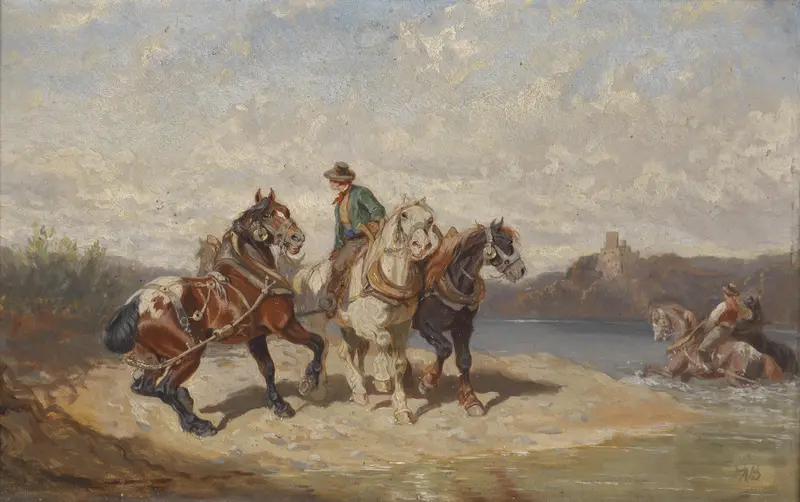
Treidelpferde an der Donau
Alexander Von Bensa
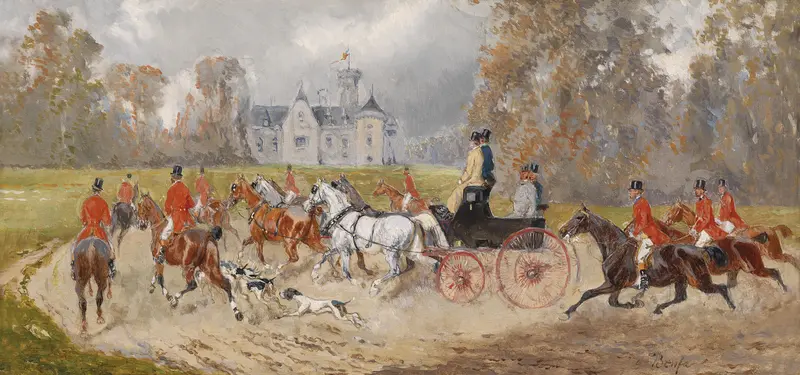
Rückkehr ins Schloss
Alexander Von Bensa
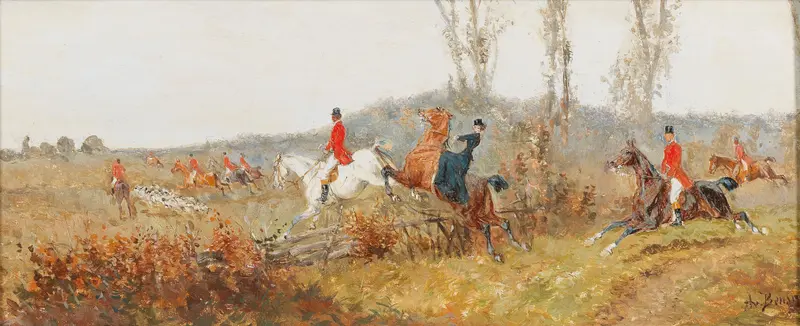
On the Scent
Alexander Von Bensa
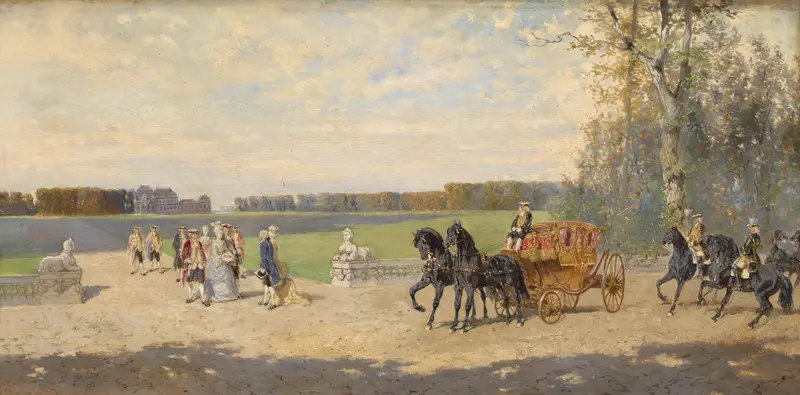
Ausfahrt vor dem Schloss
Alexander Von Bensa
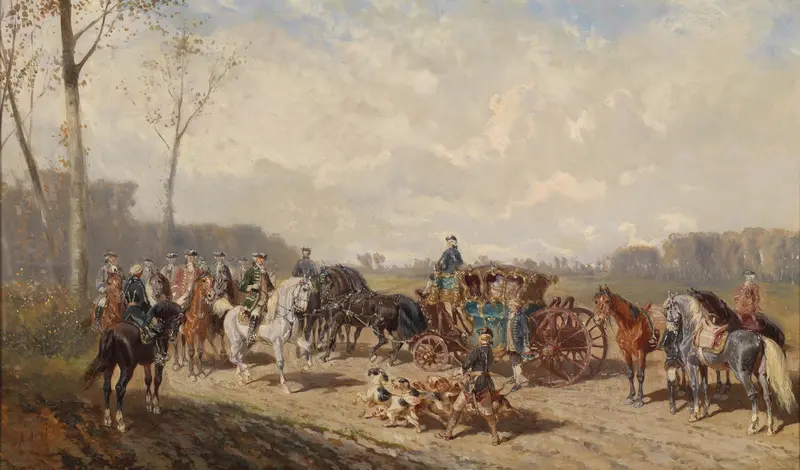
Begegnung beim Ausritt
Alexander Von Bensa
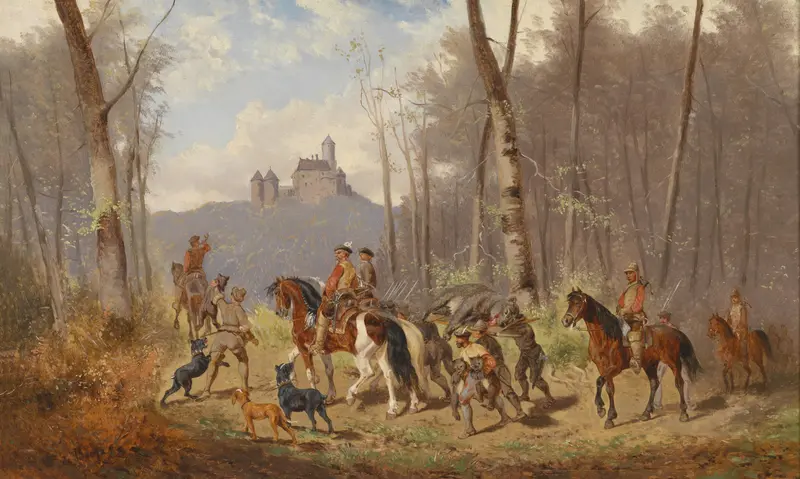
Heimkehr nach der Bärenjagd
Alexander Von Bensa
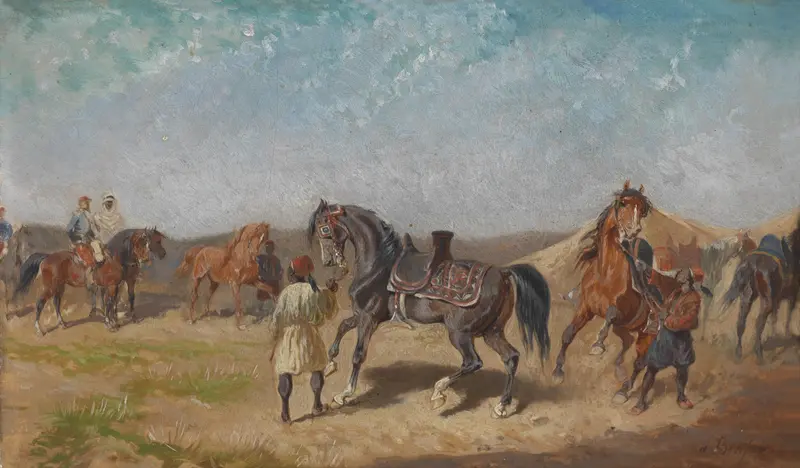
Nordafrikanisches Reiterlager
Alexander Von Bensa
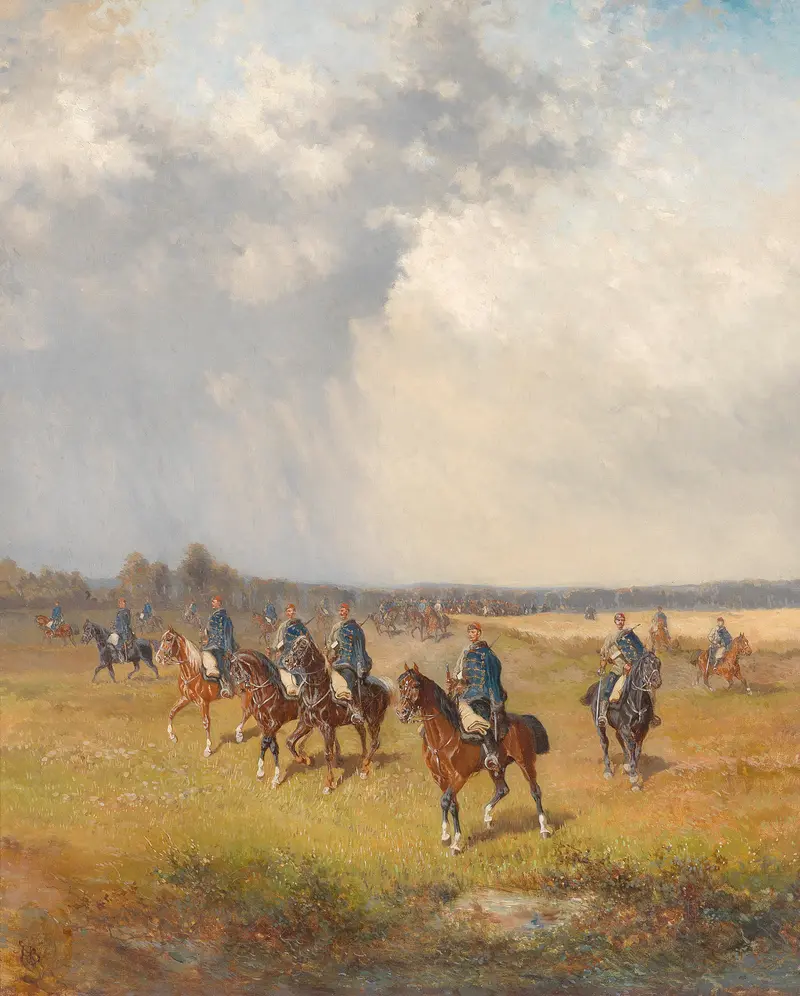
Ungarische Husaren
Alexander Von Bensa
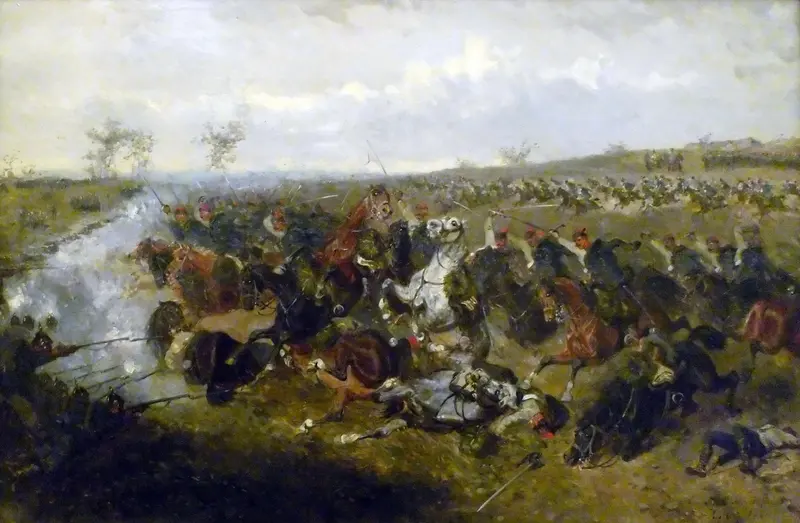
Battle of Schweinschädel.
Alexander Von Bensa
More Genre Scene Art

Banquet of the Officers of the St George Civic Guard
Frans Hals

Rembrandt and Saskia in the Scene of the Prodigal Son
Rembrandt van Rijn

Bal du moulin de la Galette
Pierre-Auguste Renoir

Quadrille at the Moulin Rouge
Henri de Toulouse-Lautrec

A Burial at Ornans
Gustave Courbet

When Will You Marry?
Paul Gauguin