
Napoléon donnant un ordre à un officier supérieur des Guides — History & Facts
In the turbulent spring of 1814, as the First French Empire teetered on the brink of collapse, Théodore Géricault—then just 23 years old—produced Napoléon donnant un ordre à un officier supérieur des Guides. What makes this work remarkable is its timing: painted in the very months when Paris fell to the Allies and Napoleon abdicated, it captures the emperor’s authority at the very moment it was slipping away. Unlike the grand state portraits of Napoleon by Jacques-Louis David, Géricault’s painting was not a government commission, but a young artist’s urgent response to history unfolding before his eyes. The scene is charged with immediacy: Napoleon, astride a rearing horse, leans forward to issue a command to a senior officer of his elite Guides regiment.
Géricault chooses the instant of action—Napoleon’s gloved hand extended, the officer attentive, the horses tense with energy. The emperor’s uniform is rendered with crisp detail, while the officer’s face is caught in a moment of concentration, emphasizing the chain of command that held the army together. The sky is heavy with clouds, perhaps a nod to the uncertainty of the campaign’s outcome.
Unlike David’s idealized Napoleon Crossing the Alps, Géricault’s approach is more dynamic and psychological, focusing on the drama of leadership under pressure rather than heroic myth. The precise early history of this painting is unclear; it is not known to have been exhibited in Géricault’s lifetime, nor does it appear in the records of imperial commissions. It stands as an early example of Géricault’s fascination with military themes, preceding his later, more famous works such as The Raft of the Medusa. Over the years, the painting has been attributed to different periods of the artist’s career, but stylistic analysis and contemporary accounts support the 1814 date.
Today, Napoléon donnant un ordre à un officier supérieur des Guides is recognized as a vivid document of a young artist’s response to the fall of an empire, and a testament to Géricault’s emerging voice in the last days of Napoleonic France.
More Artworks by Théodore Géricault
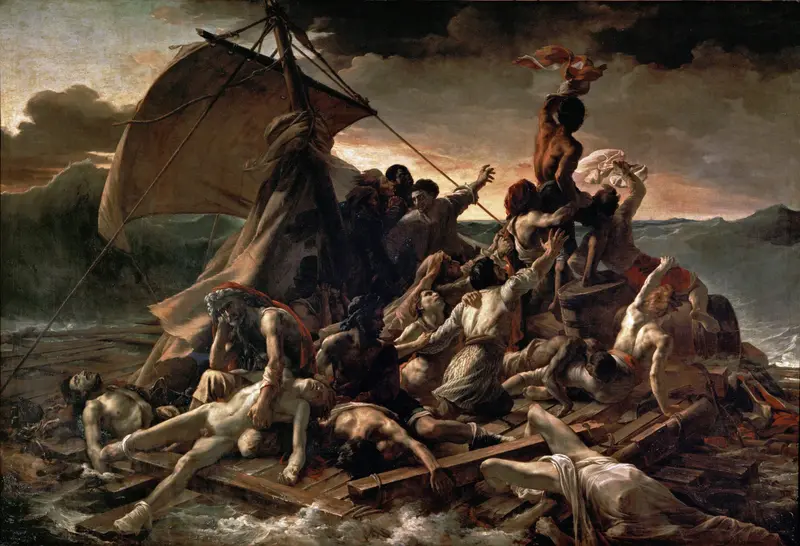
The Raft of the Medusa
Théodore Géricault

Géricault - Le naufrage du radeau de la Méduse, MBA 790
Théodore Géricault
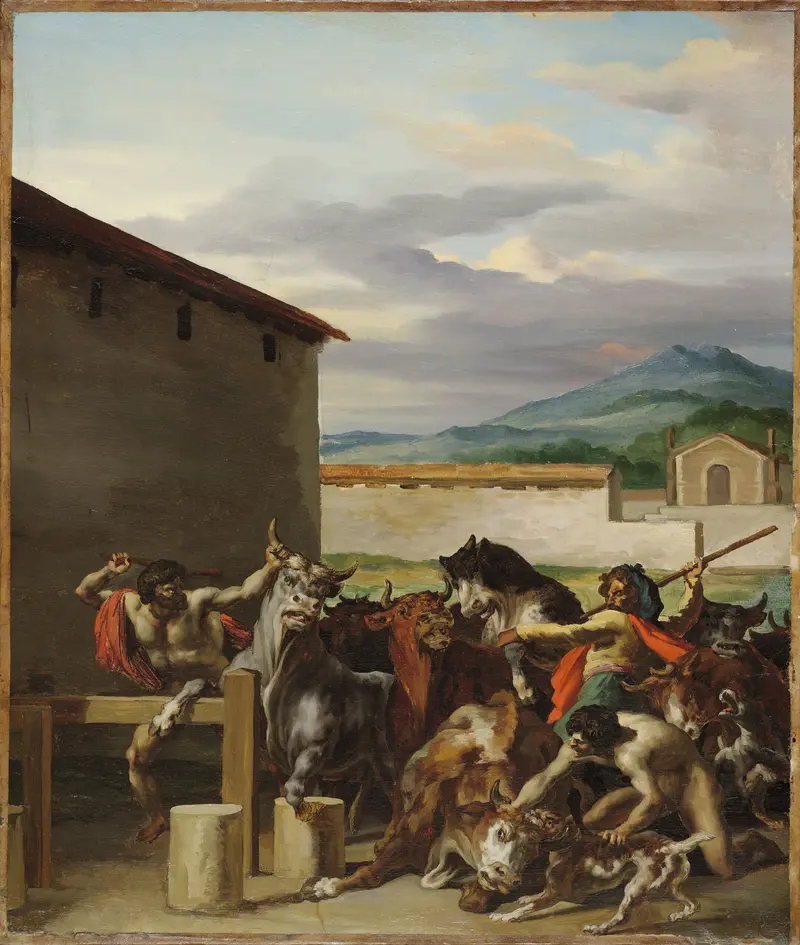
Cattle Market
Théodore Géricault
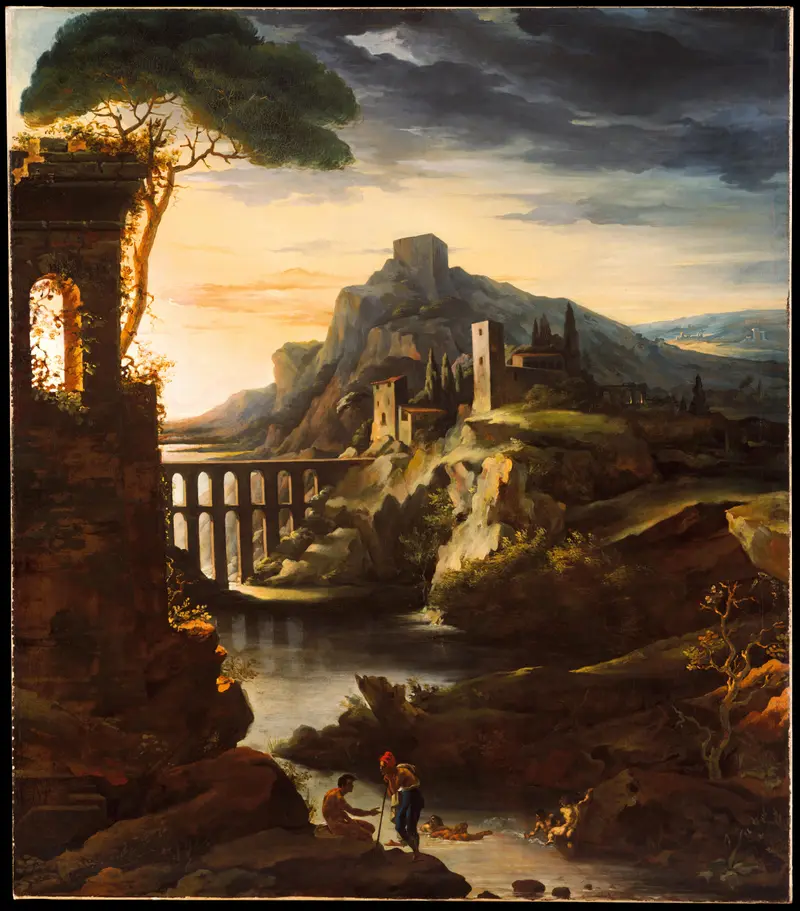
Evening; Landscape with an Aqueduct
Théodore Géricault
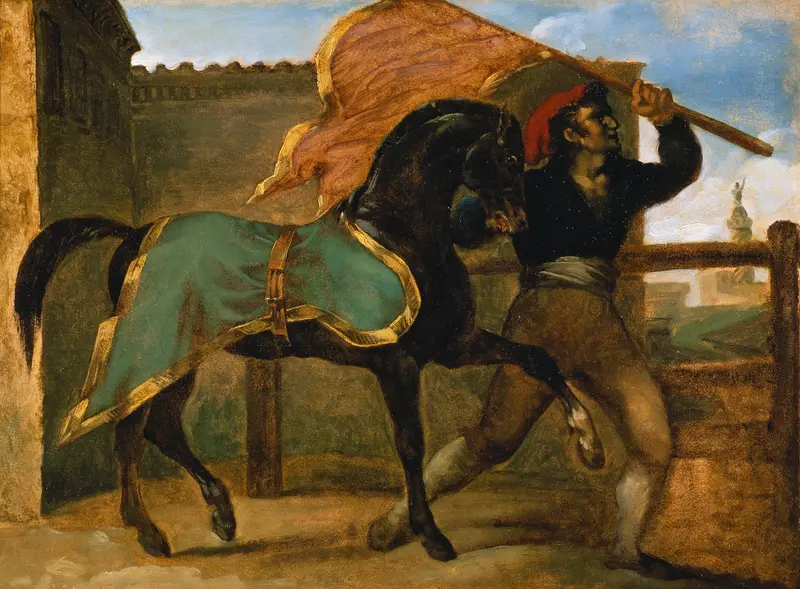
Horse Race
Théodore Géricault

Horses Standing in a Mews
Théodore Géricault
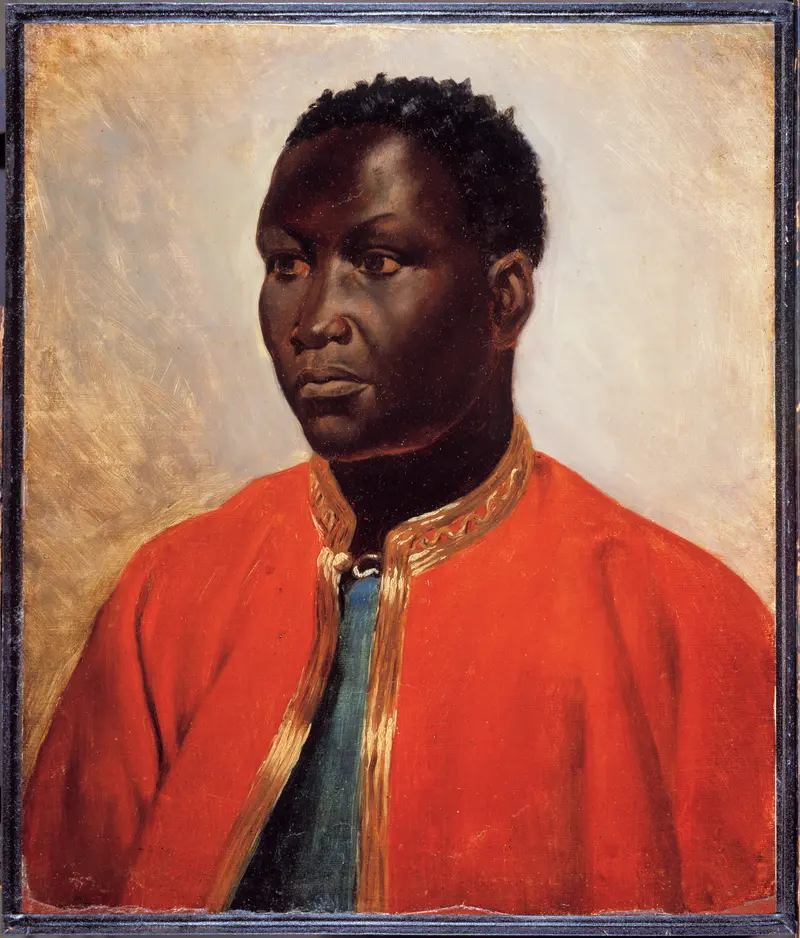
Portrait of a Negro
Théodore Géricault
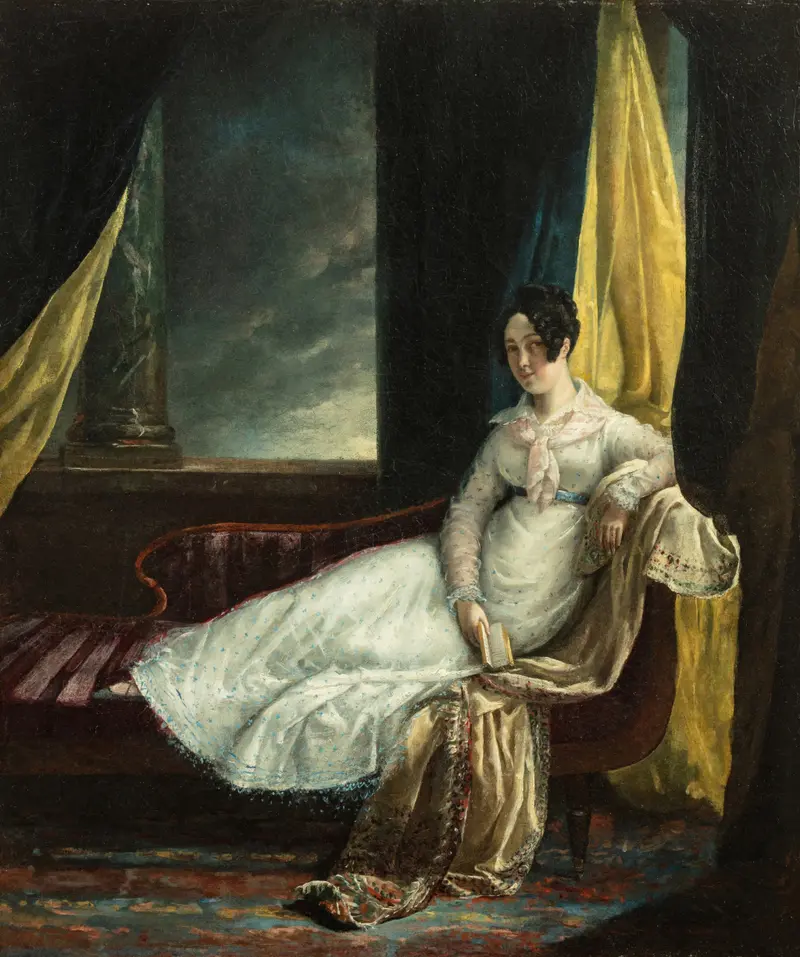
Portrait of Zoë Elmore
Théodore Géricault
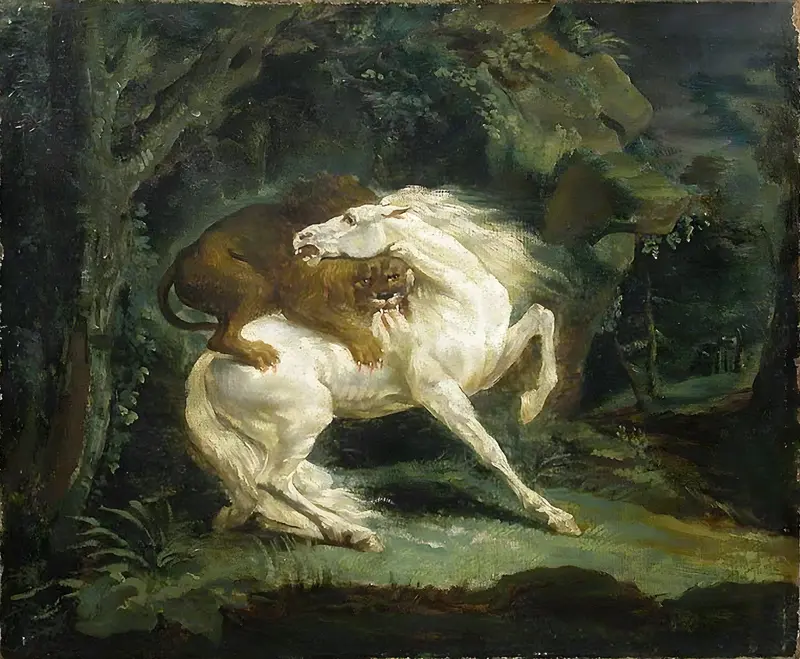
Cheval attaqué par un lion
Théodore Géricault
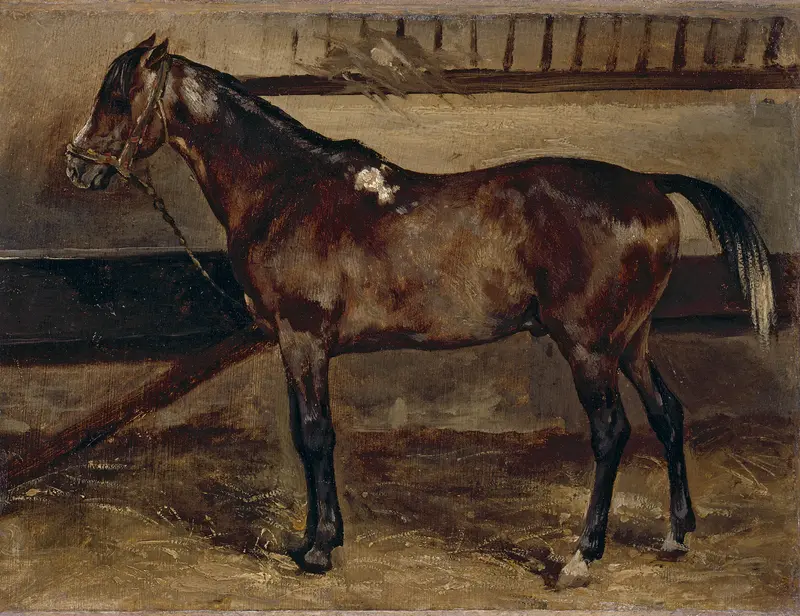
Cheval brun à l'écurie
Théodore Géricault





