
Narcissus with Two Nymphs and Echo — History & Facts
In the mid-seventeenth century, Nicolas Poussin returned to the myth of Narcissus, a subject that had fascinated artists for centuries, but here he did something unusual: he included not just Narcissus and Echo, but two additional nymphs, expanding the cast and deepening the psychological drama. This compositional choice has led to debate among scholars, as the canonical Ovidian version of the myth typically centers on just the ill-fated youth and the sorrowful Echo. By multiplying the witnesses to Narcissus’s fate, Poussin invites viewers to consider the tragedy not as an isolated event, but as a spectacle observed and mourned by others—a subtle commentary on the nature of desire and loss. At the moment Poussin captures, Narcissus gazes rapturously at his own reflection, entirely absorbed and oblivious to the figures around him.
Echo, pale and withdrawn, lingers at the edge, her longing evident in her posture, while the two nymphs—one gesturing toward Narcissus, the other turning away—frame the scene with contrasting reactions: fascination and sorrow. The lush landscape, rendered with Poussin’s characteristic clarity, is not mere backdrop but a silent participant, its stillness mirroring Narcissus’s fatal self-absorption. The painter’s careful arrangement of limbs and glances draws the eye in a circle, echoing the myth’s theme of endless repetition.
Compared to Caravaggio’s earlier Narcissus, with its stark isolation, Poussin’s version is a tableau of emotional interplay, layered and complex. The precise origins of Narcissus with Two Nymphs and Echo remain somewhat obscure, as the patron and early history are not firmly documented, but the work is generally dated to Poussin’s mature Roman period, around 1647, when he was at the height of his powers. Like many of his mythological paintings, it reflects his deep engagement with classical literature and his drive to synthesize narrative, emotion, and order. Over the centuries, the painting has passed through several private collections, occasionally misattributed due to its unusual subject grouping, before being recognized as a significant example of Poussin’s late mythological style.
Today, it stands as a testament to the artist’s intellectual rigor and his ability to breathe new life into ancient tales.
More Artworks by Nicolas Poussin

Spring
Nicolas Poussin
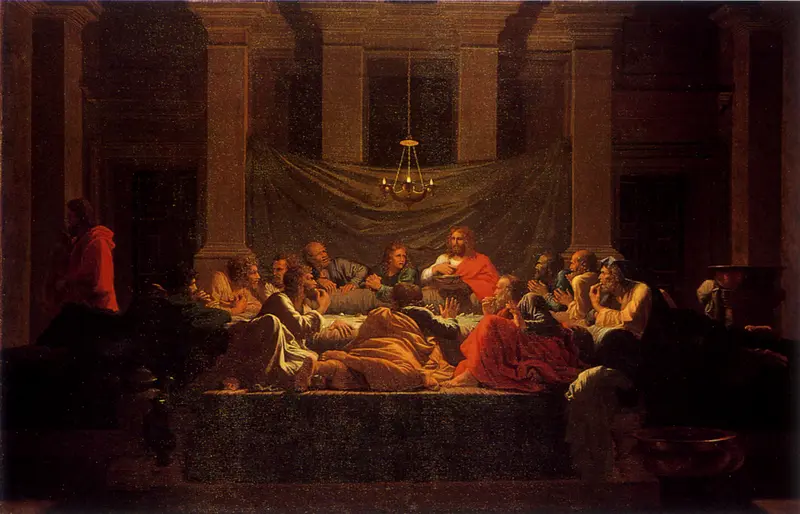
The Sacrament of the Holy Eucharist
Nicolas Poussin
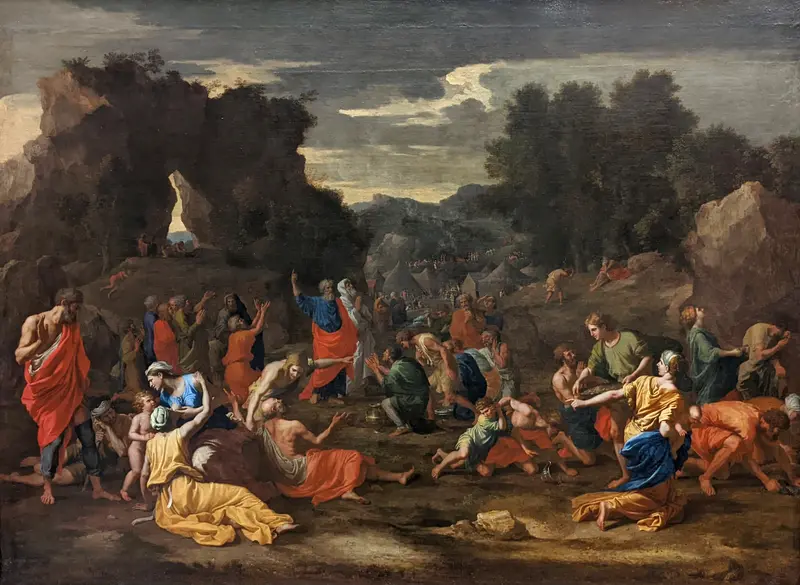
The Israelites gathering Manna in the Desert
Nicolas Poussin
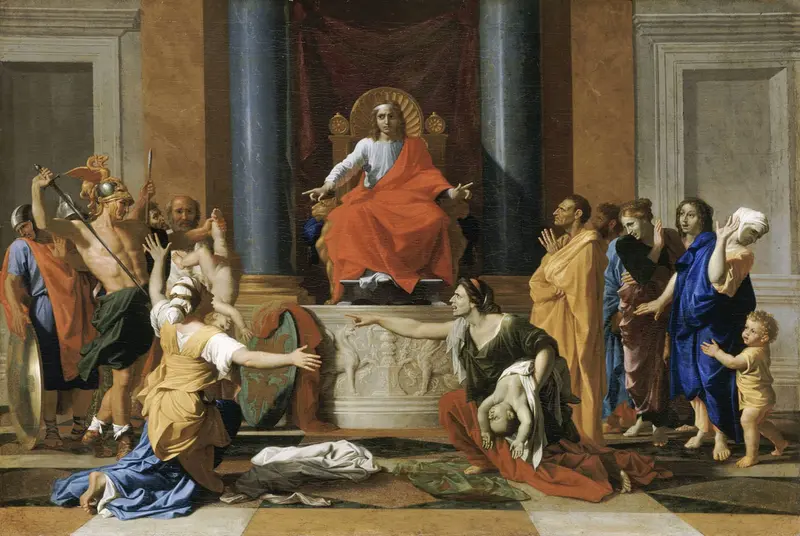
The Judgment of Solomon
Nicolas Poussin
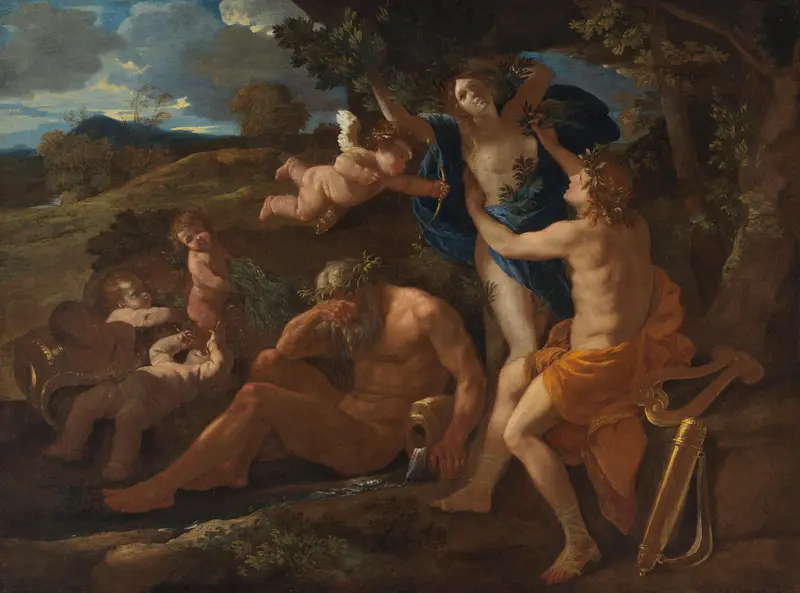
Apollo and Daphne
Nicolas Poussin

The Nurture of Jupiter
Nicolas Poussin

Ordination
Nicolas Poussin
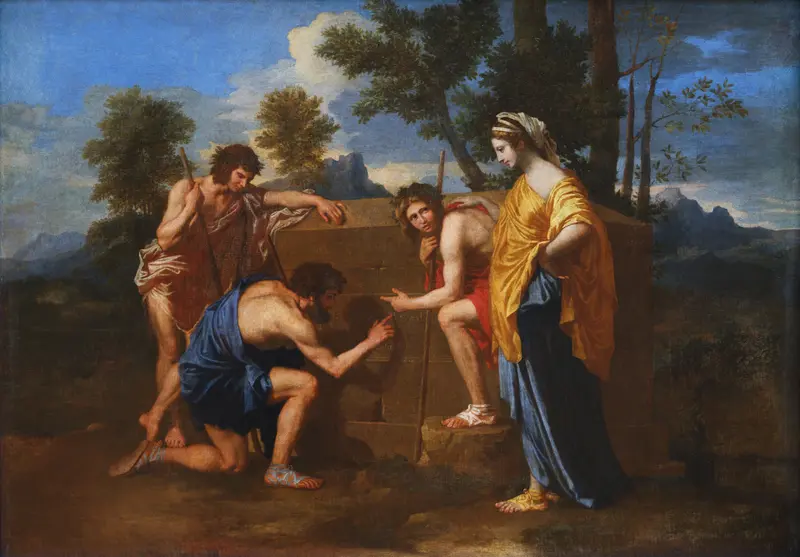
Et in Arcadia ego
Nicolas Poussin
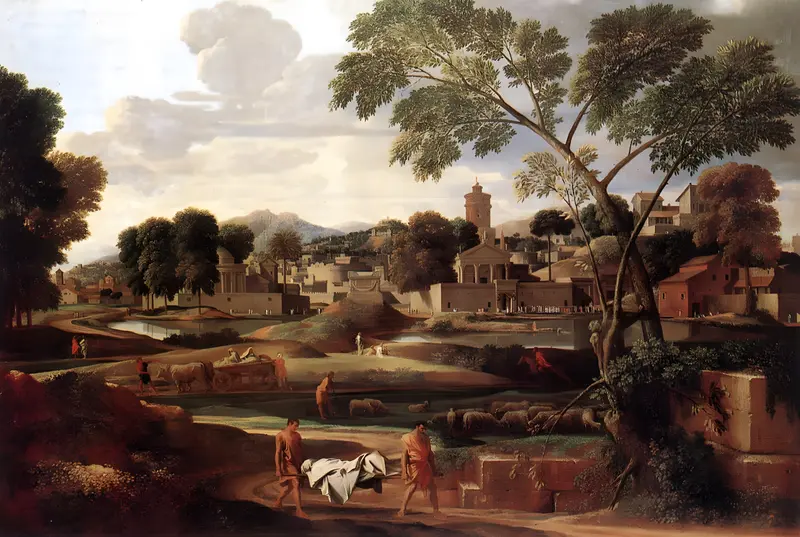
The Funeral of Phocion
Nicolas Poussin
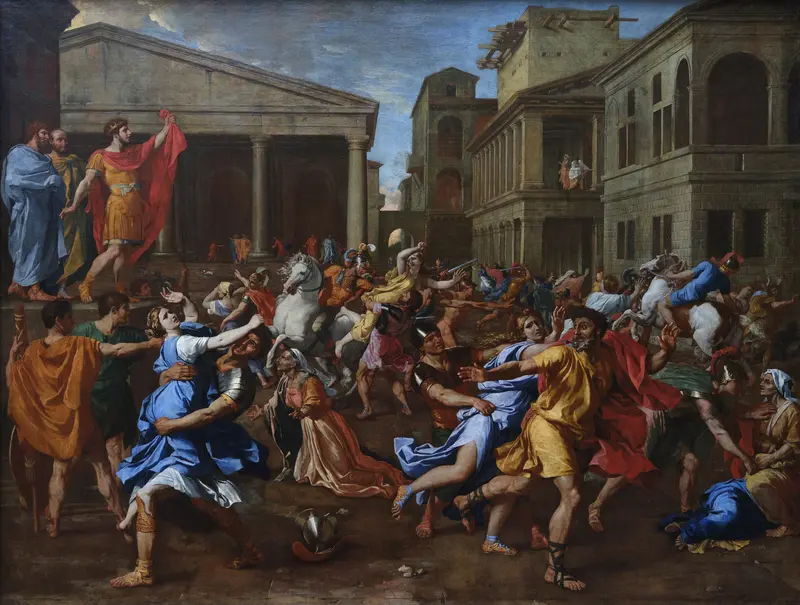
The Rape of the Sabine Women
Nicolas Poussin





