
Our Lady with the Infant Jesus riding on a Lamb — History & Facts
When William Blake painted Our Lady with the Infant Jesus riding on a Lamb in 1800, he was living in Felpham, Sussex, at the invitation of the poet William Hayley. This period marked a rare moment when Blake, better known for his visionary poetry and engravings, was commissioned to create religious images for private devotion. The painting’s subject—a Madonna with the Christ Child astride a lamb—is not found in the canonical Gospels, but rather springs from Blake’s own imaginative reading, blending biblical symbolism with his radical spiritual vision. In this scene, the Virgin Mary, serene and youthful, guides the Christ Child who sits astride a gentle lamb.
The lamb, a traditional symbol of innocence and sacrifice, prefigures Jesus's fate, while the Child’s outstretched hand suggests both blessing and acceptance. Mary’s gaze is tender yet distant, as if she senses the future sorrow entwined with her son’s destiny. The composition’s soft, glowing light seems to emanate from within the figures, a technique reminiscent of Raphael’s Madonnas but rendered in Blake’s distinctive, almost dreamlike palette.
Unlike more formal treatments of the Madonna and Child, Blake’s version is intimate and visionary, inviting the viewer into a private moment charged with spiritual meaning. The medium of Our Lady with the Infant Jesus riding on a Lamb remains uncertain, as the original work is known today only through descriptions and a surviving monochrome reproduction. Scholars believe it was created for one of Hayley’s friends or patrons, reflecting the small, devotional scale of much of Blake’s work from this period. The painting’s current whereabouts are unknown, and its physical fate is as mysterious as its subject.
Nevertheless, the image has entered the lore of Blake’s career as an example of his unique fusion of Christian iconography and personal mythology, standing apart from both his commercial engravings and his more famous illuminated books.
More Artworks by William Blake
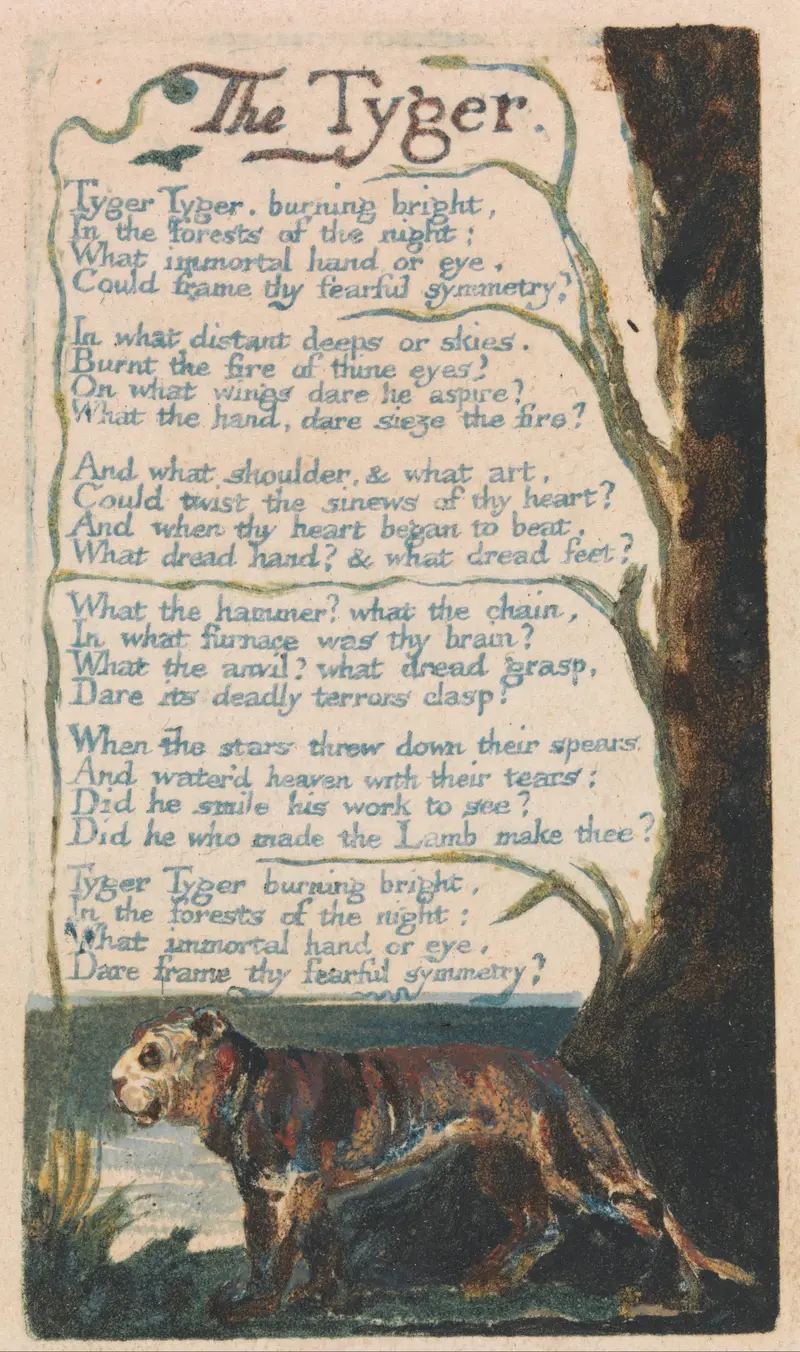
The Tyger
William Blake

Christ Blessing
William Blake
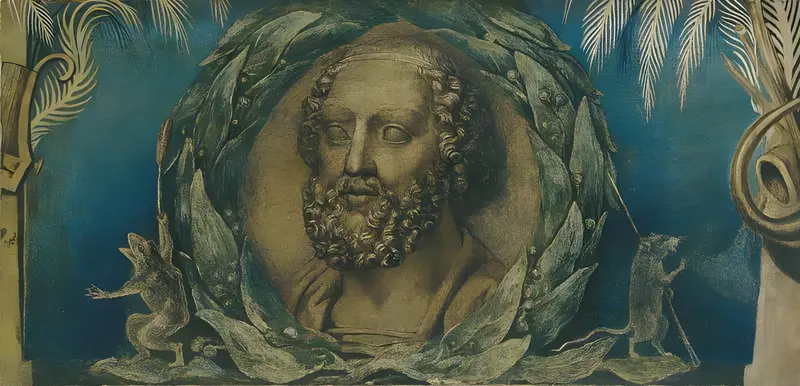
Homer
William Blake
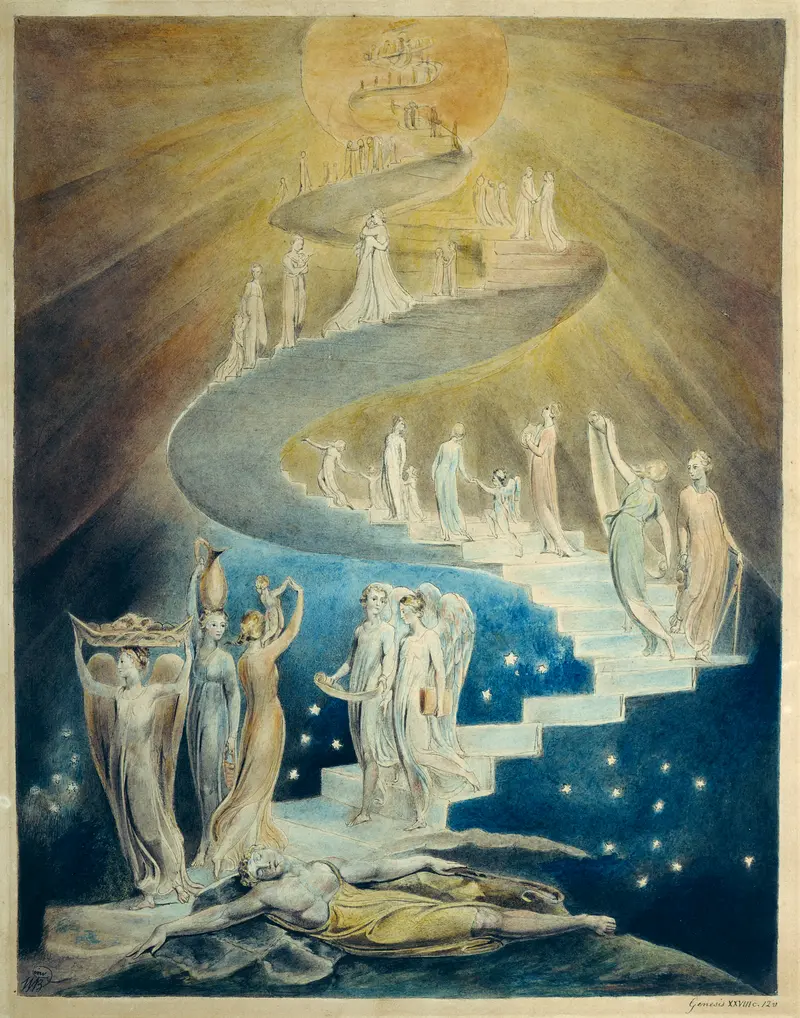
Jacob's Ladder
William Blake
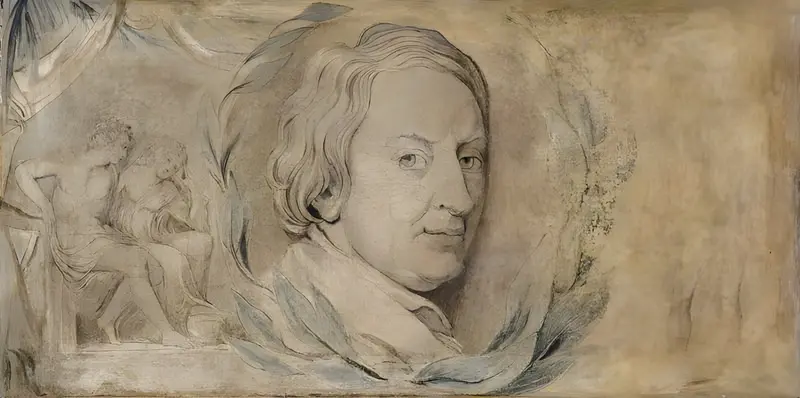
John Dryden (1631–1700)
William Blake
Landscape near Felpham
William Blake
Sacrifice of Job
William Blake
Christ's Entry into Jerusalem
William Blake
The Ancient of Days
William Blake
Adam Naming the Beasts
William Blake





