
Panel for a Screen: Children Playing with a Rabbit — History & Facts
When Albert Pinkham Ryder painted Panel for a Screen: Children Playing with a Rabbit in 1876, he was just beginning to chart his own course apart from the conventions of his time. Unlike the moody, allegorical seascapes for which he would later become known, this work stands as a rare, early example of Ryder’s engagement with domestic subject matter. The painting’s original purpose as a decorative screen panel also sets it apart: functional art was a fashionable pursuit among American artists in the 1870s, but few such panels survive, and even fewer by Ryder.
Its survival offers a glimpse into a lesser-known aspect of his oeuvre. At the heart of the composition, a small group of children gathers around a white rabbit, their faces animated by curiosity and gentle delight. The moment Ryder selects is one of innocent discovery—tiny hands reaching out, tentative and careful, as the rabbit sits still in their midst. The children’s clothing, rendered in soft, muted tones, and the delicate handling of their gestures, speak to a nostalgia for rural childhood and a world apart from the city’s bustle.
The rabbit itself, a symbol of gentleness and vulnerability, becomes the focal point of their attention. Unlike the more theatrical scenes of children by Winslow Homer, Ryder’s approach is quieter, favoring intimacy over drama. The panel’s journey through history is not well documented, a common fate for functional art of its era. It is believed to have been created during Ryder’s early years in New York, before he found his distinctive voice in Symbolist landscapes.
The medium remains uncertain, though it likely involved oil on canvas or board, typical for decorative panels of the period. Today, Panel for a Screen: Children Playing with a Rabbit is valued as a rare window into Ryder’s formative period, showing a side of the artist that is gentle and observant, before the stormier visions that would define his later work. Its presence in museum collections today ensures that this quieter aspect of his artistic journey is not forgotten.
More Artworks by Albert Pinkham Ryder

The Toilers of the Sea
Albert Pinkham Ryder
Moonlight
Albert Pinkham Ryder
The Lorelei
Albert Pinkham Ryder
With Sloping Mast And Dipping Prow
Albert Pinkham Ryder
Homeward Bound
Albert Pinkham Ryder
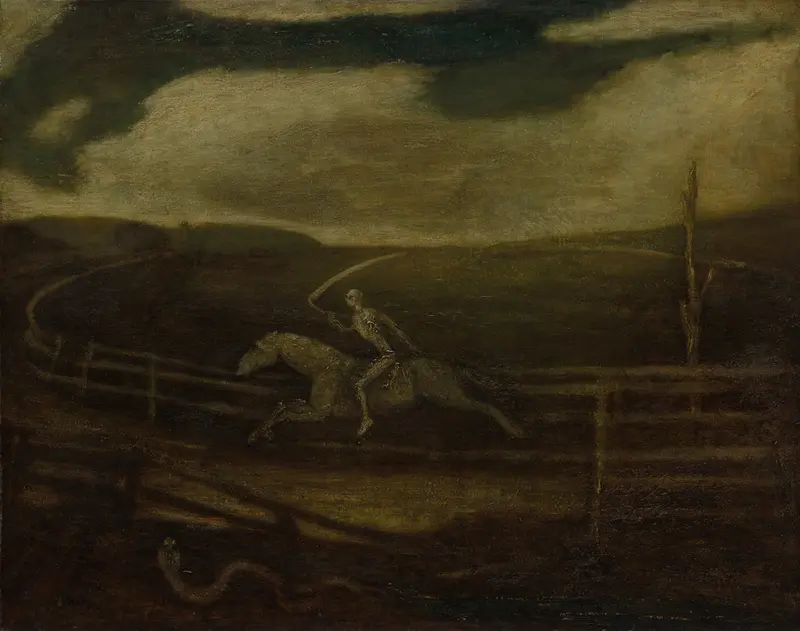
The Race Track (Death on a Pale Horse)
Albert Pinkham Ryder
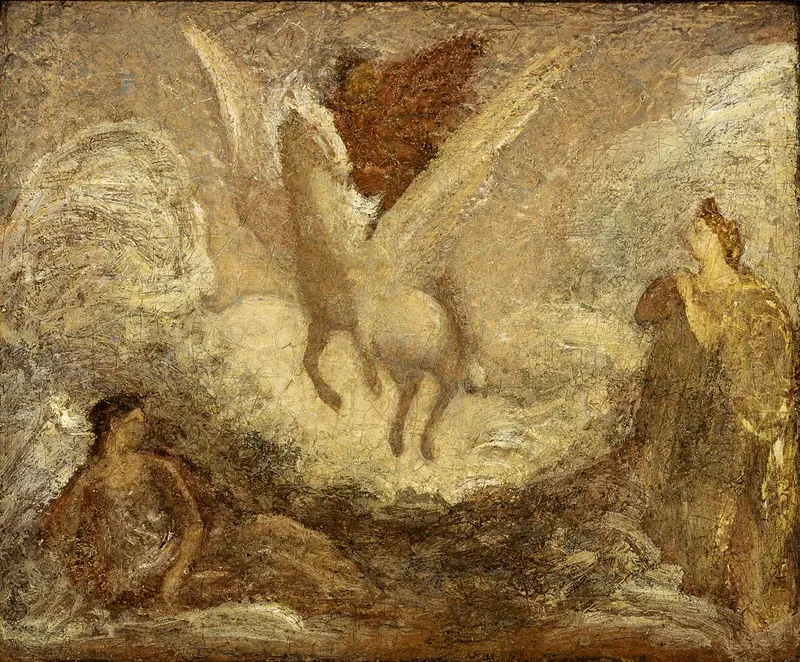
Pegasus Departing
Albert Pinkham Ryder
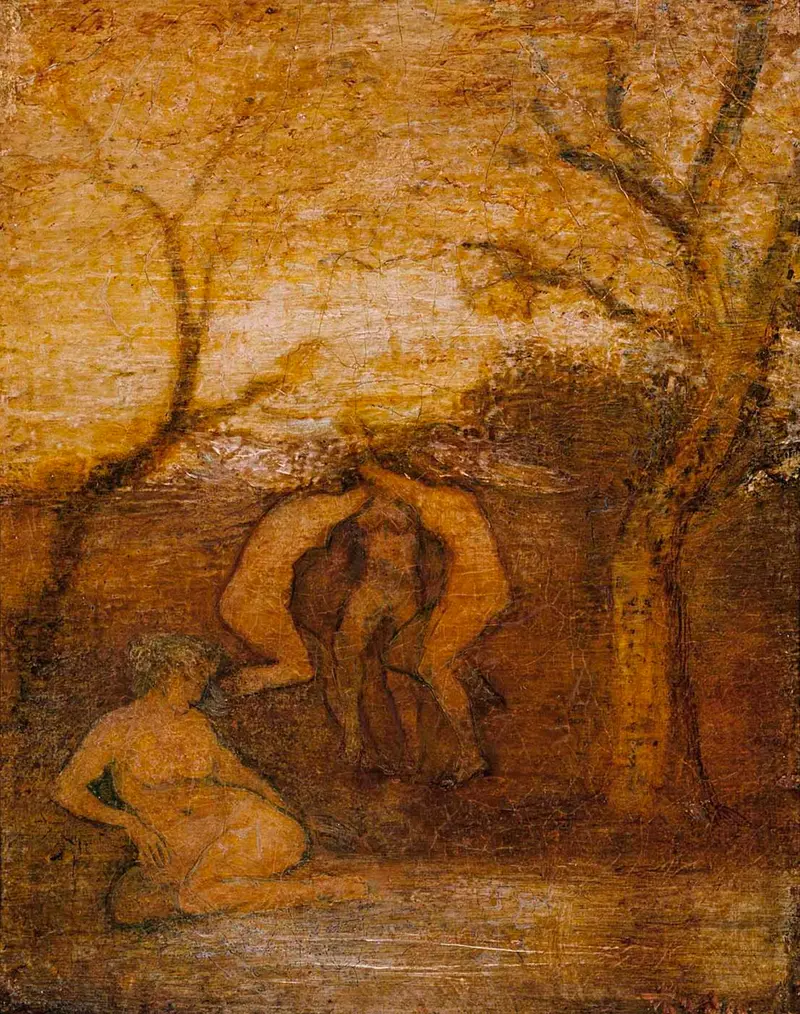
Dancing Dryads
Albert Pinkham Ryder
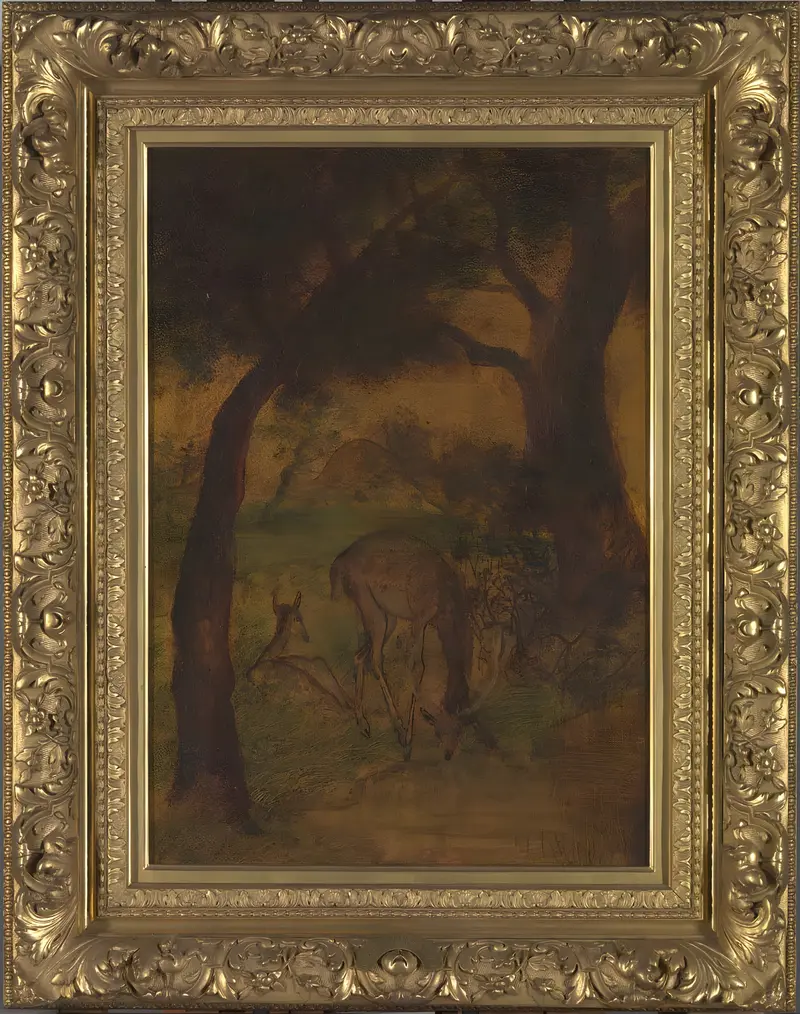
A Stag Drinking
Albert Pinkham Ryder
Christ Appearing to Mary
Albert Pinkham Ryder
More Genre Scene Art

Banquet of the Officers of the St George Civic Guard
Frans Hals

Rembrandt and Saskia in the Scene of the Prodigal Son
Rembrandt van Rijn

Bal du moulin de la Galette
Pierre-Auguste Renoir

Quadrille at the Moulin Rouge
Henri de Toulouse-Lautrec

A Burial at Ornans
Gustave Courbet

When Will You Marry?
Paul Gauguin