
Portrait of Reine LeFebvre Holding a Nude Baby — History & Facts
When Mary Cassatt exhibited Portrait of Reine LeFebvre Holding a Nude Baby in 1902, she was already celebrated as the only American regularly showing with the Impressionists in Paris. Yet this work stands out for its intimate focus: Reine LeFebvre was not a professional model, but a friend and neighbor of Cassatt’s in Mesnil-Théribus, and the baby is her own child. The painting belongs to a series Cassatt produced around this time, exploring the theme of modern motherhood—a subject she returned to repeatedly, but never with quite the same directness as here.
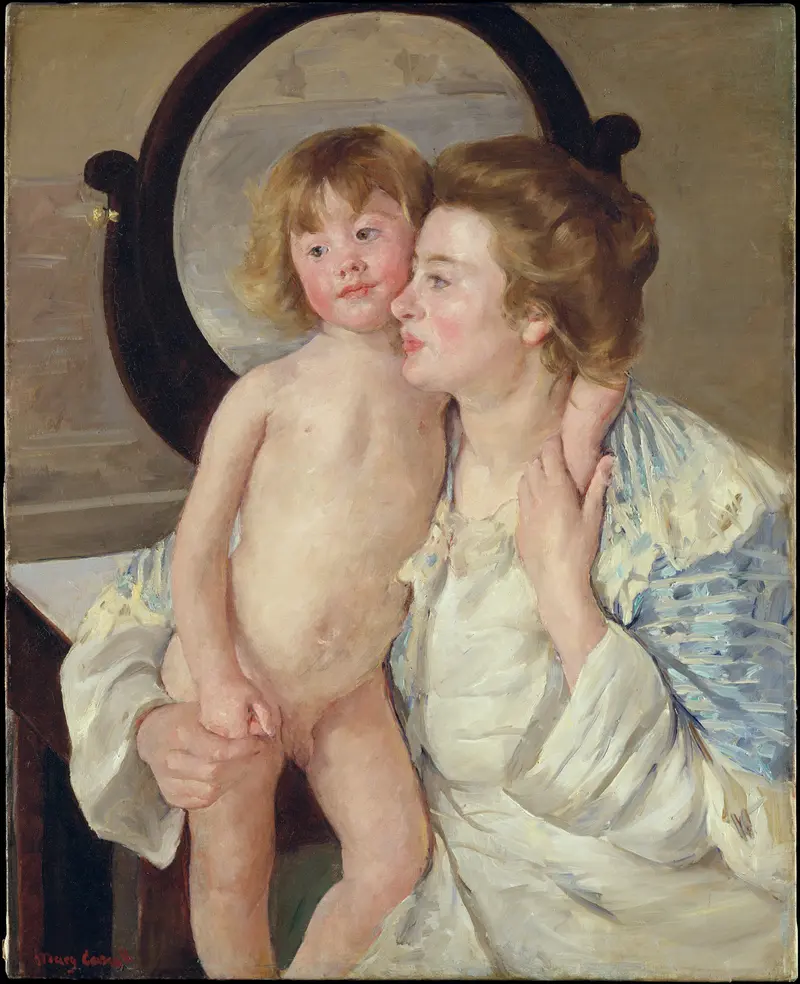
Critics of the day noted the frankness of the pose, unusual for a society still shy about the realities of infancy. At the center of the canvas, Reine sits upright in a wooden chair, cradling her unclothed infant against her chest. The baby’s limbs sprawl in the unselfconscious abandon of early childhood, while Reine’s gaze is directed downward, a private moment caught in the midst of daily life. The soft, natural light falls across their skin, highlighting the contrast between the mother’s composed stillness and the child’s restless energy.
Unlike Renoir’s sentimental mothers, Cassatt’s approach is unsparing and unsentimental: the mother’s face is thoughtful, even tired, and the child’s flesh is rendered with a frankness that recalls Old Master studies of the nude. The blue and white of Reine’s dress, and the plainness of the background, keep the focus on the physical and emotional bond between the two. The precise provenance of Portrait of Reine LeFebvre Holding a Nude Baby is not fully documented, but it is typical of Cassatt’s mature period, when she was working independently and often gave paintings as gifts or sold them through private channels. Many works from this series entered American collections in the early twentieth century, as Cassatt herself encouraged collectors like the Havemeyers to acquire Impressionist art.
Today, the painting is held in a private collection and rarely seen in public, making it a sought-after highlight whenever it is loaned for exhibitions. Within Cassatt’s career, it marks a high point in her exploration of the mother-and-child theme—an honest, modern vision that would influence generations of artists to come.
More Artworks by Mary Cassatt

The Child's Bath
Mary Cassatt
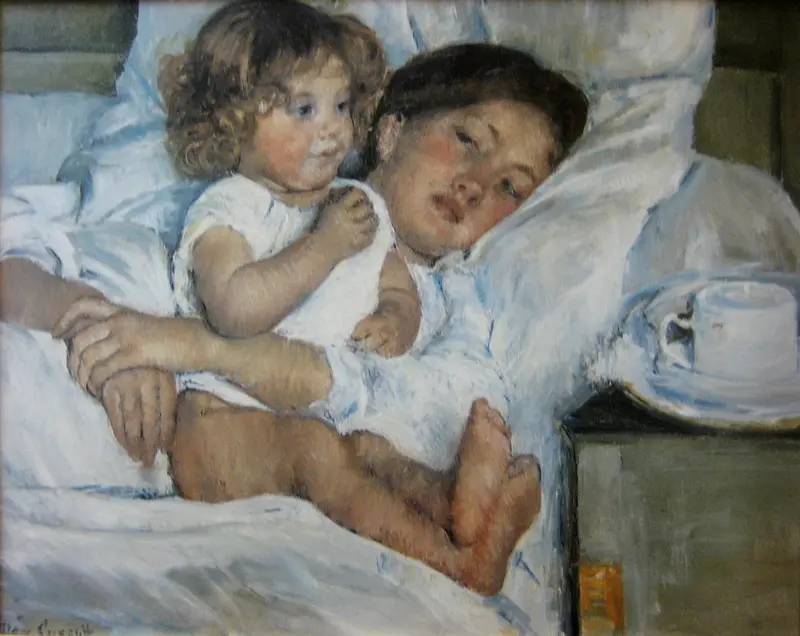
Breakfast in Bed
Mary Cassatt

Mother and Child (Baby Getting Up from His Nap)
Mary Cassatt
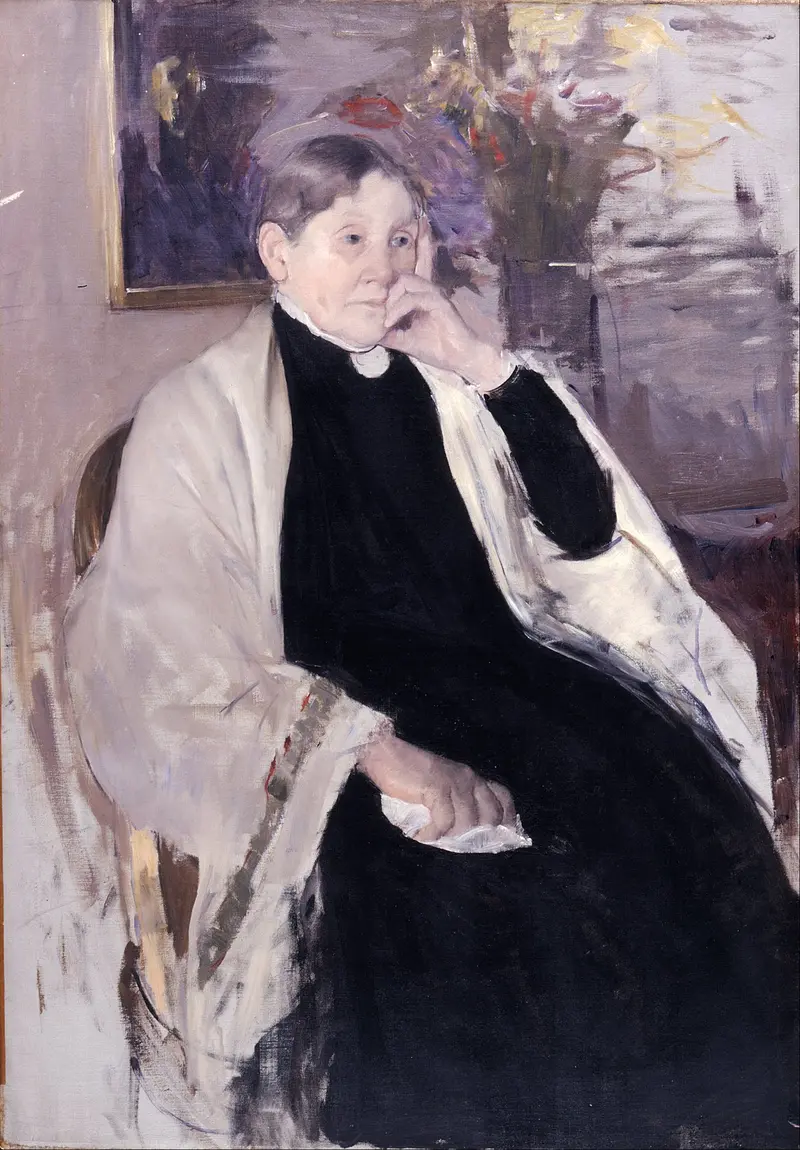
Mrs. Robert S. Cassatt, the Artist's Mother
Mary Cassatt
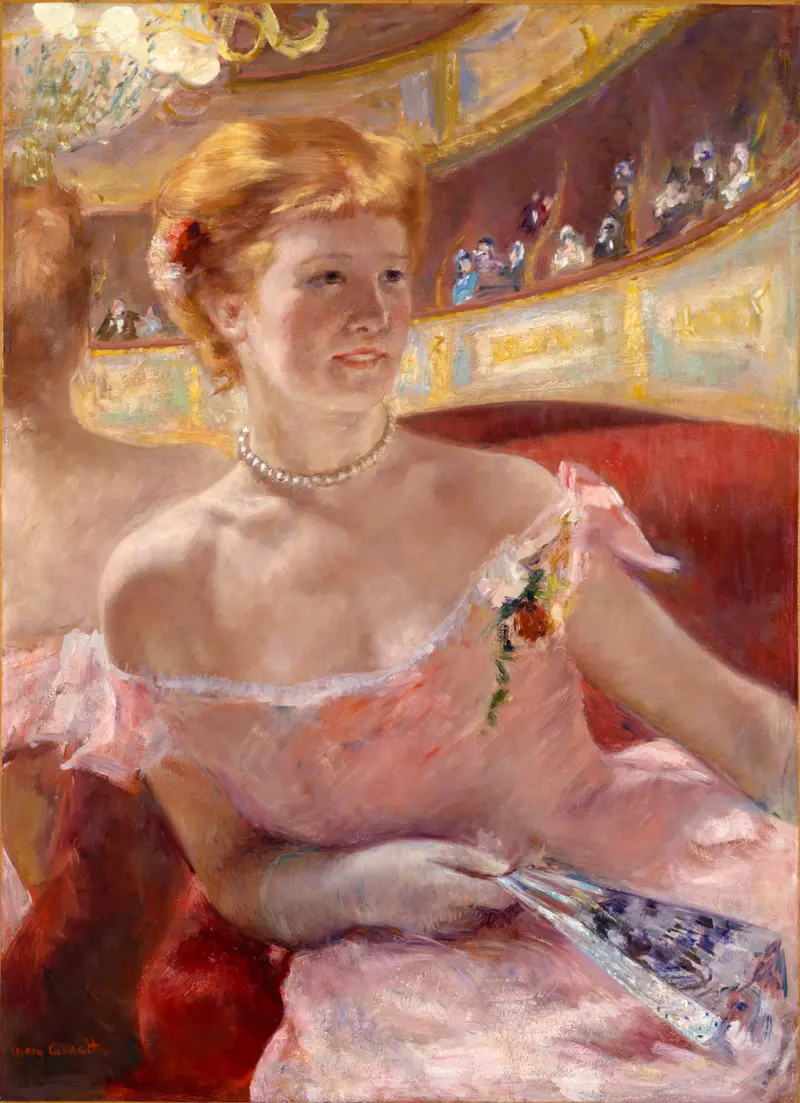
Woman with a Pearl Necklace in a Loge
Mary Cassatt
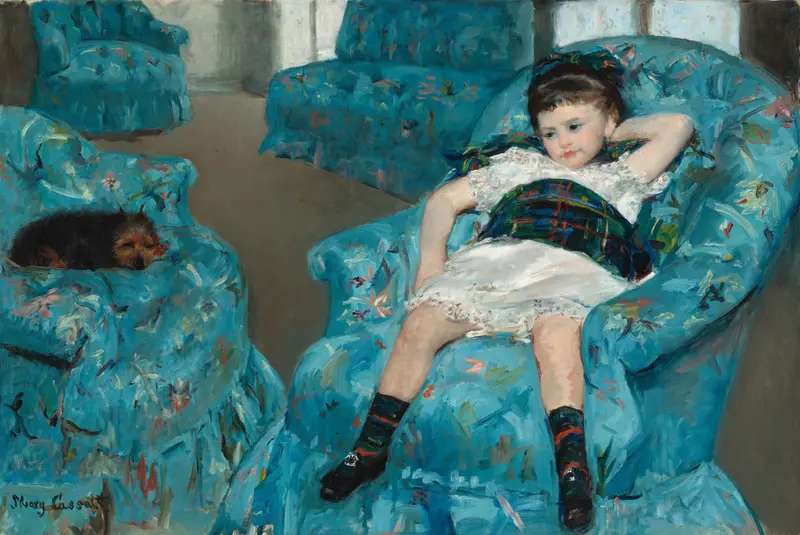
Little Girl in a Blue Armchair
Mary Cassatt
Mother and Child (The Oval Mirror)
Mary Cassatt
Mother and Child
Mary Cassatt
In The Loge
Mary Cassatt
On a Balcony
Mary Cassatt





