Roman Ornament No. 2 — History & Facts
What first seizes the eye in Roman Ornament No. 2 by Owen Jones is the hypnotic rhythm of foliage and fruit, unfurling with a precision that feels both ancient and freshly observed. The chromolithograph draws you in with its golden backdrop, setting off the intricate reliefs as if they were precious fragments unearthed from a Roman villa.
Each panel is a study in movement and balance: acanthus leaves spiral and interlock, their veins rendered with a sculptor’s care, while clusters of fruit anchor the swirling lines with quiet abundance. The repetition of these motifs across the six sections creates a visual tempo, inviting the viewer to trace the lineage of classical ornament from fragment to frieze. Works like this emerged from a nineteenth-century hunger to codify and revive the decorative arts of past civilizations. Owen Jones’s plates, published in London and here preserved in the Polona Digital Library, were not just illustrations but tools for architects and designers seeking to restore a sense of order and beauty to modern interiors.
The year 1856 places this print in the heart of the Victorian era, when archaeological discoveries and the rise of chromolithography made the patterns of antiquity newly accessible. History has kept few personal traces of the artisans who first carved these motifs, but Jones’s careful study ensures their forms live on—inviting us, even now, to look closer and imagine the hands that shaped them.
More Artworks by Owen Jones

Greek Ornament No. 1
Owen Jones
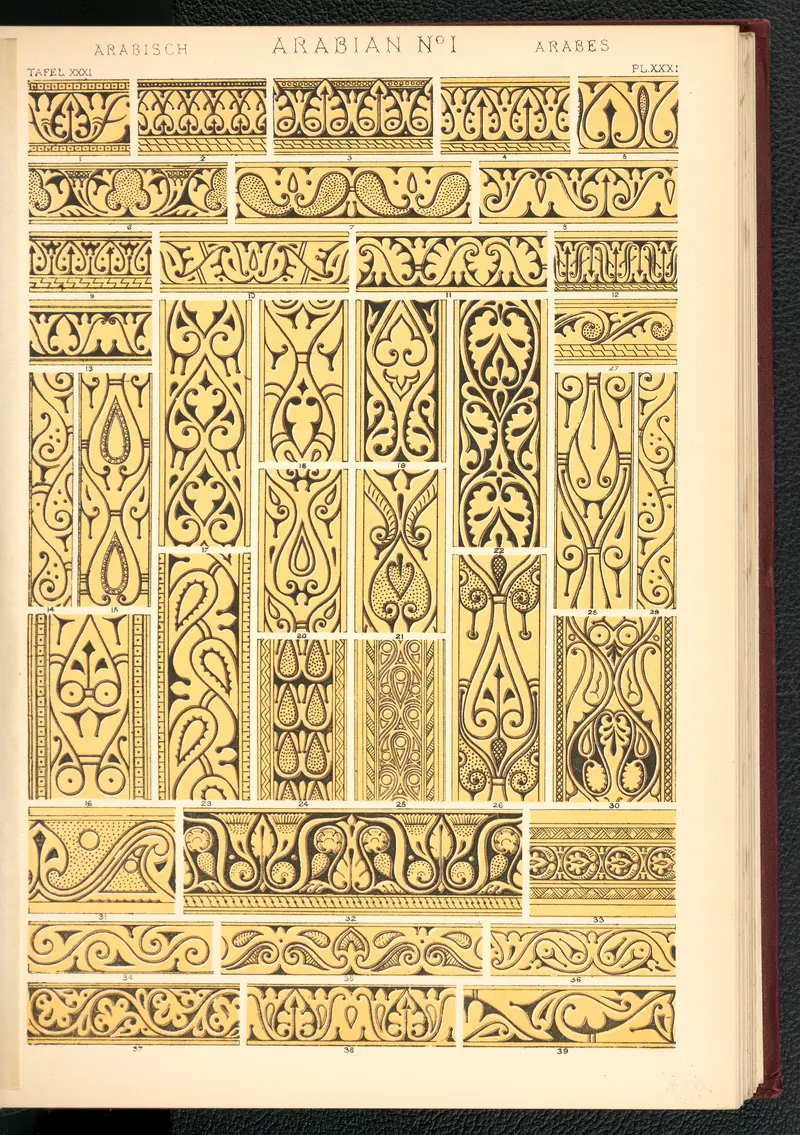
Arabian Ornament No. 1
Owen Jones
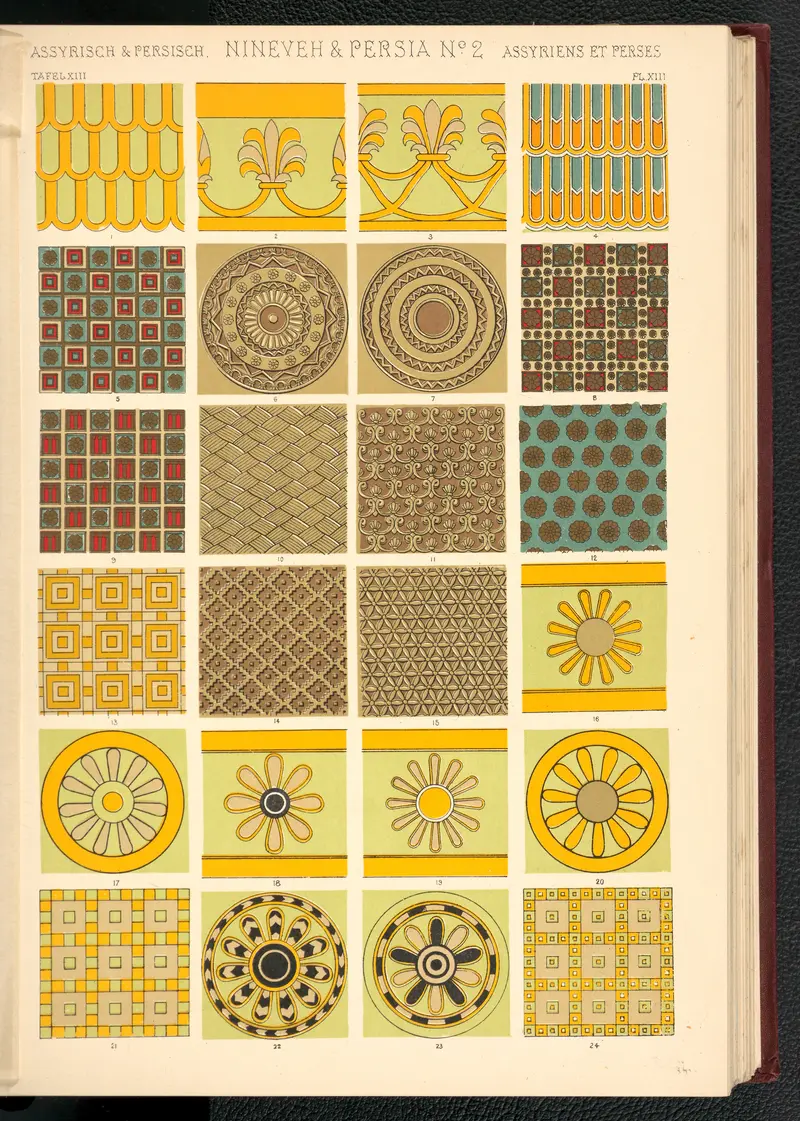
Assyrian Ornament No. 2
Owen Jones

Egyptian Ornament No. 3
Owen Jones
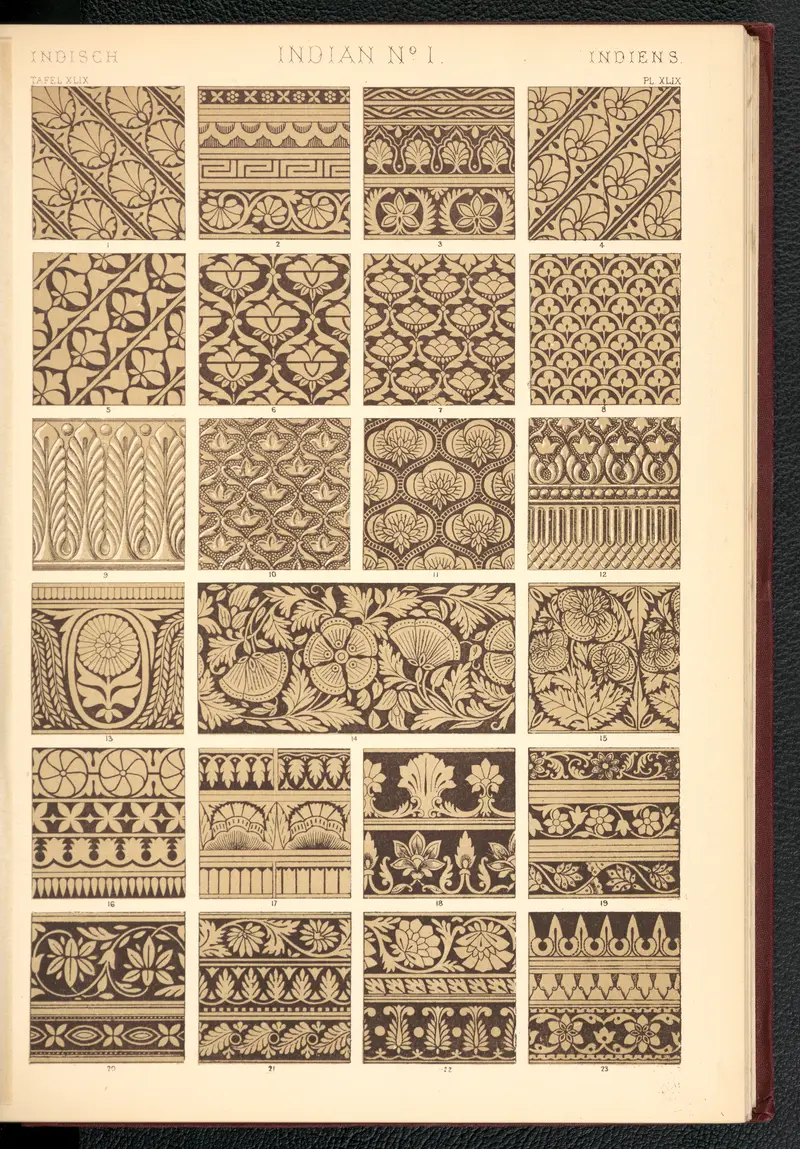
Indian Ornament No. 1
Owen Jones
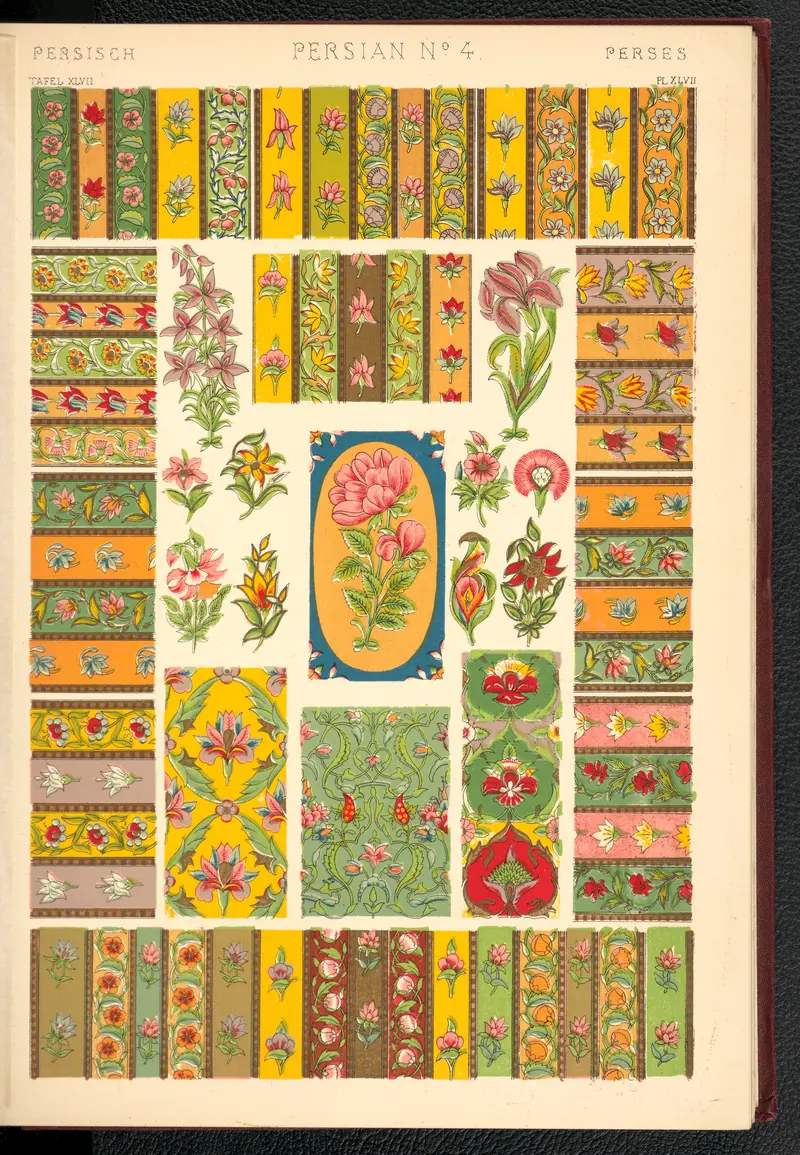
Persian Ornament No. 4
Owen Jones
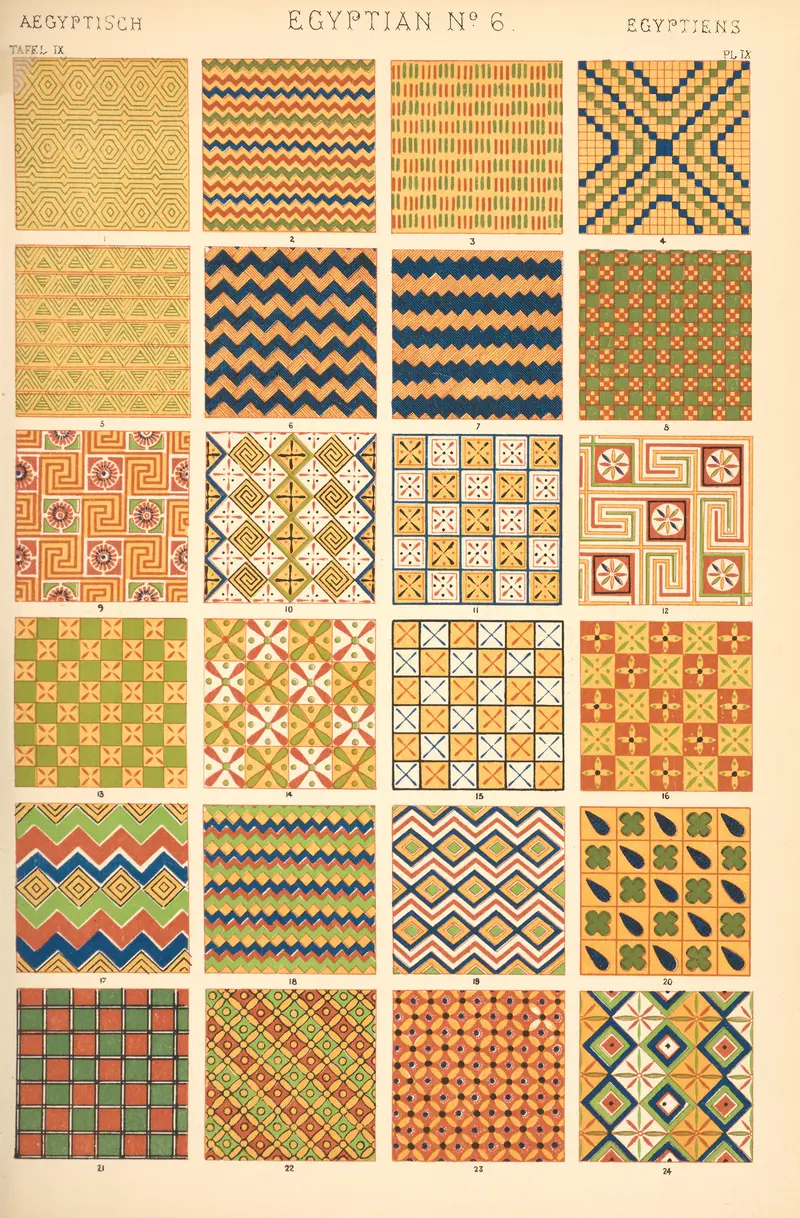
Egyptian Ornament No. 6
Owen Jones
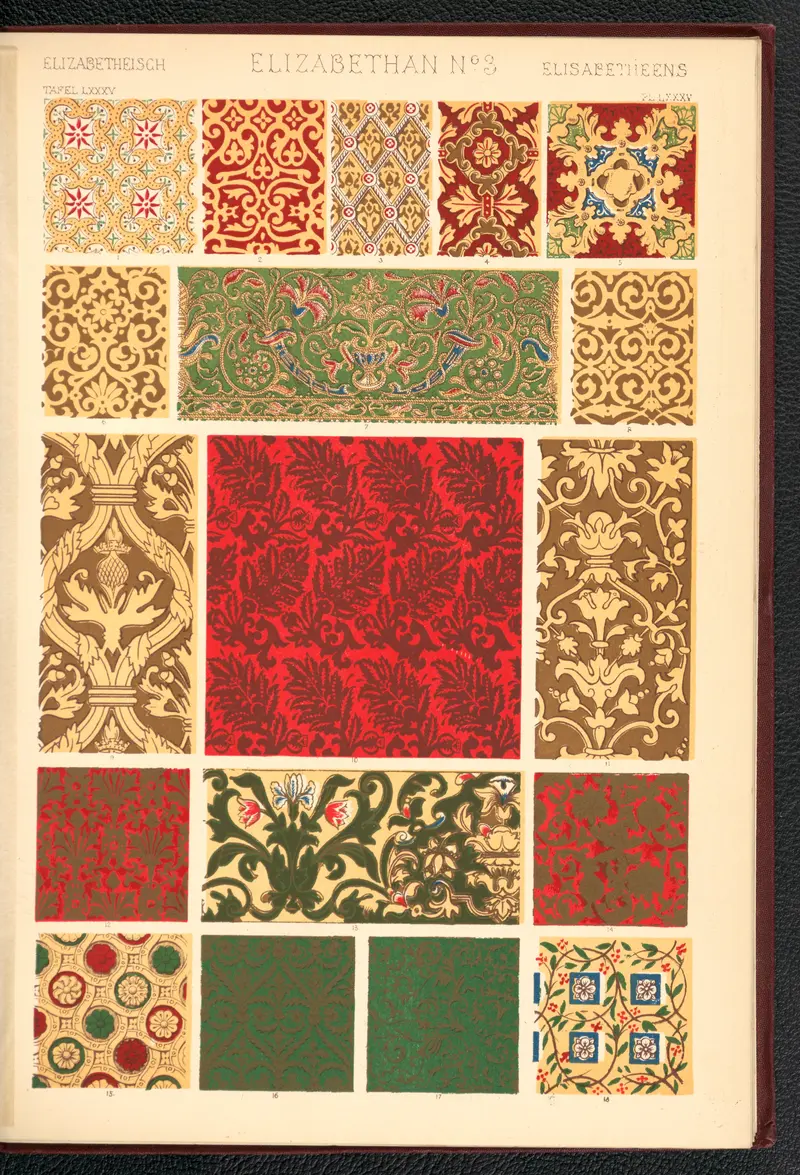
Elizabethan Ornament No. 3
Owen Jones
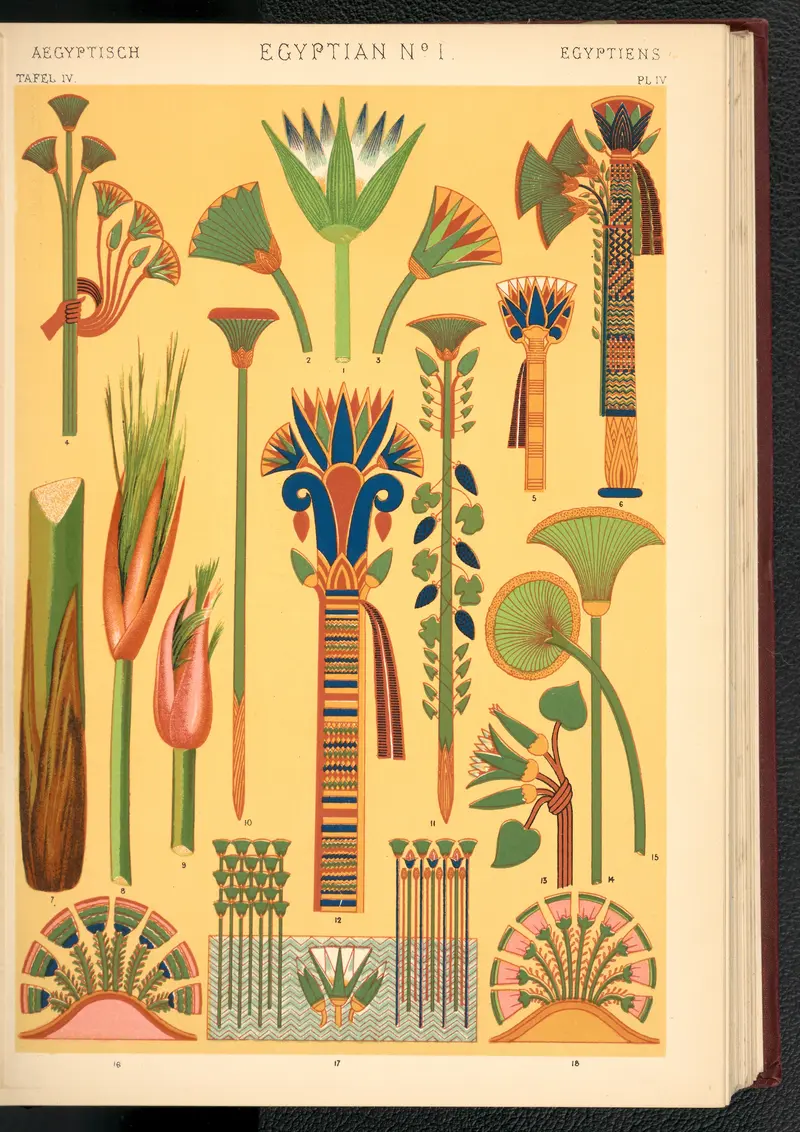
Egyptian Ornament No. 1
Owen Jones
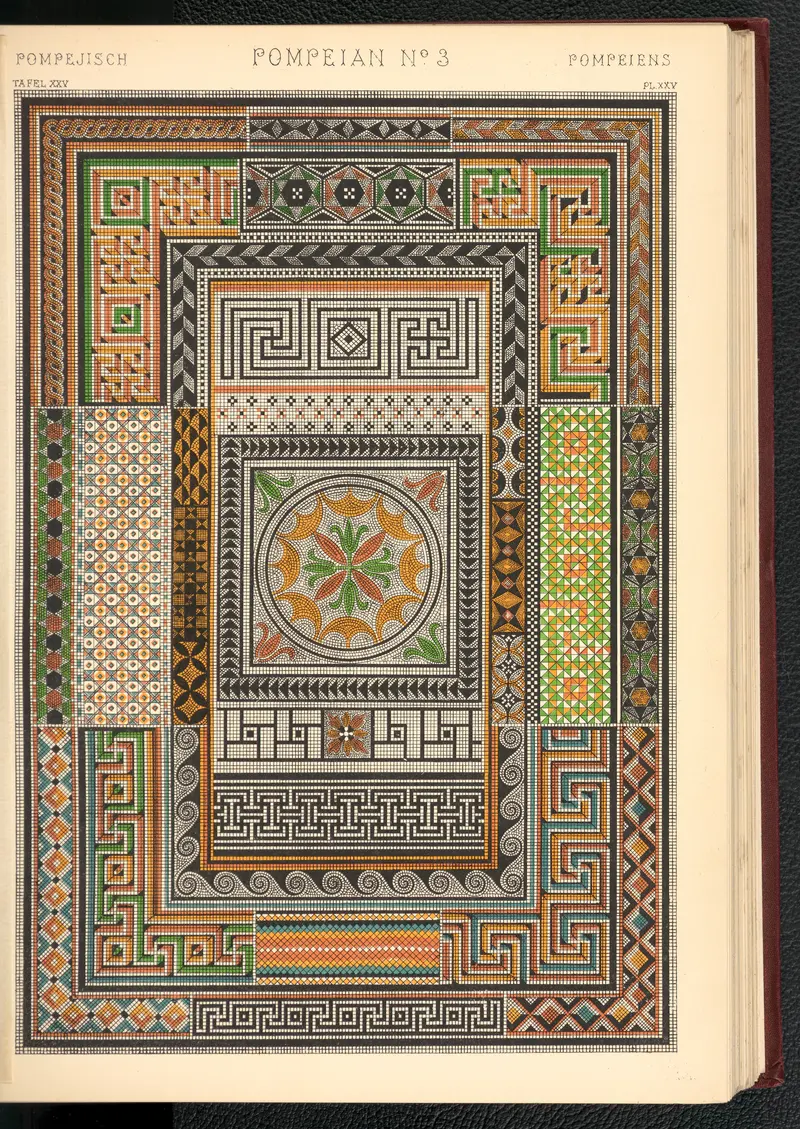
Pompeian Ornament No. 3
Owen Jones