
Sakata Kintoki Riding on Bear's Back — History & Facts
Few figures in Japanese folklore have inspired as much artistic fascination as Sakata Kintoki, the legendary child of superhuman strength, but it is Katsushika Hokusai’s 1804 rendering in Sakata Kintoki Riding on Bear's Back that stands out for its playful audacity. This work belongs to a celebrated series in which Hokusai explored heroes and monsters, but what sets it apart is the bear itself—a companion rather than a foe, rendered with a sense of humor rare in depictions of mythic warriors. The image’s enduring popularity is attested by the many prints, paintings, and even toys it inspired throughout the Edo period. At the heart of the scene is young Kintoki, astride a massive bear, gripping its fur as if it were a loyal steed.
According to legend, Kintoki—raised in the wilds of Mount Ashigara—befriended animals and performed feats of strength from an early age, eventually becoming a retainer of the warrior Minamoto no Yorimitsu. Here, Hokusai captures the moment of camaraderie between boy and beast: Kintoki’s wide-eyed expression and energetic pose suggest both innocence and power, while the bear’s gentle demeanor inverts its usual fearsome reputation. The composition’s lively lines and rhythmic patterns recall Hokusai’s own Thirty-six Views of Mount Fuji, but the subject’s mythic playfulness finds a parallel in Utagawa Kuniyoshi’s later series of warrior prints, where humor and heroism often intertwine. The precise medium of this work remains uncertain, though it is thought to be either a painting or an early color print, typical of Hokusai’s experimentation in the early 1800s.
Unlike many of his later, widely circulated woodblock prints, Sakata Kintoki Riding on Bear's Back is less well documented; its provenance before entering public collections is unclear, and scholars debate whether it was intended as a unique painting or a model for prints. Today, it is recognized as a key example of Hokusai’s fascination with folklore and his ability to blend humor, dynamism, and technical skill. The work stands at the threshold of the artist’s mature period, foreshadowing the narrative inventiveness that would define his later masterpieces.
More Artworks by Katsushika Hokusai

The Great Wave off Kanagawa
Katsushika Hokusai
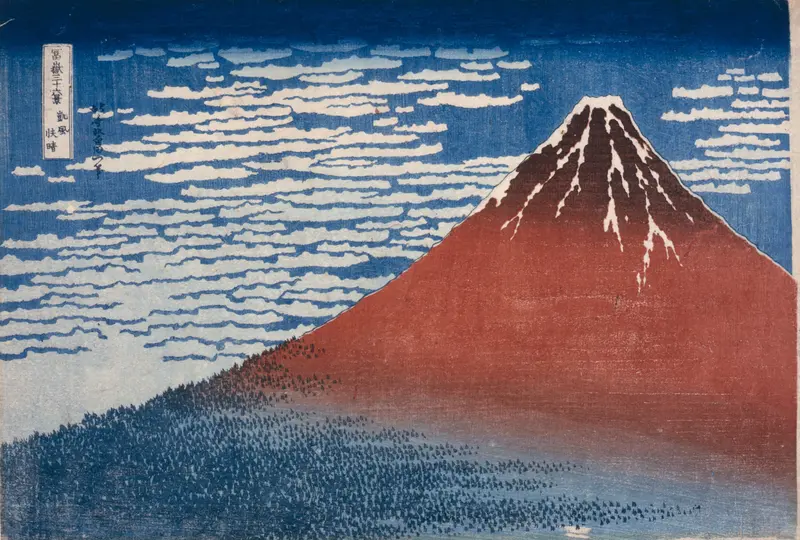
Fine Wind, Clear Morning (Red Fuji)
Katsushika Hokusai
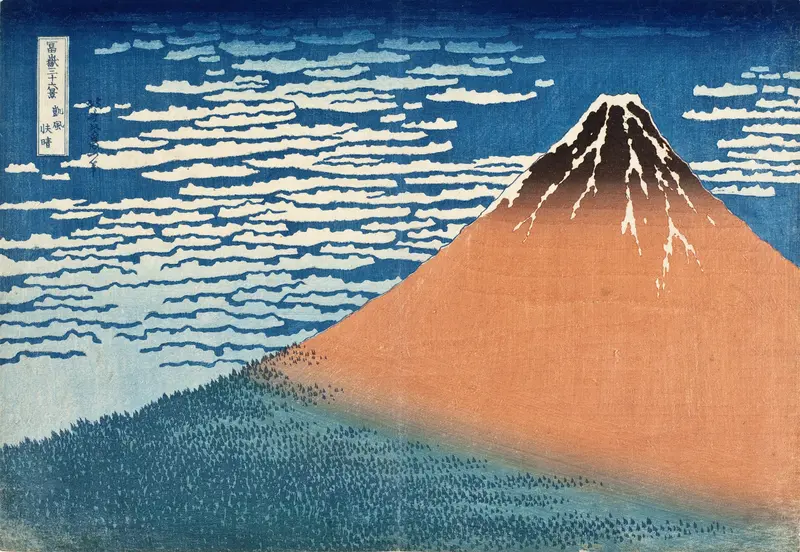
South Wind, Clear Dawn
Katsushika Hokusai
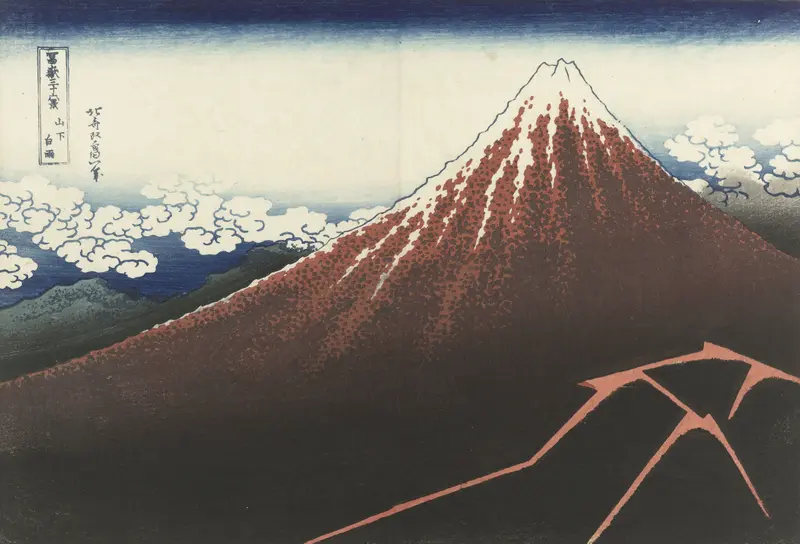
Rainstorm Beneath the Summit
Katsushika Hokusai
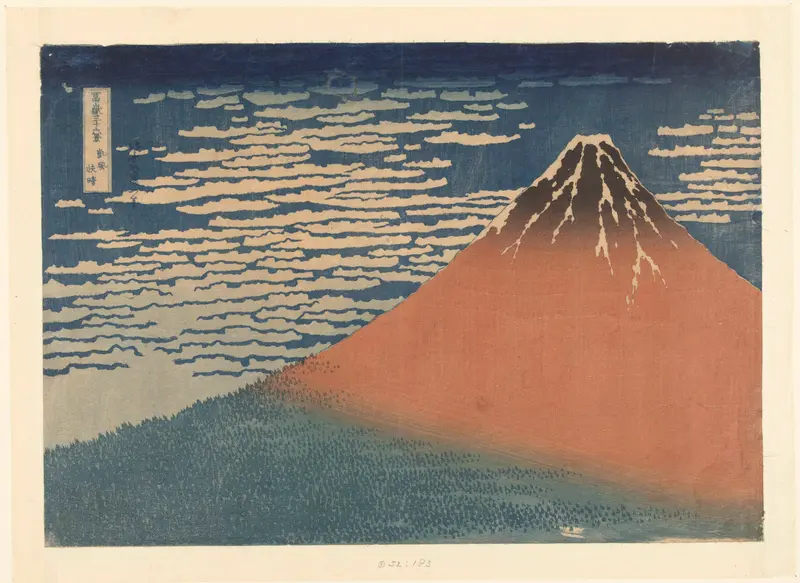
Clear Weather with a Southerly Wind
Katsushika Hokusai
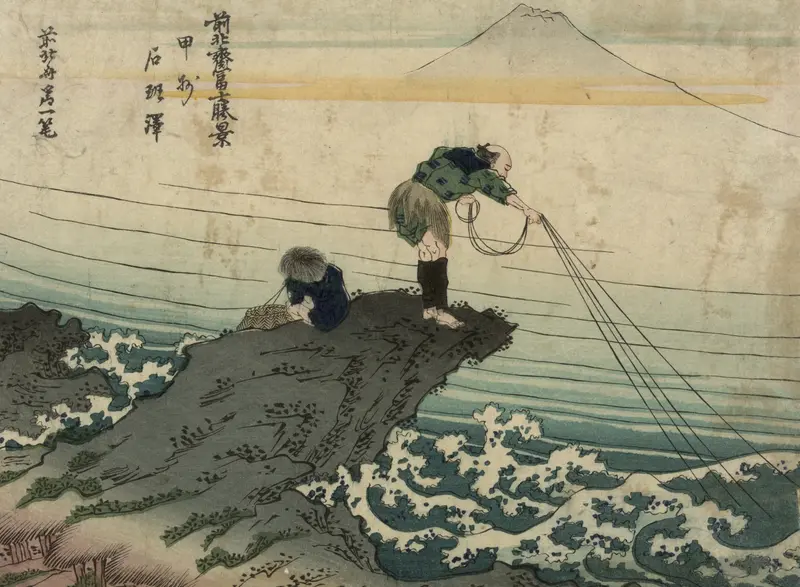
Kōshū kajikazawa
Katsushika Hokusai
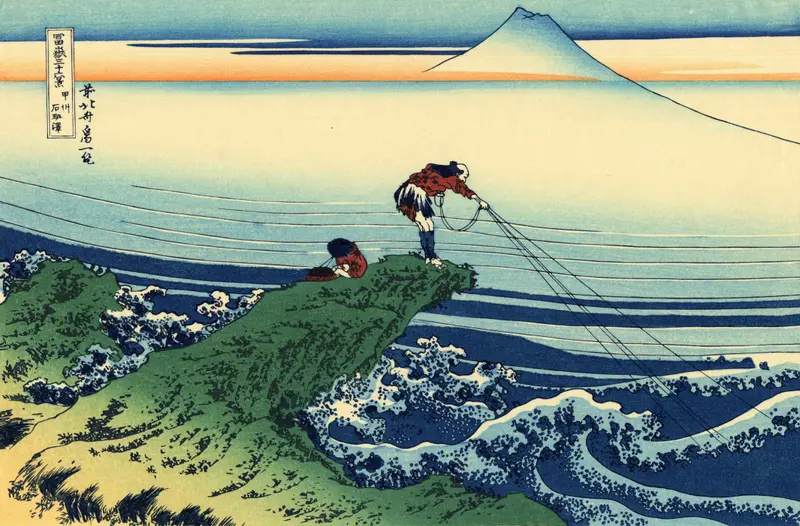
Kōshū kajikazawa 2
Katsushika Hokusai
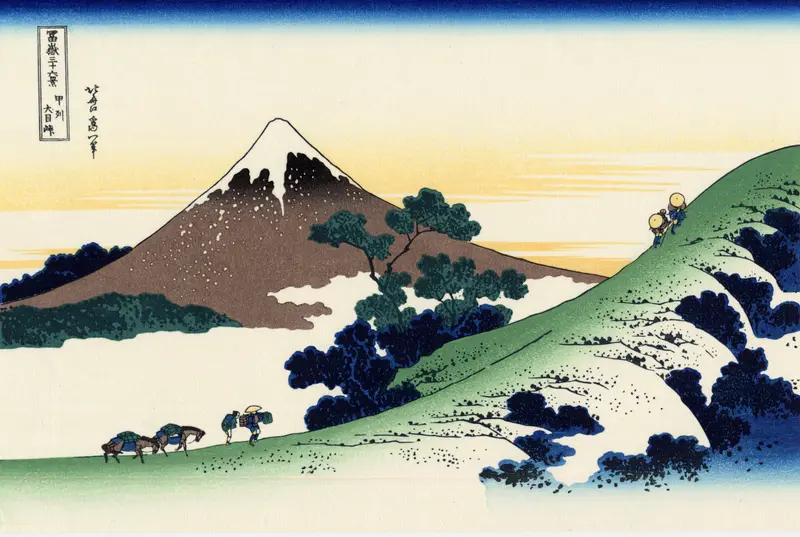
Inume Pass in Kai Province (Kôshû inume-tôge)
Katsushika Hokusai

Yoro Falls in Mino Province (Mino no Yoro no taki), from the series "A Tour of Waterfalls in Various Provinces (Shokoku taki meguri)"
Katsushika Hokusai
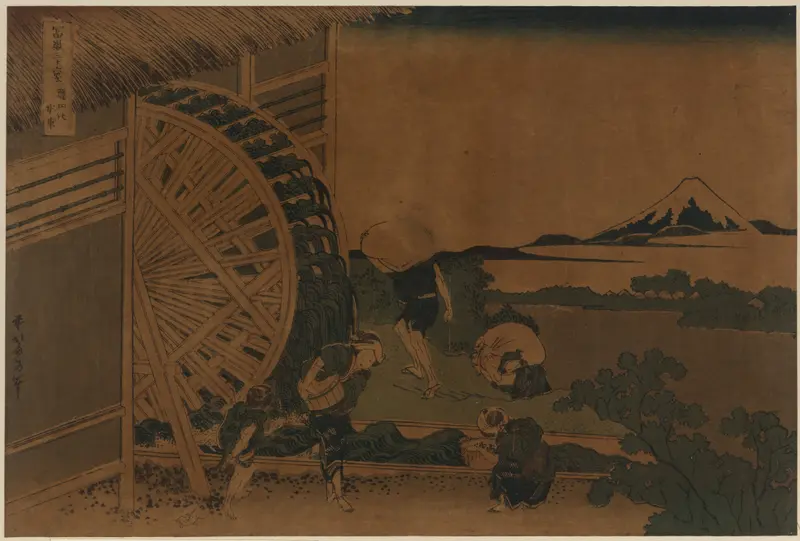
Onden no suisha
Katsushika Hokusai





