
Sara holding a cat — History & Facts
When Mary Cassatt painted Sara holding a cat in 1908, she was already celebrated as one of the few women at the heart of the Impressionist movement, yet her late portraits of children and families were often painted for her own circle, not for public exhibition. This particular work features her young niece, Sara, a frequent subject in Cassatt’s art, and the painting is one of several intimate family scenes that Cassatt created after her return to France from the United States. The identity of the cat remains unknown, but the gentle, domestic mood is a hallmark of Cassatt’s late style, which favored personal, everyday moments over grand narratives.
The painting stands out for its quietness and the trust between artist and sitter, a quality that contemporary critics often remarked upon. In this scene, Sara sits calmly, her arms gently encircling a cat that seems content to remain still, its body relaxed in her lap. The child’s gaze is steady, meeting the viewer with a composed seriousness unusual for such a young subject, while the cat’s soft fur is rendered with loose, quick strokes, capturing the animal’s warmth and weight. The light falls softly across Sara’s face, illuminating her features and the delicate folds of her dress, while the background recedes into gentle ambiguity, focusing all attention on the bond between girl and pet.
Unlike the formal child portraits of John Singer Sargent, Cassatt’s approach is informal and affectionate, emphasizing the private world of childhood rather than public display. The precise journey of Sara holding a cat is not fully documented, but it is typical of Cassatt’s late period, when she often painted for family members and friends rather than for the Paris salons. Many such works remained in private hands for decades, passed down through families or quietly sold, only to reappear in public collections much later. Today, the painting is recognized as an example of Cassatt’s enduring commitment to depicting the lives of women and children with honesty and empathy, themes that defined her career.
Its gentle intimacy marks a contrast with her earlier, more public works, and it remains a favorite among admirers of her domestic scenes.
More Artworks by Mary Cassatt

The Child's Bath
Mary Cassatt
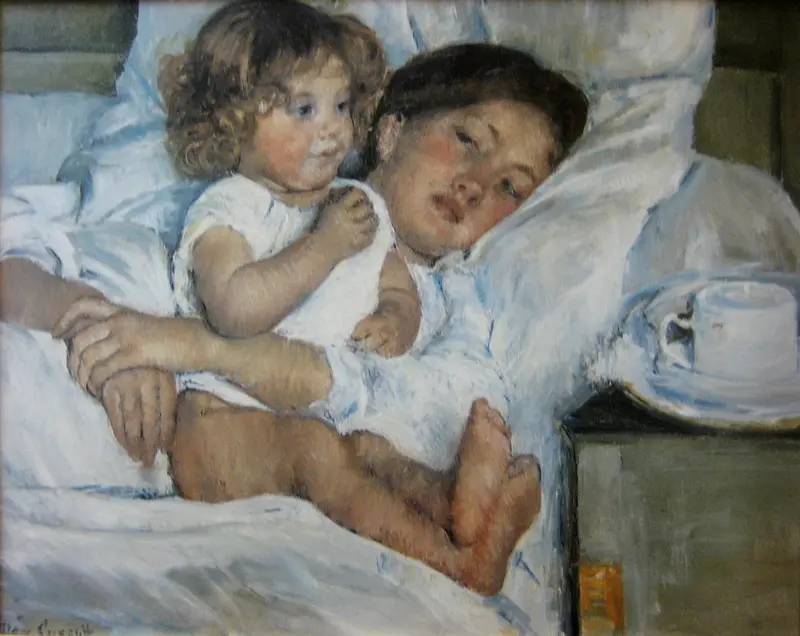
Breakfast in Bed
Mary Cassatt

Mother and Child (Baby Getting Up from His Nap)
Mary Cassatt
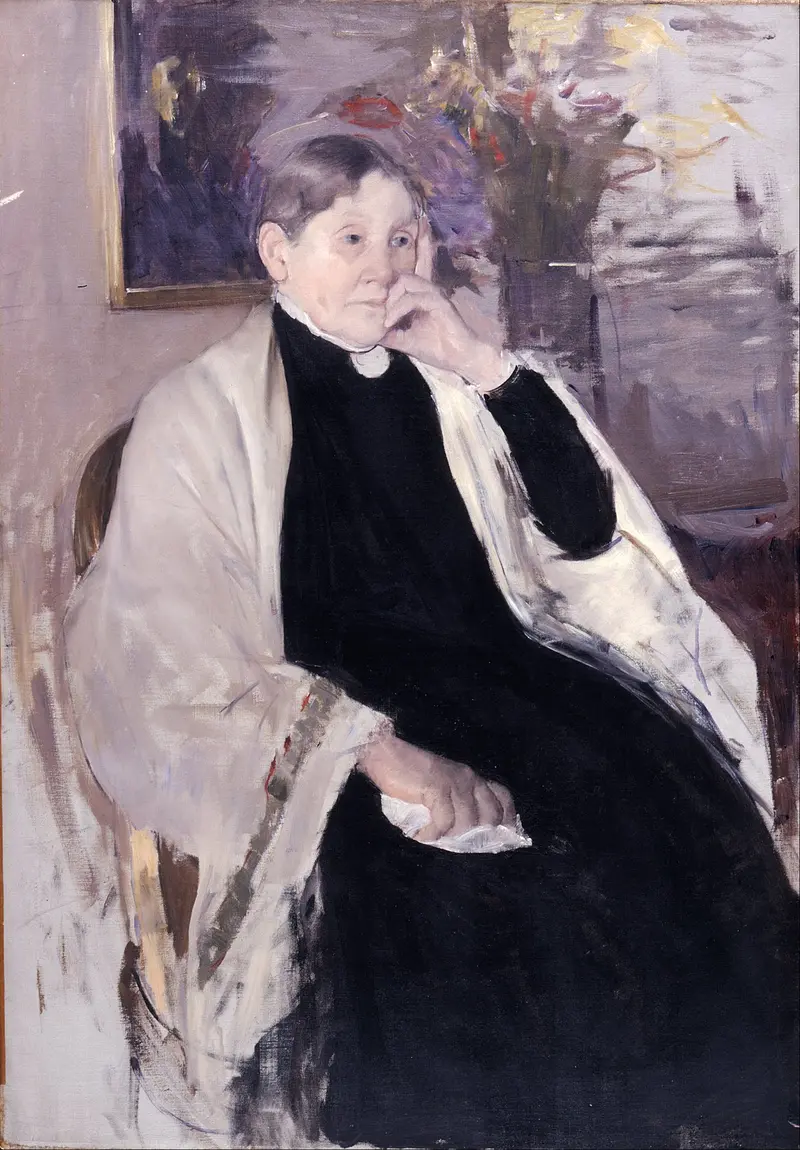
Mrs. Robert S. Cassatt, the Artist's Mother
Mary Cassatt
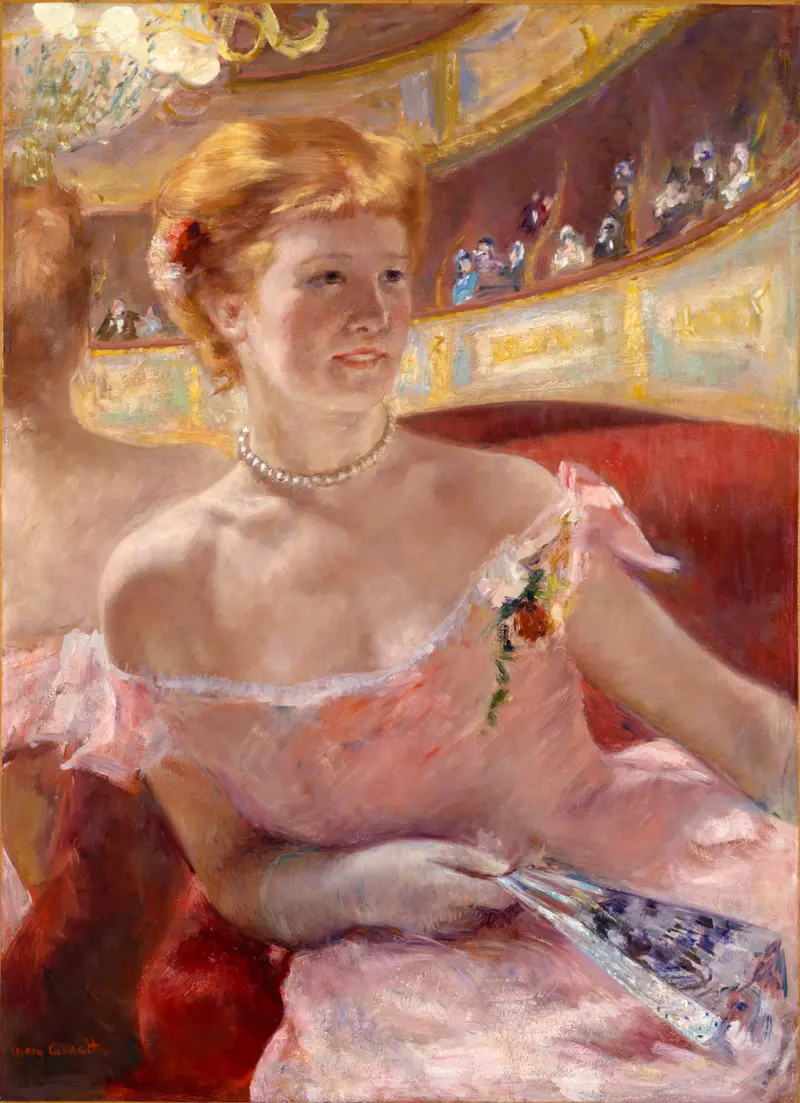
Woman with a Pearl Necklace in a Loge
Mary Cassatt
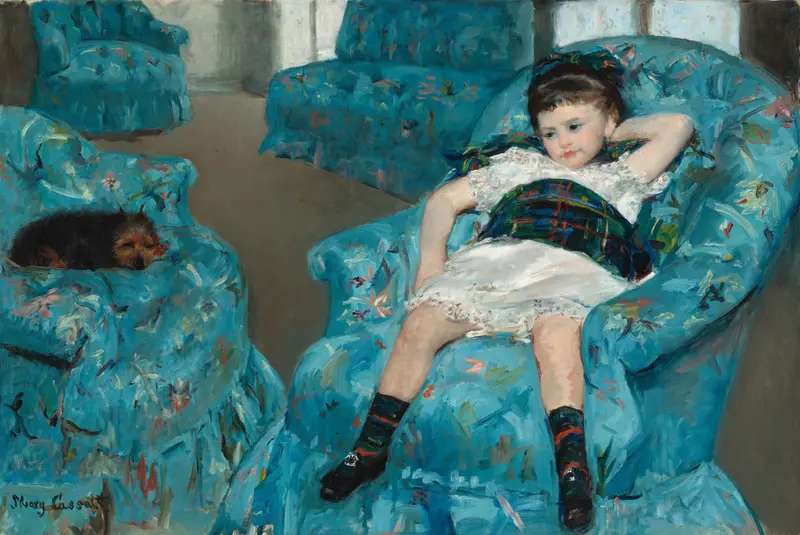
Little Girl in a Blue Armchair
Mary Cassatt
Mother and Child (The Oval Mirror)
Mary Cassatt
Mother and Child
Mary Cassatt
In The Loge
Mary Cassatt
On a Balcony
Mary Cassatt





