
Suonatrice di mandola, o Il costume giapponsese — History & Facts
A young woman meets the viewer’s gaze with a gentle, knowing smile, her hands poised mid-chord on the mandola that rests in her lap. The light, soft and almost secretive, falls across her face and the intricate folds of her costume, drawing our attention to the play of textures: the shimmer of her embroidered robe, the polished wood of the instrument, the plushness of the chair. A porcelain plate and a large vase anchor the scene, their pale surfaces catching stray glints and hinting at a fascination with the exotic—an echo of Japonisme, the European craze for Japanese art and motifs that swept through salons at the turn of the twentieth century.
The dark, draped background hushes the space, making the sitter and her music the quiet center of gravity. Painted in 1910, Suonatrice di mandola, o Il costume giapponsese by Antonio Mancini belongs to a world where artists delighted in theatrical costume, cross-cultural fantasy, and the intimate drama of the studio interior. In Italy and beyond, the early 1900s saw a hunger for images that blended the everyday with the imagined, often staged for private collectors eager for a touch of the exotic at home. Mancini, known for his bravura brushwork and psychological sensitivity, here turns his attention to a subject that feels both staged and spontaneous, inviting us to linger over the tactile pleasures of paint as much as the sitter’s enigmatic expression.
History has kept few traces of this particular work, now in a private collection, but its atmosphere and detail invite us to listen for the music that might still be echoing in the painted silence.
More Artworks by Antonio Mancini

Portrait of a lady
Antonio Mancini
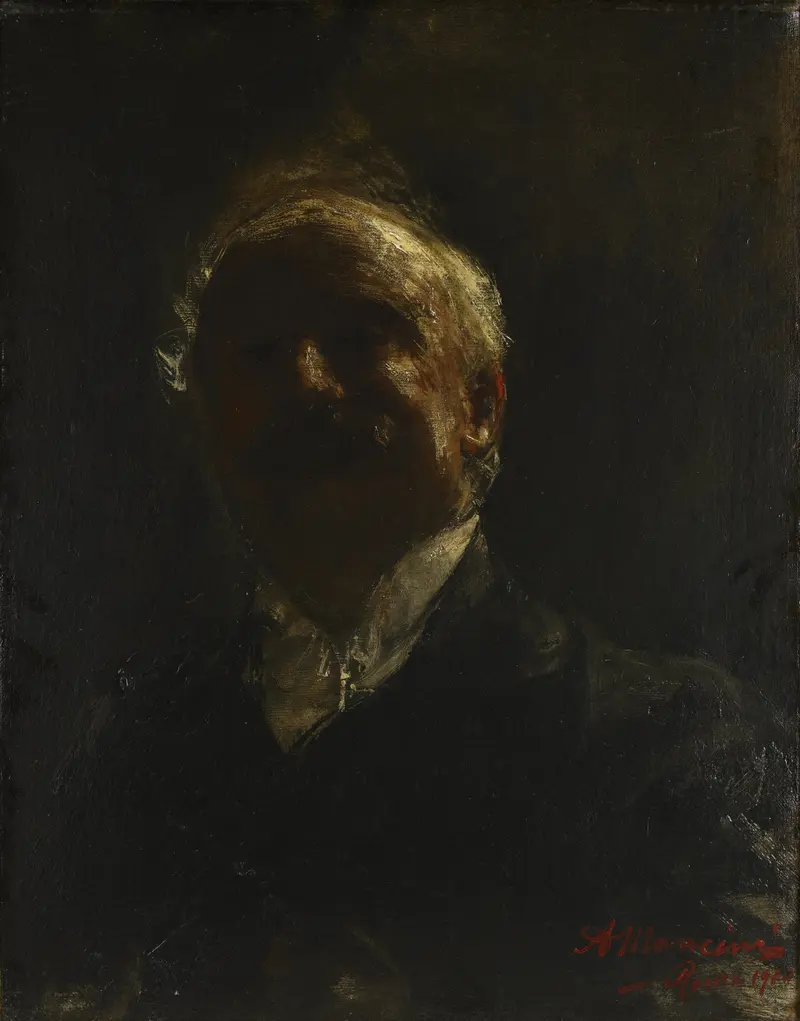
Self-Portrait
Antonio Mancini
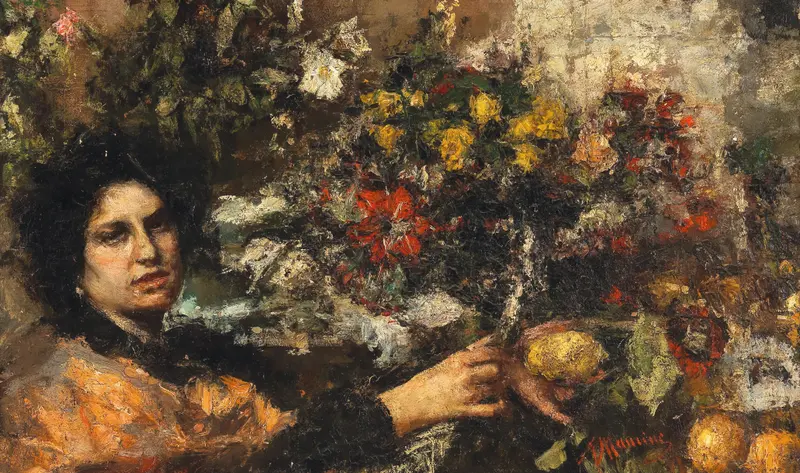
The Flower Seller
Antonio Mancini
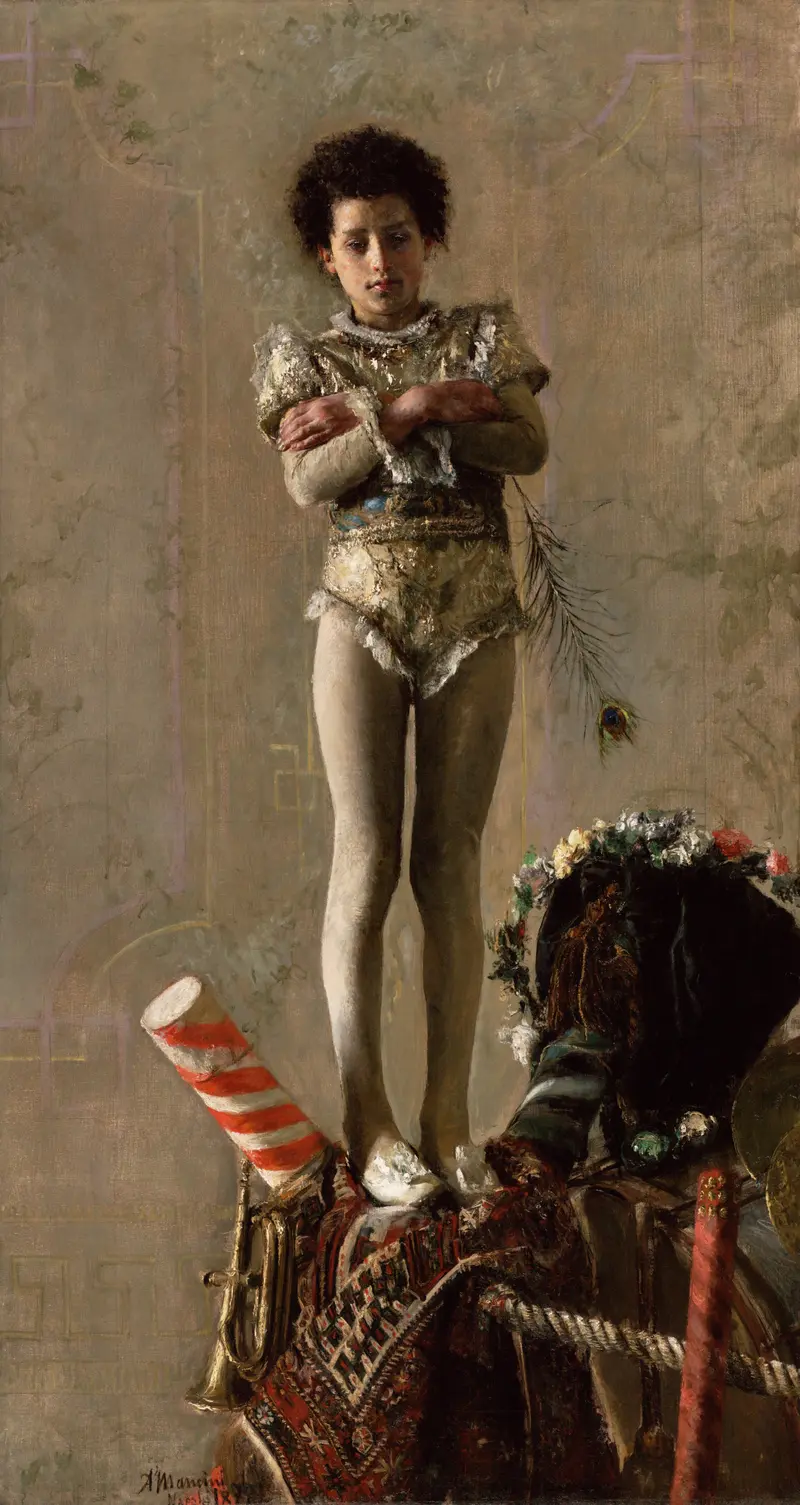
The Saltimbanco
Antonio Mancini
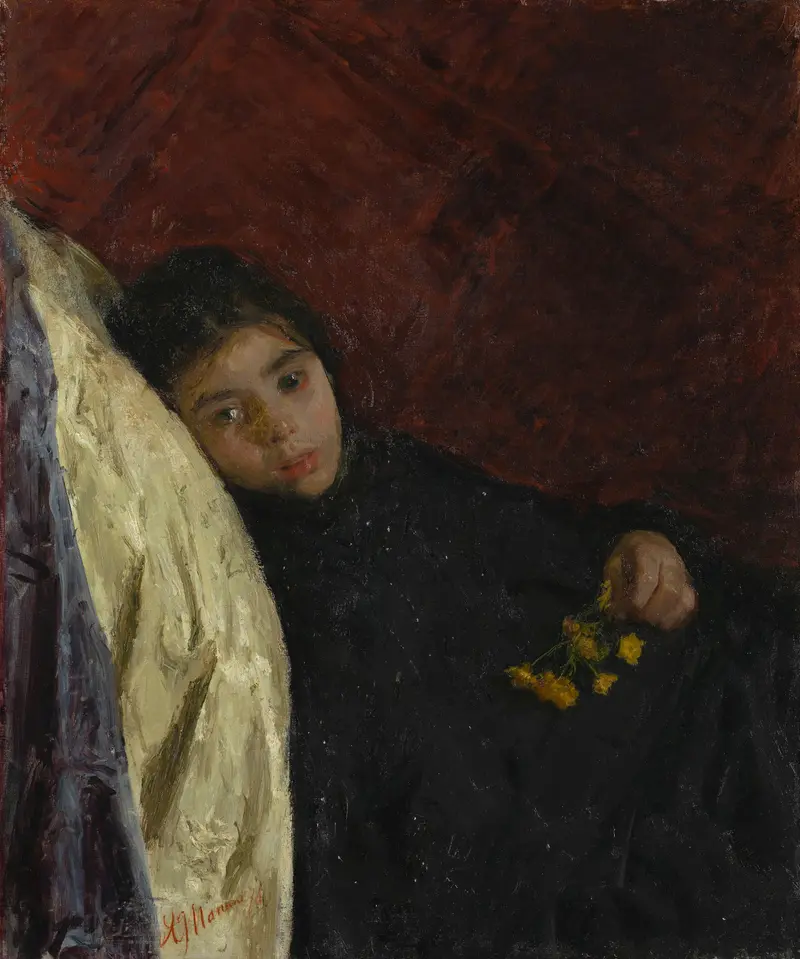
The sick child
Antonio Mancini
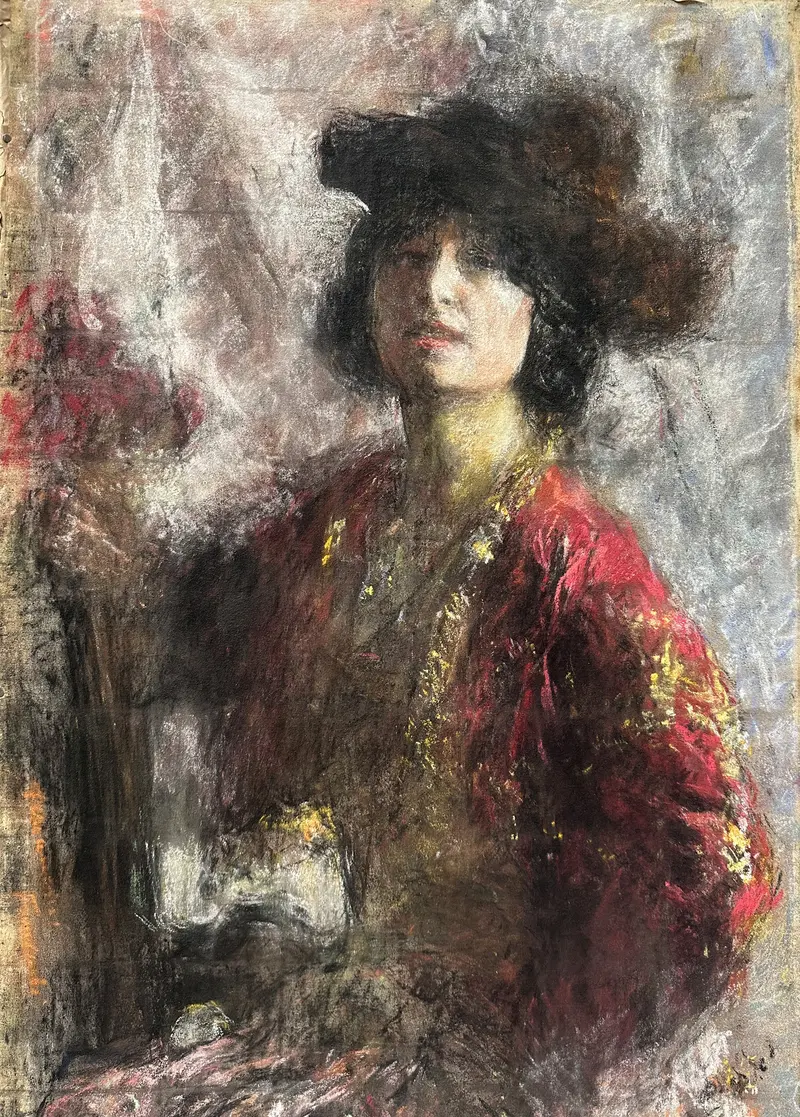
Bolero. Bullfighter
Antonio Mancini
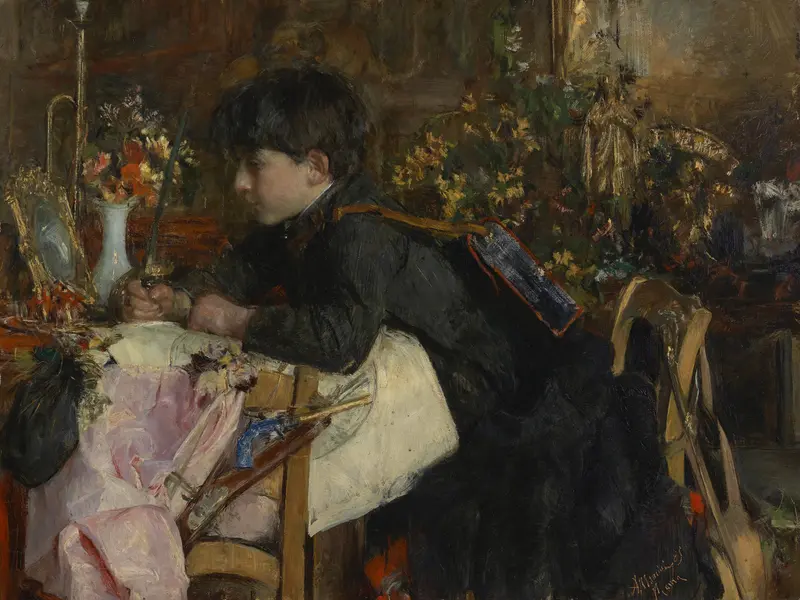
The birthday
Antonio Mancini
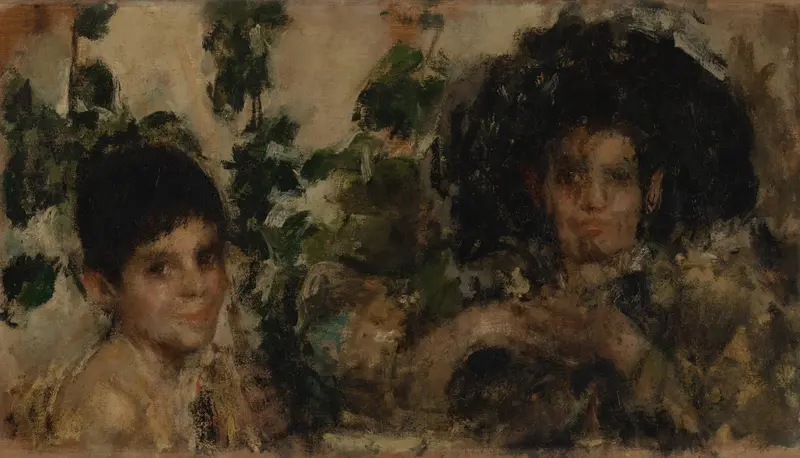
The brothers
Antonio Mancini
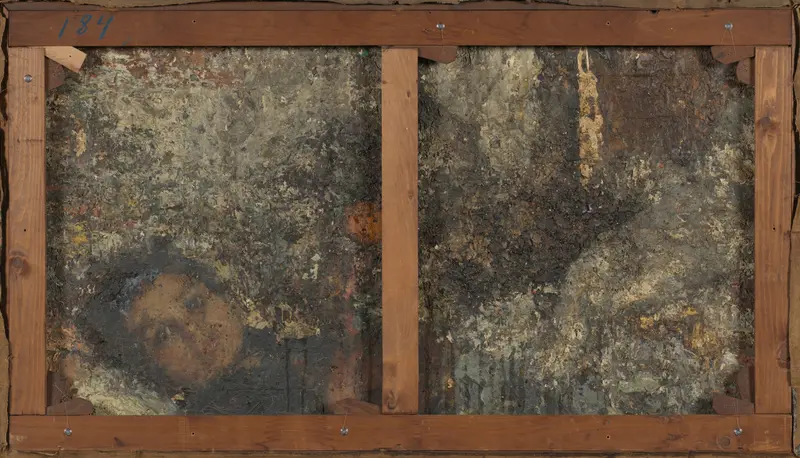
Liggend kind hwm0184v The Mesdag Collection
Antonio Mancini
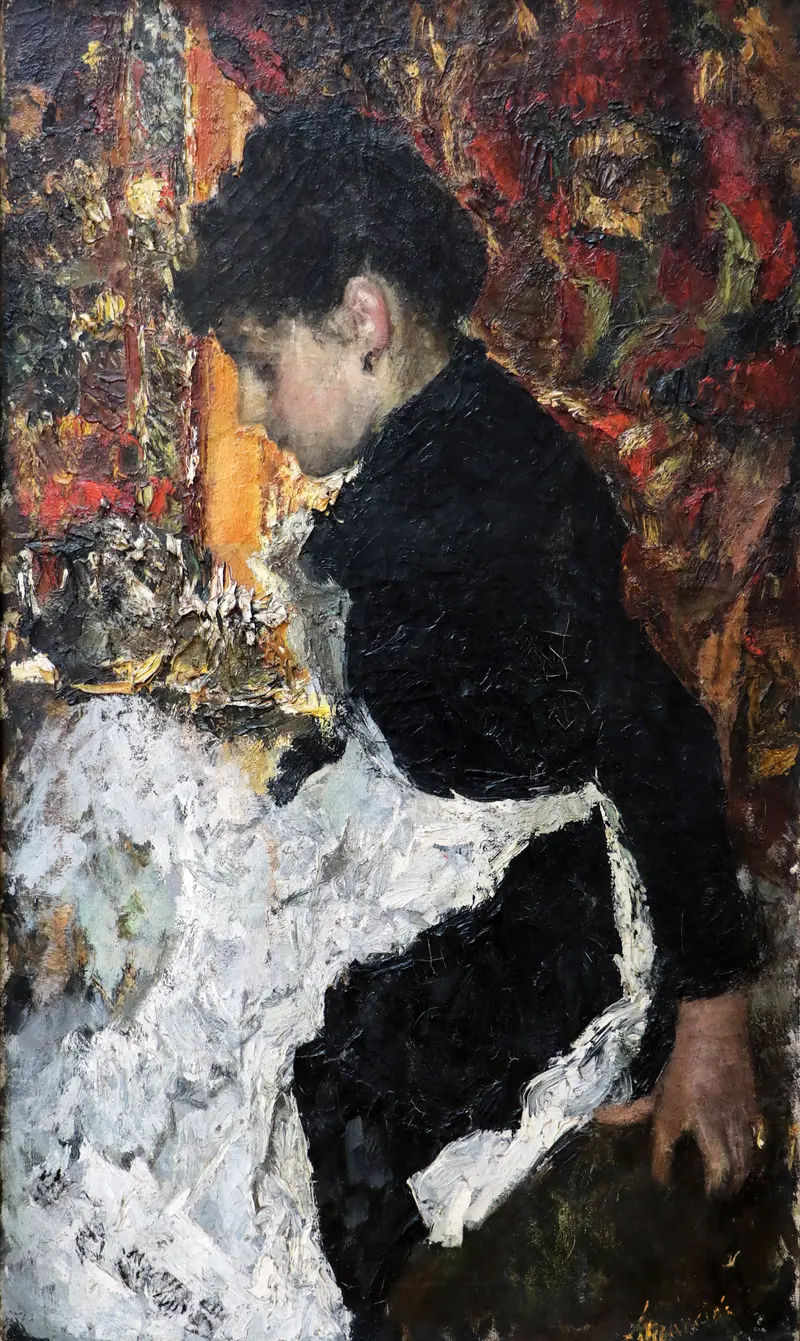
Servetta
Antonio Mancini
More Genre Scene Art

Banquet of the Officers of the St George Civic Guard
Frans Hals

Rembrandt and Saskia in the Scene of the Prodigal Son
Rembrandt van Rijn

Bal du moulin de la Galette
Pierre-Auguste Renoir

Quadrille at the Moulin Rouge
Henri de Toulouse-Lautrec

A Burial at Ornans
Gustave Courbet

When Will You Marry?
Paul Gauguin