
The Ancestors of Christ: Uzziah, Jotham and Ahaz — History & Facts
When Michelangelo painted The Ancestors of Christ: Uzziah, Jotham and Ahaz on the Sistine Chapel ceiling in 1510, he was inventing a new kind of biblical portrait: one that gave forgotten names from the Gospel of Matthew a monumental presence. These three kings, little more than names in genealogical lists, were suddenly given faces and gestures as vivid as any prophet or sibyl. Their inclusion was part of Julius II’s ambitious vision to link Christ’s story to the entire sweep of Old Testament history.
The fact that Michelangelo chose to give these obscure ancestors such psychological depth has puzzled and fascinated viewers for centuries. In this scene, the three generations of Judah’s royal line are shown together, yet each seems locked in private thought. Uzziah, the eldest, sits with his head bowed, his hand to his chin, as if weighed down by the burdens of kingship and the shadow of leprosy that, according to the Bible, marked his later years. Jotham, his son, looks outward, alert and tense, while Ahaz, the youngest, turns away, his body twisted in unease—perhaps a nod to his reputation as a faithless ruler.
The figures are hemmed in by architectural frames and swathes of drapery, their forms sculpted by bold, directional light. Unlike the stately procession of ancestors in works by Ghirlandaio in the Tornabuoni Chapel, Michelangelo’s trio are restless, their humanity on display. Painted in fresco high above the chapel floor, The Ancestors of Christ: Uzziah, Jotham and Ahaz forms just one panel in the long lineage that runs along the Sistine ceiling’s borders. The medium is fresco, though the exact pigments and techniques Michelangelo used are still studied by conservators.
Commissioned by Pope Julius II, the Sistine ceiling was completed between 1508 and 1512, transforming Michelangelo’s reputation from sculptor to painter of astonishing invention. The fresco has never left its original setting in the Vatican, enduring centuries of candle smoke, restoration, and scrutiny. Today, it remains a testament to Michelangelo’s ability to find drama and character even in the most obscure corners of biblical history.
Sources: Wikidata Q4009320 · Image source (Wikimedia Commons)
More Artworks by Michelangelo

Libyan Sibyl
Michelangelo
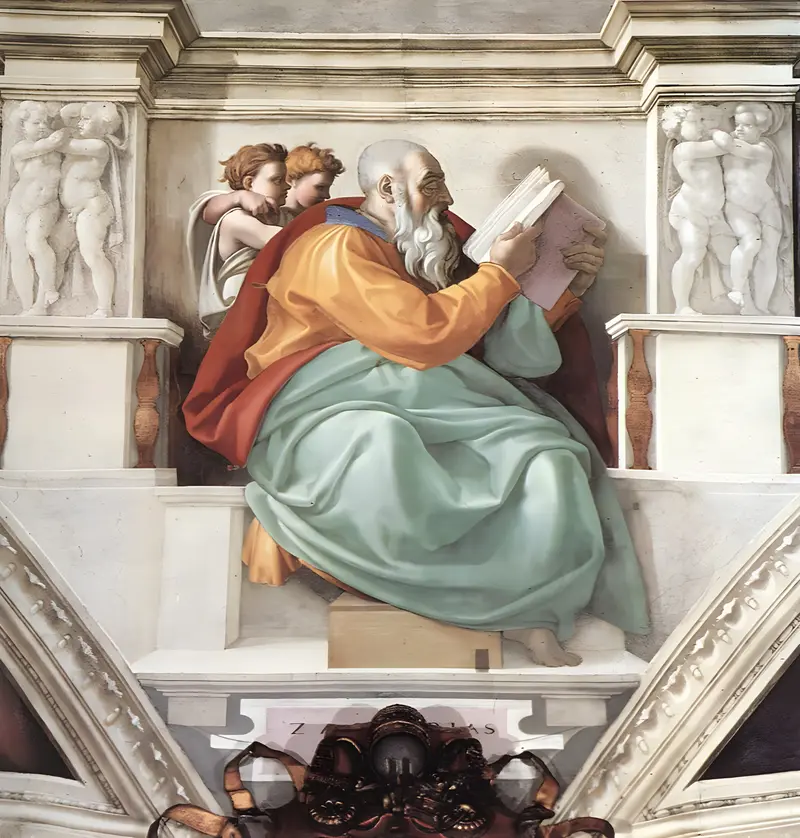
Prophet Zechariah
Michelangelo

Cumaean Sibyl
Michelangelo
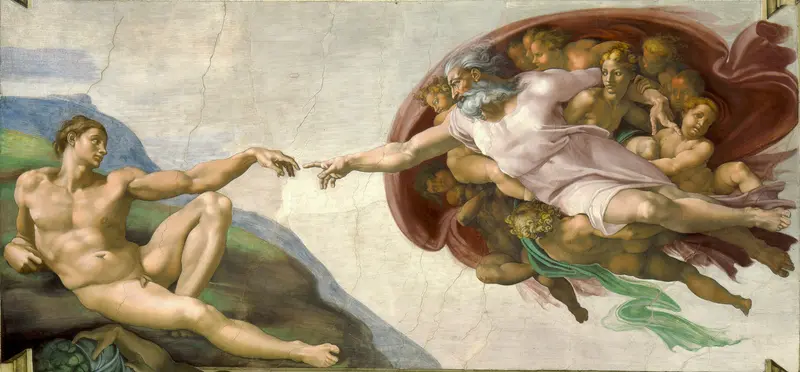
The Creation of Adam
Michelangelo
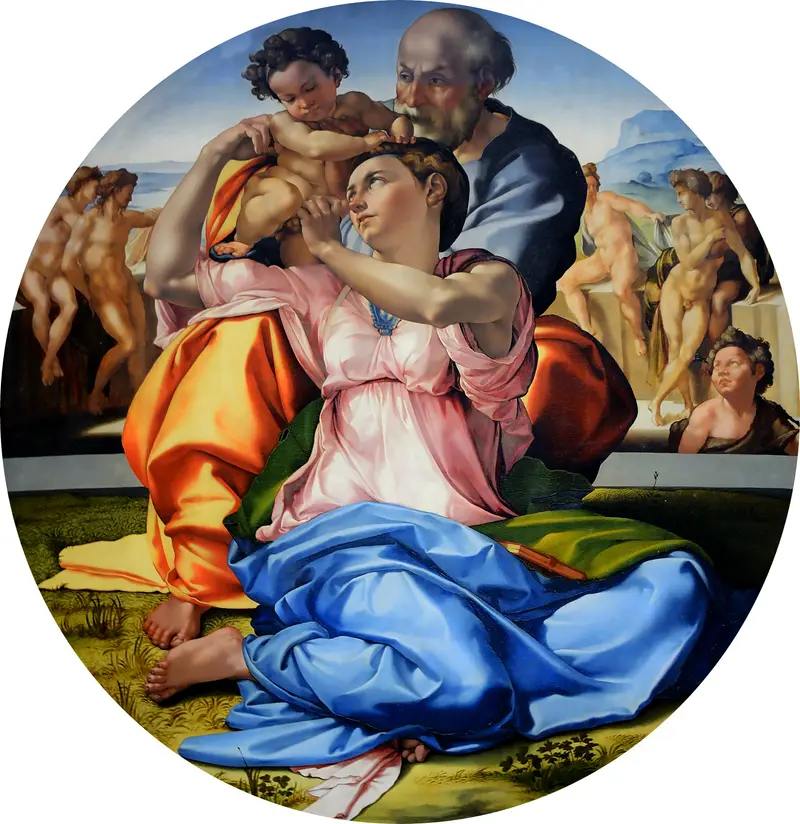
Doni Tondo
Michelangelo
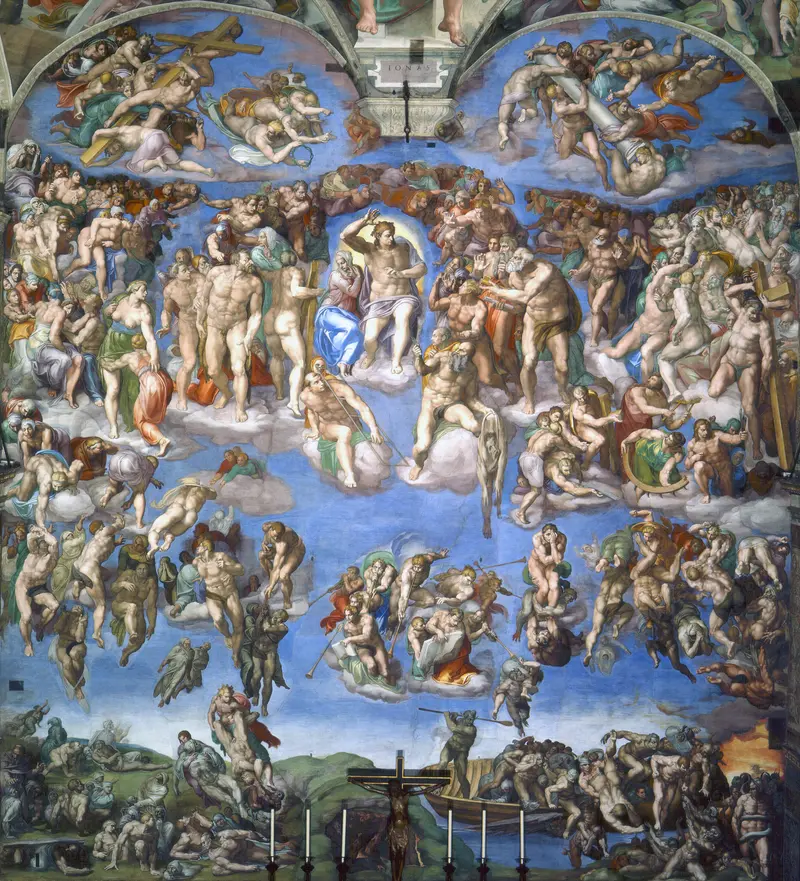
The Last Judgment
Michelangelo
Separation of Light from Darkness
Michelangelo
The Separation of the Earth and Waters
Michelangelo

Erythraean Sibyl
Michelangelo
Salmon, Boaz, Obed
Michelangelo




