
The Body of Christ Borne to the Tomb — History & Facts
When William Blake exhibited The Body of Christ Borne to the Tomb in 1808, he did so alongside a companion piece, The Entombment, marking a rare moment when the artist sought public recognition for his visionary religious art. Unlike most of his works, which were often privately commissioned or circulated in small circles, these paintings were created for Thomas Butts, a devoted patron who encouraged Blake’s biblical explorations. The pairing of these scenes—one showing Christ’s body carried, the other his burial—invites viewers to meditate on the passage between death and resurrection, a theme that preoccupied Blake throughout his career. The painting captures the harrowing moment after the crucifixion, as Christ’s followers carry his lifeless body toward the tomb.
In Blake’s interpretation, the figures are elongated, their faces marked by grief and awe, while the shroud that wraps Christ glows with an unearthly light. The mourners’ gestures—Mary’s outstretched arms, Nicodemus’s bowed head—draw the eye to the central figure of Christ, whose serenity contrasts with the anguish around him. Unlike the heavy realism of Caravaggio’s The Entombment of Christ, Blake’s vision is stripped of material detail, focusing instead on spiritual presence: the light seems to emanate not from any candle or sun, but from Christ himself, suggesting hope amid despair. The original medium of The Body of Christ Borne to the Tomb remains uncertain, though it is believed to be tempera or watercolor on canvas, typical of Blake’s experimental approach at the turn of the nineteenth century.
After its creation for Thomas Butts, the painting remained in private hands for many years and was not widely seen by the public. Today, it is held by the Tate in London, where it stands as a testament to Blake’s singular blend of poetry, painting, and mysticism. The work marks a period when Blake, often dismissed by his contemporaries, was quietly forging a path that would later secure his reputation as one of the most original artists of the Romantic movement.
More Artworks by William Blake
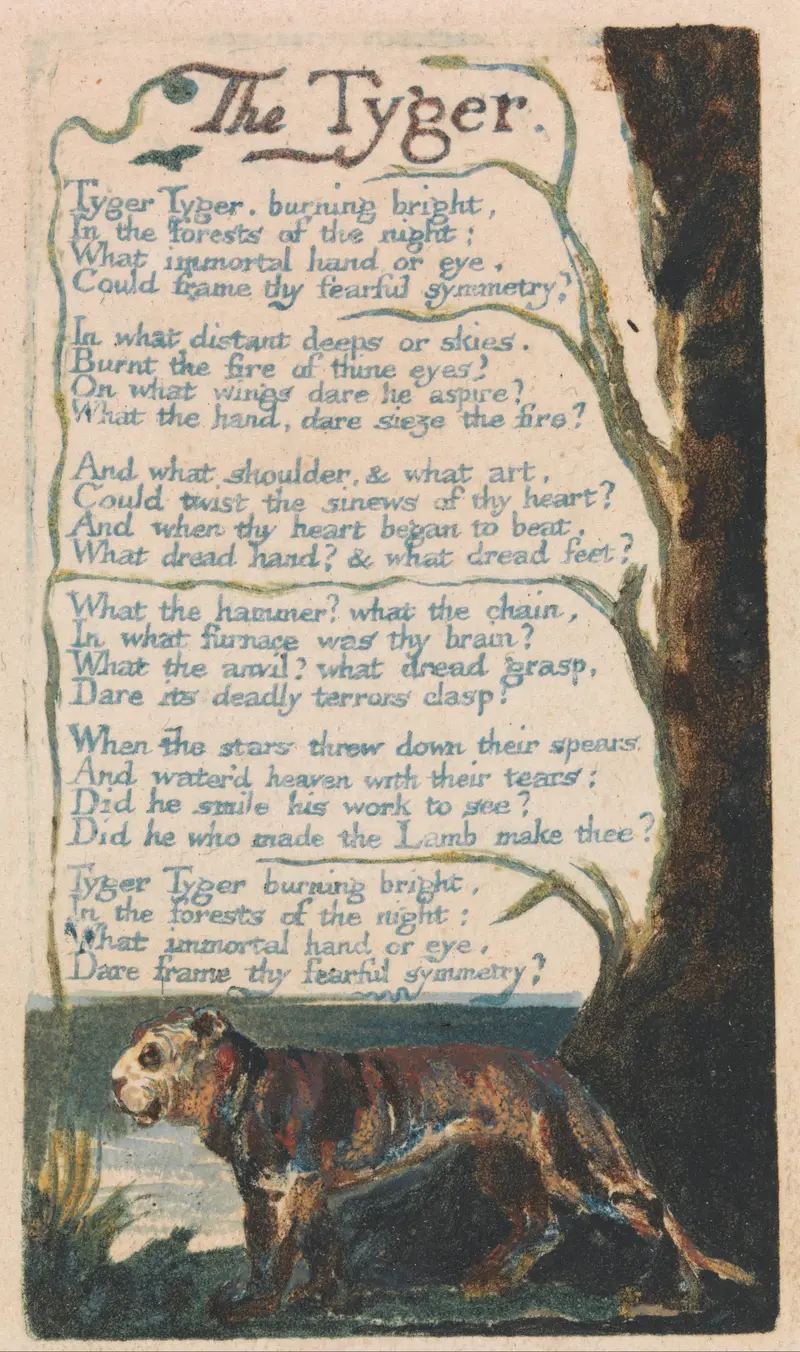
The Tyger
William Blake

Christ Blessing
William Blake
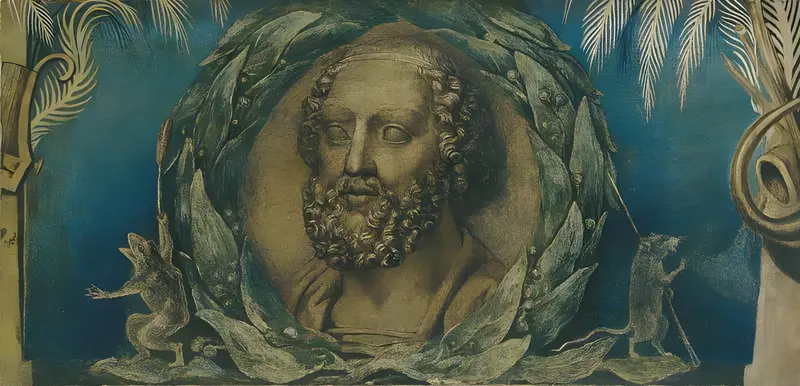
Homer
William Blake
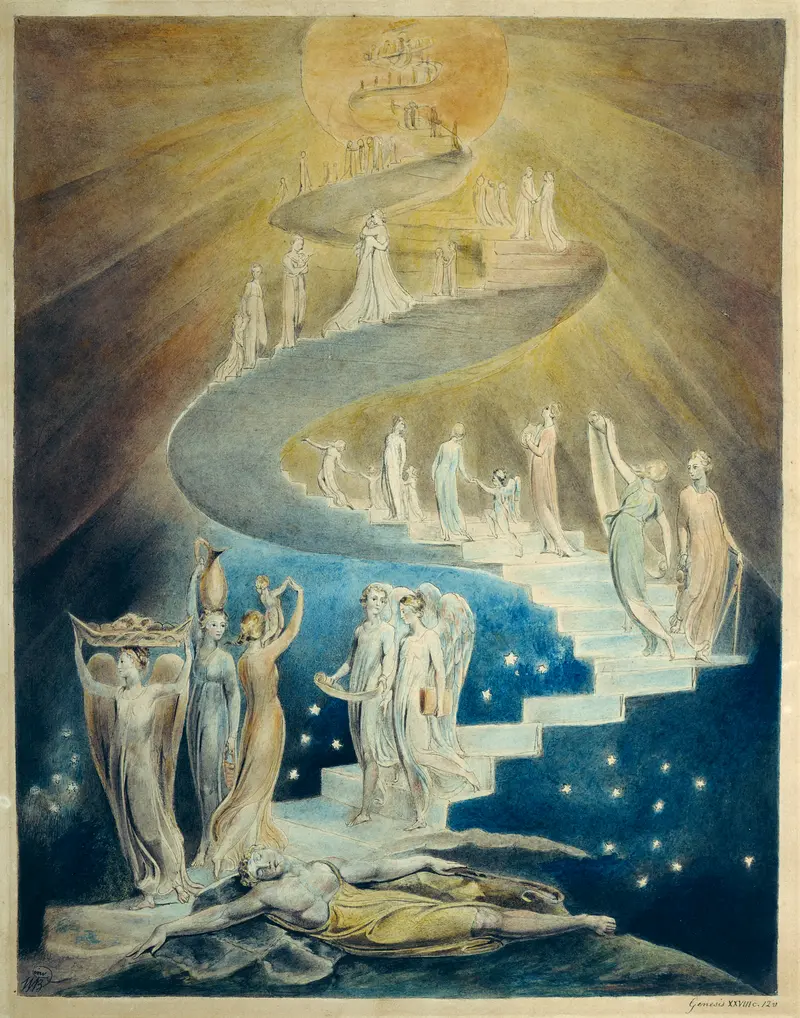
Jacob's Ladder
William Blake
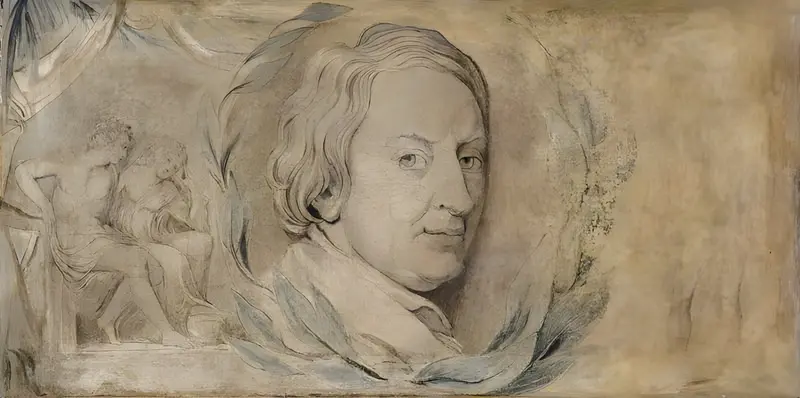
John Dryden (1631–1700)
William Blake
Landscape near Felpham
William Blake
Sacrifice of Job
William Blake
Christ's Entry into Jerusalem
William Blake
The Ancient of Days
William Blake
Adam Naming the Beasts
William Blake





