
The Caress — History & Facts
When The Caress was first exhibited in 1902, viewers immediately recognized Mary Cassatt’s signature subject: the quiet intimacy between mother and child. What set this work apart, however, was its immediate popularity among collectors in Paris, who saw in it a fresh, modern take on domestic life. At a time when the art world was still debating the merits of Impressionism, Cassatt’s tender scenes of women and children were both celebrated and, in some conservative circles, quietly dismissed as “too private” for public display.
Yet, The Caress quickly became one of her most requested compositions, with several collectors seeking versions or related pastels. The moment Cassatt captures is one of gentle affection: a mother, seated in profile, leans close to her young daughter, who nestles trustingly against her. The mother’s hand, resting lightly on the child’s shoulder, is the painting’s focal point—a visual anchor that gives the work its title. Soft, filtered light bathes the figures, dissolving the boundaries between their forms and the patterned background, a hallmark of Cassatt’s late style.
The mother’s gaze, directed not at the viewer but at her child, creates a sense of privacy and absorption. Unlike Pierre-Auguste Renoir’s more decorative mother-and-child scenes, Cassatt’s approach is quieter, the emotional bond rendered through touch rather than spectacle. The precise provenance of The Caress is not fully documented, but it is known that Cassatt often worked in series, exploring similar compositions in oil, pastel, and print. This work likely remained in private hands for decades, as was common for her domestic scenes, many of which were acquired by American collectors eager to bring Impressionist art across the Atlantic.
Today, The Caress stands as a testament to Cassatt’s lifelong commitment to depicting women’s inner worlds, and it holds a place of honor in several major museum collections, though its original medium remains uncertain. The painting marks a mature phase in Cassatt’s career, when her technique became more daring and her focus on maternal intimacy more pronounced.
More Artworks by Mary Cassatt

The Child's Bath
Mary Cassatt
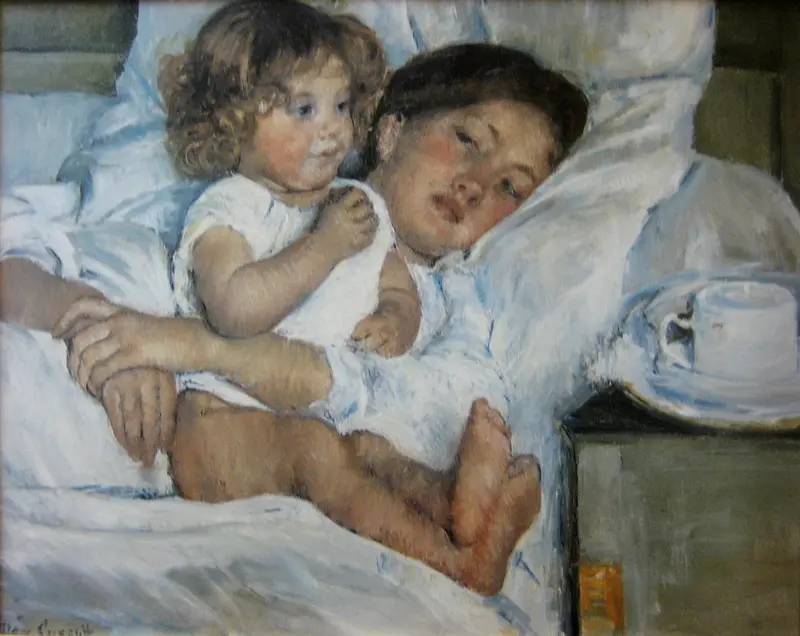
Breakfast in Bed
Mary Cassatt

Mother and Child (Baby Getting Up from His Nap)
Mary Cassatt
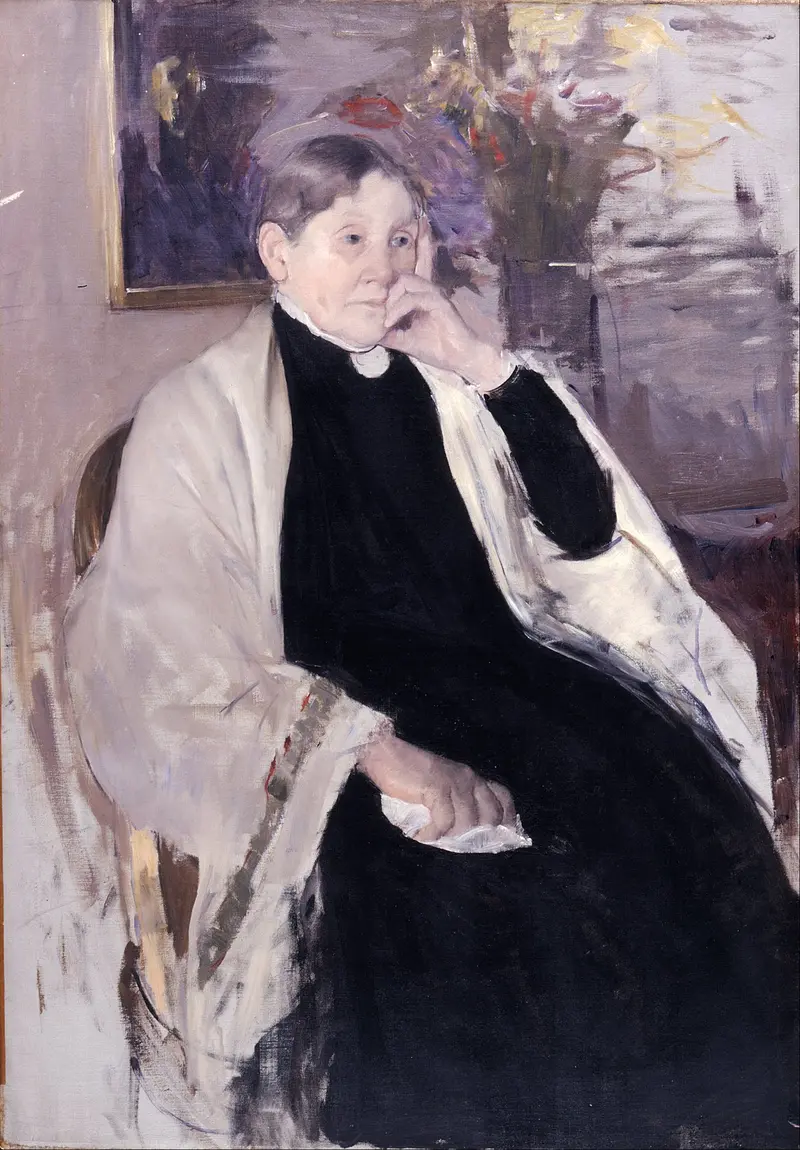
Mrs. Robert S. Cassatt, the Artist's Mother
Mary Cassatt
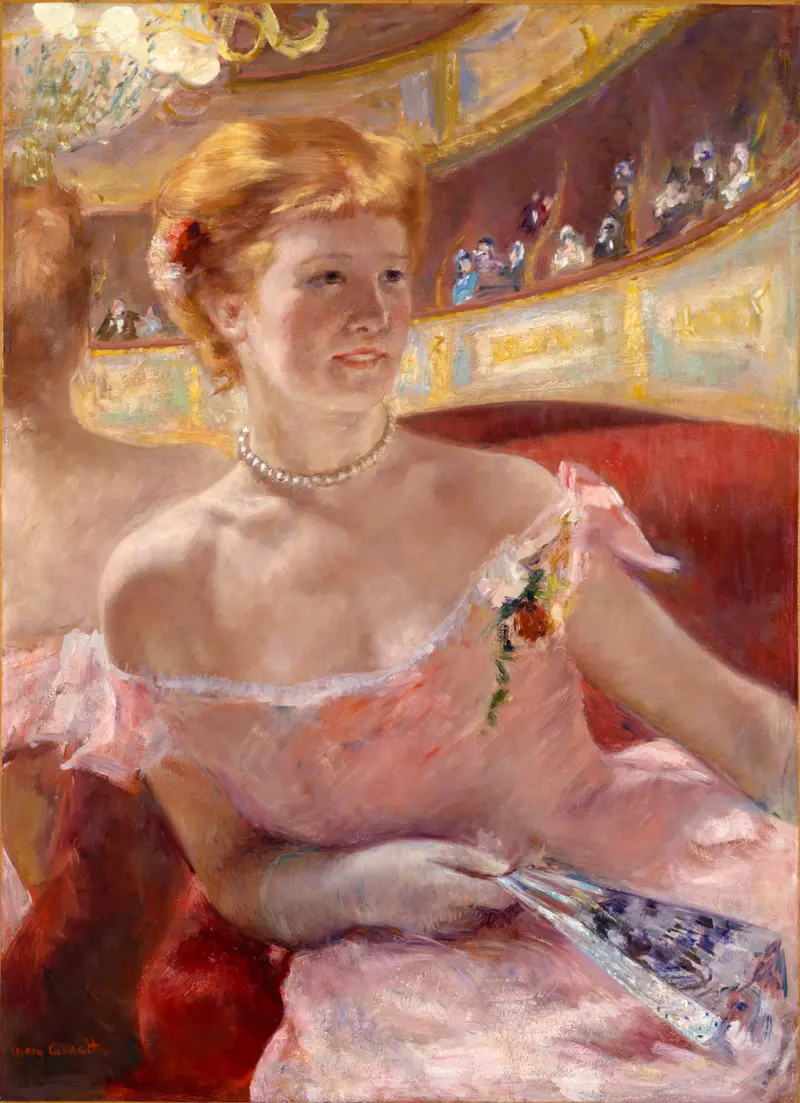
Woman with a Pearl Necklace in a Loge
Mary Cassatt
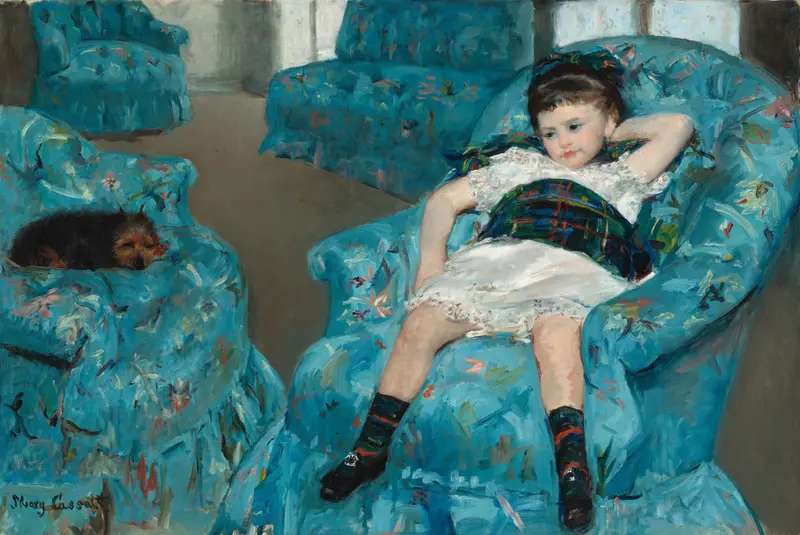
Little Girl in a Blue Armchair
Mary Cassatt
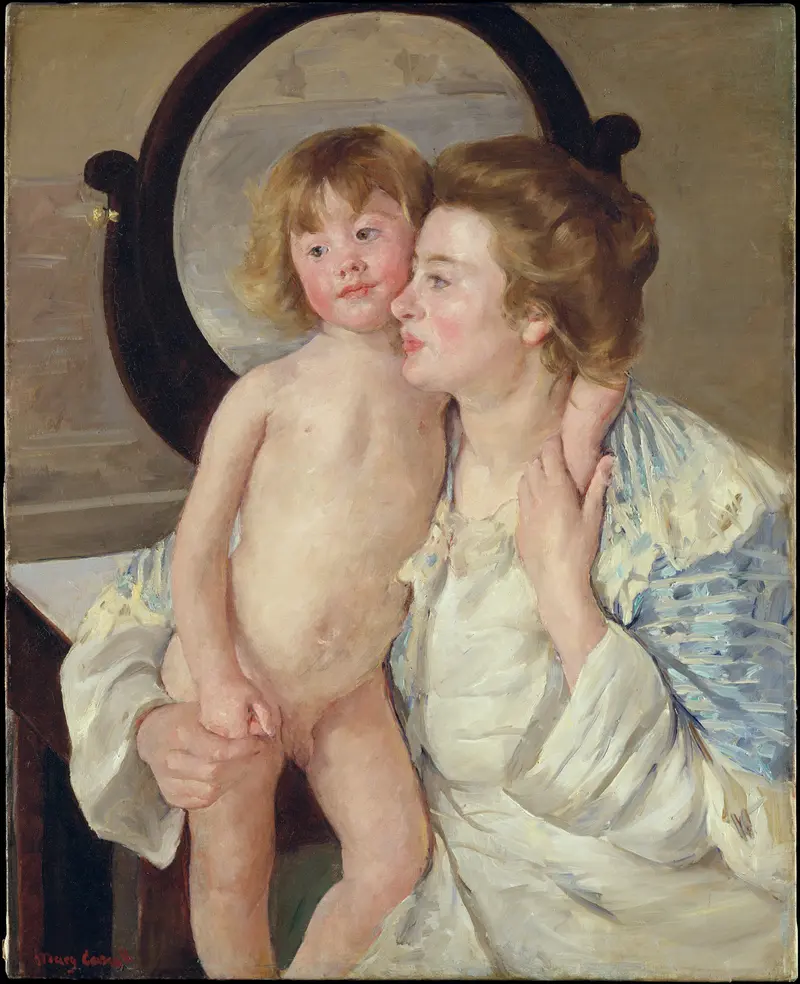
Mother and Child (The Oval Mirror)
Mary Cassatt
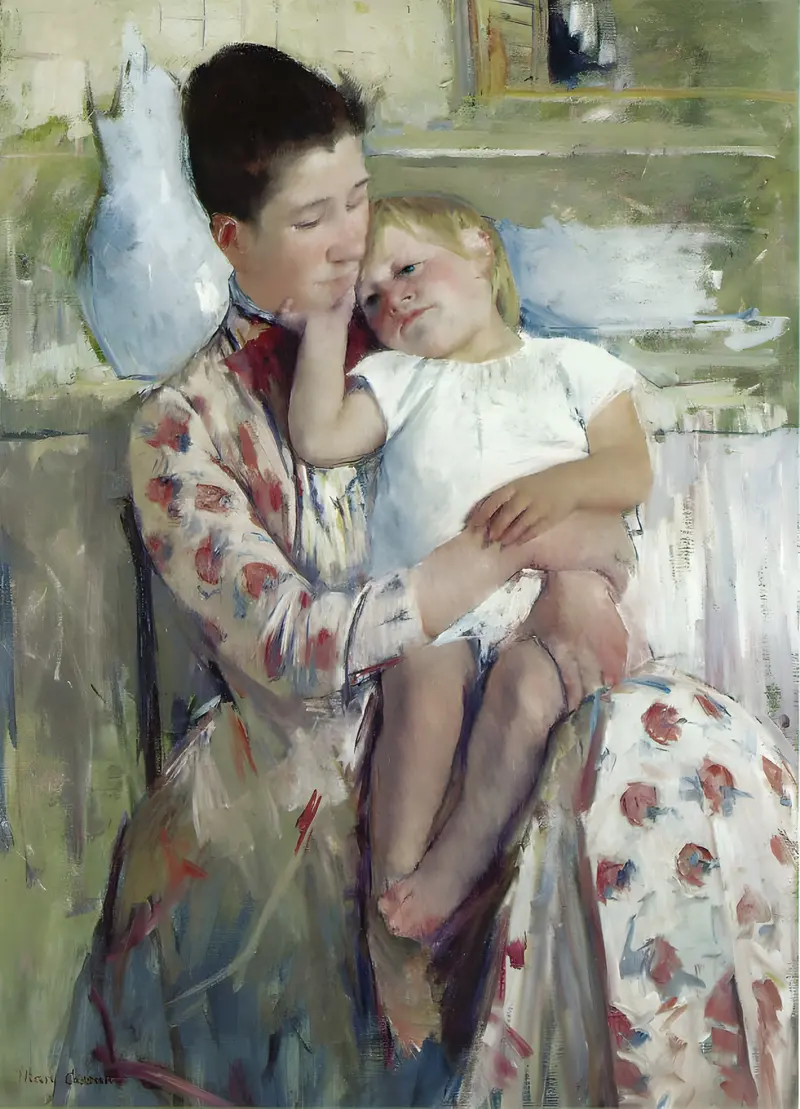
Mother and Child
Mary Cassatt
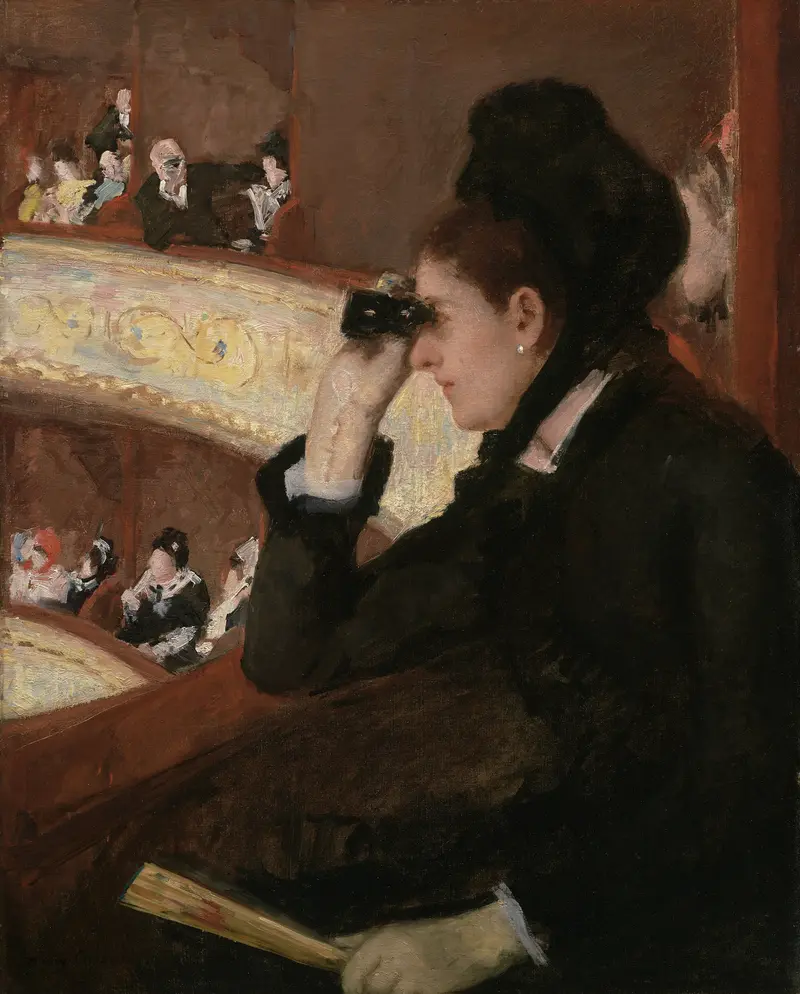
In The Loge
Mary Cassatt
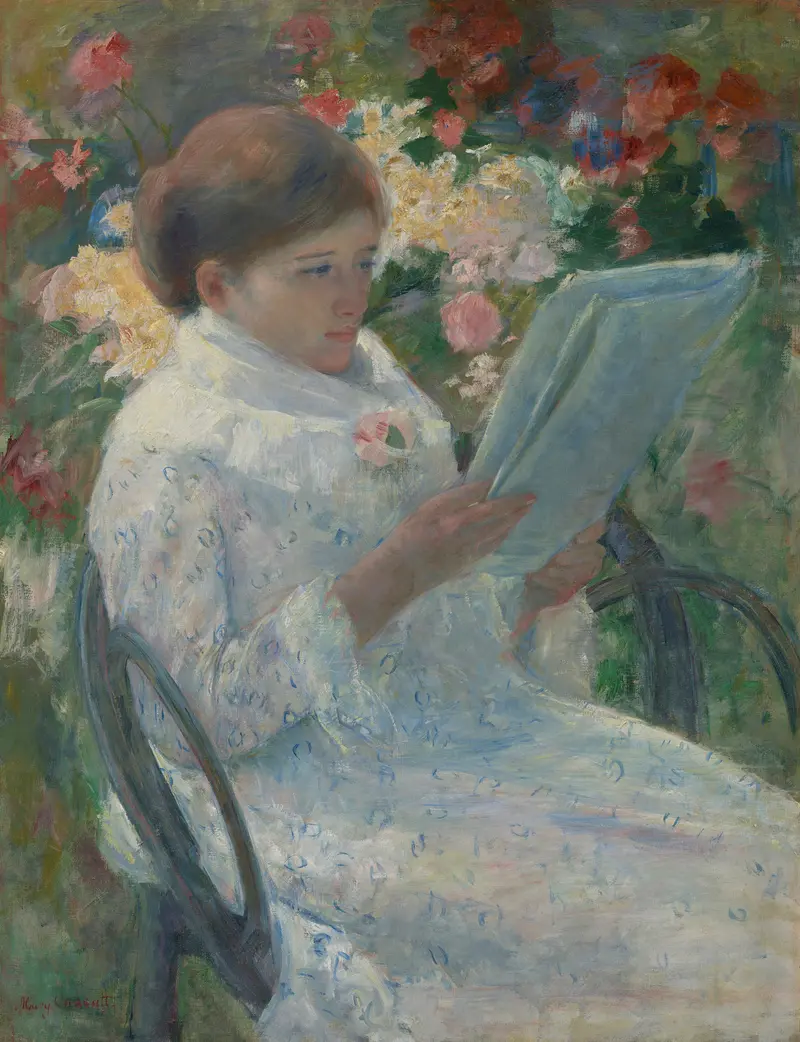
On a Balcony
Mary Cassatt
More Genre Scene Art

Banquet of the Officers of the St George Civic Guard
Frans Hals

Rembrandt and Saskia in the Scene of the Prodigal Son
Rembrandt van Rijn

Bal du moulin de la Galette
Pierre-Auguste Renoir

Quadrille at the Moulin Rouge
Henri de Toulouse-Lautrec

A Burial at Ornans
Gustave Courbet

When Will You Marry?
Paul Gauguin