
The Channel of Gravelines, Grand Fort-Philippe — History & Facts
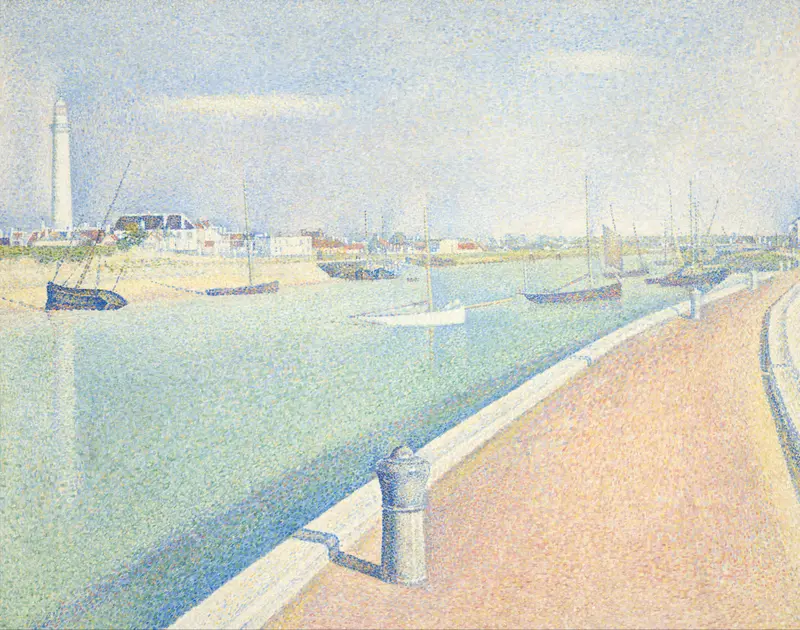
When Georges Seurat painted The Channel of Gravelines, Grand Fort-Philippe in 1890, he was working in the final year of his life, just months before his untimely death at age 31. This canvas stands as one of his last completed works, and it marks the culmination of his experiments with pointillism—his signature technique of placing tiny dots of pure color side by side. The painting is also notable for its location: Gravelines, a small port town on the northern coast of France, which Seurat visited several times and depicted in a handful of luminous canvases.
Unlike the bustling Parisian scenes for which he is best known, here Seurat turned his attention to the quiet, open spaces of the French coast. In this scene, the viewer stands at the edge of the channel, gazing toward the distant Grand Fort-Philippe under a pale, hazy sky. The boats, their sails furled, rest motionless on the calm water, while the low banks and geometric forms of the harbor stretch into the distance. Seurat’s meticulous dots of color blend at a distance into shimmering blues, greens, and ochres, creating a sense of stillness and clarity.
The absence of human figures and the precise, almost architectural arrangement of the landscape invite comparison to Claude Monet’s views of the Normandy coast, yet Seurat’s approach is more analytical, emphasizing structure over fleeting impression. The light in the painting is cool and even, flattening shadows and highlighting the solidity of the forms, as if time itself has paused. Today, The Channel of Gravelines, Grand Fort-Philippe is recognized as a landmark of late Post-Impressionism, and it resides in the collection of the Musée d’Art Moderne in Paris. The painting’s provenance is straightforward: it remained with Seurat’s family after his death, and was later acquired by the museum as part of its efforts to document the evolution of modern French painting.
As one of Seurat’s last works, it offers a glimpse of the direction his art might have taken had he lived longer—moving toward greater abstraction and a serene, measured order. The painting stands as a quiet testament to Seurat’s lifelong fascination with light, color, and the underlying geometry of the visible world.
More Artworks by Georges Seurat
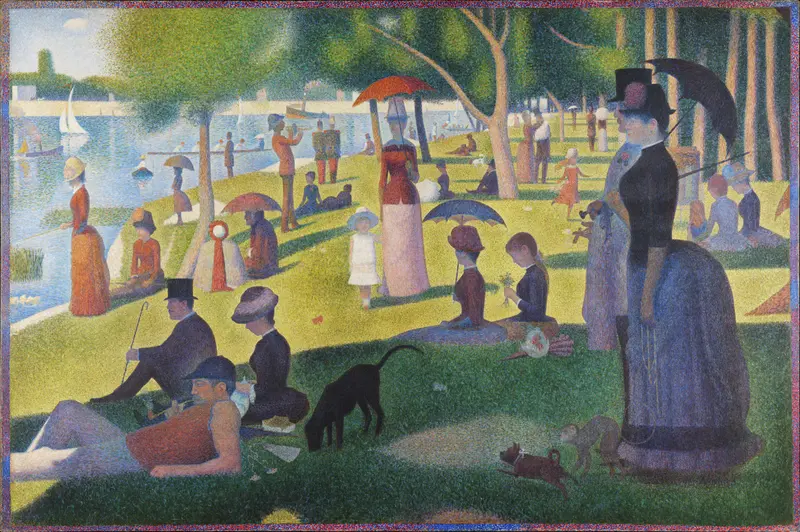
A Sunday Afternoon on the Island of La Grande Jatte
Georges Seurat
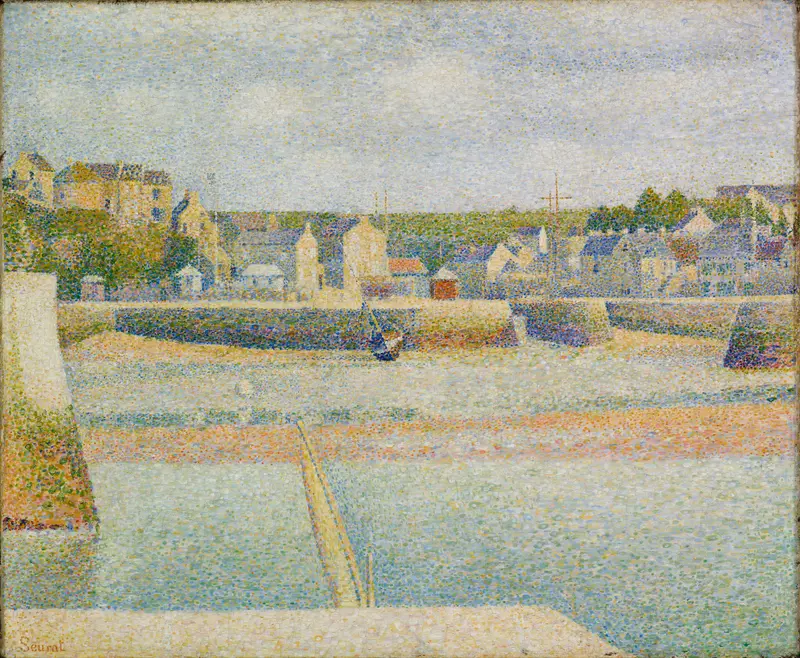
Port-en-Bessin, The Outer Harbor (Low Tide)
Georges Seurat
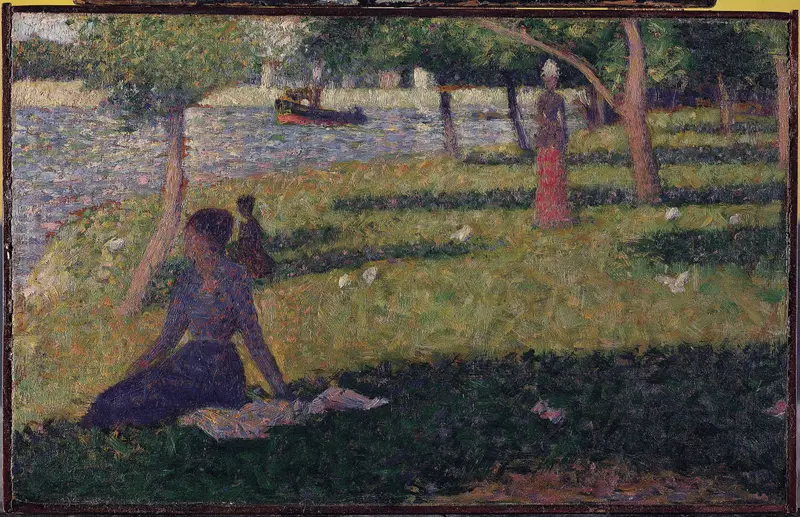
Étude pour ‘La Grande Jatte’ (Study for ‘La Grande Jatte’)
Georges Seurat
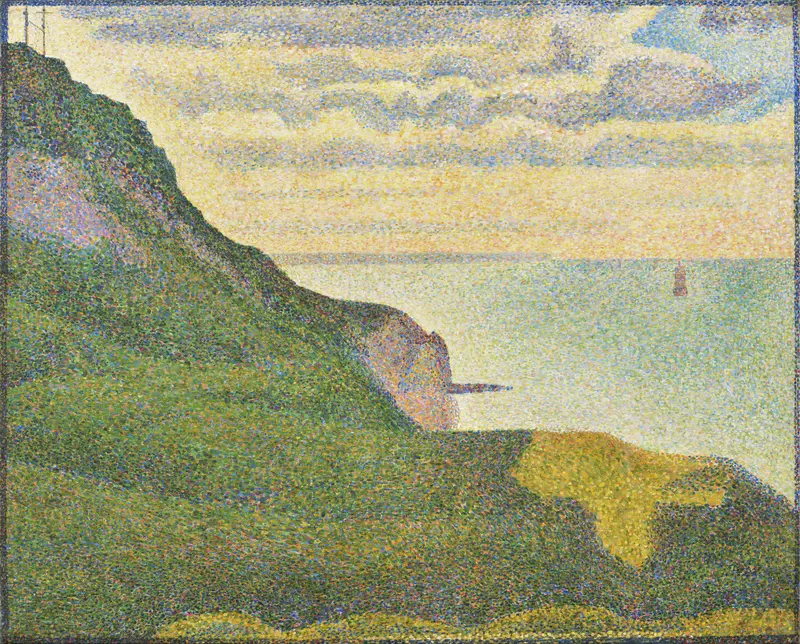
Seascape at Port-en-Bessin,Normandy
Georges Seurat
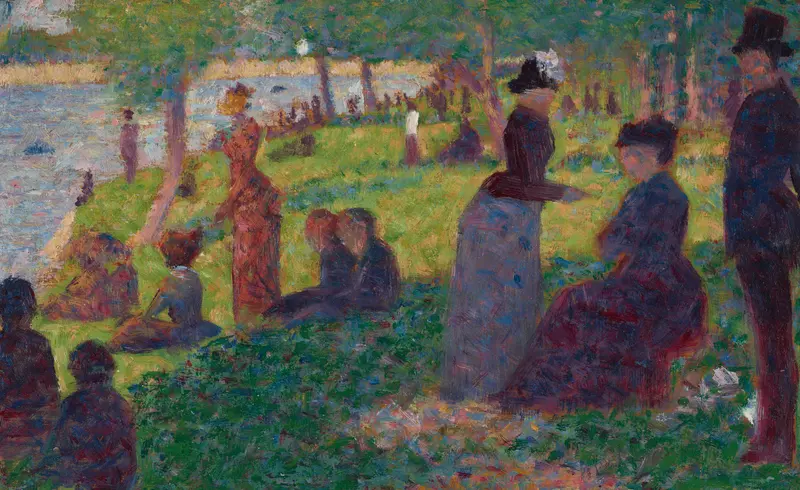
Oil Sketch for "A Sunday on La Grande Jatte — 1884"
Georges Seurat
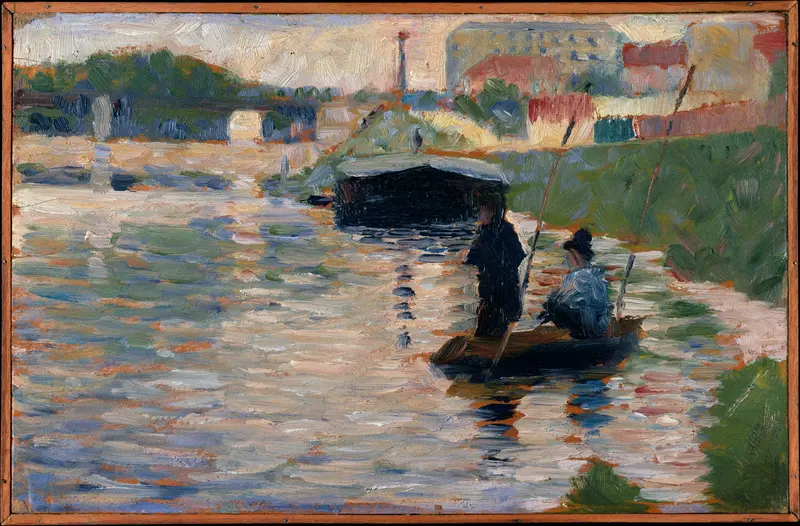
View of the Seine
Georges Seurat
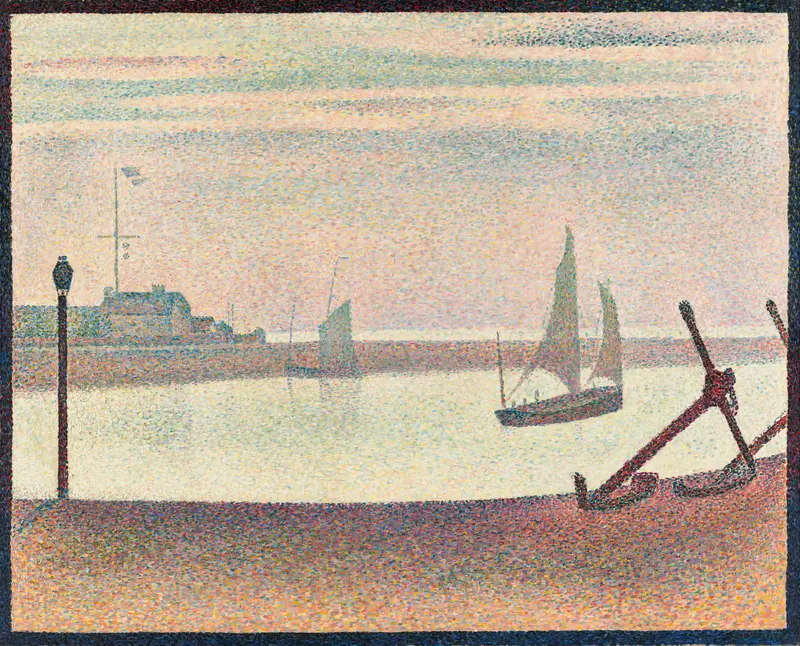
The Channel at Gravelines, Evening
Georges Seurat
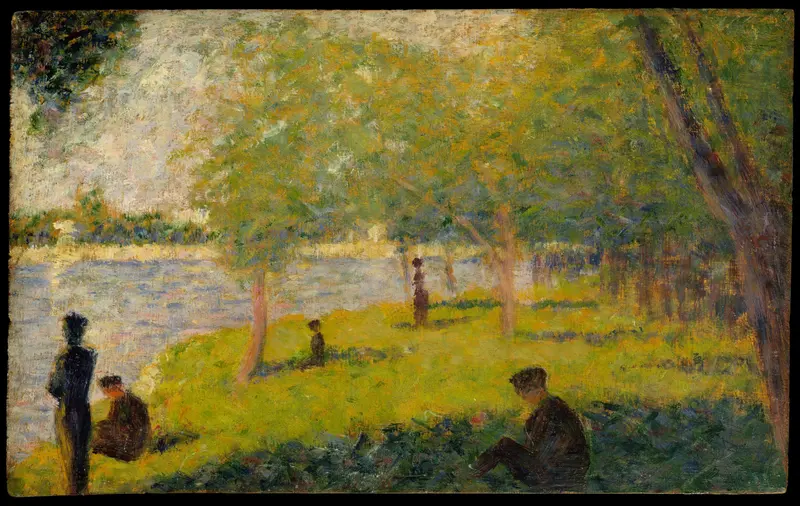
Study for ‘A Sunday on La Grande Jatte’
Georges Seurat
Study for A Sunday on La Grande Jatte
Georges Seurat
The Channel of Gravelines, Petit Fort Philippe
Georges Seurat





