
The Circus Parade (Study) — History & Facts
When Georges Seurat unveiled his large canvas The Circus Parade at the Salon des Indépendants in 1889, critics were already familiar with his painstaking preparations—this small Study from 1887 is one of several that survive, offering a rare glimpse into the artist’s methodical process. Unlike many of his contemporaries, Seurat worked obsessively through sketches and studies before committing to a final composition, and these preparatory works have become prized for the way they reveal his evolving vision. The parade itself was a familiar Parisian spectacle, but in the 1880s, the circus was also a symbol of modern urban life, its performers and crowds a favorite subject for artists seeking to capture the energy of the city. In this Study, the moment is one of anticipation: a procession of horses, acrobats, and musicians advances through a bustling street, their forms reduced to shimmering dots and dashes.
The central horse, poised mid-stride, draws the eye forward, while the crowd blurs into a tapestry of hats and faces. The pointillist technique—tiny, distinct touches of color—creates a sense of movement and light, echoing the fleeting excitement of the parade itself. Compared to Renoir’s more fluid The Circus or Degas’s dynamic pastels of performers, Seurat’s approach is analytical, almost scientific, yet still manages to conjure the thrill of spectacle. The precise provenance of The Circus Parade (Study) is unclear, as many of Seurat’s studies circulated among friends and collectors before entering public collections.
It is likely that this work was created in the artist’s Paris studio as part of his preparations for the finished painting, which now hangs in the Musée d’Orsay. As with his studies for A Sunday Afternoon on the Island of La Grande Jatte, these smaller works are now valued for the insight they provide into Seurat’s working methods and the evolution of Pointillism. Today, The Circus Parade (Study) is recognized not only as a step toward a major painting, but as a lively document of a vanished Paris.
More Artworks by Georges Seurat
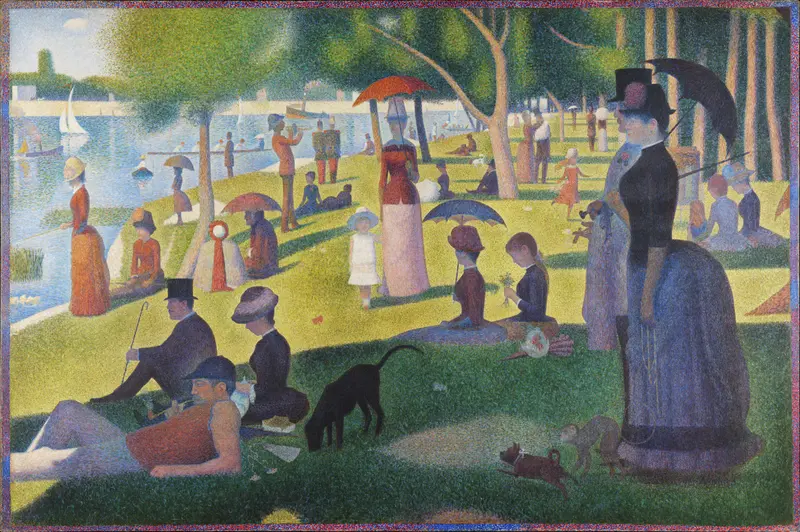
A Sunday Afternoon on the Island of La Grande Jatte
Georges Seurat
Port-en-Bessin, The Outer Harbor (Low Tide)
Georges Seurat
Étude pour ‘La Grande Jatte’ (Study for ‘La Grande Jatte’)
Georges Seurat
Seascape at Port-en-Bessin,Normandy
Georges Seurat
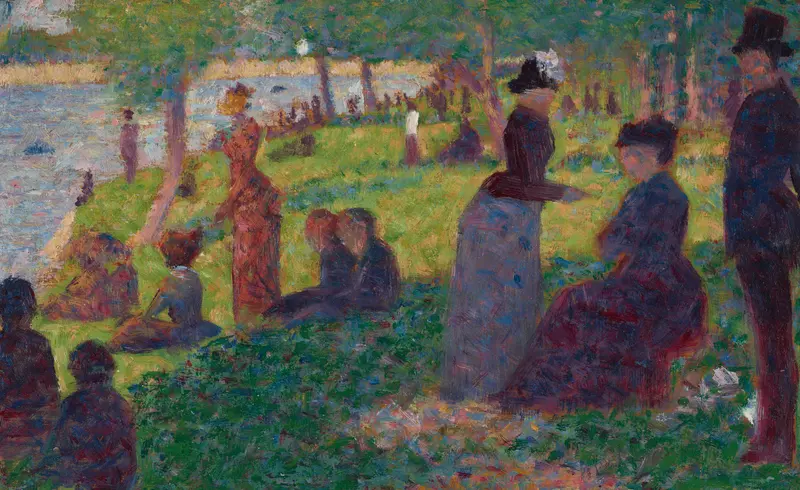
Oil Sketch for "A Sunday on La Grande Jatte — 1884"
Georges Seurat
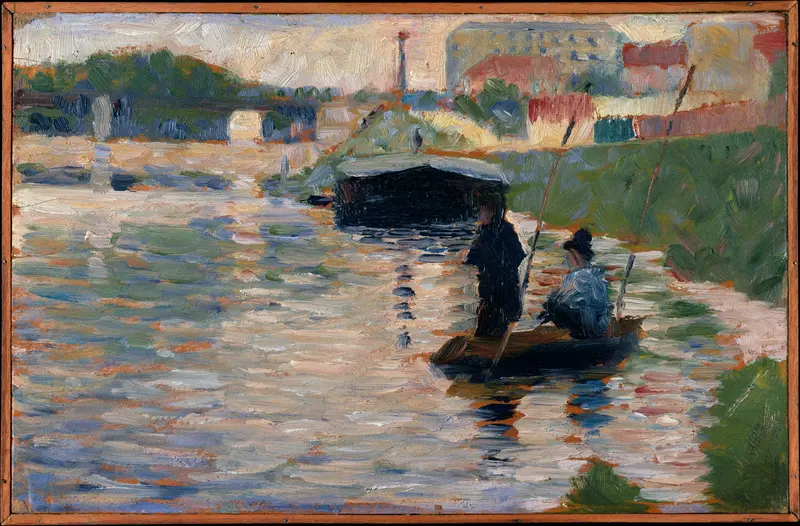
View of the Seine
Georges Seurat
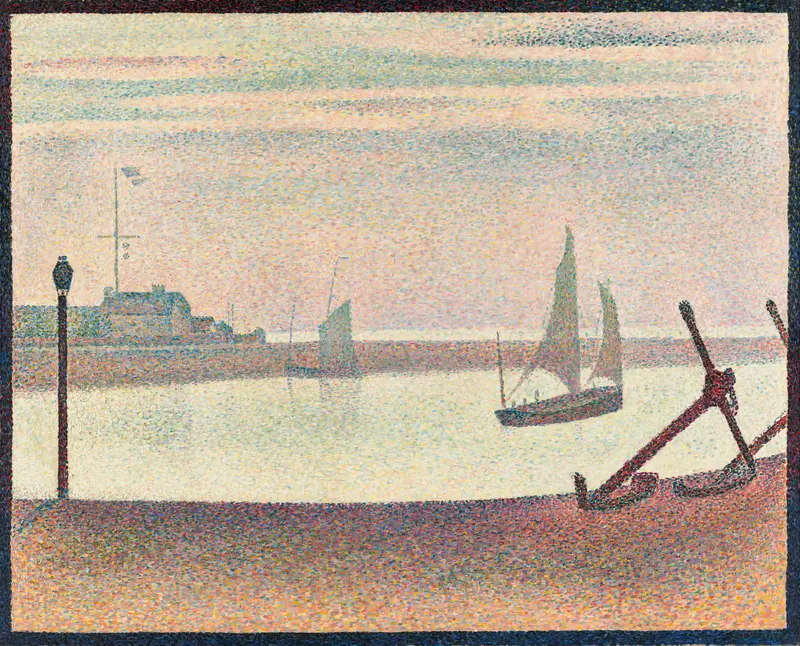
The Channel at Gravelines, Evening
Georges Seurat
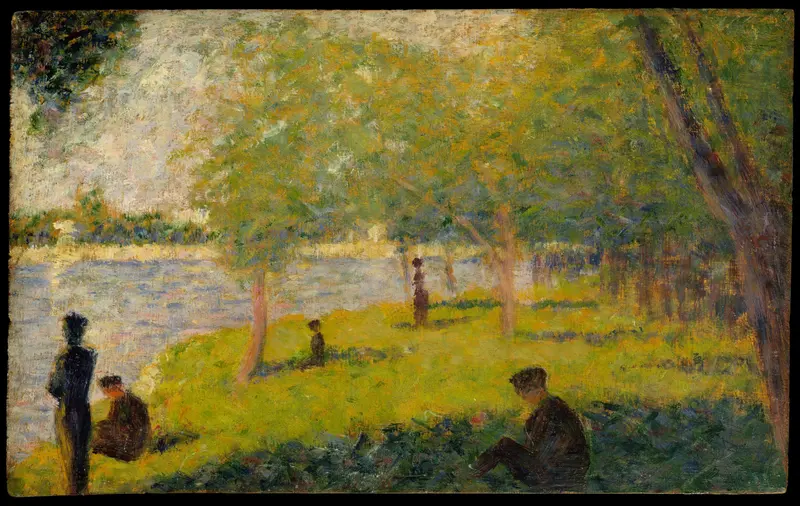
Study for ‘A Sunday on La Grande Jatte’
Georges Seurat
Study for A Sunday on La Grande Jatte
Georges Seurat
The Channel of Gravelines, Petit Fort Philippe
Georges Seurat
More Genre Scene Art

Banquet of the Officers of the St George Civic Guard
Frans Hals

Rembrandt and Saskia in the Scene of the Prodigal Son
Rembrandt van Rijn

Bal du moulin de la Galette
Pierre-Auguste Renoir

Quadrille at the Moulin Rouge
Henri de Toulouse-Lautrec

A Burial at Ornans
Gustave Courbet

When Will You Marry?
Paul Gauguin