
The Close of Day — History & Facts
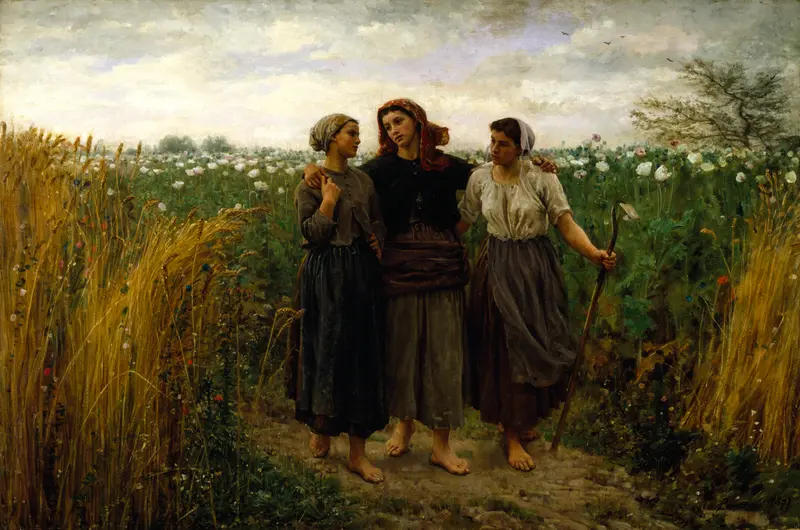
When The Close of Day was first exhibited at the Paris Salon of 1865, critics immediately recognized it as a defining statement of Jules Breton’s dedication to rural life. At a time when urbanization was rapidly transforming France, Breton’s focus on the dignity and quiet endurance of peasant laborers was both a political and artistic choice. The painting became so admired that it was reproduced in engravings and inspired later artists, helping to cement Breton’s reputation as the leading interpreter of the French countryside.
Its popularity even reached across the Atlantic, influencing American painters of rural scenes. A group of weary fieldworkers, backs bent and faces turned toward the fading sun, make their slow way home across the stubbled fields. Breton chooses the moment just after the day’s labor, when the golden light lingers on the horizon and the figures are silhouetted against the sky. The women’s kerchiefs and baskets, rendered with careful attention, speak to their daily routines, while the subtle play of light on their faces and hands hints at both fatigue and quiet satisfaction.
Unlike the idealized peasants of Jean-François Millet, Breton’s workers are individualized and grounded in a specific place and time, their humanity emphasized by the gentle glow that envelops them. The original medium of The Close of Day is not clearly recorded, though Breton most often worked in oil on canvas. The painting’s whereabouts have shifted over the years, as it passed through private collections and exhibitions, but it remains a key example of the Realist movement’s concern with everyday life. For Breton, this work marked a high point in his career, reinforcing his role as a chronicler of rural France and earning him lasting acclaim.
Today, The Close of Day is frequently cited in discussions of 19th-century French painting, valued for its honest depiction of labor and its quiet lyricism.
More Artworks by Jules Breton

The Song of the Lark
Jules Breton
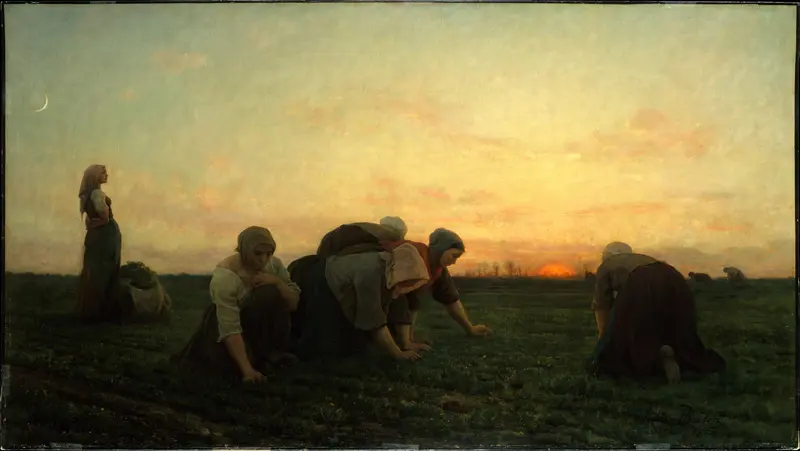
The Weeders
Jules Breton
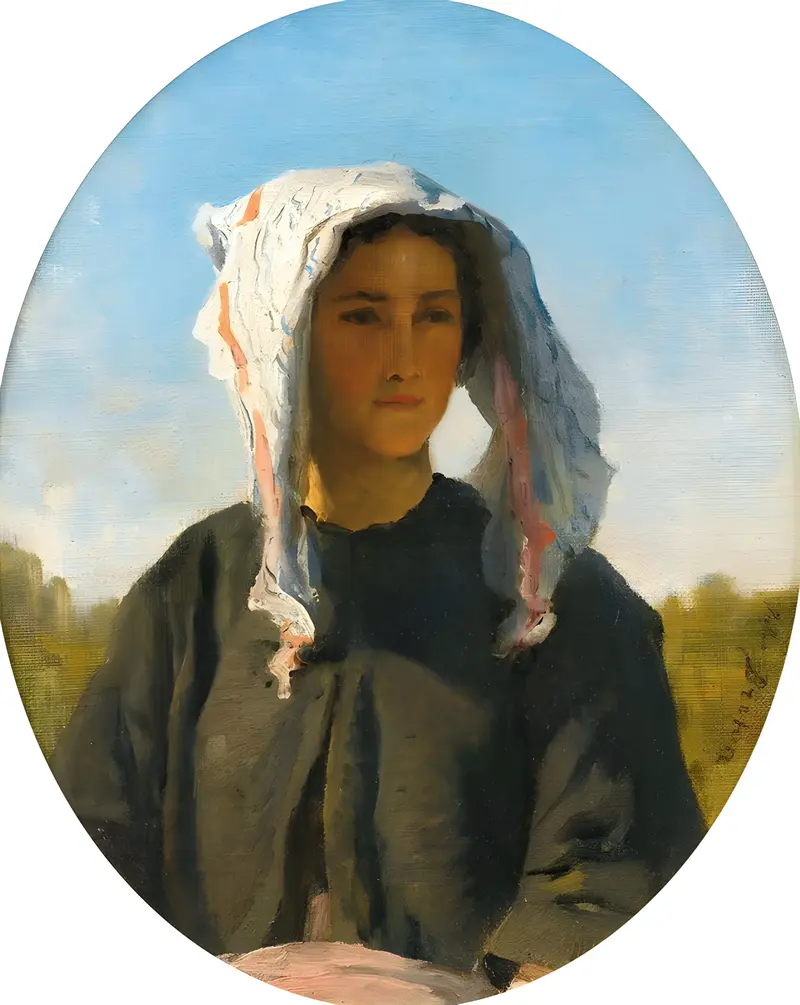
Portrait de jeune Paysanne Bordelaise
Jules Breton
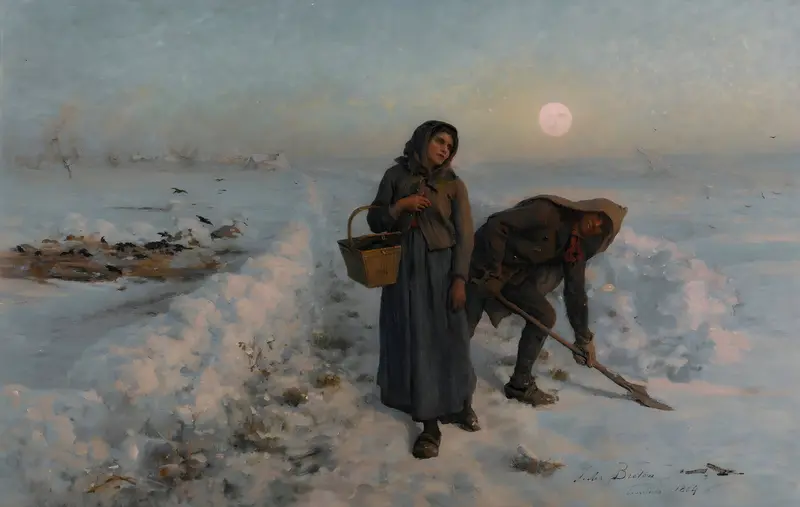
Sur la route en hiver; artois
Jules Breton
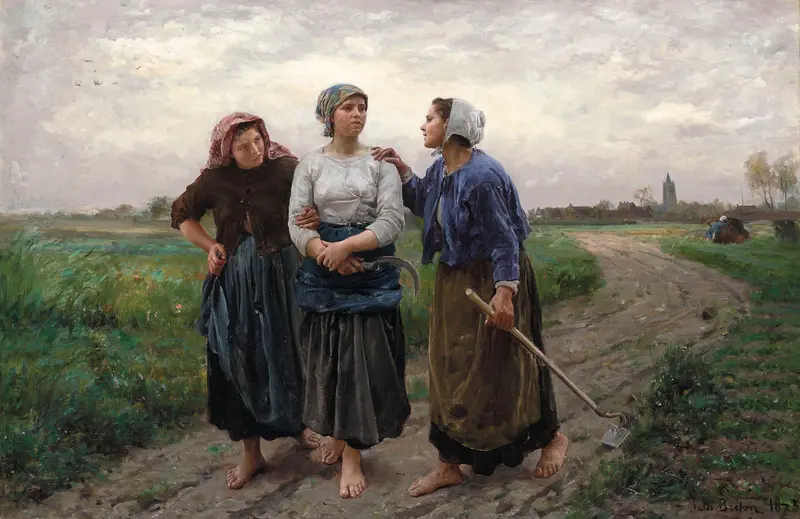
Les amies
Jules Breton
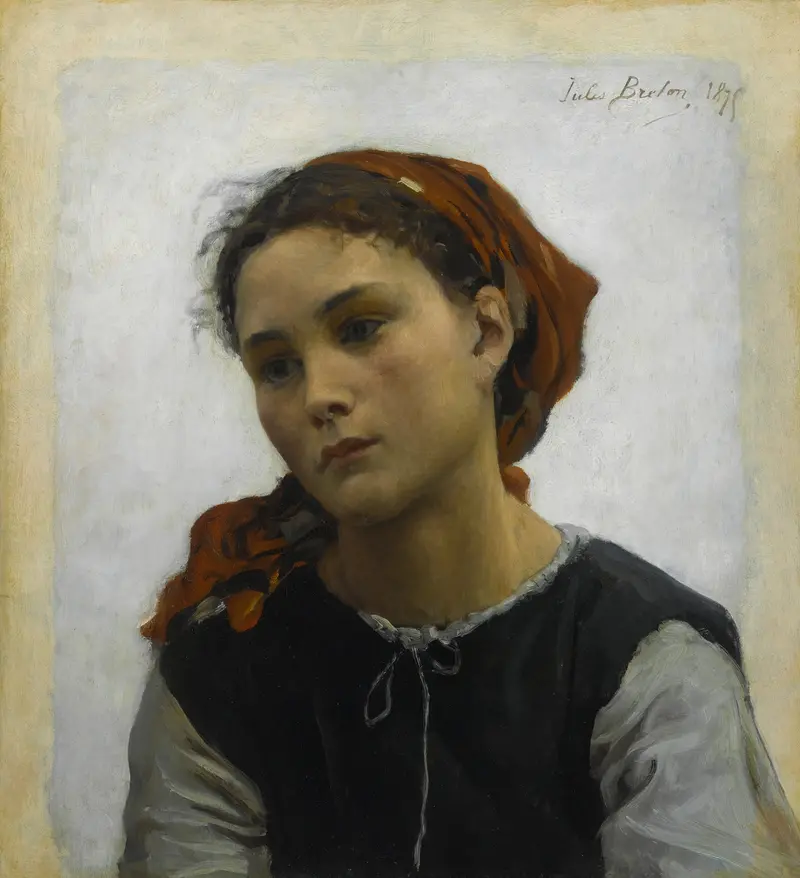
Innocente
Jules Breton
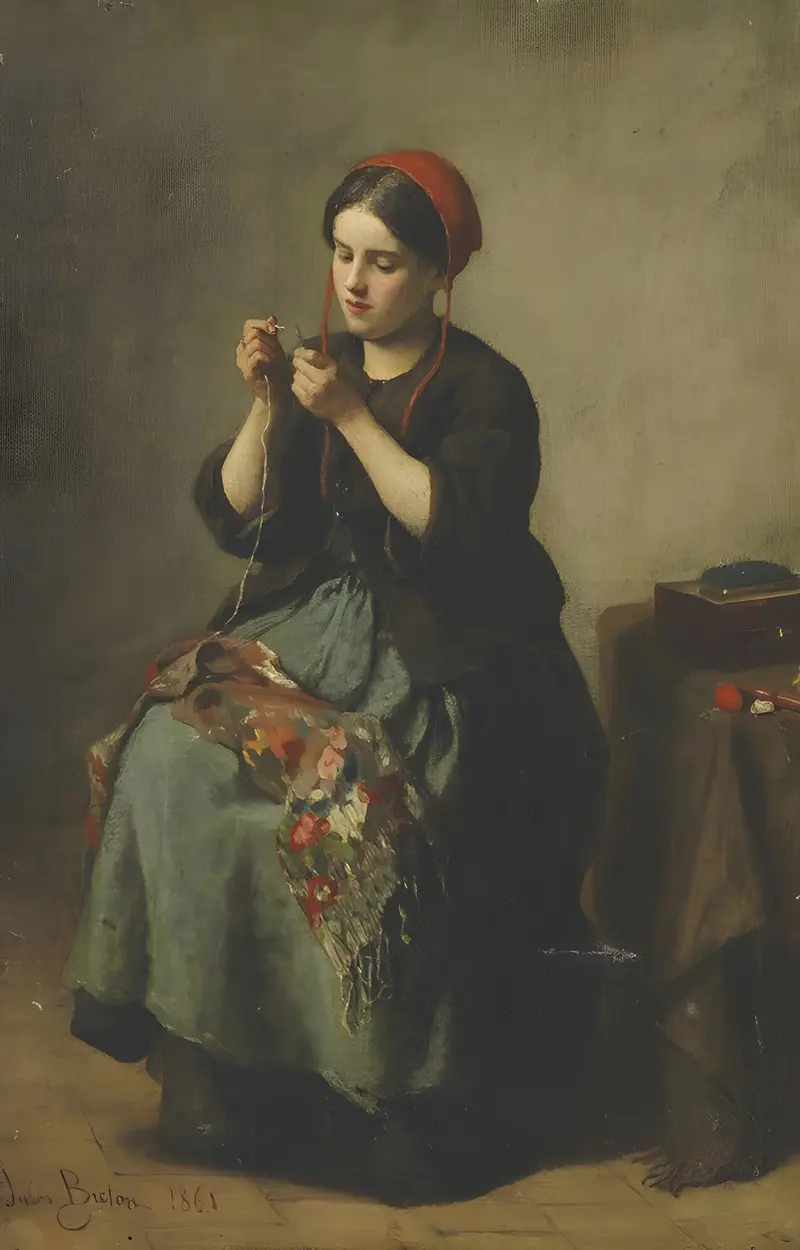
Peasant woman threading a needle
Jules Breton
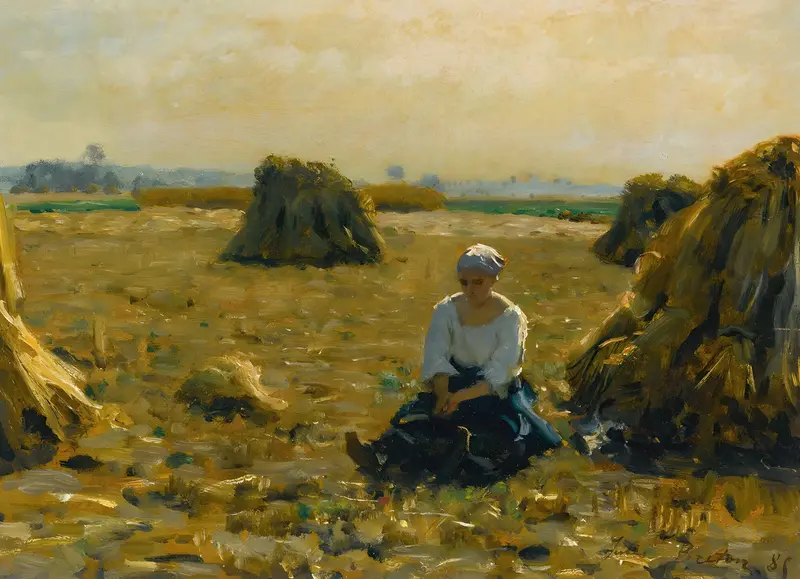
Jeune femme dans les champs
Jules Breton
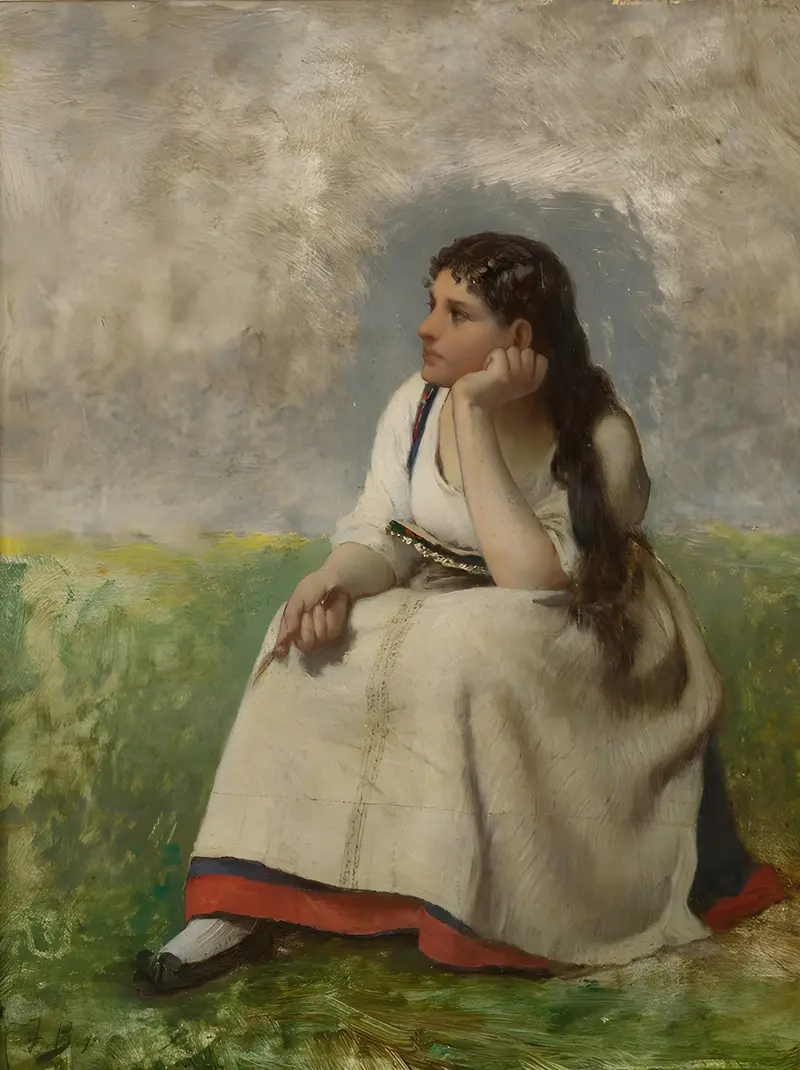
Jeune Fille Pensive
Jules Breton
Returning from the Fields
Jules Breton
More Genre Scene Art

Banquet of the Officers of the St George Civic Guard
Frans Hals

Rembrandt and Saskia in the Scene of the Prodigal Son
Rembrandt van Rijn

Bal du moulin de la Galette
Pierre-Auguste Renoir

Quadrille at the Moulin Rouge
Henri de Toulouse-Lautrec

A Burial at Ornans
Gustave Courbet

When Will You Marry?
Paul Gauguin