
The Departure of Väinämöinen — History & Facts
The first thing to strike the viewer is the way a single, commanding figure—clad in a crimson cloak and crowned with a mane of white hair—anchors the entire scene. His stern gaze and resolute posture draw the eye, but it is the crowd on the shore, their faces marked by worry, sorrow, and awe, that gives the moment its emotional charge. The painter has staged a drama of farewell: the oar gripped in the old man's hand signals imminent departure, while the clustering figures—some clasping hands, others lost in thought—suggest a community on the edge of loss.
Light falls most strongly on the central figure, setting him apart from the earthier tones of the onlookers, and the sweep of his beard and cloak echoes the movement of the boat, as if the land itself is reluctantly letting go. Painted in 1906, this work belongs to a world where national epics and folklore were being rediscovered and reimagined for a new century. In Finland, artists like Akseli Gallen-Kallela drew on the Kalevala—the country’s foundational myth—to forge a visual language of identity and longing. Such paintings were often commissioned for public spaces or civic collections, intended to inspire pride and unity in a time of political uncertainty.
Today, The Departure of Väinämöinen resides in the Hämeenlinna Art Museum, a reminder of how myth and memory entwine in the search for belonging. The faces in the painting invite us to linger, to wonder what is being left behind—and what might still return.
More Artworks by Akseli Gallen-Kallela
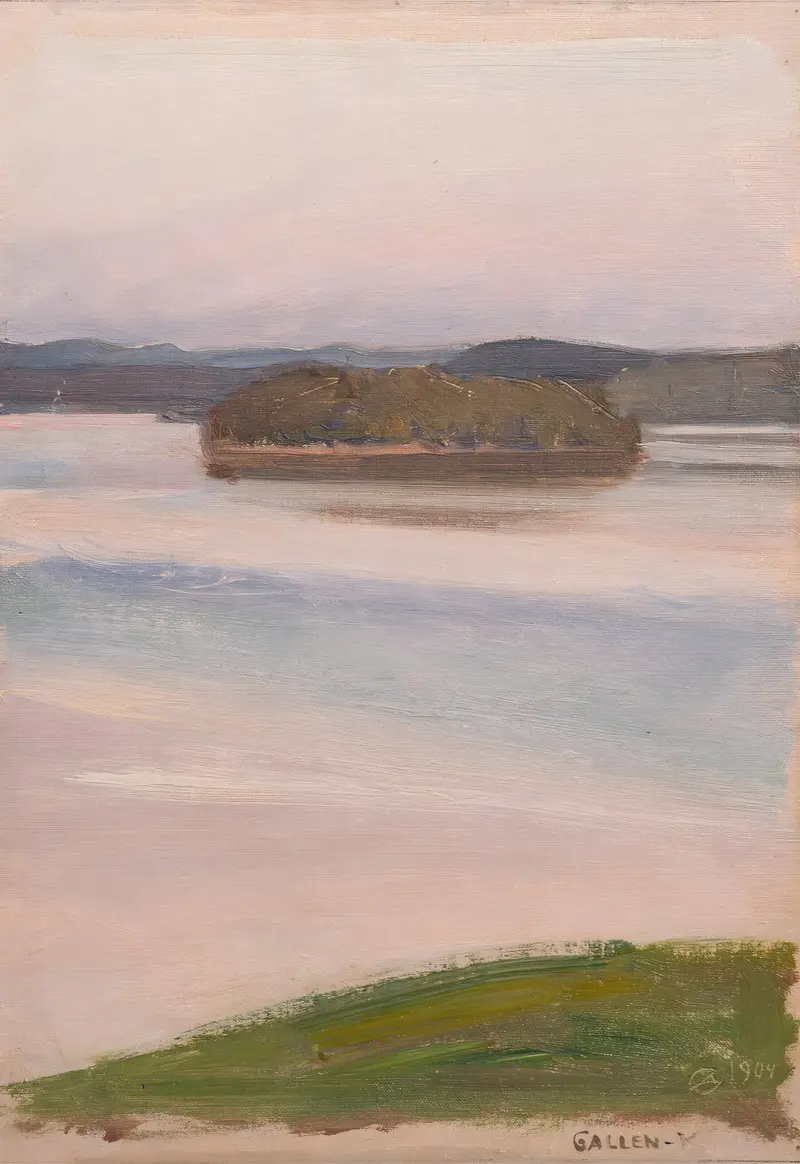
Lake Keitele
Akseli Gallen-Kallela
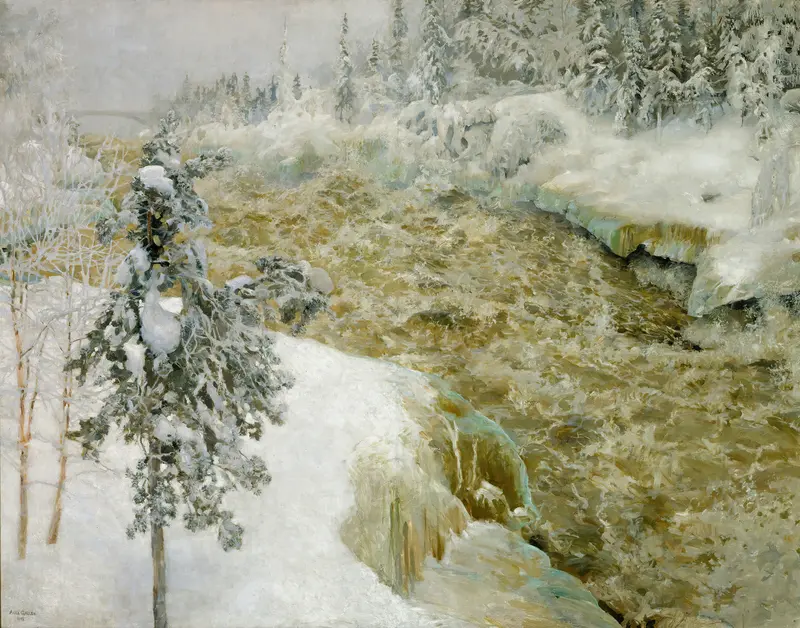
Imatra Falls in Snow ; Imatra in Winter
Akseli Gallen-Kallela
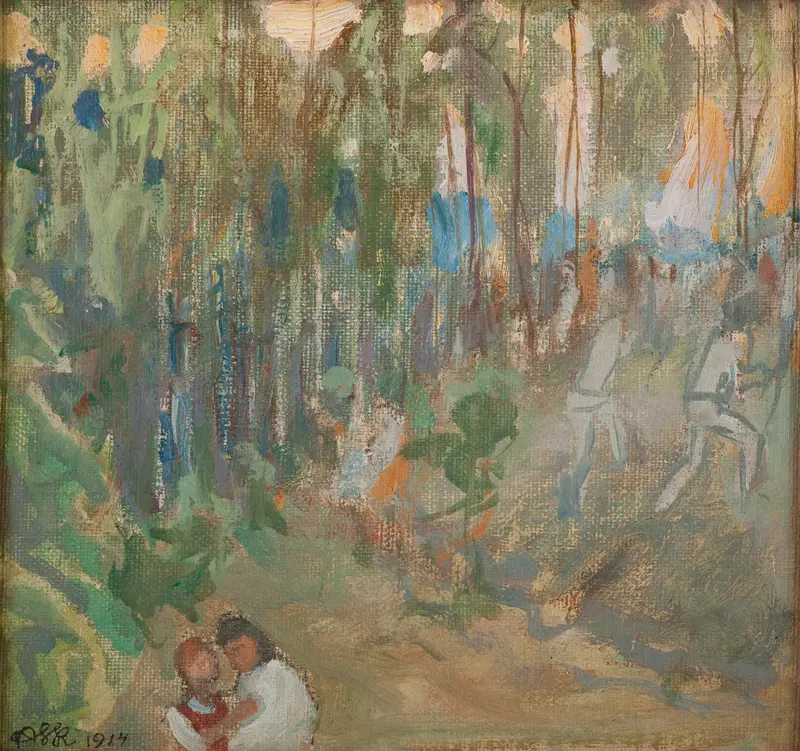
Vainovalkeat
Akseli Gallen-Kallela
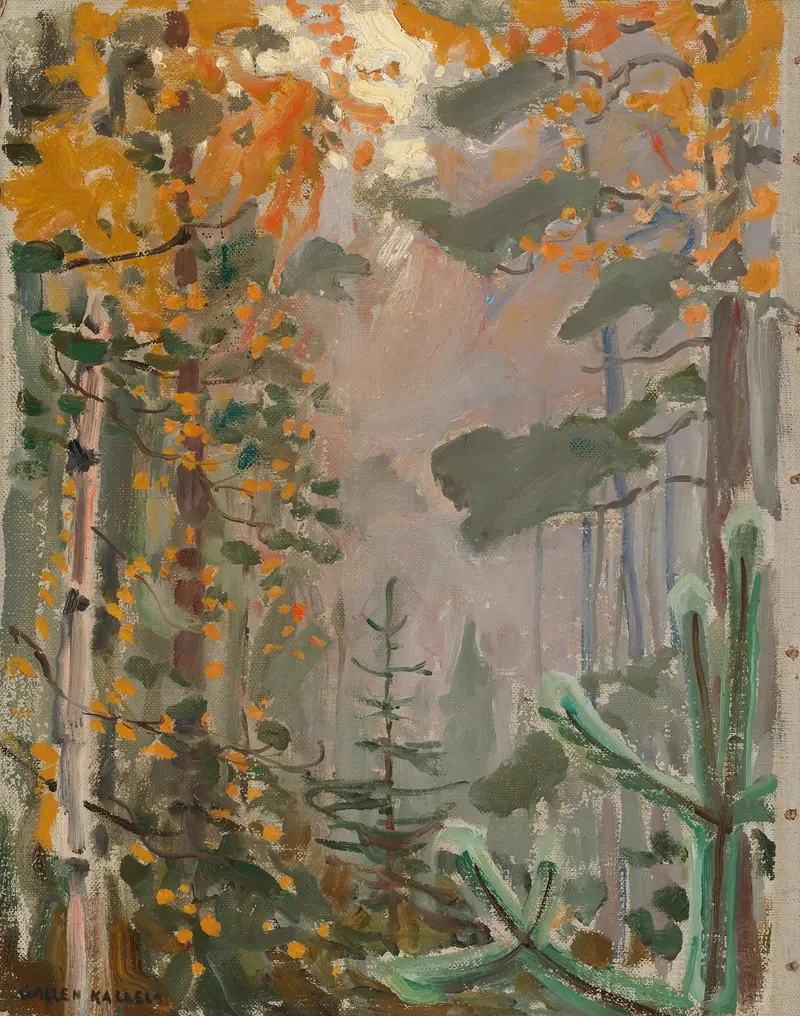
Autumn Landscape
Akseli Gallen-Kallela
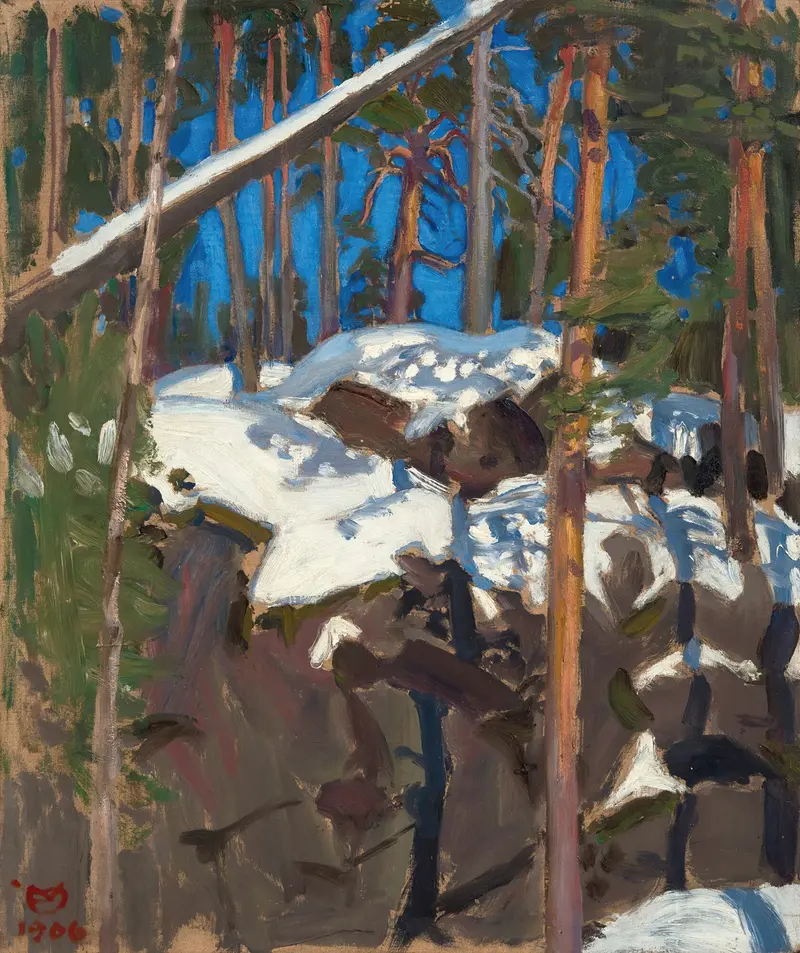
Spring Sun At Konginkangas
Akseli Gallen-Kallela
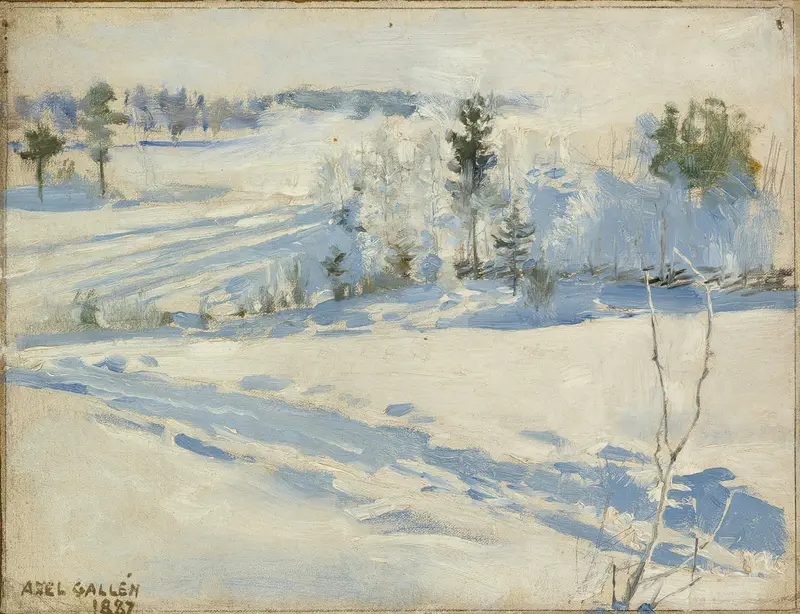
Winter Landscape
Akseli Gallen-Kallela

First Snow
Akseli Gallen-Kallela
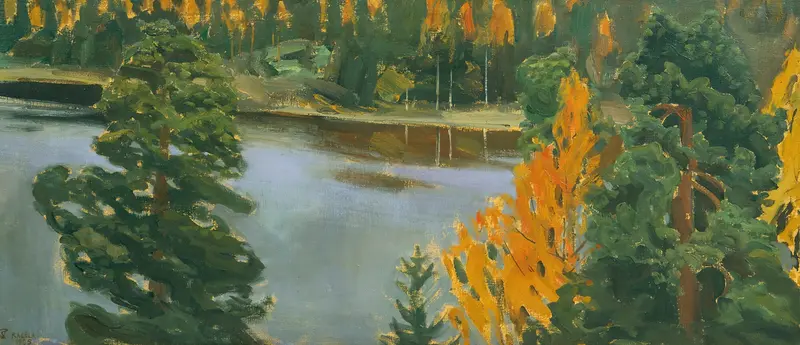
Lake View In Autumn
Akseli Gallen-Kallela
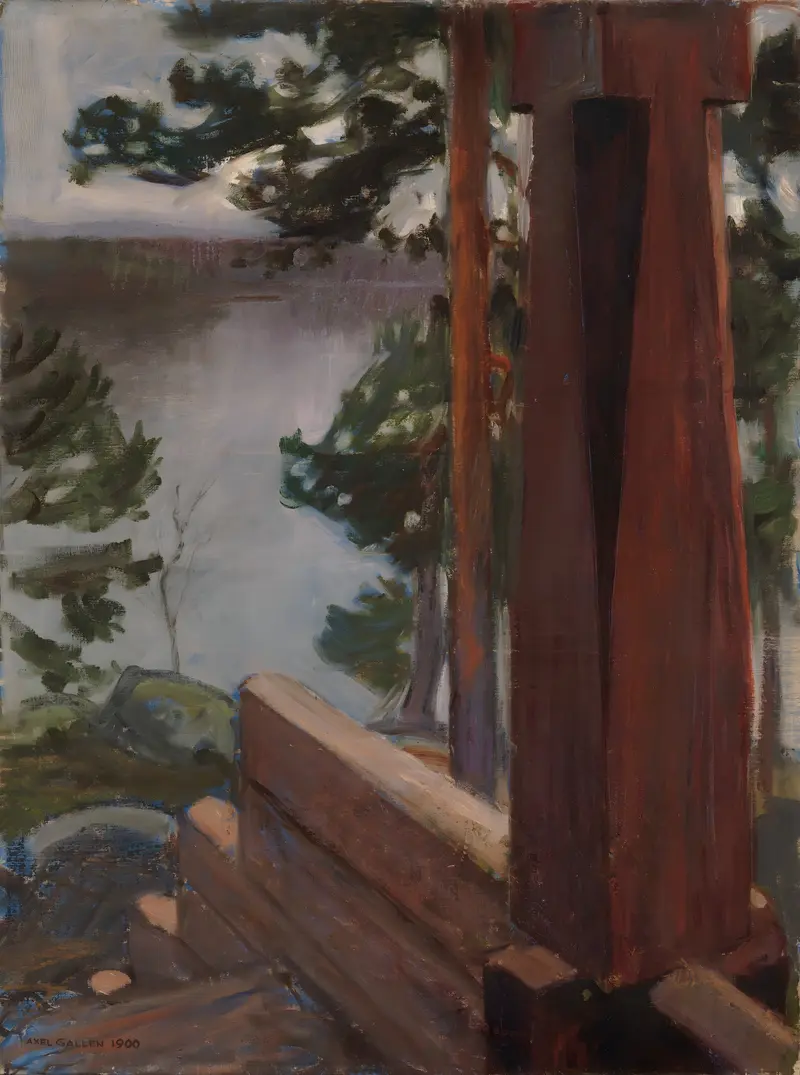
The Kalela Porch
Akseli Gallen-Kallela

Light Behind The Clouds
Akseli Gallen-Kallela





