
The Ghost of a Flea — History & Facts
When William Blake unveiled The Ghost of a Flea in 1819, he claimed the figure was not a product of his imagination, but a literal vision: a spirit he encountered during a séance with the astrologer John Varley. Blake described the apparition as a monstrous, humanoid creature, part man and part insect, which he believed to be the spiritual essence of the common flea. This bizarre vision, both unsettling and captivating, quickly became a talking point among Blake’s circle, who were already accustomed to his mystical revelations and unconventional art. At the center of the small, dark panel stands the ghostly Flea, a muscular, reptilian figure with bulging eyes, a lizard-like tongue, and a bowl of blood in its hand.
The creature’s elongated limbs and heavy, scaled skin suggest both strength and predation, while the golden vessel hints at its insatiable thirst. Behind it, a curtain is drawn back to reveal a starry void, reinforcing the sense of a supernatural visitation. Blake’s choice to depict the Flea as a menacing, almost heroic figure, rather than a mere pest, sets his vision apart from the satirical insects of James Gillray or the moralizing animals of George Stubbs.
Here, the Flea becomes a symbol of violence and excess, a warning about the darker impulses lurking within the human soul. Painted in tempera and gold on a small mahogany panel, The Ghost of a Flea is one of Blake’s rare excursions into miniature painting, measuring just over 21 centimeters high. It was never formally exhibited in Blake’s lifetime, but remained in the Varley family before entering the collection of the Tate Gallery, where it resides today. The work stands out in Blake’s career as both a technical curiosity and a testament to his visionary practice, bridging his illuminated books and his late mythological watercolors.
Its survival and continued fascination reflect the enduring power of Blake’s imagination—and his willingness to paint what others could not see.
More Artworks by William Blake
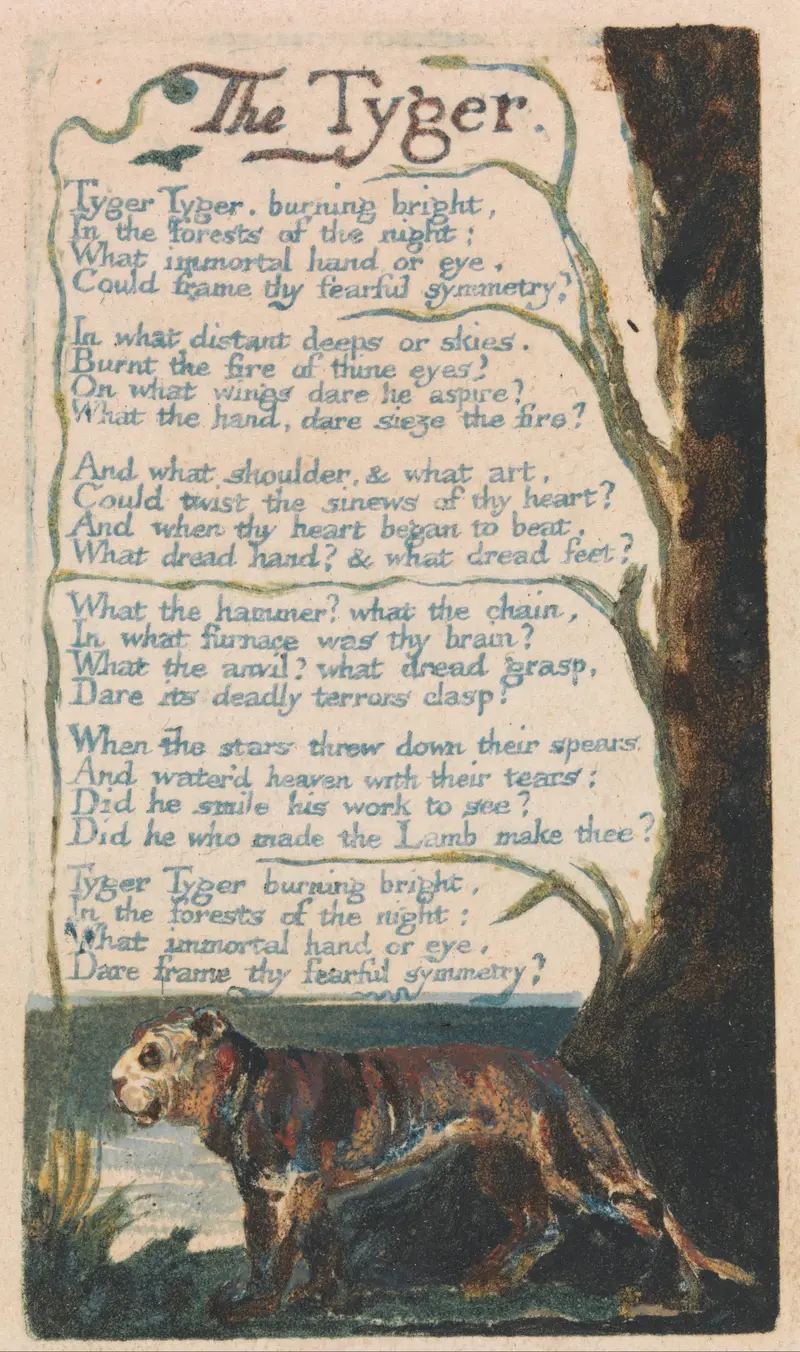
The Tyger
William Blake

Christ Blessing
William Blake
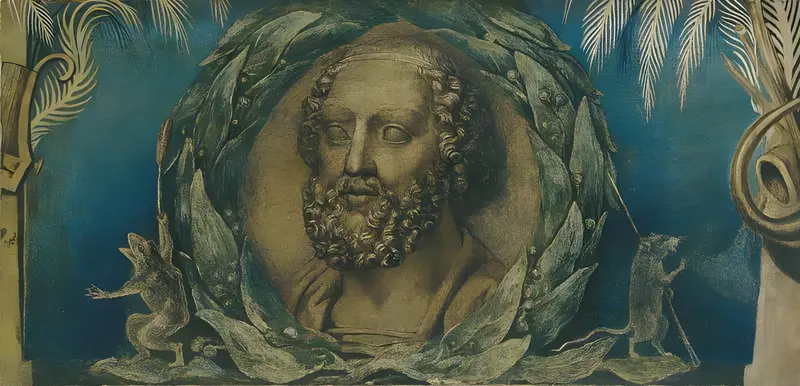
Homer
William Blake
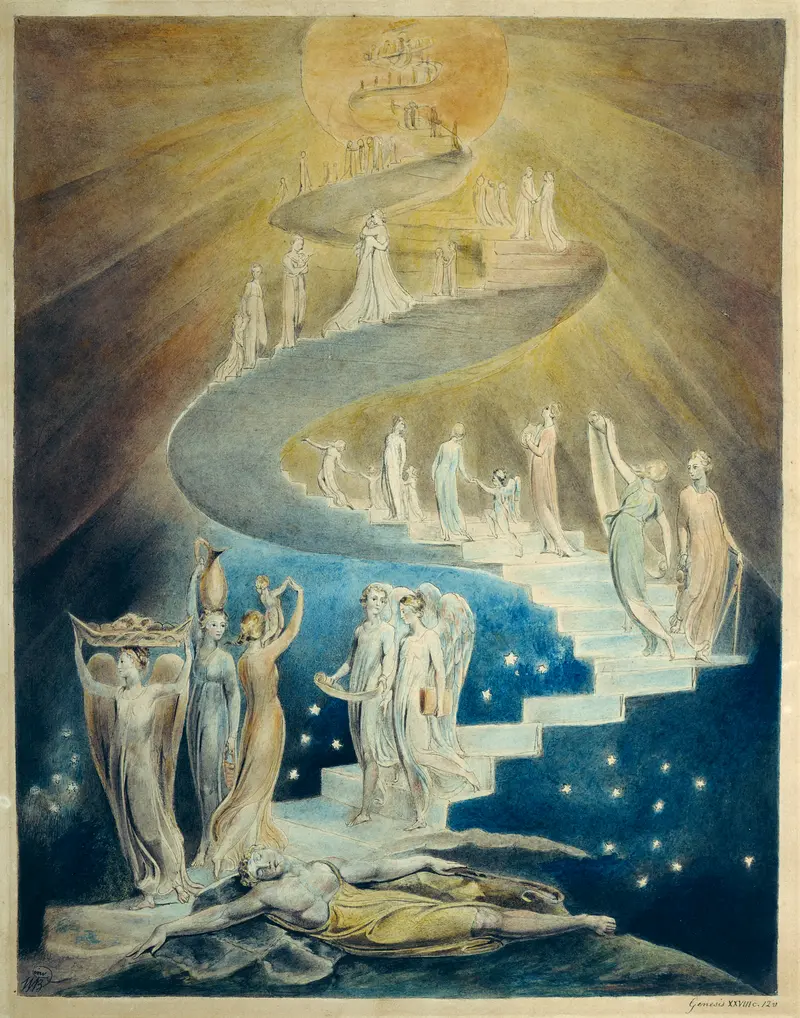
Jacob's Ladder
William Blake
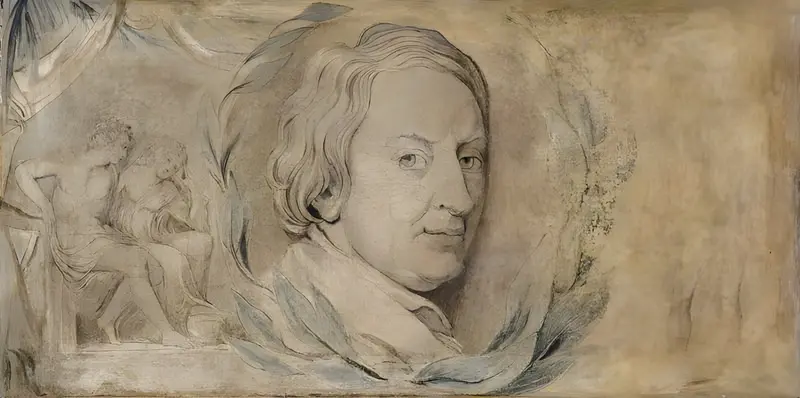
John Dryden (1631–1700)
William Blake
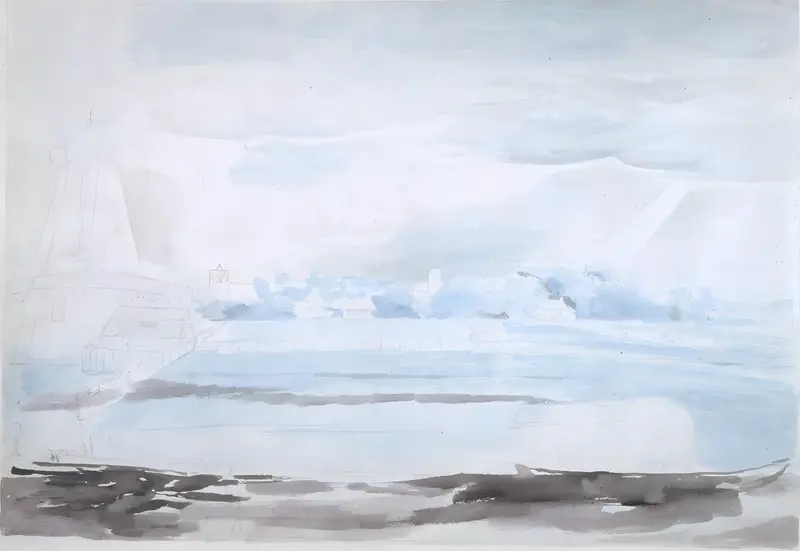
Landscape near Felpham
William Blake
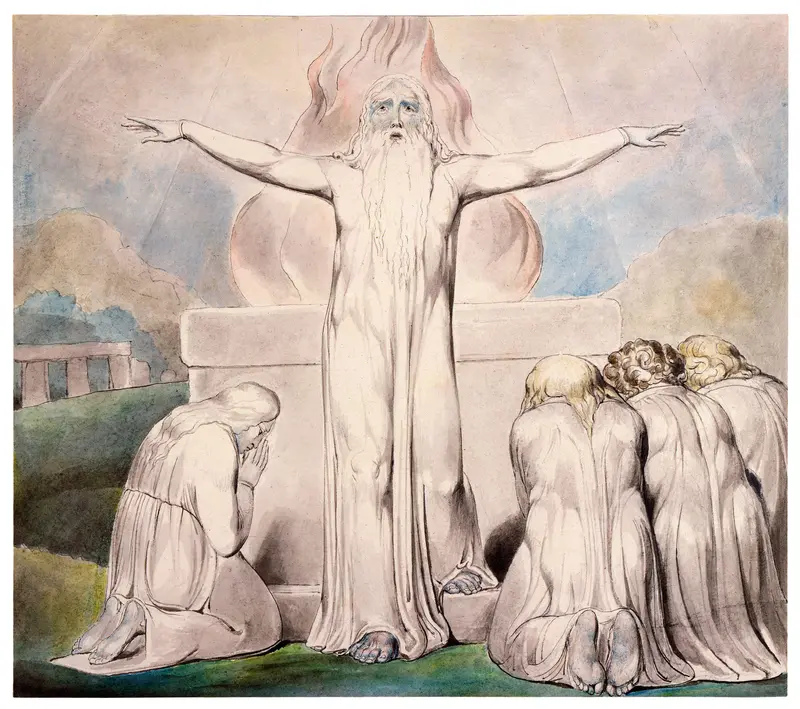
Sacrifice of Job
William Blake
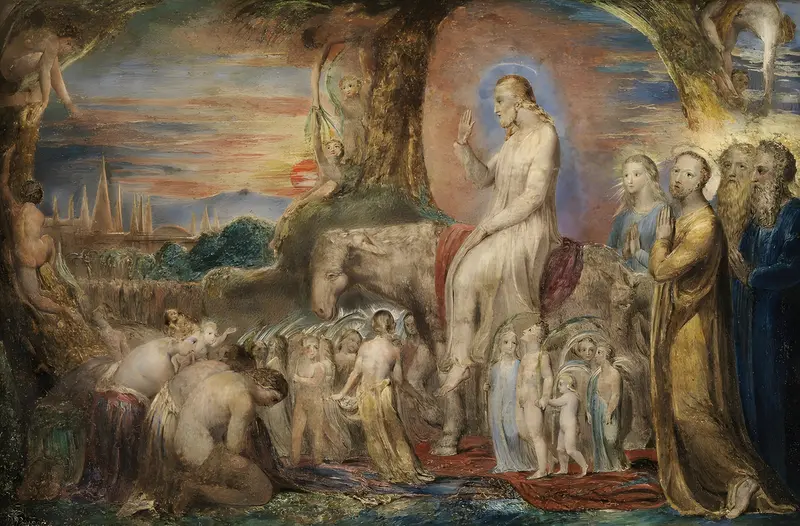
Christ's Entry into Jerusalem
William Blake
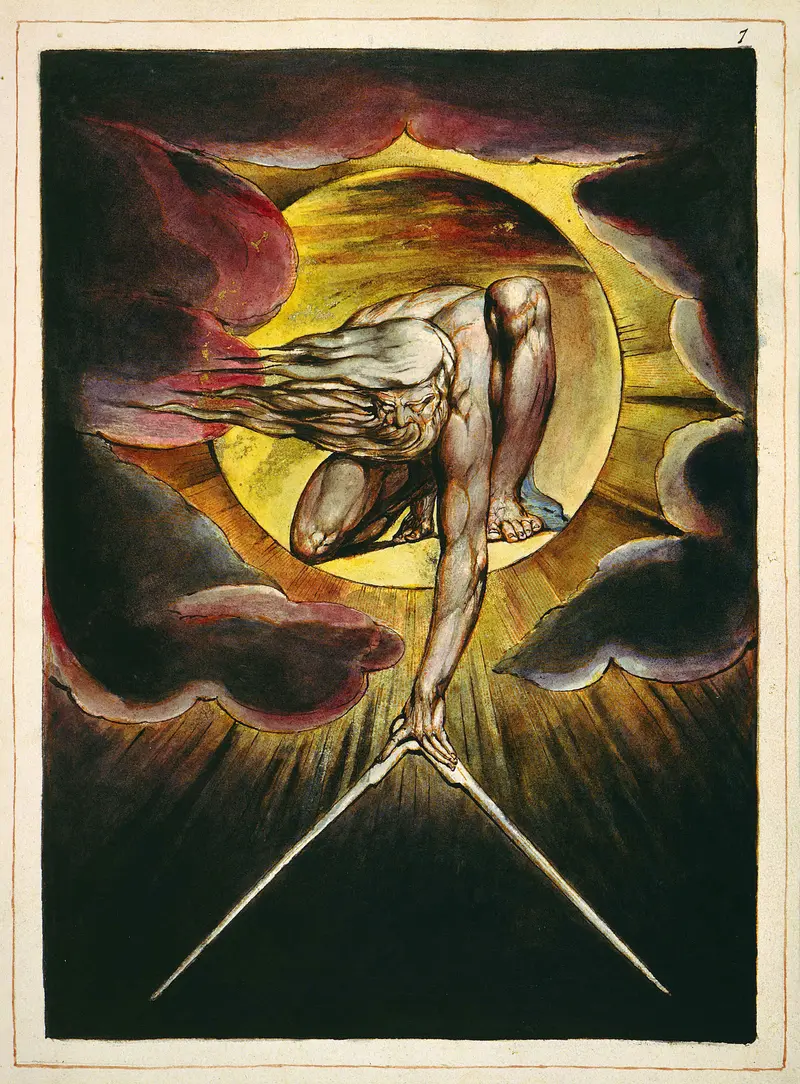
The Ancient of Days
William Blake
Adam Naming the Beasts
William Blake



