
The Lovers' Whirlwind, Francesca da Rimini and Paolo Malatesta — History & Facts
Few works in the Romantic era dared to visualize Dante’s most tragic lovers with such intensity as The Lovers' Whirlwind, Francesca da Rimini and Paolo Malatesta by William Blake. Created in 1824, this painting was part of a remarkable commission: the elderly Blake was asked by John Linnell to illustrate Dante’s Divine Comedy, a project that would become the artist’s final major undertaking. The story of Francesca and Paolo, condemned for their adulterous love, had already captured the imagination of poets and painters, but Blake’s vision stands apart for its feverish energy and spiritual drama. Blake chooses the moment in Dante’s Inferno when the poet encounters Francesca and Paolo, swept together in an eternal storm as punishment for their illicit passion.
The lovers are locked in a desperate embrace, their bodies twisting in the wind that never ceases—a visual metaphor for desire that cannot rest. Around them, ghostly forms whirl in the darkness, their fate sealed by the choices of their hearts. The artist’s swirling lines and luminous figures contrast sharply with, for example, Gustave Doré’s later, more literal engravings of the same episode.
In Blake’s hands, the storm is not just weather but the very substance of sin and longing, and the lovers’ clasp is both tender and anguished. The exact medium of this work remains uncertain—Blake often combined watercolor, ink, and tempera in his late illustrations—but it belongs to a set of Dante drawings and paintings that were left unfinished at his death in 1827. Many of these works, including The Lovers' Whirlwind, passed through the hands of Linnell’s family before entering public collections. Today, the piece is recognized as a testament to Blake’s visionary approach in his final years, merging poetry and image in a way that continues to challenge and inspire.
Its place in the artist’s oeuvre marks the culmination of a lifelong fascination with the interplay of the spiritual and the human.
More Artworks by William Blake
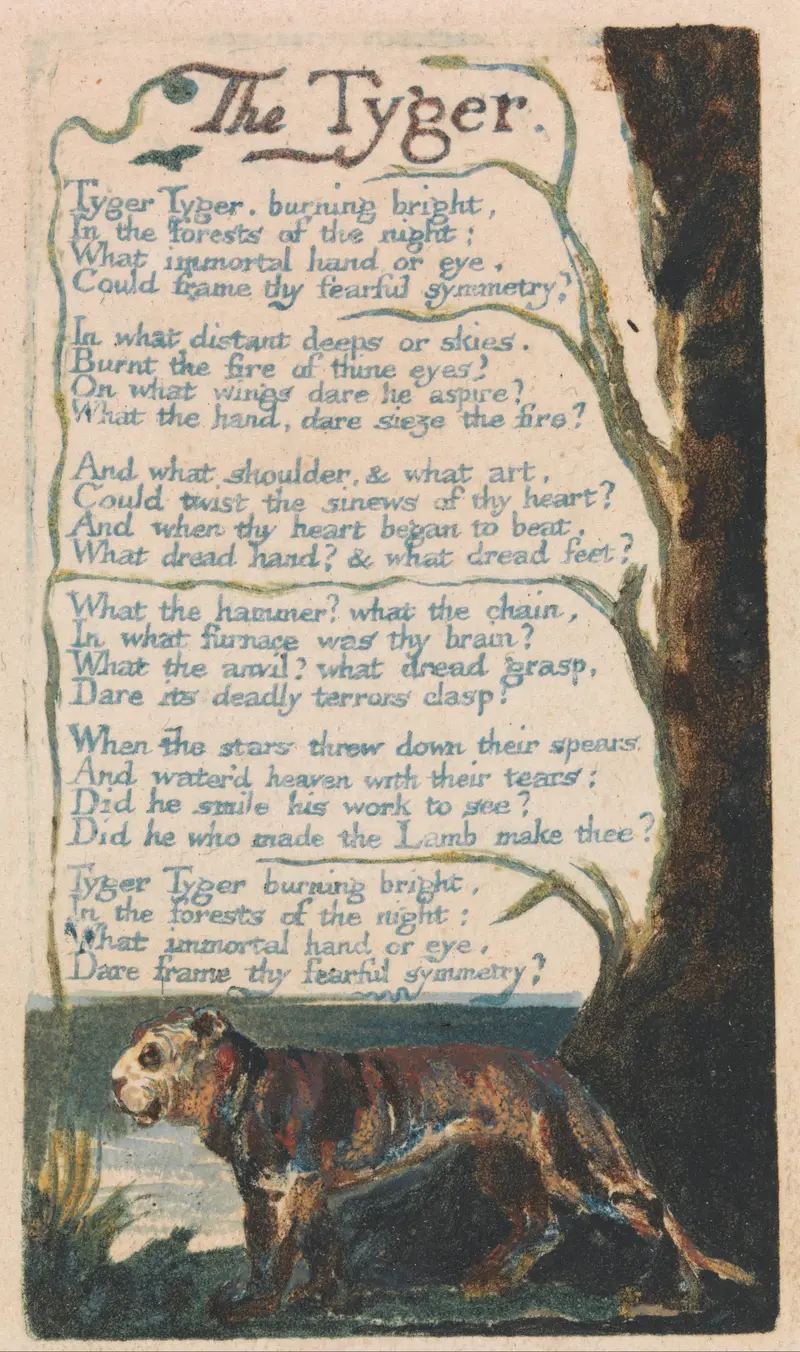
The Tyger
William Blake

Christ Blessing
William Blake
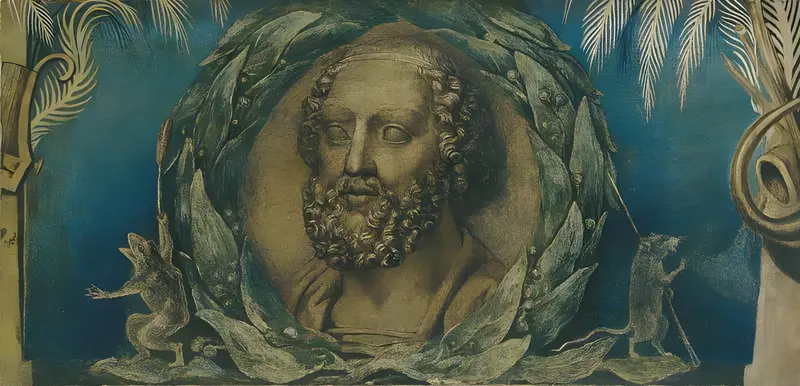
Homer
William Blake
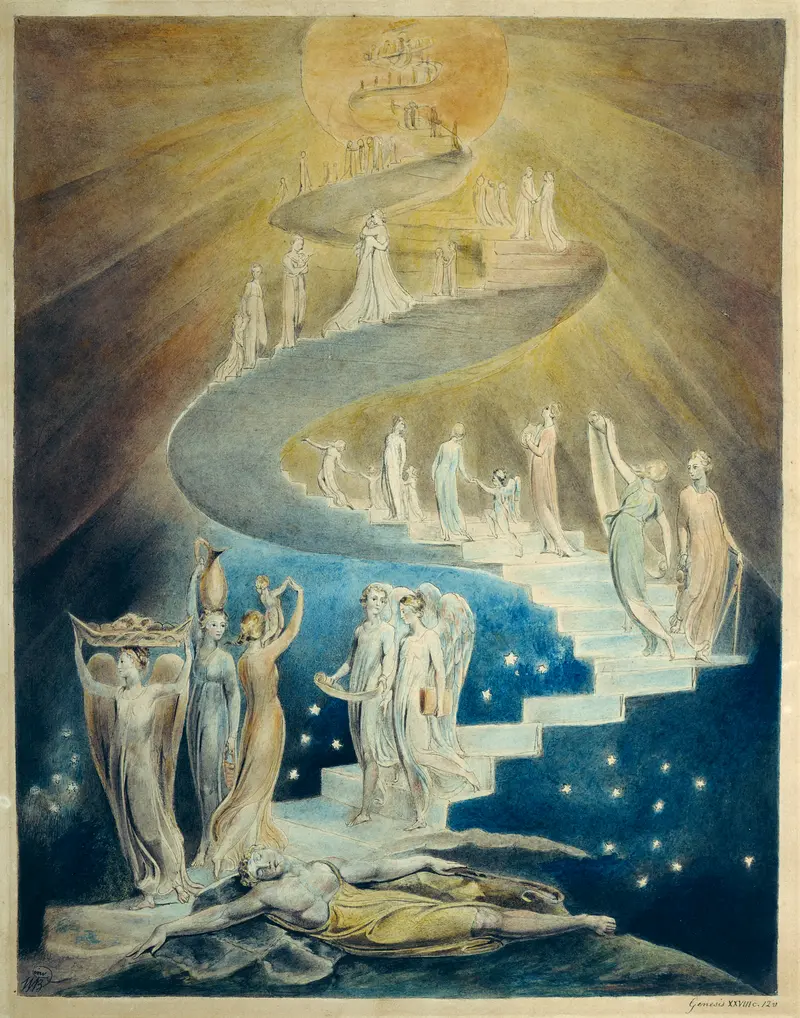
Jacob's Ladder
William Blake
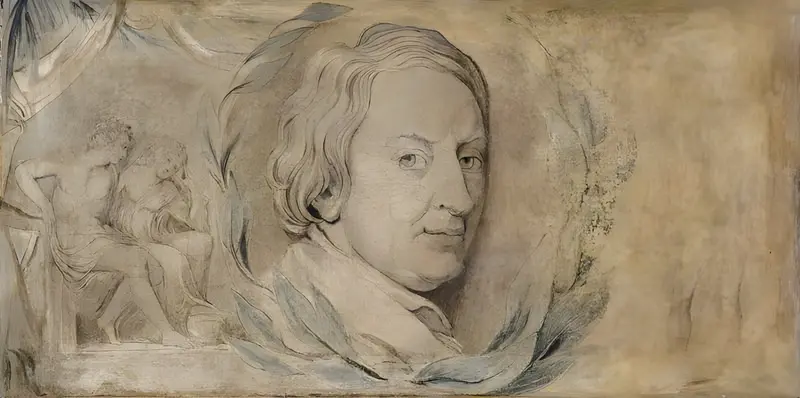
John Dryden (1631–1700)
William Blake
Landscape near Felpham
William Blake
Sacrifice of Job
William Blake
Christ's Entry into Jerusalem
William Blake
The Ancient of Days
William Blake
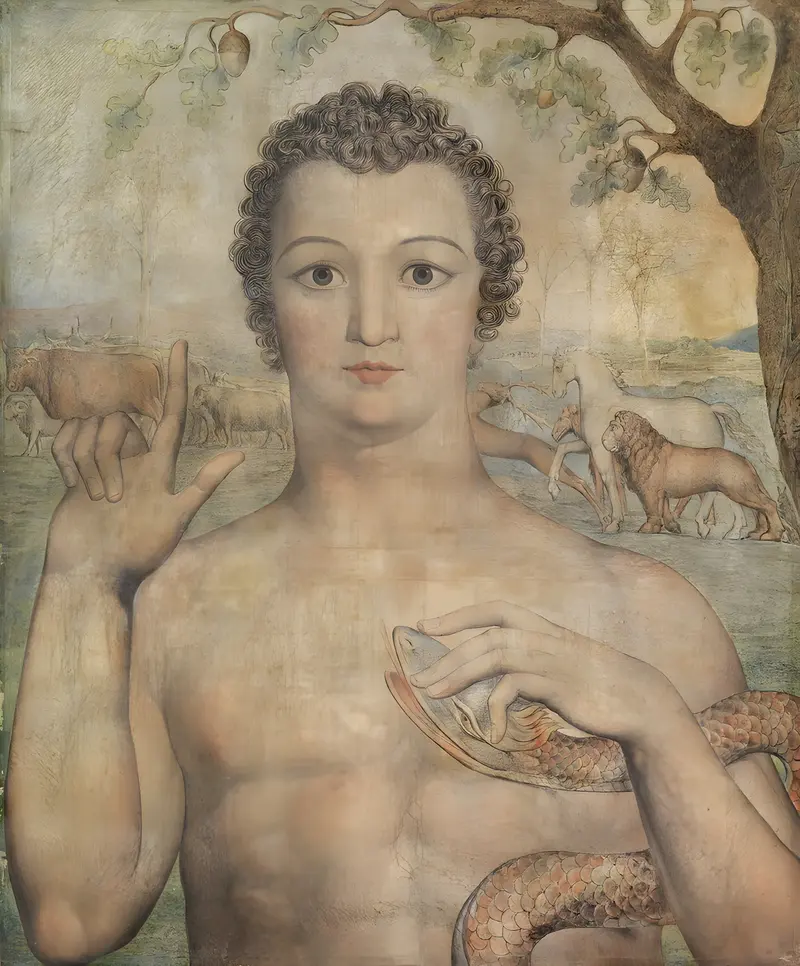
Adam Naming the Beasts
William Blake





