
The Lunch — History & Facts
When The Lunch appeared in Seville around 1617, it marked one of the earliest known signed works by the young Diego Velázquez, then just eighteen years old. The painting’s bold naturalism and earthy humor caught the attention of local collectors, signaling a new direction in Spanish painting. Scholars still debate whether this canvas was intended as a genre scene for a private home or as a demonstration piece to attract patrons.
What is certain is that The Lunch stands as a testament to Velázquez’s precocious skill and his fascination with everyday life, long before he entered the royal court. At the heart of The Lunch is a simple meal shared by three men, their faces animated in mid-conversation. The central figure, gesturing with a raised finger, seems to be telling a joke or making a point, while his companions—one older, one younger—react with laughter and attentive curiosity. The table is set with a loaf of bread, a carafe of wine, and a few humble dishes, rendered with striking realism.
Every wrinkle, crumb, and glint of glass is painted with the same care Velázquez would later lavish on kings and courtiers. Unlike the idealized banquets of Caravaggio or the moralizing feasts of Jan Steen, Velázquez’s scene is unvarnished and intimate, inviting viewers to join the company. The physical journey of The Lunch is less documented than that of Velázquez’s later masterpieces. It remained in Seville for much of its early life, likely passing through the hands of local collectors before entering public collections in the nineteenth century.
Today, it is recognized as a key work from Velázquez’s formative years, revealing the artist’s early mastery of light, texture, and human character. The painting’s directness and honesty foreshadow the psychological depth that would define his mature portraits, making it a cornerstone for understanding the evolution of Spanish Baroque painting.
More Artworks by Diego Velázquez

Las Meninas
Diego Velázquez

The Triumph of Bacchus
Diego Velázquez

Rokeby Venus
Diego Velázquez

Equestrian Portrait of Prince Balthasar Charles
Diego Velázquez

Bacchus
Diego Velázquez

Don Gaspar de Guzmán (1587–1645), Count-Duke of Olivares
Diego Velázquez
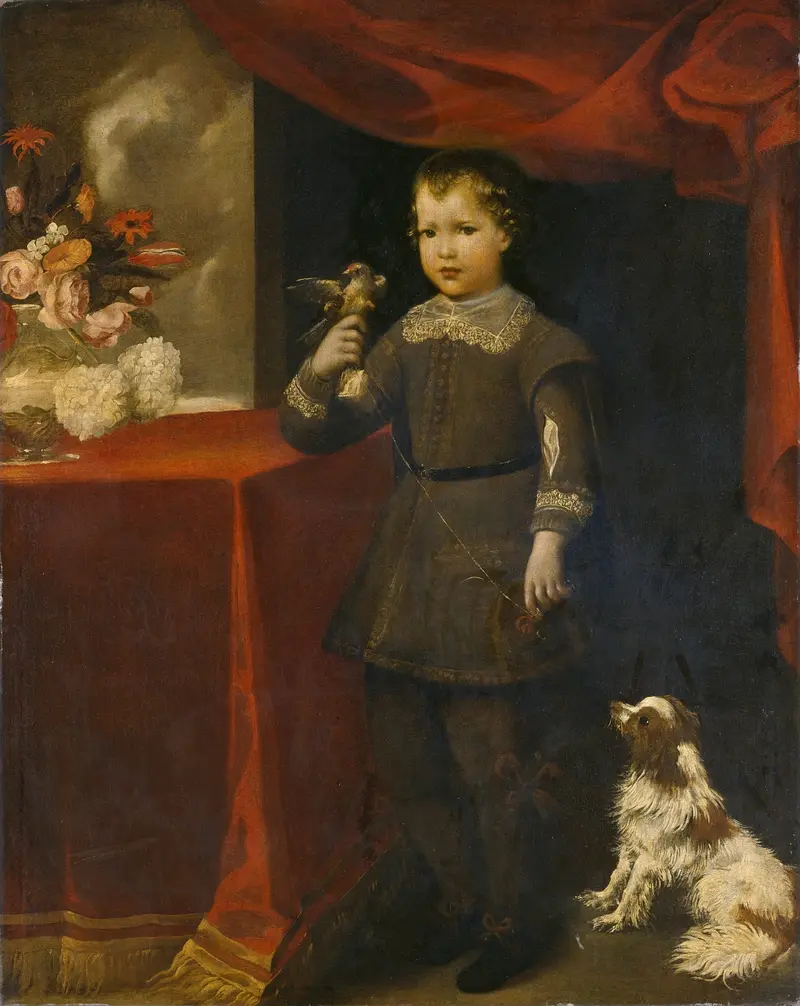
El príncipe Baltasar Carlos de Austria
Diego Velázquez

Equestrian Portrait of Philip III
Diego Velázquez

Equestrian Portrait of Margarita of Austria
Diego Velázquez
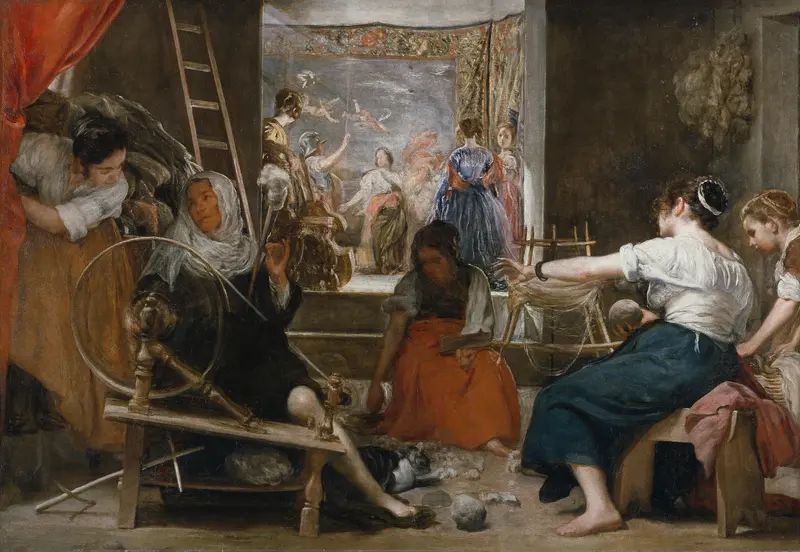
Las Hilanderas
Diego Velázquez
More Genre Scene Art

Banquet of the Officers of the St George Civic Guard
Frans Hals

Rembrandt and Saskia in the Scene of the Prodigal Son
Rembrandt van Rijn

Bal du moulin de la Galette
Pierre-Auguste Renoir

Quadrille at the Moulin Rouge
Henri de Toulouse-Lautrec

A Burial at Ornans
Gustave Courbet

When Will You Marry?
Paul Gauguin