
The Man of the Crowd (Poe) — History & Facts
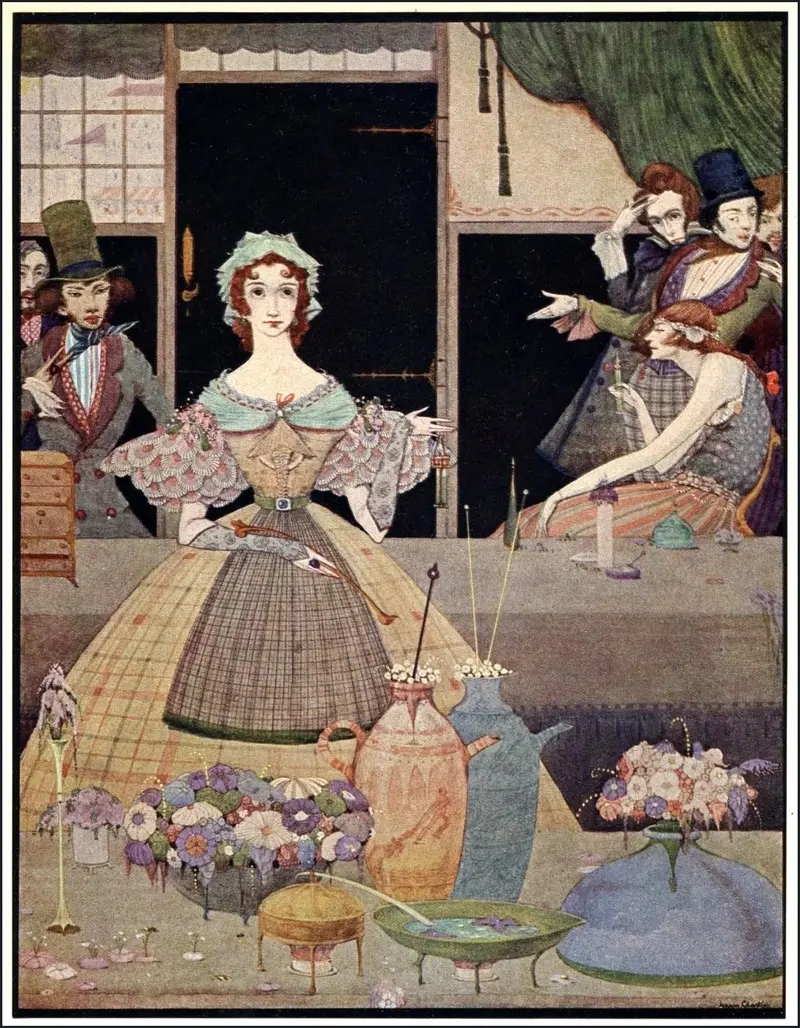
The first thing that seizes the eye in The Man of the Crowd (Poe) by Harry Clarke is the sense of feverish claustrophobia: every inch of this alley teems with decay, desperation, and theatrical gesture. A gaunt, sharp-nosed figure in a tattered black cloak sweeps through the scene, his claw-like hand raised in a nervous, almost conspiratorial motion. The street is littered with bodies—some sprawled in drunken stupor, others entwined in ambiguous embraces, and one, shockingly pallid, lies prone at the center, half-submerged in a muddy pool.
The background is a patchwork of crumbling brick, sagging laundry, and jaundiced twilight, all conspiring to press the viewer into the squalor and anonymity of the crowd. Clarke’s palette is both lurid and sickly, with bruised purples, jaundiced yellows, and the garish red of spilled wine—or blood—drawing the eye from one grotesque vignette to the next. Emerging from the decadent twilight of the early twentieth century, this 1923 illustration was created for Poe’s Tales of Mystery and Imagination, a collection that helped cement Poe’s legacy as a master of psychological horror. Clarke, known for his work in the Art Nouveau and Symbolist traditions, brought a feverish intensity to his book illustrations, often blurring the line between nightmare and reality.
In the wake of World War I, artists and readers alike were drawn to such visions of urban alienation and moral collapse. While history has kept few traces of this particular image’s journey beyond its original publication, the illustration stands as a testament to the era’s fascination with the uncanny and the unseen. Look again at the faces in the crowd—each one a mask, each one a story left half-told.
More Artworks by Harry Clarke
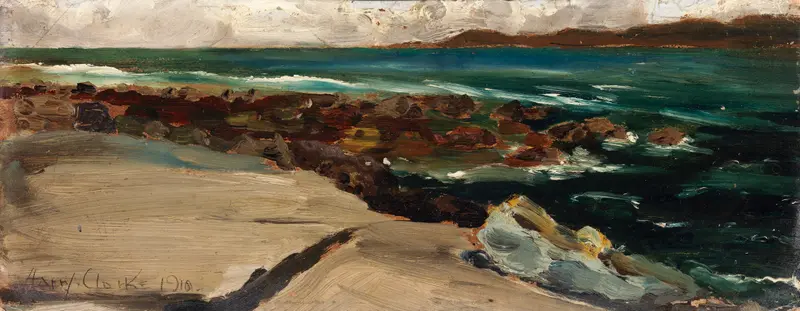
Landscape by the Coast
Harry Clarke
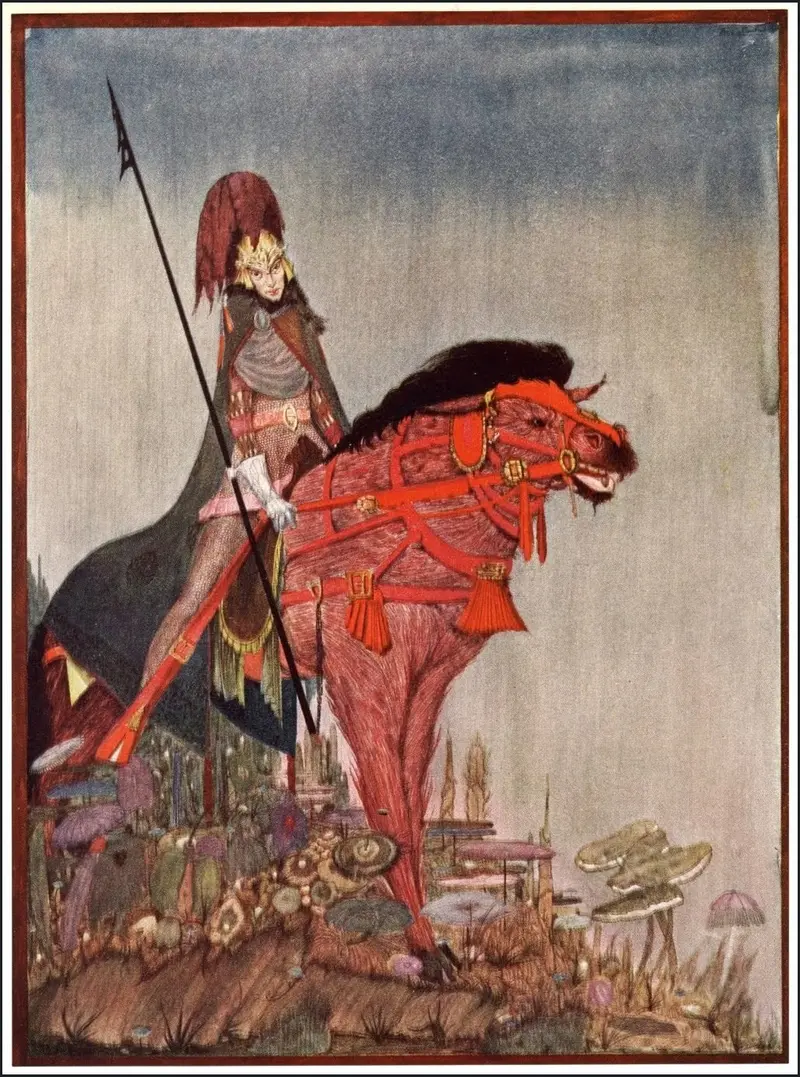
Metzengerstein (Poe)
Harry Clarke
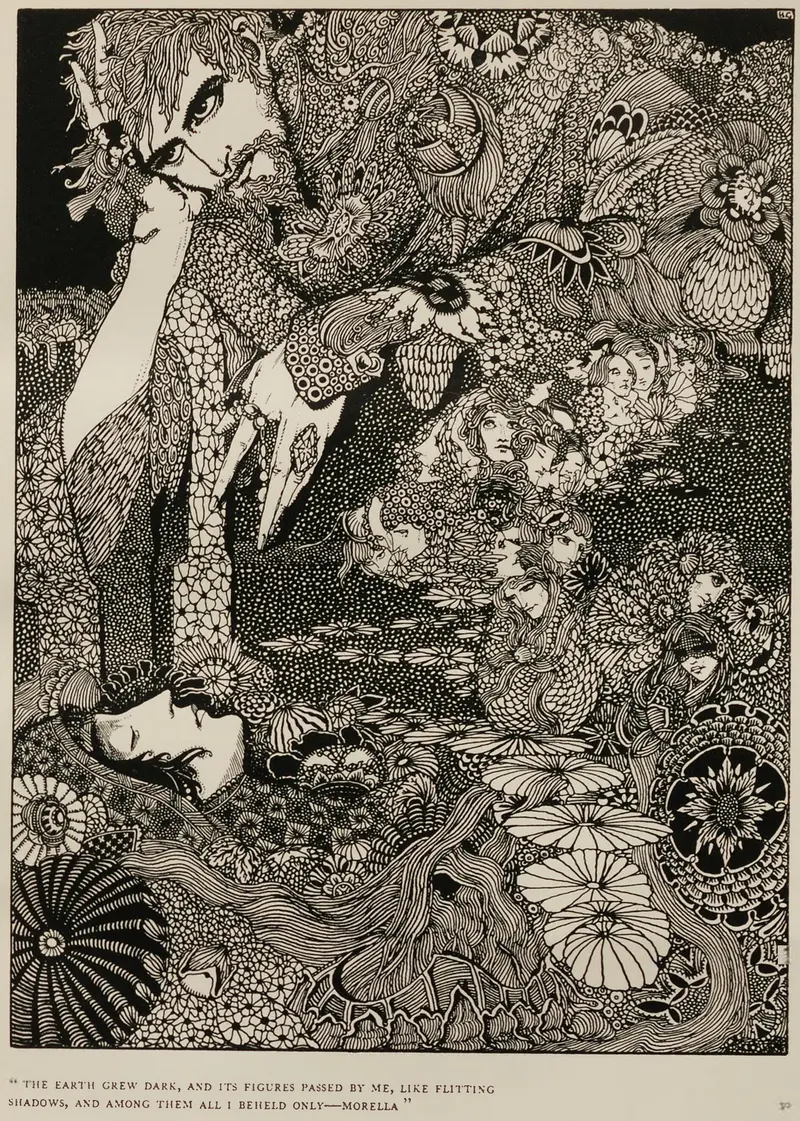
Morella (Poe)
Harry Clarke
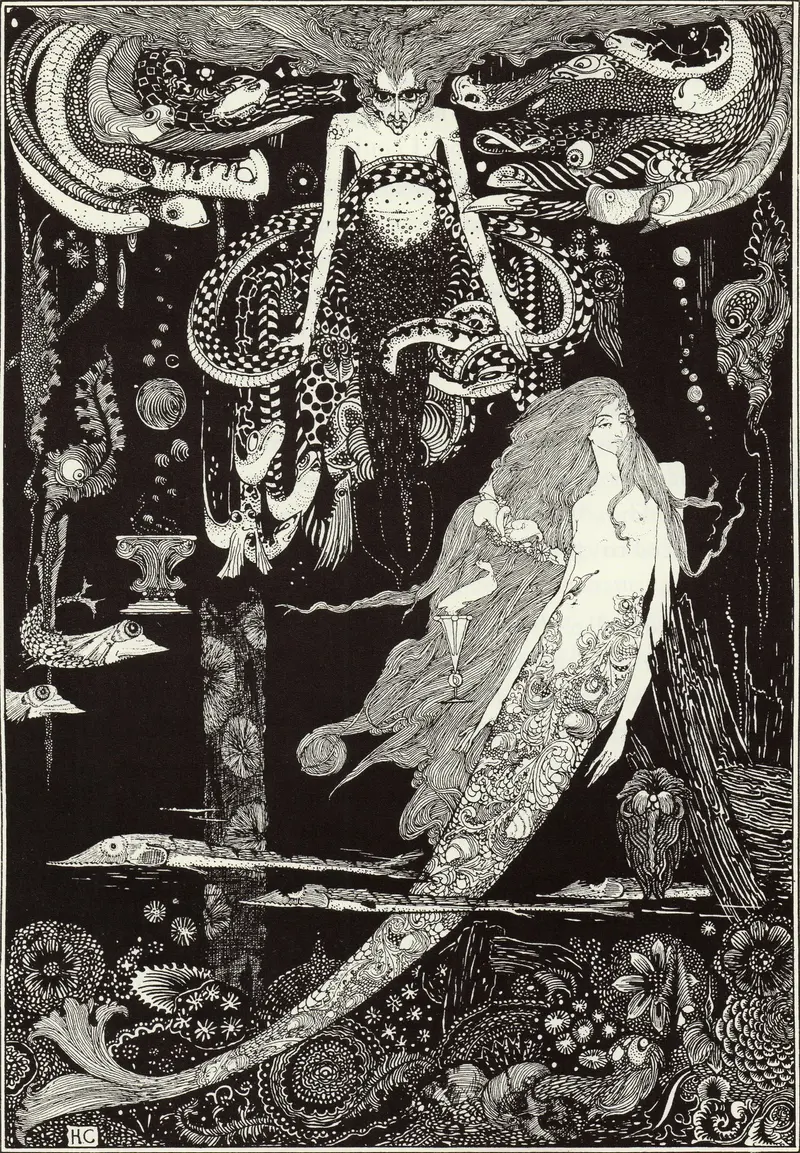
The Little Mermaid (Andersen)
Harry Clarke
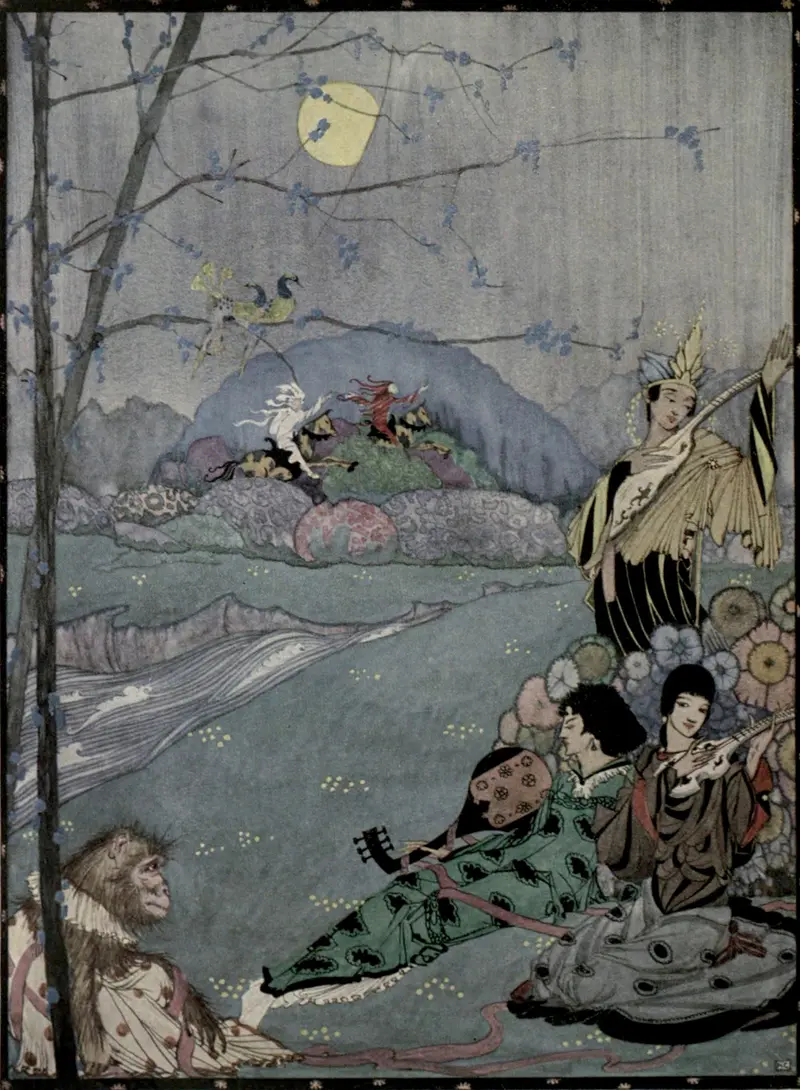
Arabia (The Year's at the Spring)
Harry Clarke
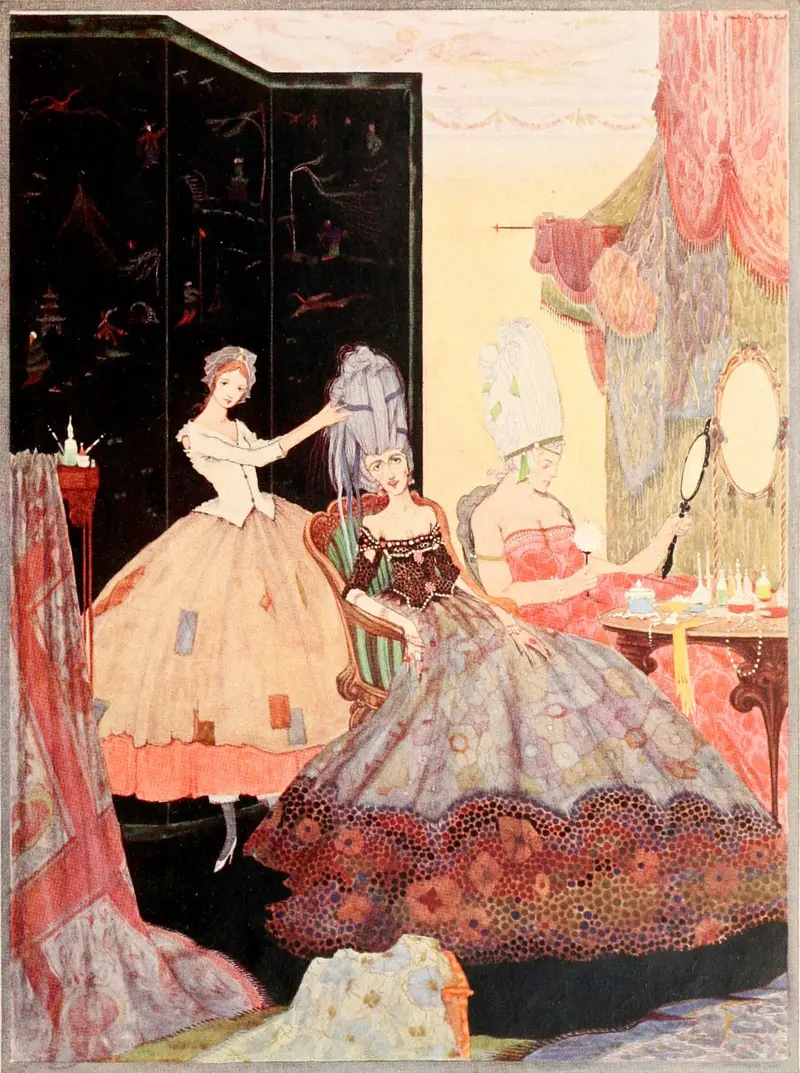
Cinderella (Perrault)
Harry Clarke
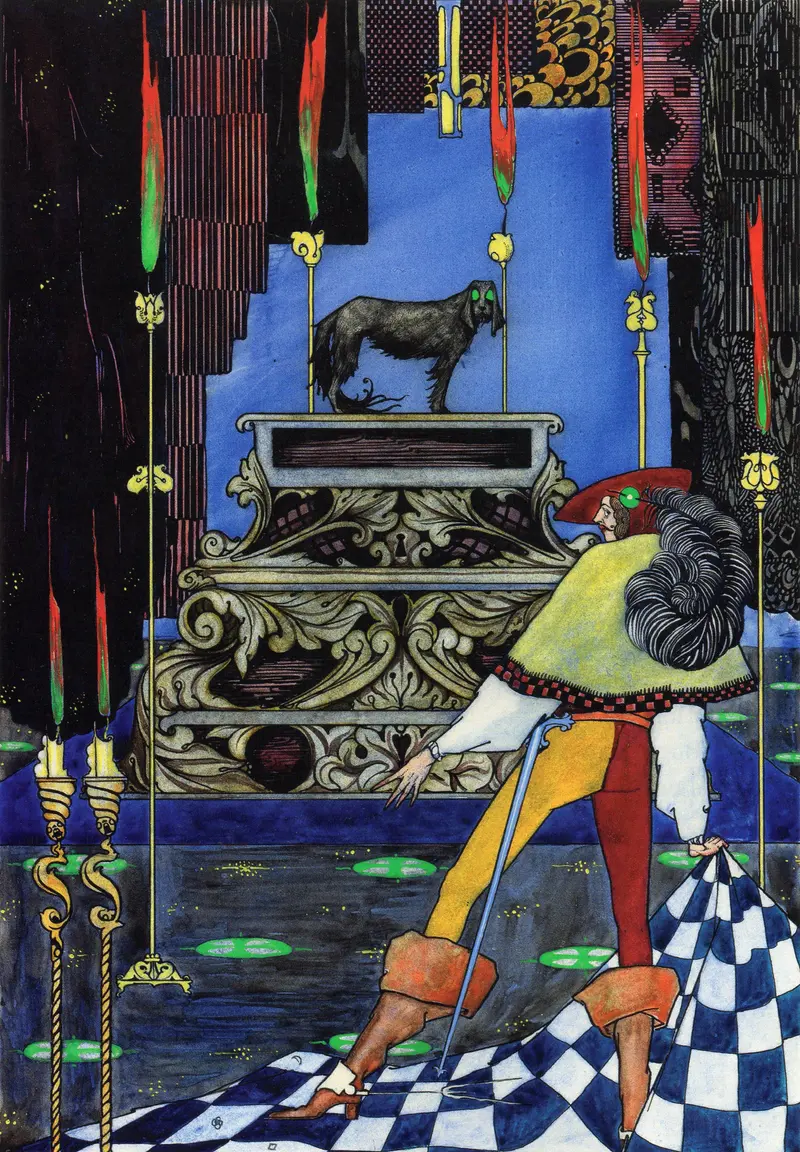
The Tinder Box (Andersen)
Harry Clarke
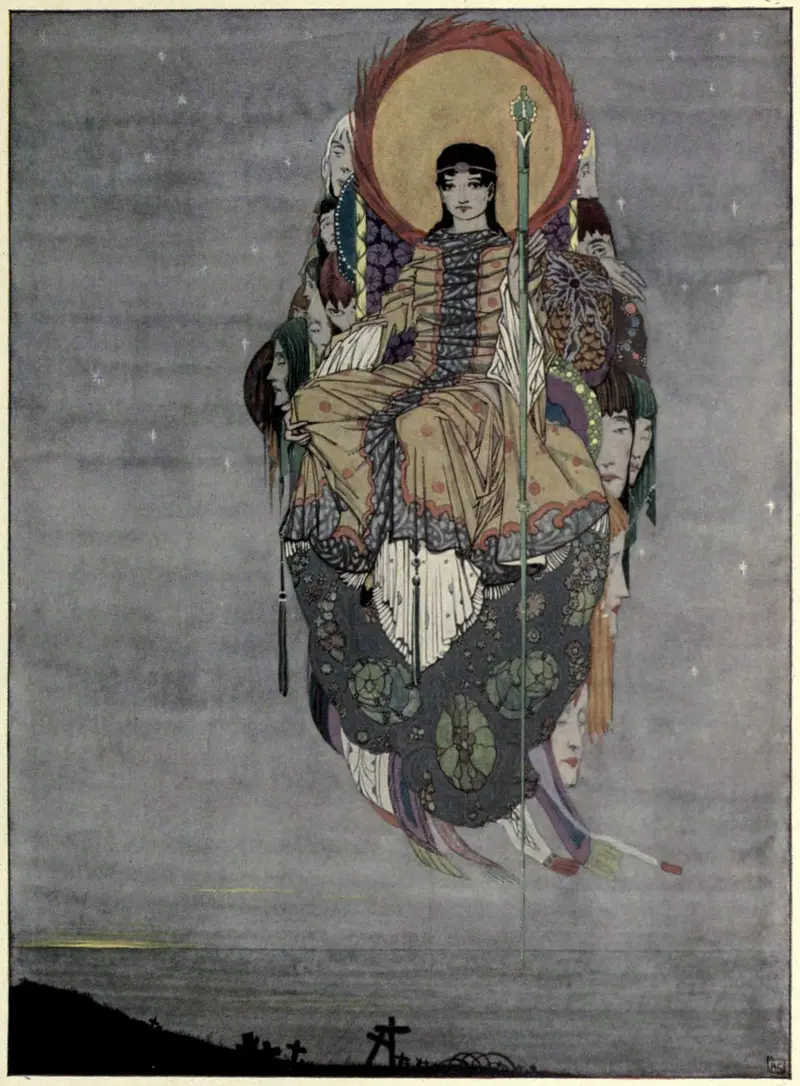
The Dead (The Year's at the Spring)
Harry Clarke
The Mystery of Marie Roget (Poe)
Harry Clarke

The Travelling Companion (Andersen)
Harry Clarke





