
The Virgin and Child in Egypt — History & Facts
When William Blake exhibited The Virgin and Child in Egypt in 1810, he startled London’s art world with his visionary approach to Christian subjects. Unlike the grand oil paintings of his contemporaries, Blake’s works often blurred the line between painting, drawing, and print, making it difficult to categorize them even today. The precise medium of this piece remains a subject of debate among scholars, who have variously described it as tempera, watercolor, or mixed media.
This uncertainty only adds to the painting’s mystique, as does the fact that Blake rarely painted large religious scenes, preferring instead to illustrate them in his poetry and prints. The moment Blake chose to capture is the Holy Family’s flight into Egypt, a story from the Gospel of Matthew. Here, Mary cradles the infant Jesus under the protective shade of a palm tree, while Joseph stands watchful at their side. The landscape is dreamlike, suffused with golden light that seems to emanate from the Child himself, casting gentle shadows on the sand.
A cluster of lilies at Mary’s feet symbolizes purity, while the distant pyramids anchor the scene firmly in Egypt. Unlike the bustling, detailed versions by artists like Caravaggio, Blake’s vision is stripped down to essentials, focusing on spiritual presence rather than historical accuracy. As with many of Blake’s paintings, the early history of The Virgin and Child in Egypt is obscure. There is no record of a patron, and it may have remained in the artist’s possession until his death.
The work’s medium and technique have prompted much discussion among art historians, who see in it a bridge between Blake’s illuminated books and his rare forays into painting. Today, the painting is held in a private collection, seldom exhibited, but it occupies a unique place in Blake’s career as one of his most ambitious attempts to bring his mystical vision to life on canvas.
More Artworks by William Blake
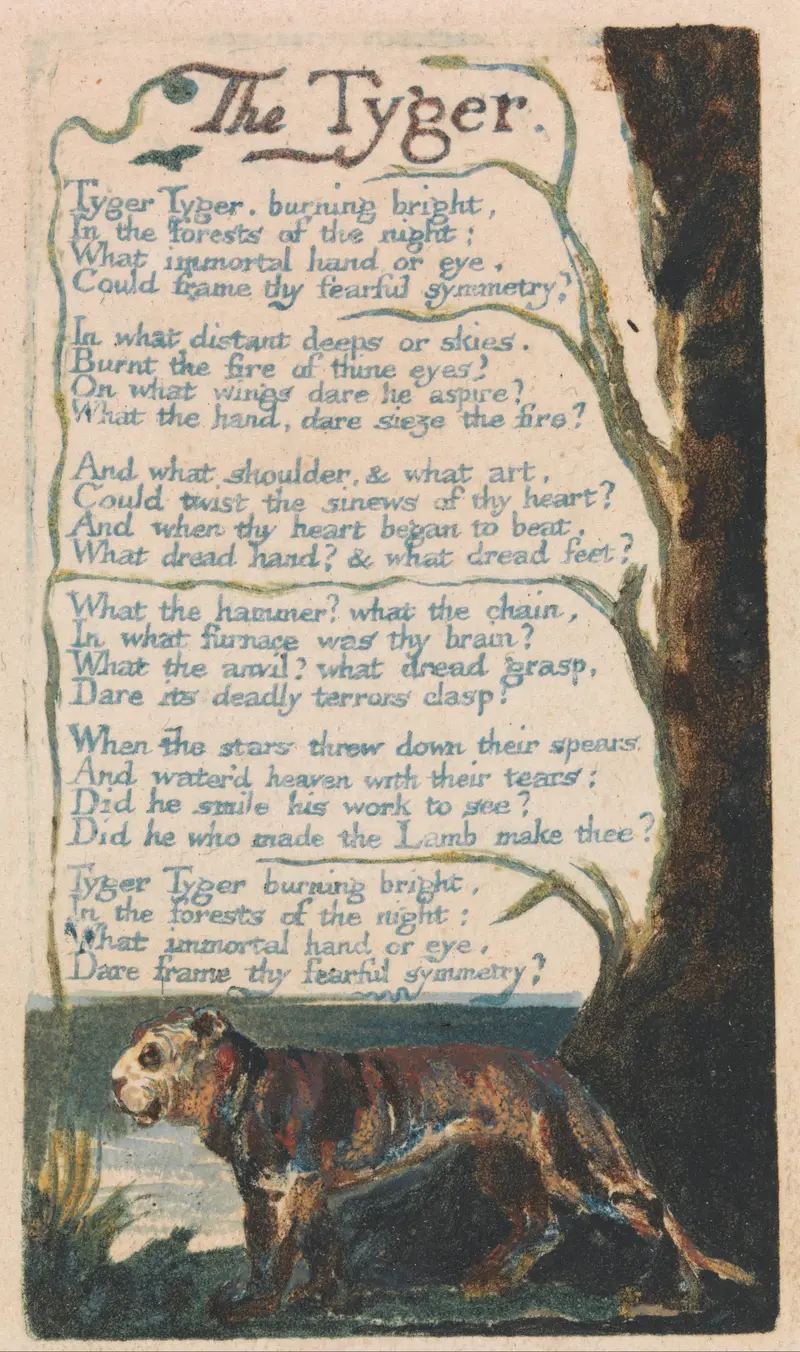
The Tyger
William Blake

Christ Blessing
William Blake
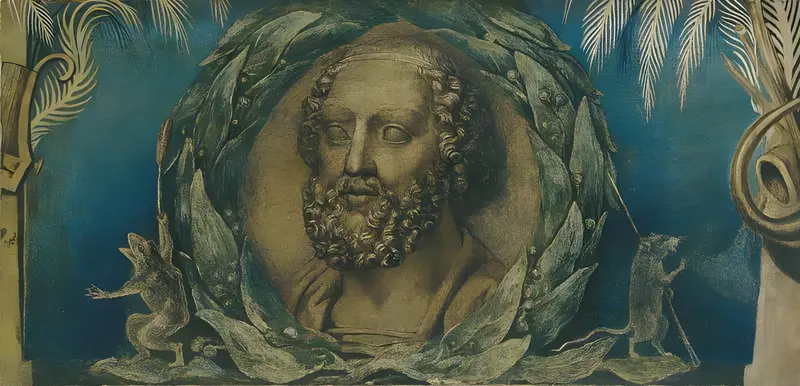
Homer
William Blake
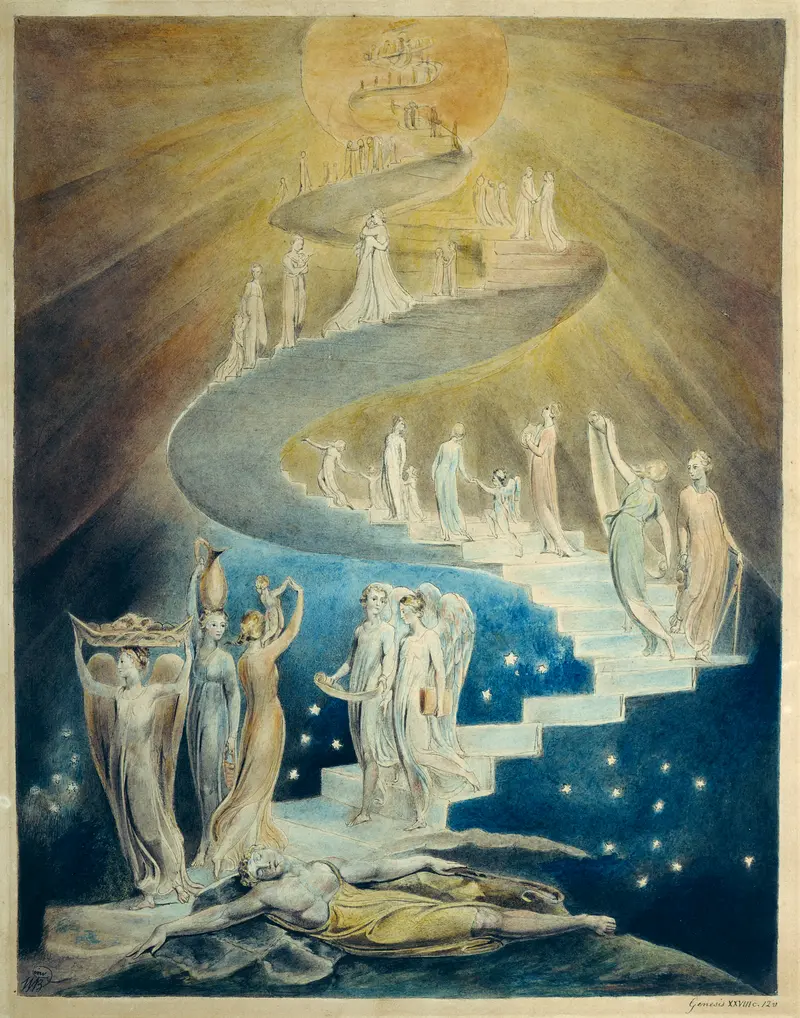
Jacob's Ladder
William Blake
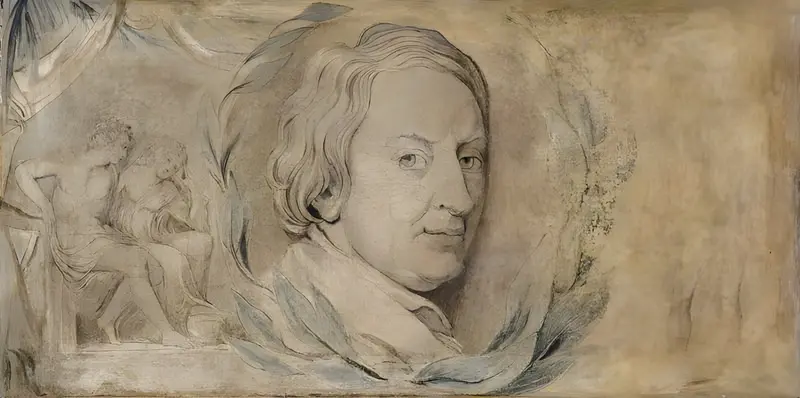
John Dryden (1631–1700)
William Blake
Landscape near Felpham
William Blake
Sacrifice of Job
William Blake
Christ's Entry into Jerusalem
William Blake
The Ancient of Days
William Blake
Adam Naming the Beasts
William Blake





