
Vertumnus and Pomona — History & Facts
What first draws the eye in Vertumnus and Pomona is the lush, almost overwhelming abundance of fruit spilling across the foreground, as if the bounty of nature itself is tumbling out of the painting. The woman at the center, crowned with flowers and framed by a cascade of heavy drapery, seems both regal and absorbed, her gaze lowered in contemplation. Her hand rests gently among the fruits—pears, grapes, squash, apples—each rendered with a tactile fullness that invites the viewer to linger over their textures and colors.
Behind her, a second figure emerges, his face animated and almost masked by a bunch of grapes he holds aloft, his expression caught between entreaty and delight. The play of light across the satin folds of fabric and the gleaming skin of the fruit sets a mood of ripeness and temptation, while the twisting forms and close cropping create a sense of intimacy and immediacy. Painted in 1610, this work belongs to the world of early seventeenth-century Flanders, when mythological subjects and allegories of nature’s fecundity were in high demand among collectors eager to display both erudition and wealth. The story of Vertumnus and Pomona—drawn from Ovid’s Metamorphoses—was a favorite for artists seeking to blend sensuality with moralizing themes, and the overflowing harvest here would have signaled prosperity and the rewards of cultivation to its original viewers.
Little is recorded about the specific journey of this painting beyond its last home in the Gemäldegalerie in Berlin, and its tragic loss in the Friedrichshain flak tower fire in 1945 leaves us with only reproductions and descriptions. Yet the painting’s exuberant surface and the charged encounter between its figures continue to invite speculation—about seduction, disguise, and the pleasures of the senses—each time we return to its image.
More Artworks by Abraham Janssens

Jupiter Rebuked by Venus
Abraham Janssens
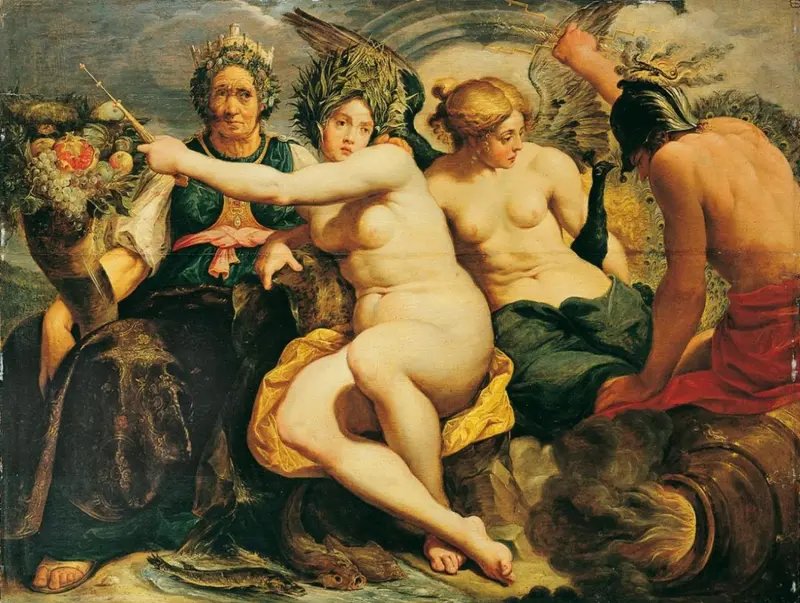
Allegorie der vier Elemente
Abraham Janssens
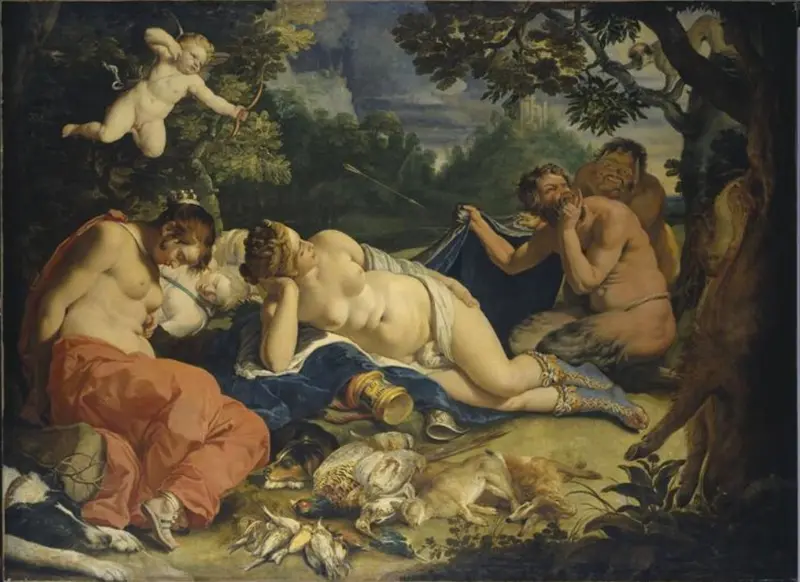
Diana and her nymphs spied on by satyrs
Abraham Janssens

Die Erweckung des Lazarus 153 Bavarian State Painting Collections
Abraham Janssens
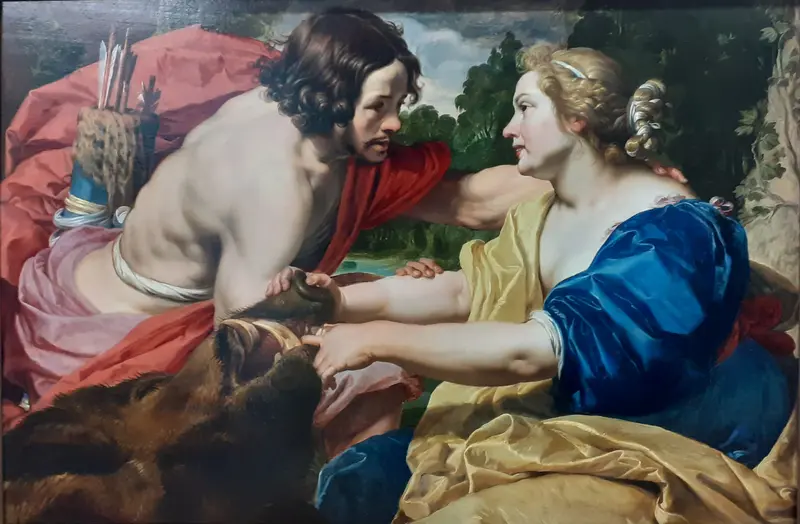
Meleager presents the head of the Calydonian Boar to Atalanta
Abraham Janssens
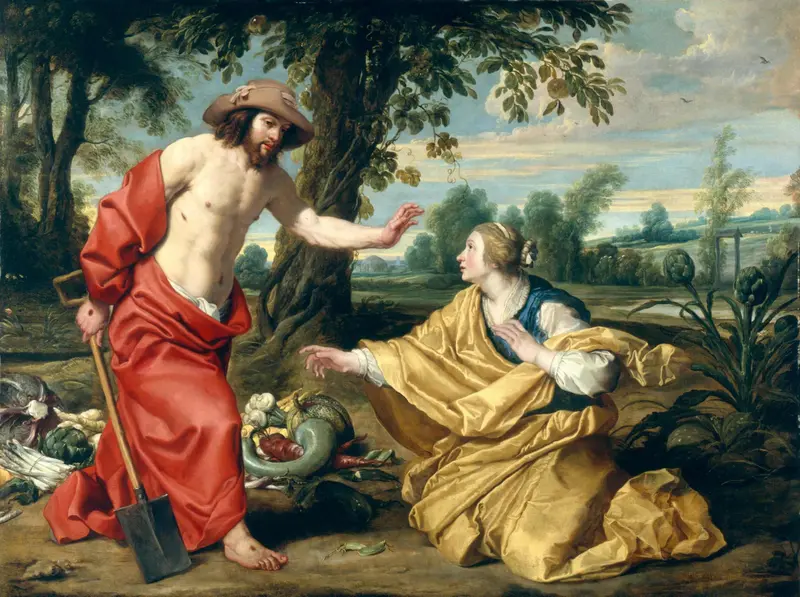
Noli me Tangere
Abraham Janssens
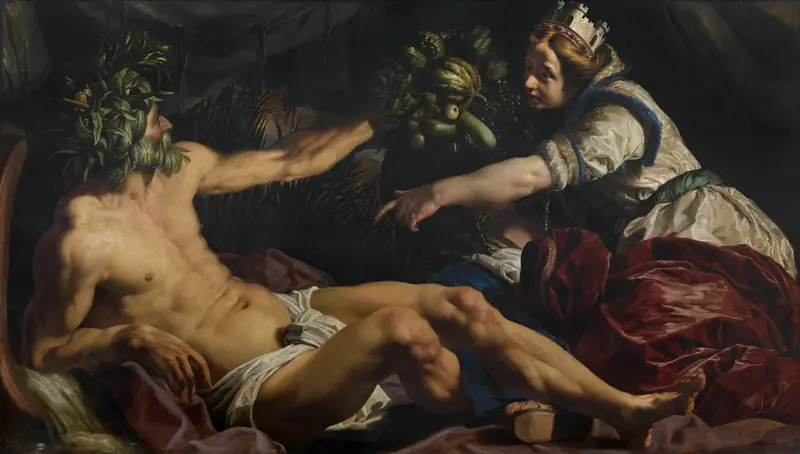
Scaldis and Antverpia
Abraham Janssens
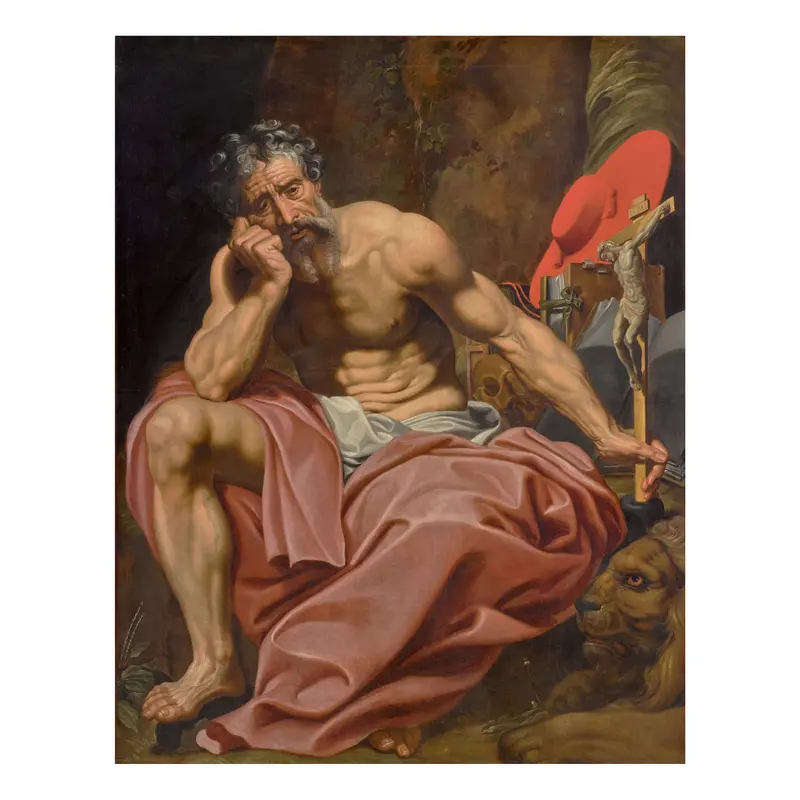
Saint Jerome
Abraham Janssens
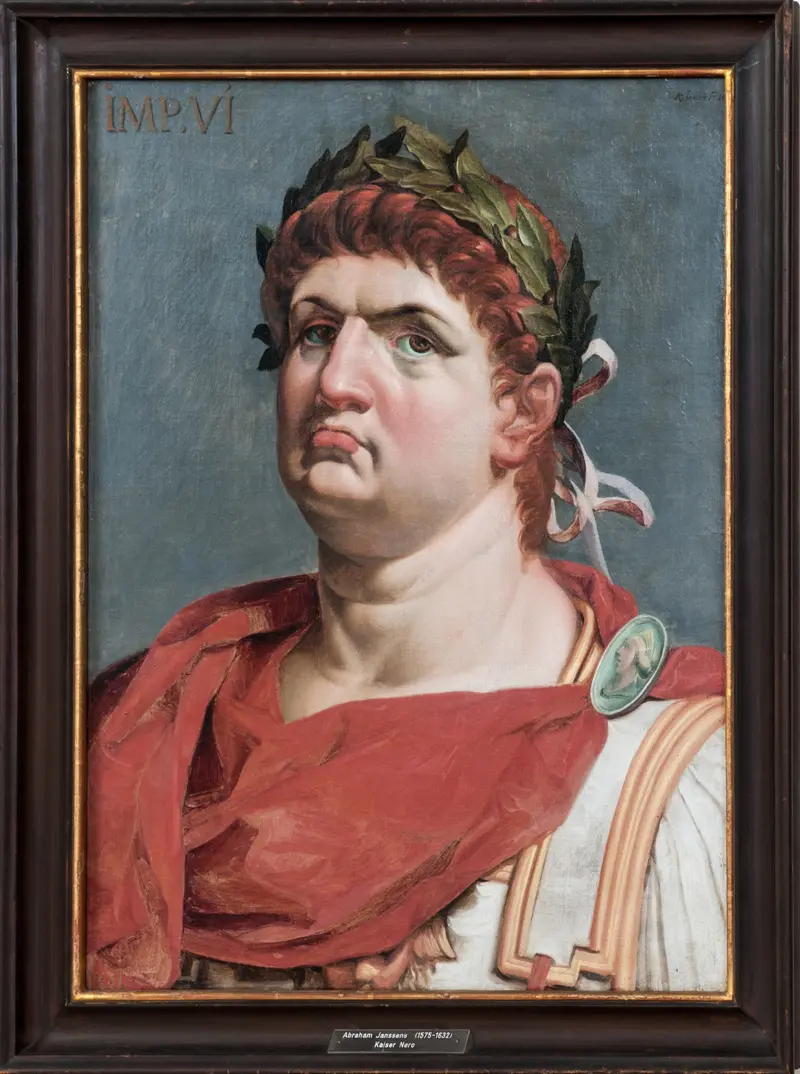
Nero
Abraham Janssens
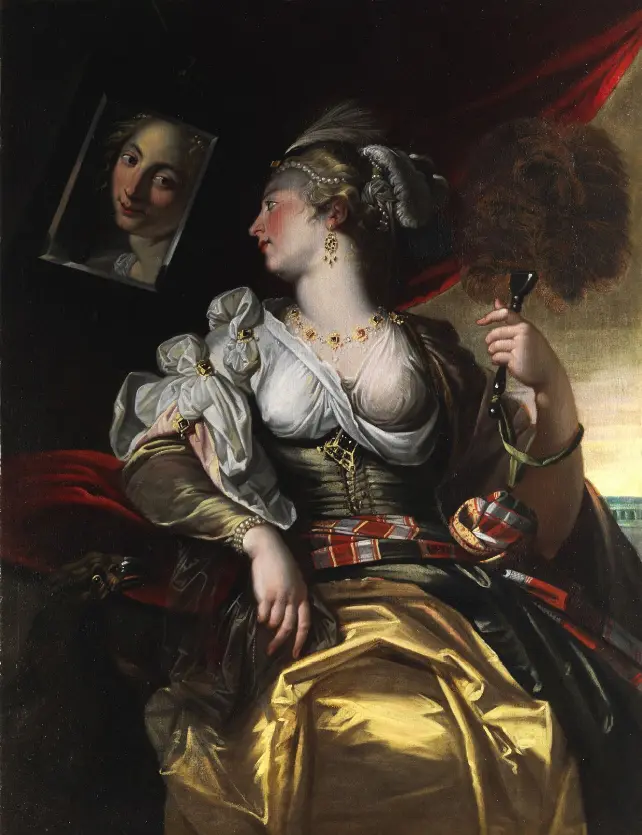
The Face
Abraham Janssens





