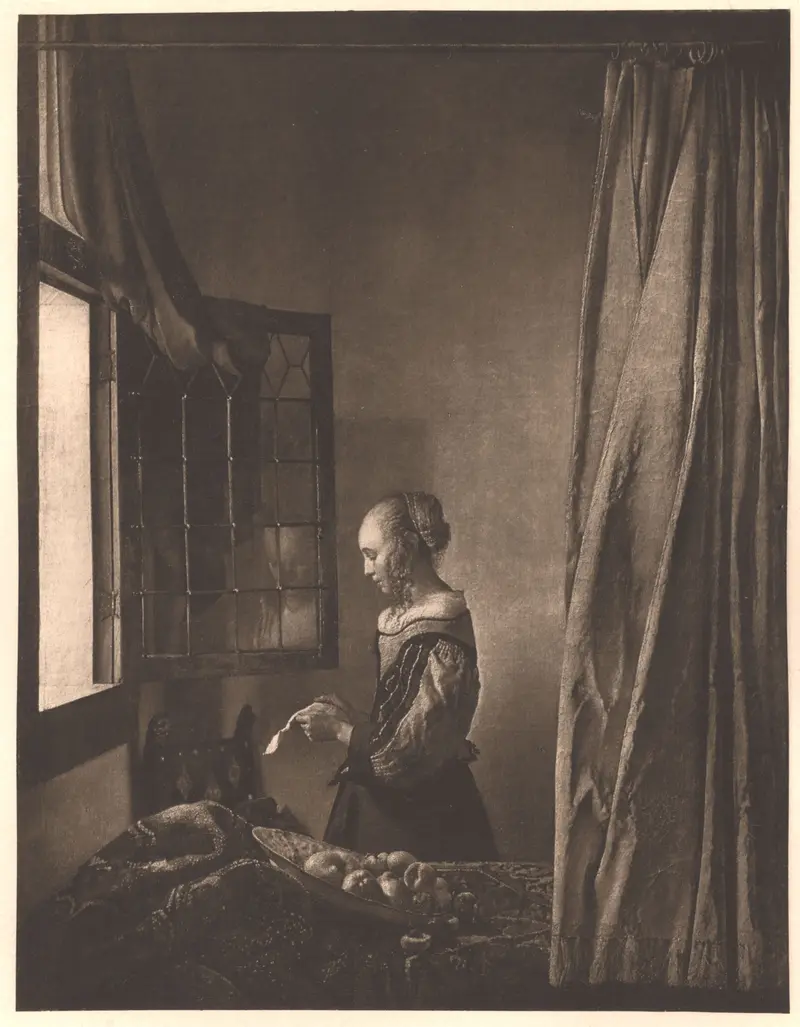
Woman with a Taper — History & Facts
When Woman with a Taper was first exhibited in 1873, critics immediately recognized it as a striking departure from the rural daylight scenes that made Jules Breton famous. Here, Breton turned his attention indoors, capturing the hush and intimacy of a single figure illuminated by candlelight. The painting’s unusual focus on a solitary woman, rather than a communal harvest or fieldwork, drew comment in the Parisian press, which praised its “quiet drama.” This work stands out among Breton’s oeuvre for its psychological intensity and nocturnal setting, both rare in his career. The scene is suspended in a moment of almost ritual stillness: a young woman, her features softly modeled by the flickering flame, shields her taper as she moves through the darkness.
Her downcast eyes and careful grip on the candle suggest both reverence and vulnerability, as if she is participating in a private vigil or household rite. The gentle play of light across her face and hands transforms the humble act of carrying a candle into a meditation on solitude and hope. Breton’s handling of chiaroscuro recalls the candlelit interiors of Georges de La Tour, yet his subject is unmistakably modern and rural, grounded in the everyday life of the French countryside. Although the exact patron of Woman with a Taper is not known, the painting quickly entered a private collection after its debut at the Salon.
Over the decades, it has appeared in several retrospectives devoted to Jules Breton and the Realist movement, helping to broaden appreciation for his lesser-known interior works. Today, the painting is celebrated as a rare example of Breton’s exploration of mood and interiority, offering a counterpoint to his more familiar sunlit harvesters. Its current whereabouts are not widely publicized, but it remains a highlight in discussions of nineteenth-century French realism and the artist’s evolving vision.
More Artworks by Jules Breton

The Song of the Lark
Jules Breton
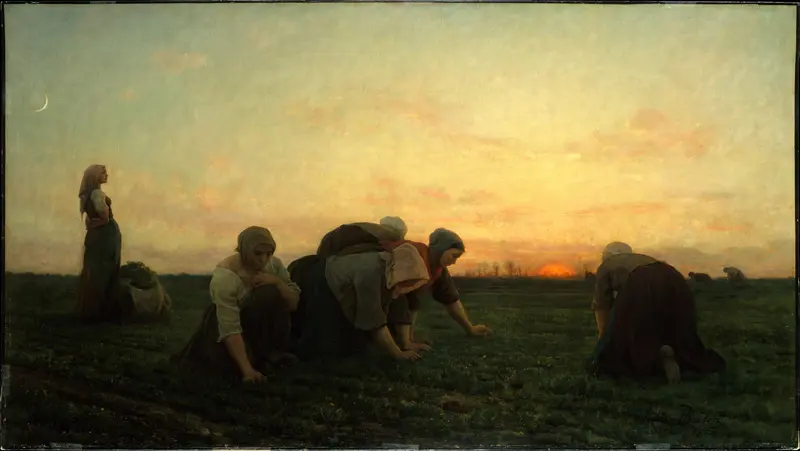
The Weeders
Jules Breton
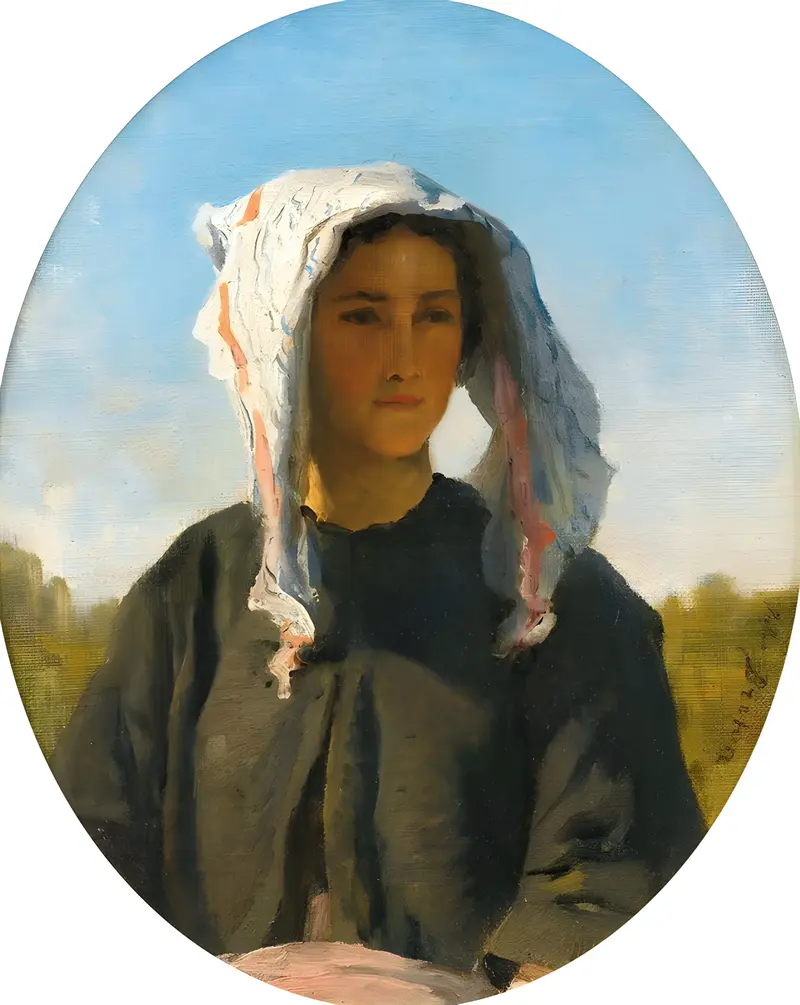
Portrait de jeune Paysanne Bordelaise
Jules Breton
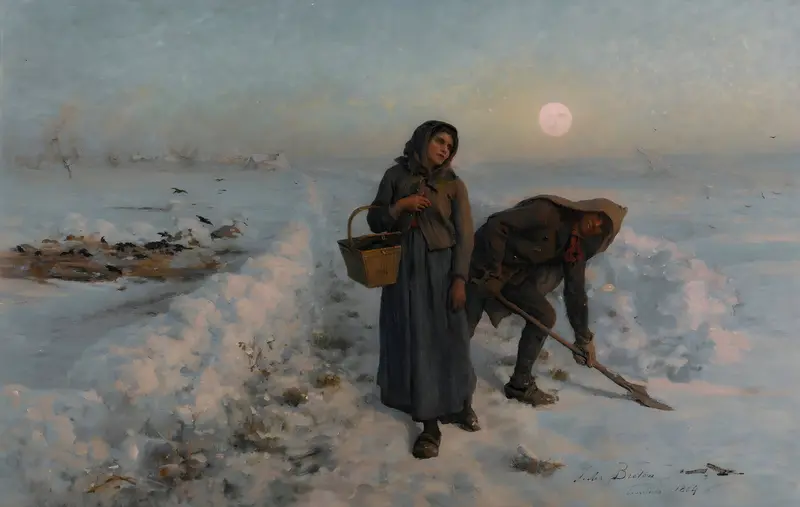
Sur la route en hiver; artois
Jules Breton
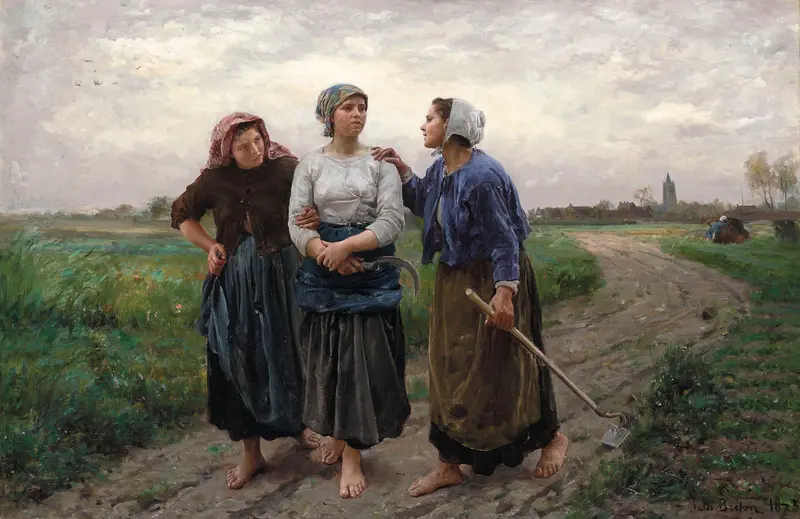
Les amies
Jules Breton
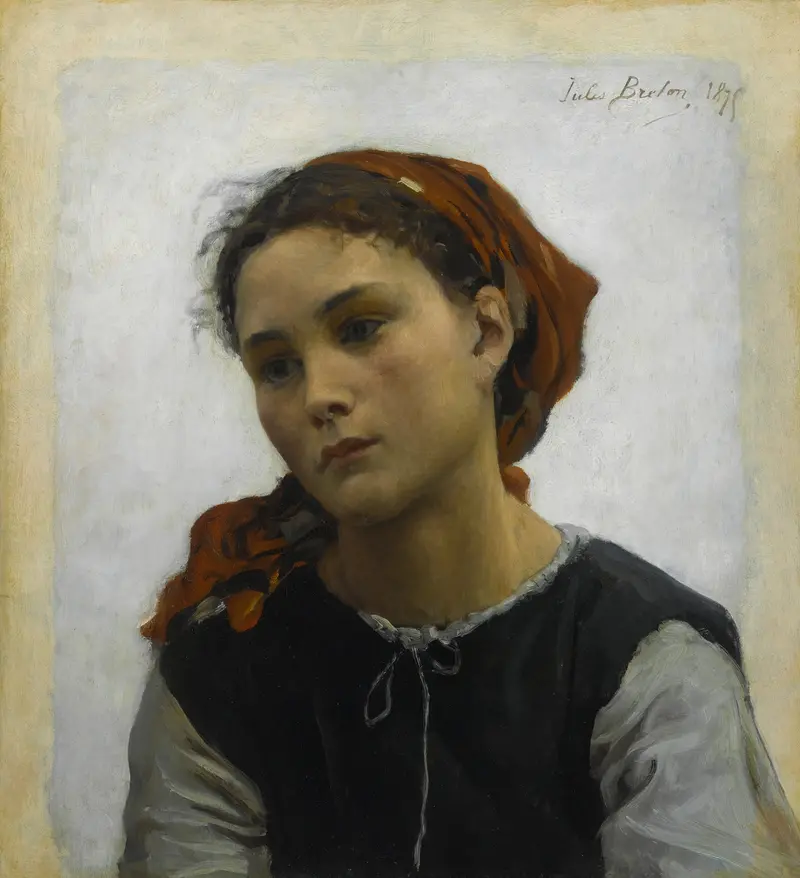
Innocente
Jules Breton
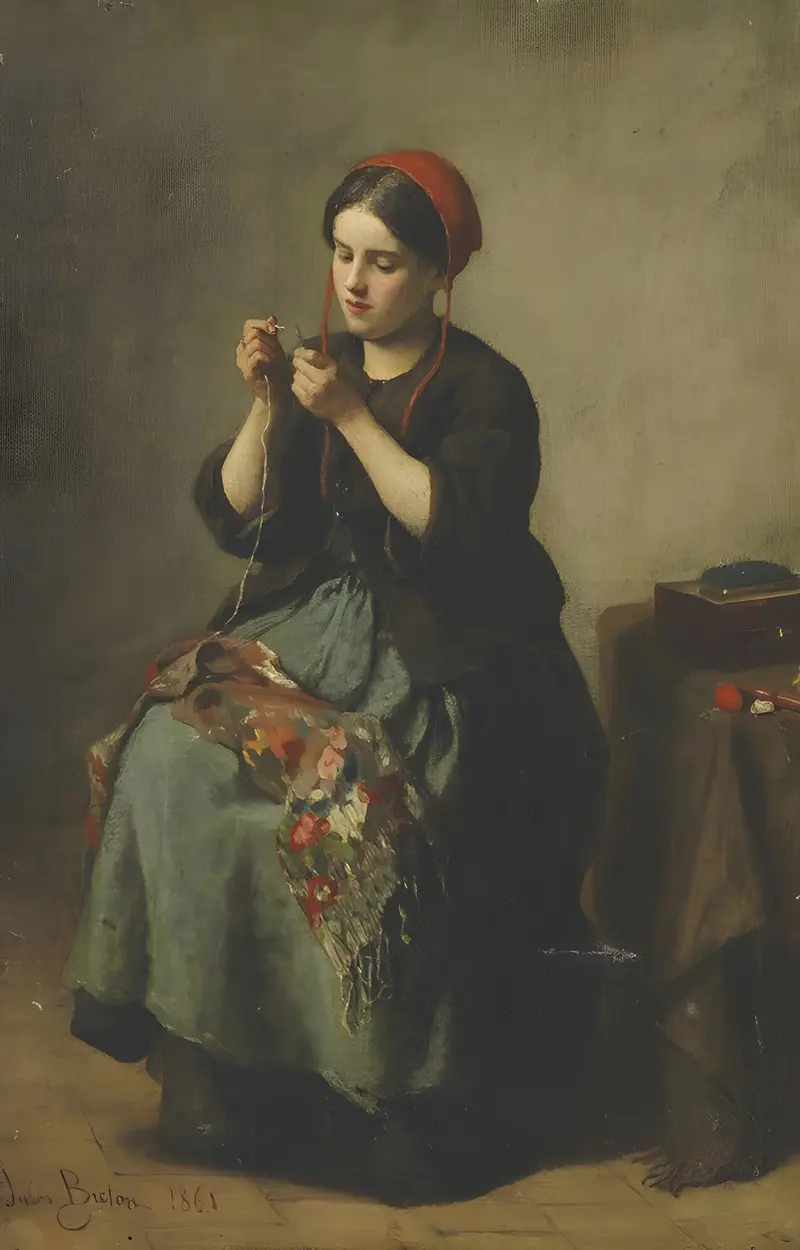
Peasant woman threading a needle
Jules Breton
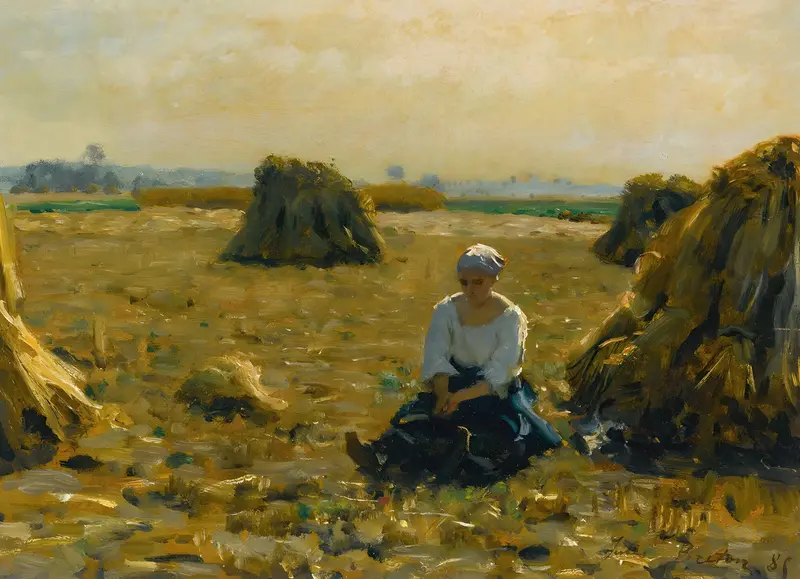
Jeune femme dans les champs
Jules Breton
Jeune Fille Pensive
Jules Breton
Returning from the Fields
Jules Breton