
Yorimasa Killing Nue — History & Facts
A monstrous cry shattered the night at the imperial palace in Kyoto in 1153, when the Nue—a chimera said to have the head of a monkey, the body of a tanuki, the limbs of a tiger, and a serpent for a tail—descended to torment Emperor Konoe. The legendary archer Minamoto no Yorimasa was summoned to end the terror, and his arrow felled the beast as it writhed above the palace roof. In 1804, Katsushika Hokusai chose this moment of supernatural drama for one of his earliest forays into warrior prints, capturing the intersection of folklore, heroism, and the supernatural that fascinated Edo-period audiences. In Yorimasa Killing Nue, the archer stands poised, his bow still vibrating from the shot, as the grotesque form of the Nue tumbles from the clouds.
Hokusai’s lines are taut and energetic, the beast’s patchwork anatomy rendered with a mix of realism and fantasy: the tiger’s claws and monkey’s grimace are unmistakable, while the serpent tail coils in midair. Yorimasa’s calm, focused expression contrasts with the chaos of the falling monster, a visual cue to his legendary composure. The composition’s diagonal thrust echoes the dynamic storytelling of Utagawa Kuniyoshi, who would later become famous for his own warrior prints, though Hokusai’s approach is more restrained, emphasizing psychological tension over explosive action. The exact medium of this work remains uncertain—some sources suggest a painting, others a hand-colored woodblock print—but its style and signature firmly place it within Hokusai’s early career, before his international fame with Thirty-Six Views of Mount Fuji.
Like many images of legendary heroes, it was likely created for the burgeoning urban market of Edo, where tales of samurai valor and supernatural creatures were in high demand. The work’s provenance is unclear; it has passed through private collections and occasionally appeared in exhibitions devoted to Edo-period myth and legend. Today, Yorimasa Killing Nue stands as a testament to Hokusai’s fascination with Japan’s rich tapestry of folklore, and his ability to animate even its darkest legends with vivid, unforgettable imagery.
More Artworks by Katsushika Hokusai

The Great Wave off Kanagawa
Katsushika Hokusai
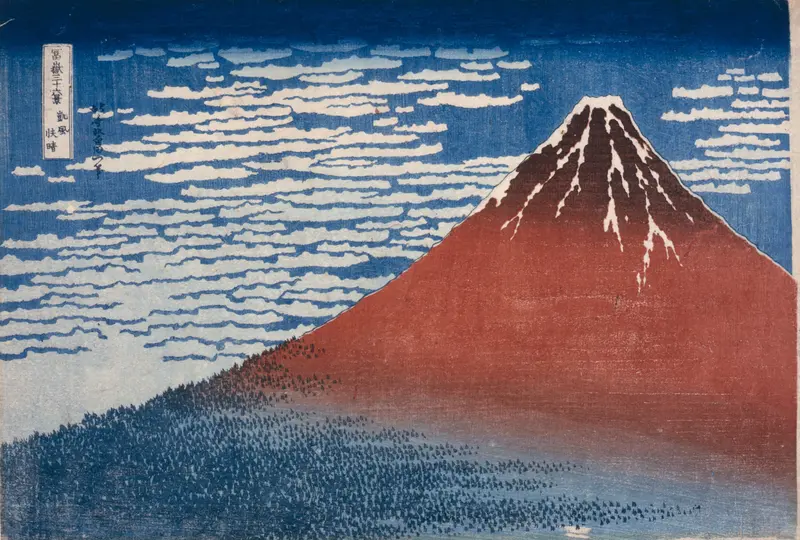
Fine Wind, Clear Morning (Red Fuji)
Katsushika Hokusai
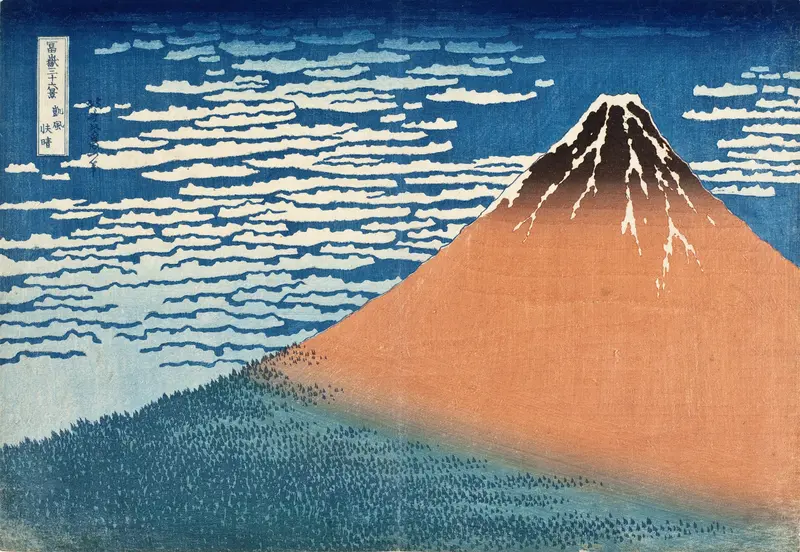
South Wind, Clear Dawn
Katsushika Hokusai
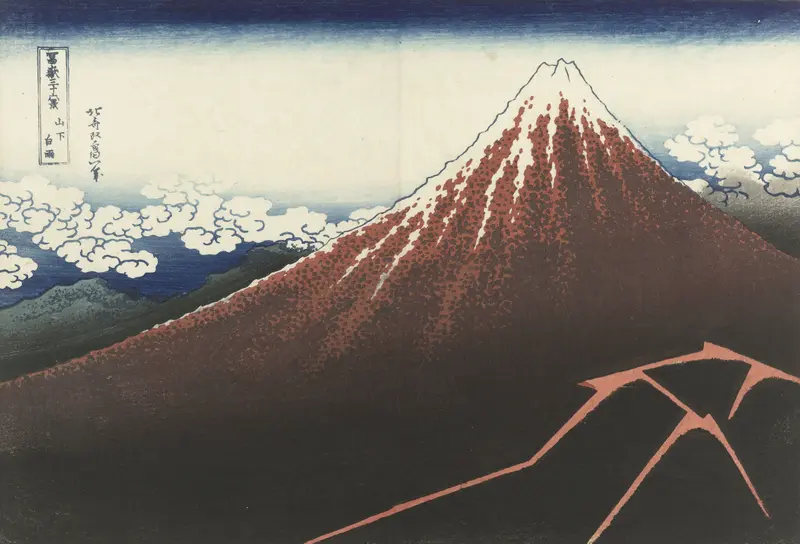
Rainstorm Beneath the Summit
Katsushika Hokusai
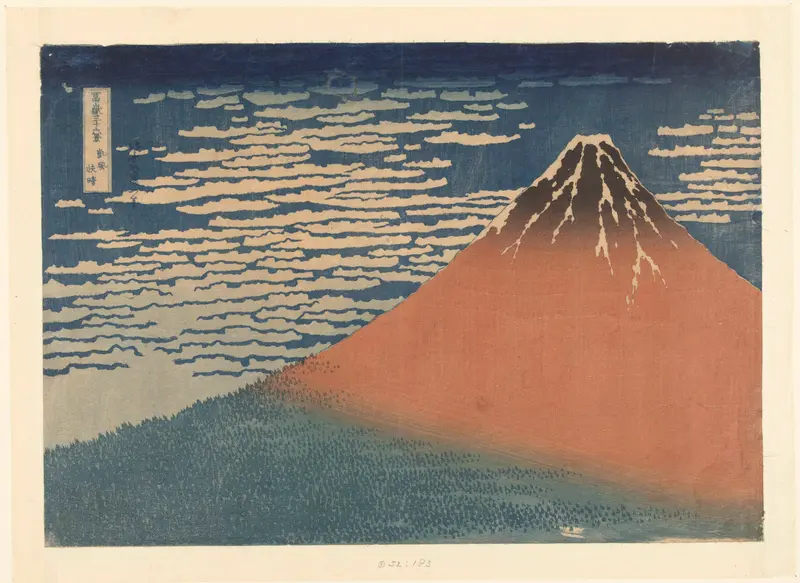
Clear Weather with a Southerly Wind
Katsushika Hokusai
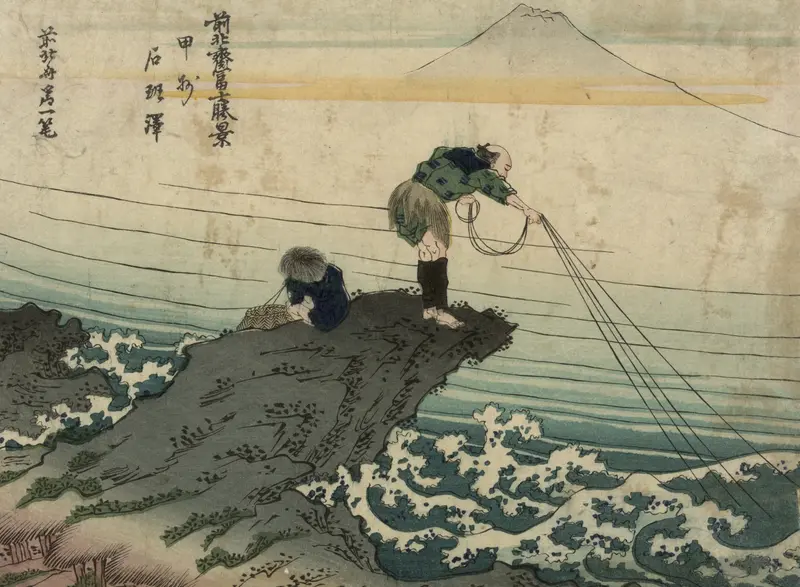
Kōshū kajikazawa
Katsushika Hokusai
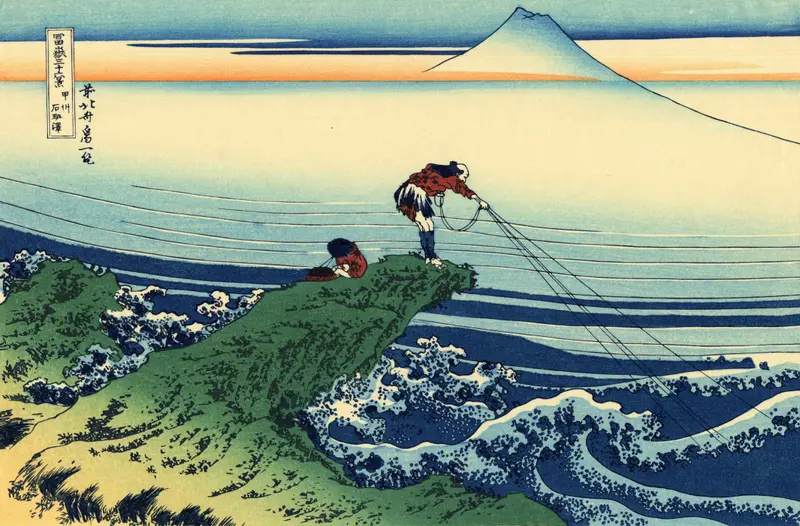
Kōshū kajikazawa 2
Katsushika Hokusai
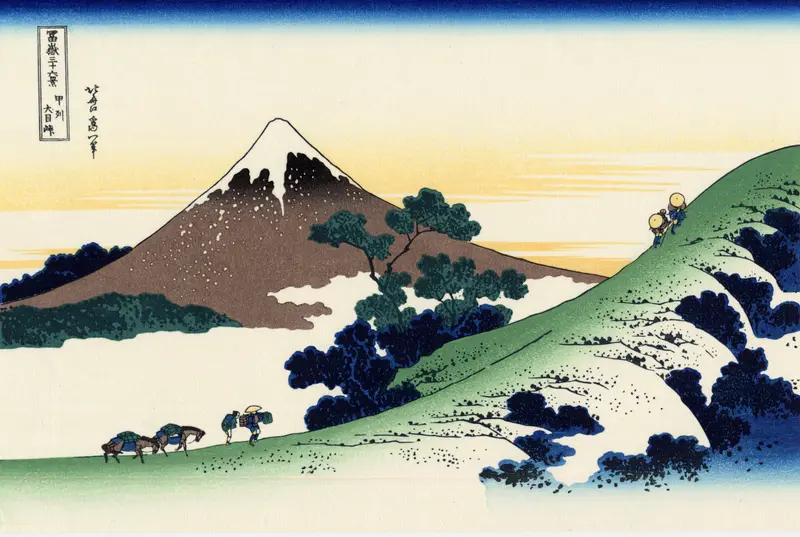
Inume Pass in Kai Province (Kôshû inume-tôge)
Katsushika Hokusai

Yoro Falls in Mino Province (Mino no Yoro no taki), from the series "A Tour of Waterfalls in Various Provinces (Shokoku taki meguri)"
Katsushika Hokusai
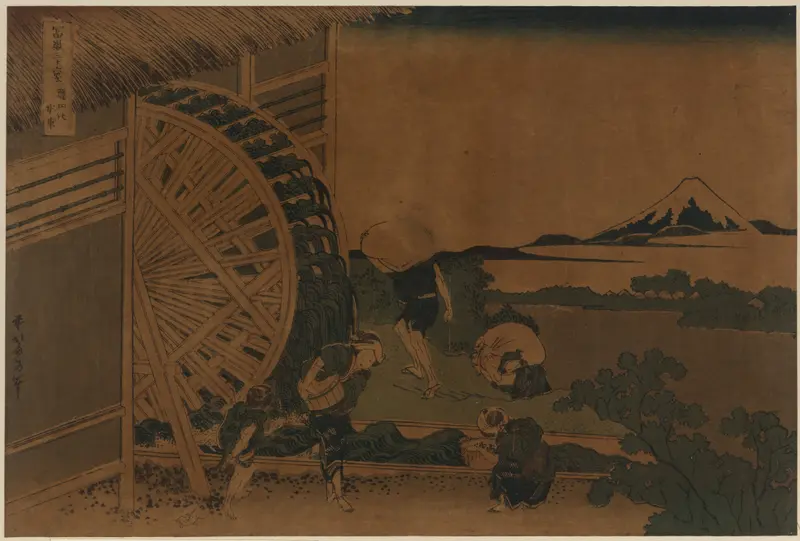
Onden no suisha
Katsushika Hokusai





