
Youth Making a Face — History & Facts
What first catches the eye is not the youth’s outlandish gesture, but the sense that we have stumbled into a private moment—a flash of mischief caught and held. The figure leans forward, elbows planted on the table, fingers pulling his mouth into a grotesque grimace. His gaze meets ours directly, as if daring the viewer to laugh or recoil.
The battered felt hat, set askew and pierced by a feather or knife, heightens the sense of unruliness, while the rough brushwork and muted palette keep the mood earthy and immediate. Light falls from the left, picking out the flushed cheeks and the gleam of the jug and mug, drawing us into the intimacy of the scene. Painted between 1632 and 1635, Youth Making a Face belongs to a world where pictures like this—known as tronies—were prized for their ability to capture the quirks and follies of everyday life. In the Low Countries, artists such as Adriaen Brouwer made a specialty of these small, lively studies, often destined for collectors or tavern walls rather than grand salons.
Brouwer’s contemporaries admired his knack for turning the ordinary into something worth a second look, and his works were traded among painters and connoisseurs alike. Today, this painting resides in the National Gallery of Art in Washington D.C., a rare survivor from a time when laughter and low company were as worthy of paint as saints and kings. Look again at the youth’s face—there is a whole world of unruly spirit in that fleeting, mocking grin.
More Artworks by Adriaen Brouwer

The Smokers
Adriaen Brouwer
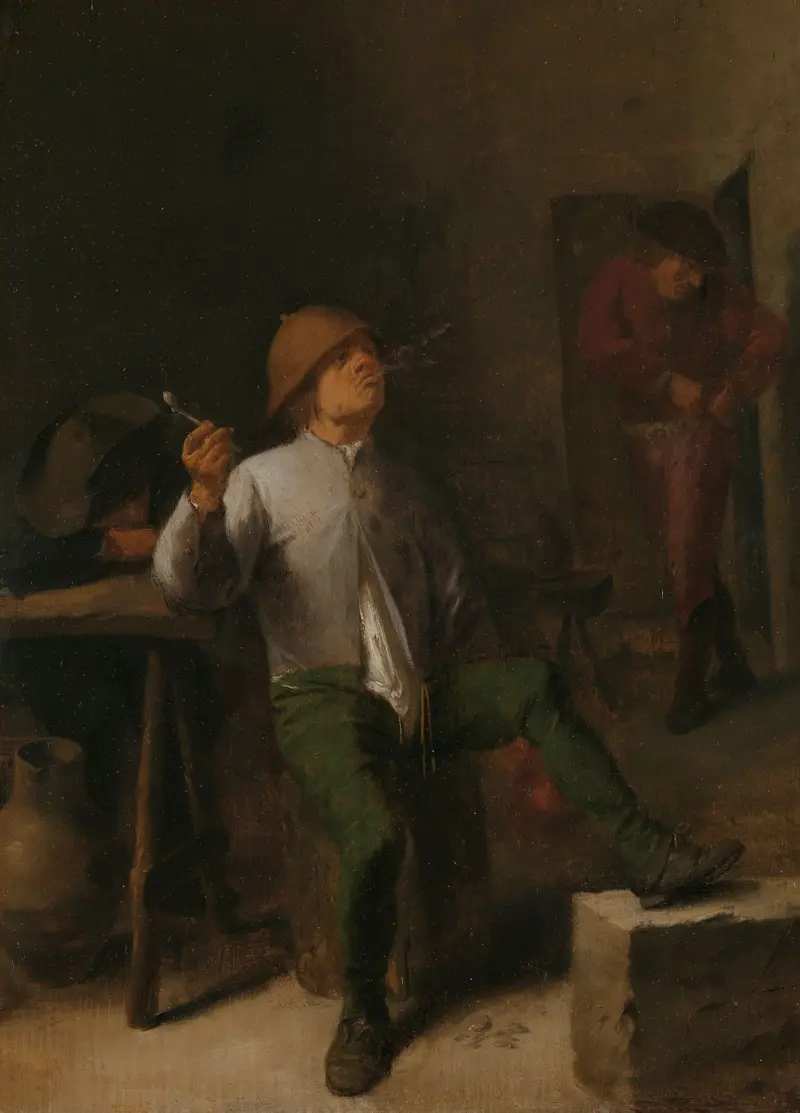
The Smoker
Adriaen Brouwer
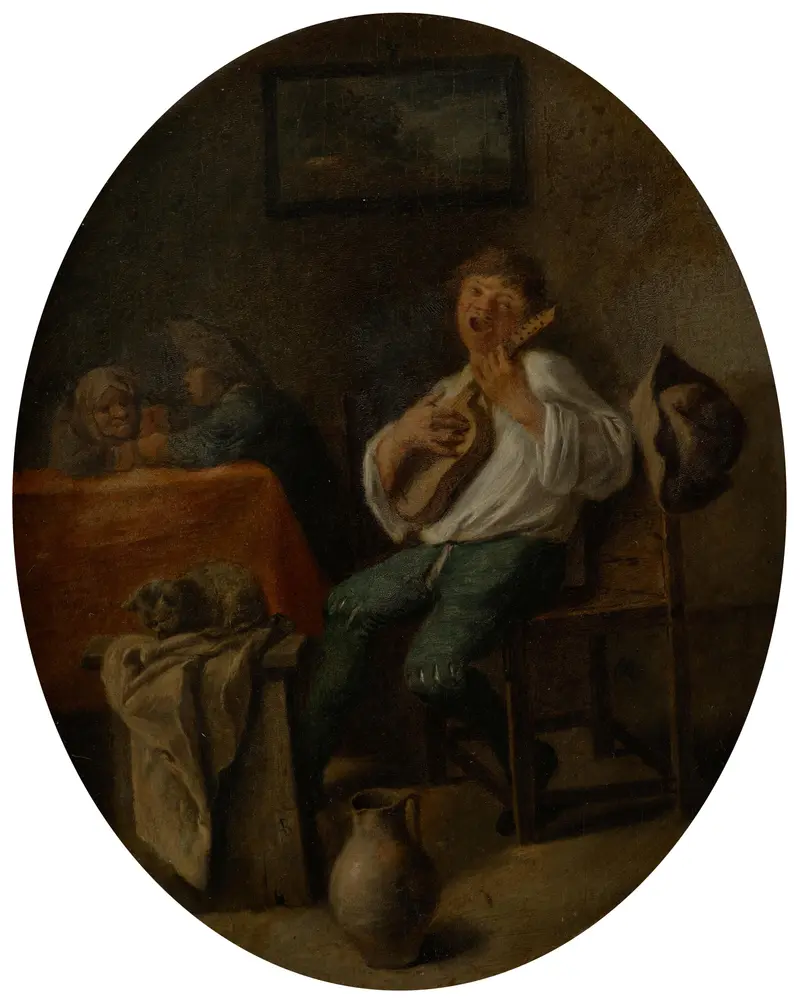
The Guitar Player
Adriaen Brouwer
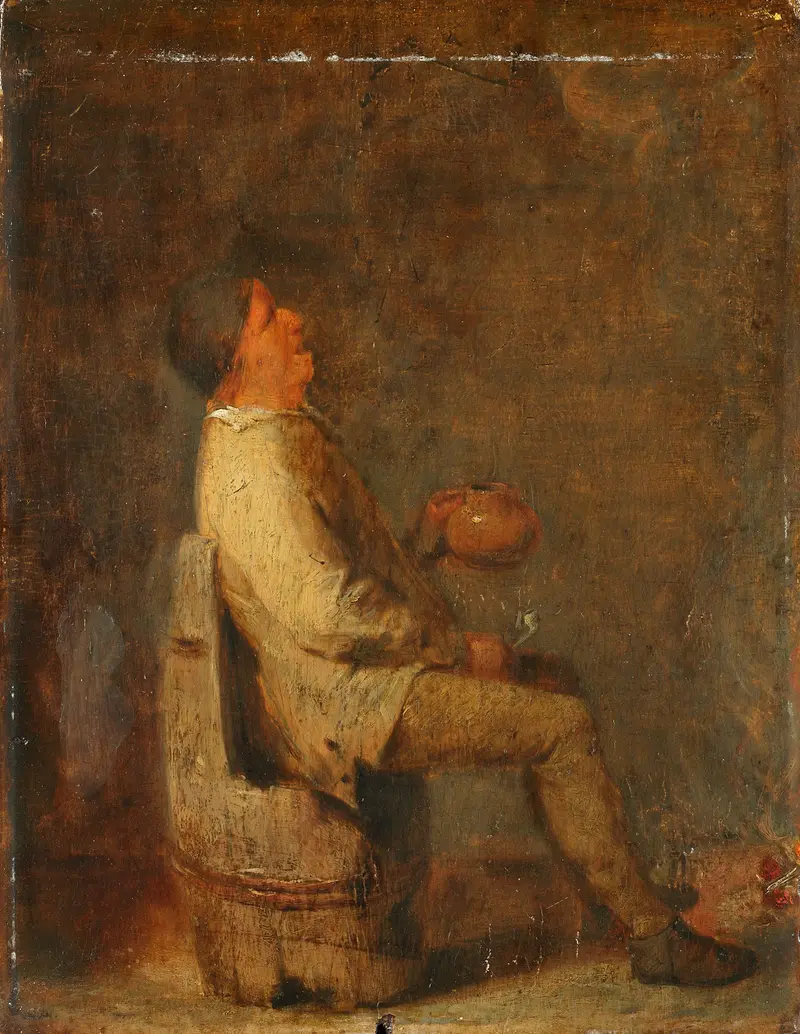
A Peasant Singing
Adriaen Brouwer
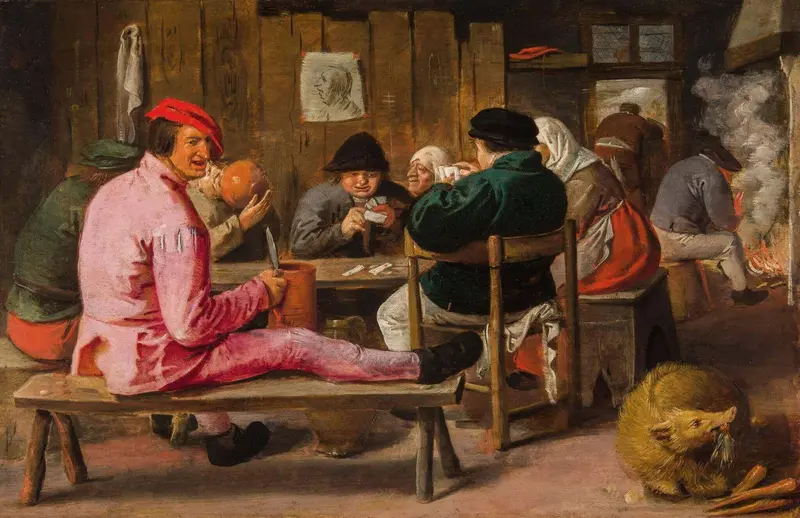
Merry Peasants in an Inn
Adriaen Brouwer
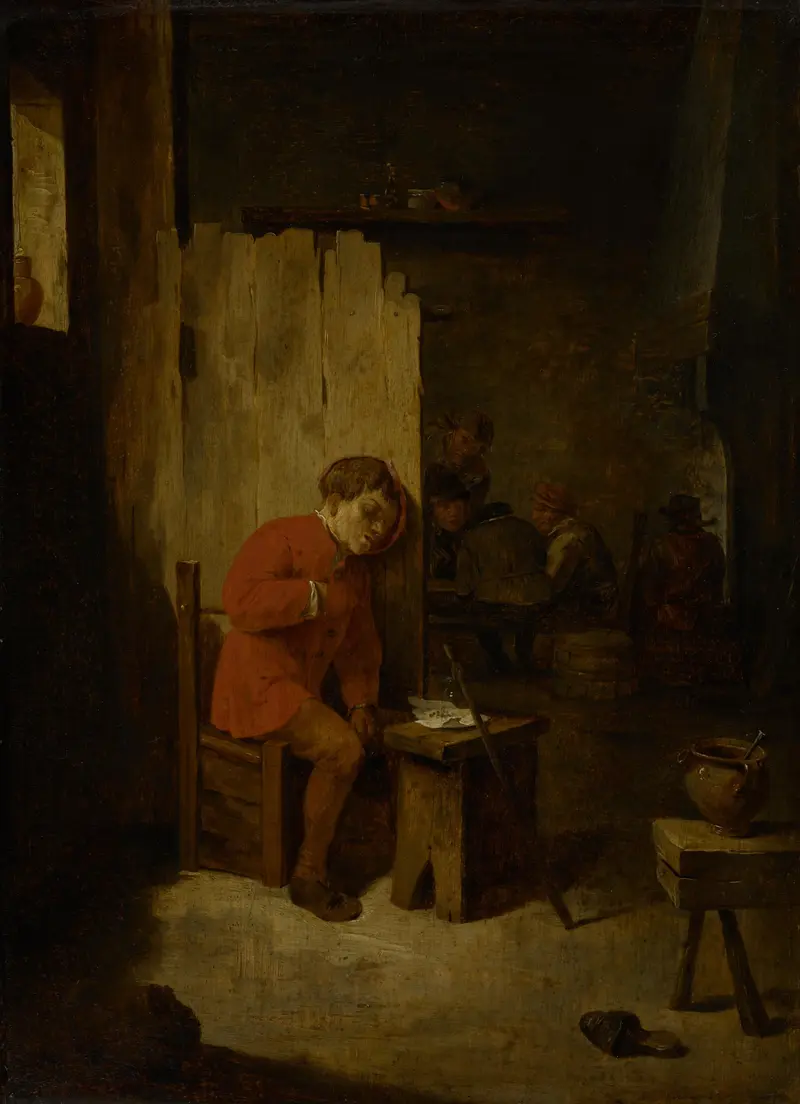
Nachahmer, Schlafender Bauer 853G Gemäldegalerie
Adriaen Brouwer
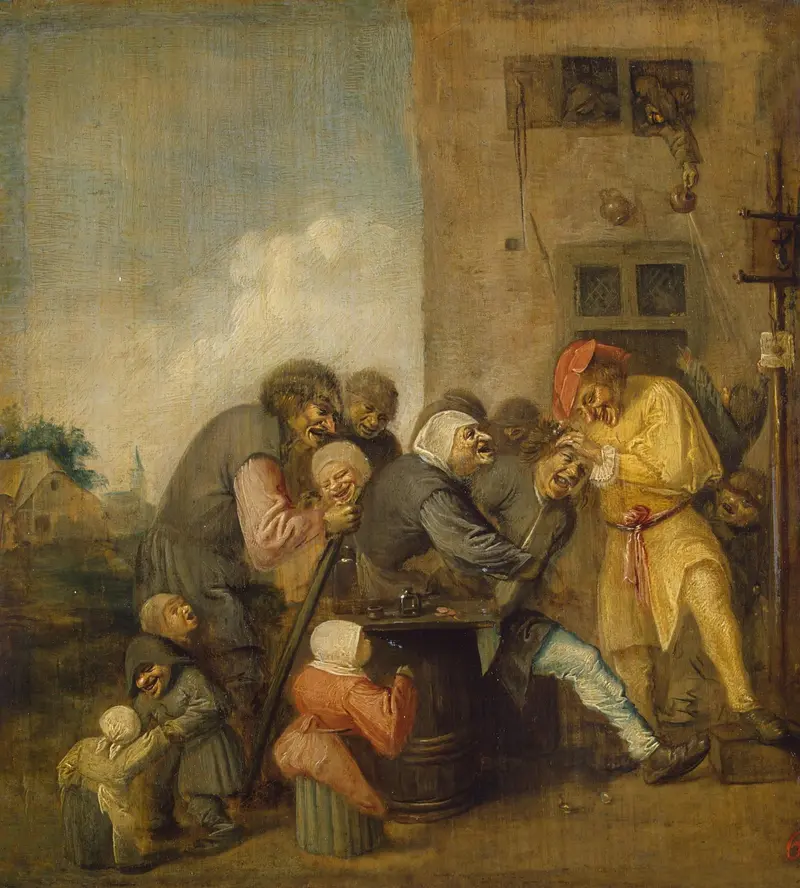
Village Charlatan (The Operation for Stone in the Head)
Adriaen Brouwer
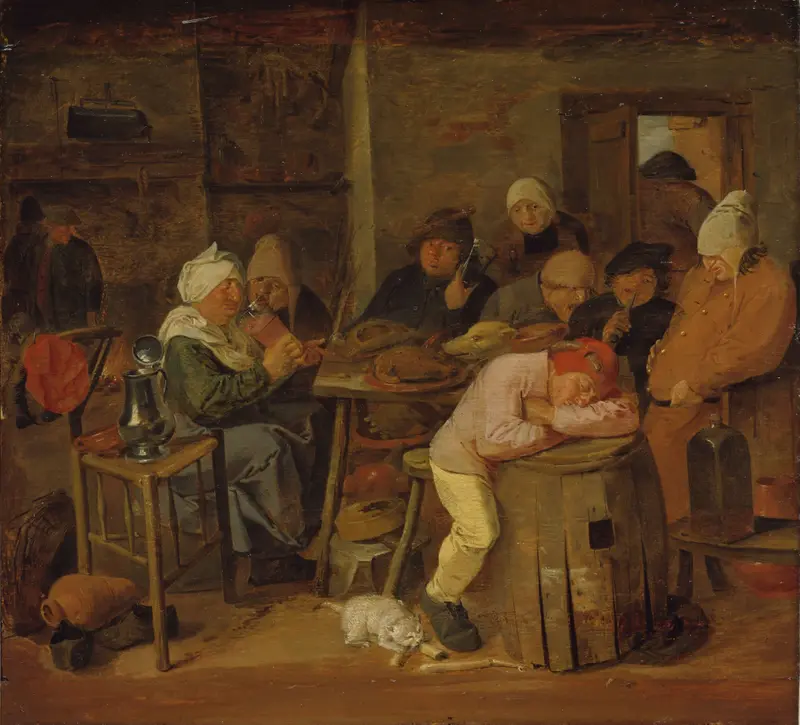
Peasants in an interior (The slaughter feast)
Adriaen Brouwer
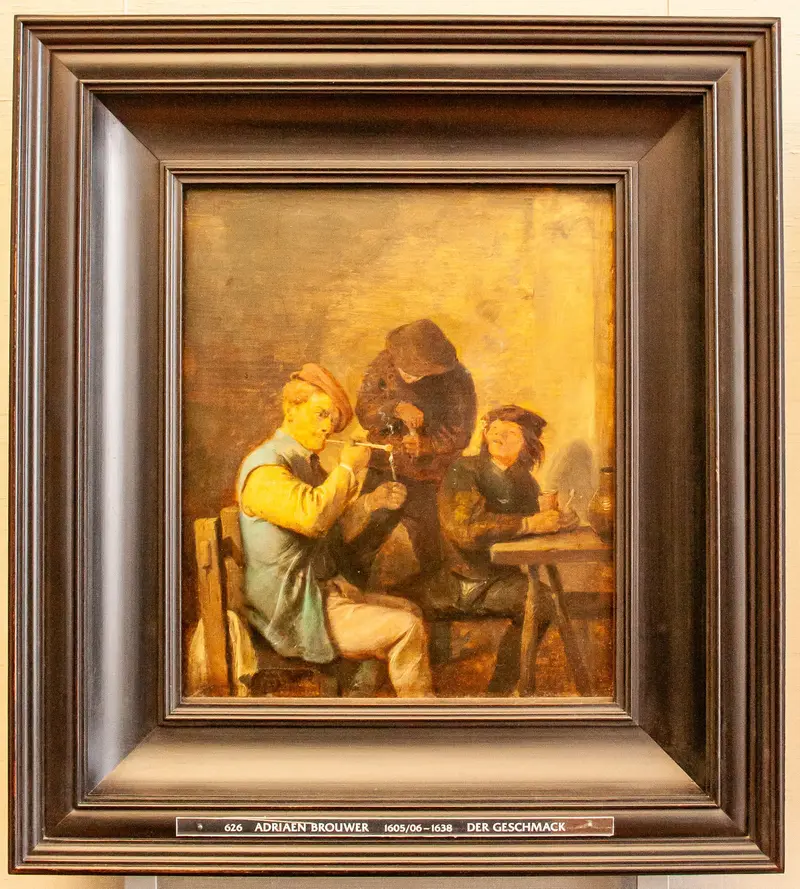
The Taste
Adriaen Brouwer
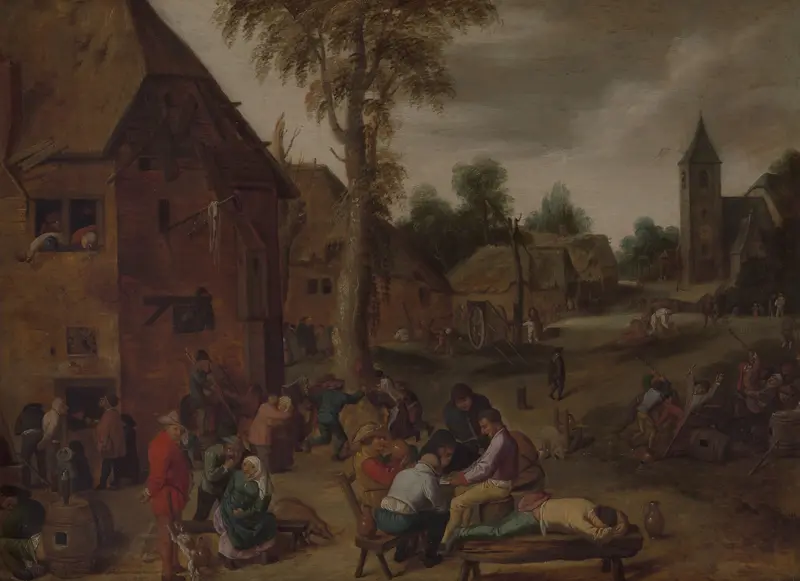
A Fair
Adriaen Brouwer
More Genre Scene Art

Banquet of the Officers of the St George Civic Guard
Frans Hals

Rembrandt and Saskia in the Scene of the Prodigal Son
Rembrandt van Rijn

Bal du moulin de la Galette
Pierre-Auguste Renoir

Quadrille at the Moulin Rouge
Henri de Toulouse-Lautrec

A Burial at Ornans
Gustave Courbet

When Will You Marry?
Paul Gauguin