
Alonso de Ercilla y Zúñiga (1533–1594) — History & Facts
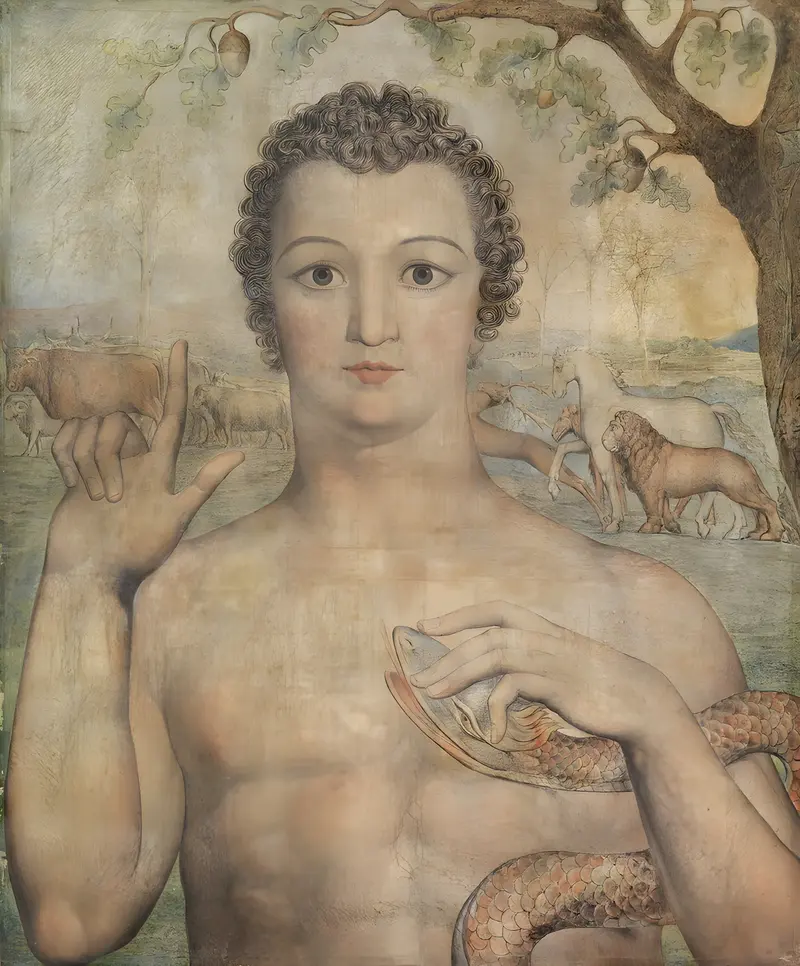
Few English artists have chosen to immortalize a Spanish poet and soldier, but in 1800, William Blake turned his attention to Alonso de Ercilla y Zúñiga (1533–1594), the celebrated author of the epic poem La Araucana. This unusual subject stands out in Blake’s oeuvre, which is far more often populated by biblical or mythological figures. The portrait’s origins remain somewhat mysterious: no commission is recorded, and the medium is undocumented, leaving scholars to wonder whether Blake painted it for a patron, a literary society, or as a personal homage to a fellow poet.
The work’s rarity—no other known Blake portrait of Ercilla exists—adds to its intrigue. Ercilla, depicted at the height of his literary fame, is best known for chronicling the Spanish conquest of Chile in the 16th century. Blake chooses to capture him in a moment of introspection, perhaps imagining the poet in the act of composing verses about the fierce Mapuche resistance. The sitter’s hand rests on a manuscript, a direct nod to La Araucana, while his armor and ruff recall both his martial exploits and his courtly status.
The light falls sharply on Ercilla’s face, highlighting a furrowed brow and intense gaze, as if Blake sought to capture both the burden of memory and the pride of authorship. Unlike the formal, distant portraits of Spanish Golden Age painters such as El Greco, Blake’s approach is more psychological, inviting the viewer into the poet’s inner world. The physical history of Alonso de Ercilla y Zúñiga (1533–1594) remains elusive. No records have surfaced regarding its early ownership or exhibition, and its medium—whether oil, watercolor, or another technique—has yet to be conclusively identified.
Some art historians have speculated that the work may have been part of a series of portraits of literary figures, but no companion pieces have been found. Today, the painting is known primarily through catalogues and reproductions, and its current whereabouts are uncertain. Within William Blake’s career, the portrait stands as a rare and fascinating intersection between English Romanticism and Spanish literary history.
More Artworks by William Blake
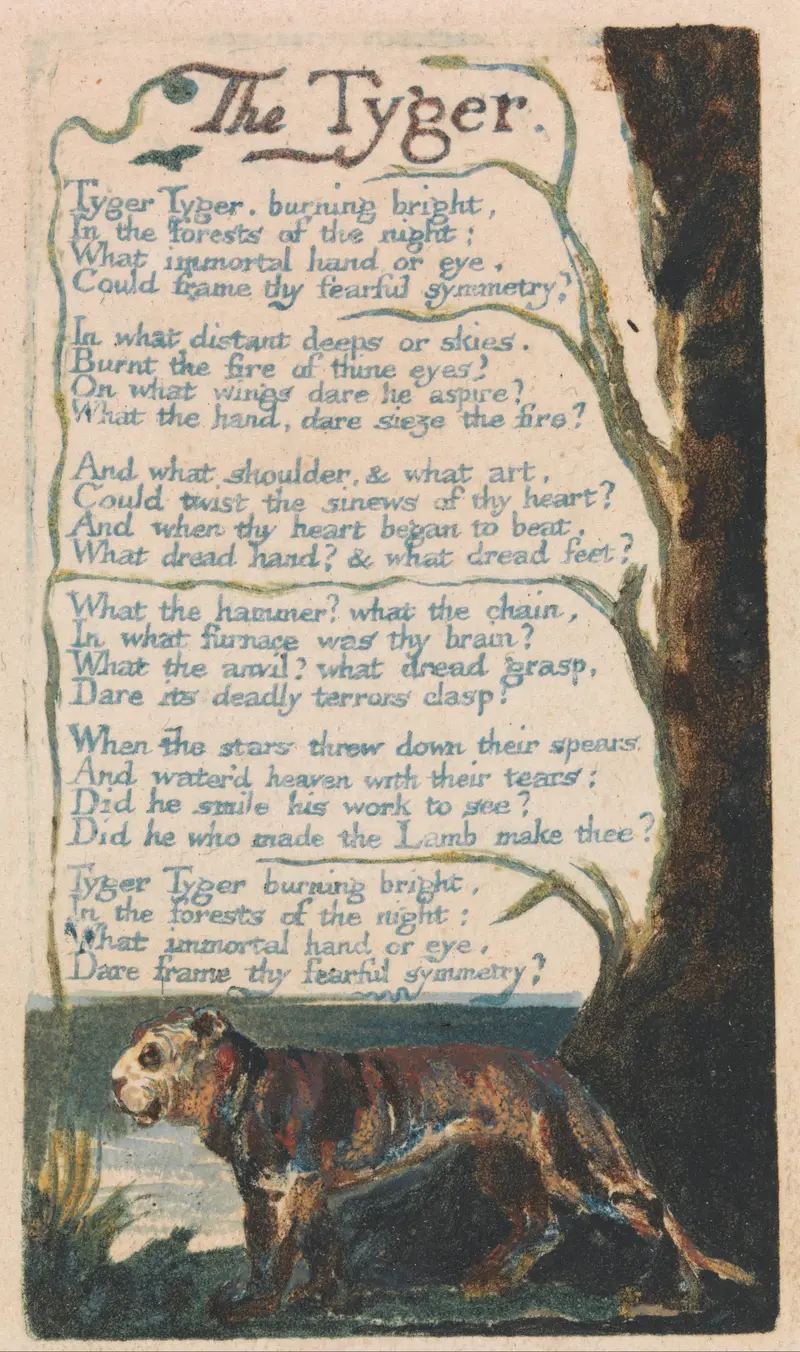
The Tyger
William Blake

Christ Blessing
William Blake
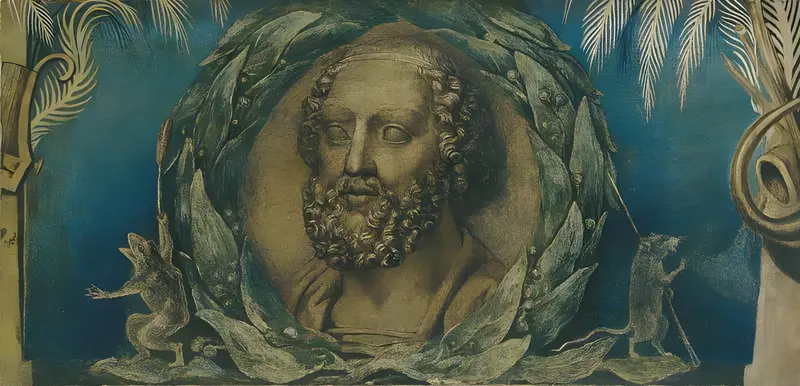
Homer
William Blake
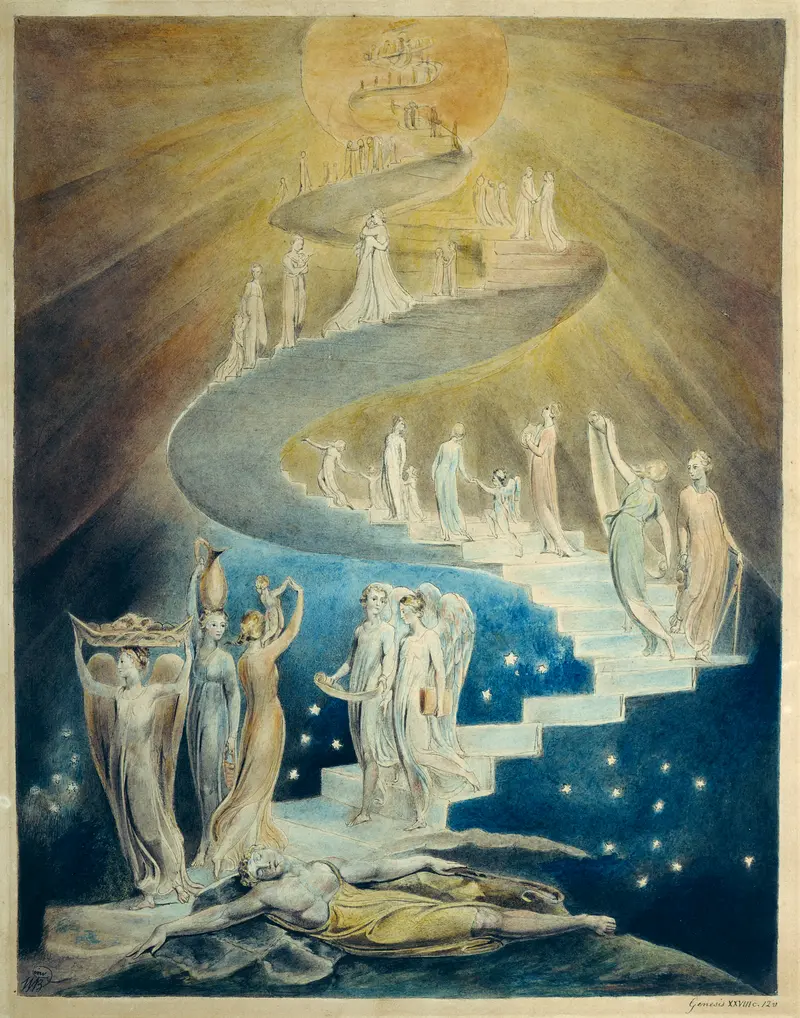
Jacob's Ladder
William Blake
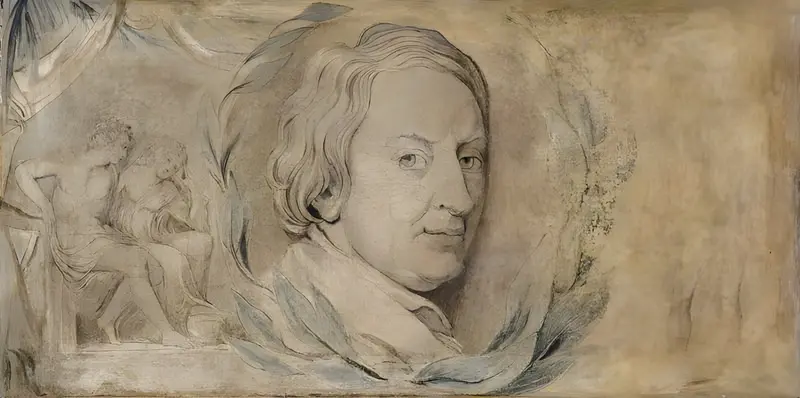
John Dryden (1631–1700)
William Blake
Landscape near Felpham
William Blake
Sacrifice of Job
William Blake
Christ's Entry into Jerusalem
William Blake
The Ancient of Days
William Blake
Adam Naming the Beasts
William Blake





