
Ariane in the Island of Naxos — History & Facts
A shaft of Mediterranean light slices across the cave’s mouth, catching on the blue and gold folds of a woman’s dress as she reaches out, half-rising, toward a figure crowned with vine leaves. The moment is charged with both arrival and revelation: the god, unmistakable in his animal pelt and thyrsus, extends his hand to Ariadne, whose upturned face and parted lips suggest the first flicker of hope after abandonment. Around them, putti tumble and hover, their garlands and torches echoing the divine encounter, while a satyr crouches in the shadows, crushing grapes—a promise of wine, festivity, and new beginnings.
The painter draws the eye from the shadowy cave to the open sea, where the faint silhouette of a departing ship hints at the story’s recent heartbreak, but the palette’s warmth and the upward swirl of figures insist on transformation. Painted in 1725, this work belongs unmistakably to the world of early eighteenth-century France, when mythological scenes were a favored playground for artists seeking to blend sensuality, drama, and allegory. Such paintings were often destined for the private salons of aristocrats, who delighted in the coded pleasures and moral lessons of classical myth. The artist, Jean-François de Troy, was known for his lively compositions and theatrical flair, qualities that pulse through every corner of this canvas.
While history has kept few traces of this particular painting’s journey, its survival in a modern collection invites us to linger on the threshold between myth and reality, where every gesture and glance is charged with possibility.
More Artworks by Jean-François de Troy

Diana and Actaeon
Jean-François de Troy

Créüse consumée par la robe empoisonnée
Jean-François de Troy
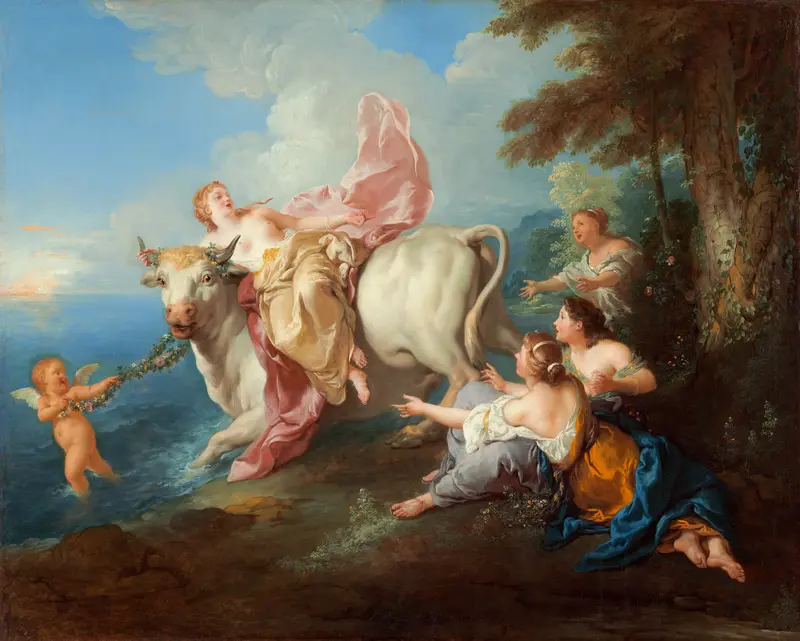
The Abduction of Europa
Jean-François de Troy

The Lunch of Oysters
Jean-François de Troy

Before the Ball
Jean-François de Troy

Pan and Syrinx
Jean-François de Troy

Le Combat des soldats nés des dents du serpent
Jean-François de Troy

Diana and Her Nymphs Bathing
Jean-François de Troy
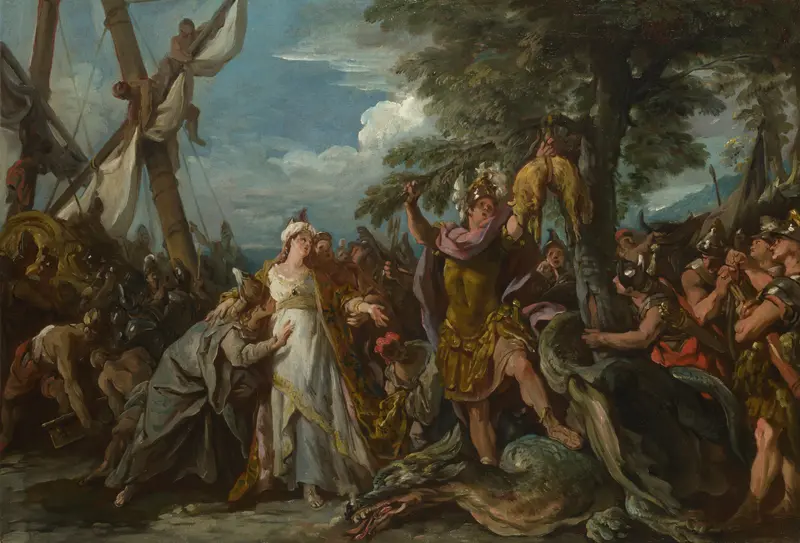
The Capture of the Golden Fleece
Jean-François de Troy

The Triumph of Mordecai
Jean-François de Troy





