
Astolf Riding Away with the Head of Orill — History & Facts
What first seizes the eye in Astolf Riding Away with the Head of Orill is the wild, almost desperate energy of the horse as it charges through a barren landscape under a bruised, storm-lit sky. The rider, draped over the animal’s back in a vivid costume of red and black stripes, clutches a grisly trophy—an object whose presence is announced by the blood streaking the horse’s flank. There is no triumph here, only haste and aftermath; the scene is all motion and aftermath, the drama heightened by Böcklin’s choice to show the escape rather than the confrontation itself.
The horse’s muscles bunch and twist, its head thrown back, as if recoiling from the burden it bears, while the rider’s posture is tense, almost collapsing into the animal’s mane. Painted around 1873, this work by Arnold Böcklin belongs to the fevered world of late nineteenth-century symbolism, when artists turned to myth, legend, and nightmare for their subjects. Böcklin’s contemporaries often drew on medieval or fantastical tales to explore the darker corners of the imagination, and his own career is marked by a fascination with the supernatural and the macabre. Such paintings were rarely made for public commissions; rather, they appealed to private collectors hungry for images that unsettled and provoked.
The world that produced this painting was one in flux, caught between Romantic nostalgia and the modern taste for psychological drama. Few traces remain of the painting’s early history, but its restless energy and haunting palette invite viewers to linger, searching for meaning in the shadows and the dust.
More Artworks by Arnold Böcklin

Die Toteninsel III
Arnold Böcklin
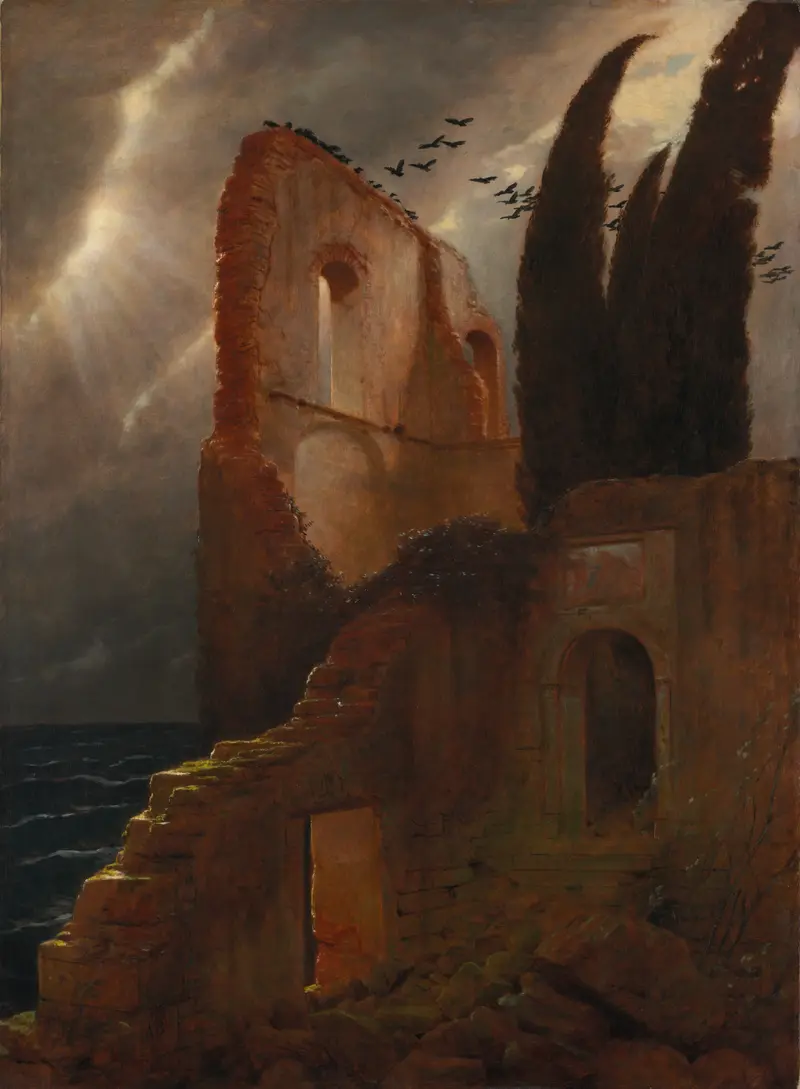
Ruin by the Sea
Arnold Böcklin
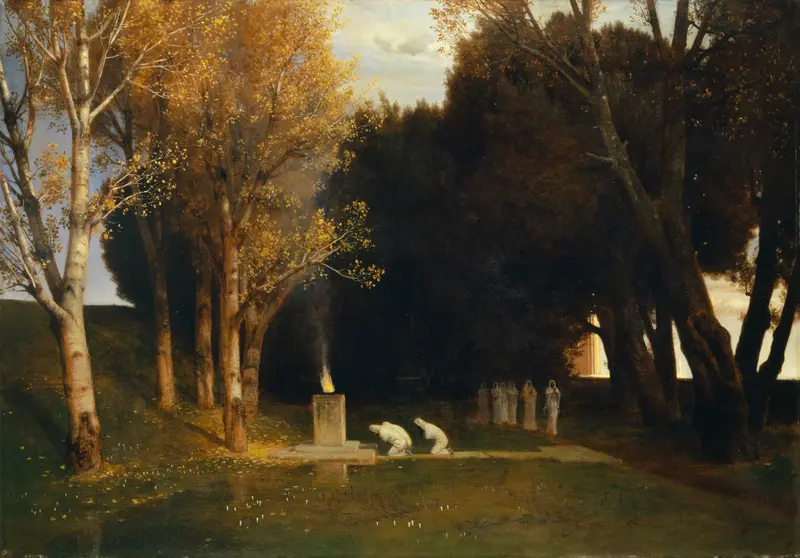
The Sacred Grove
Arnold Böcklin
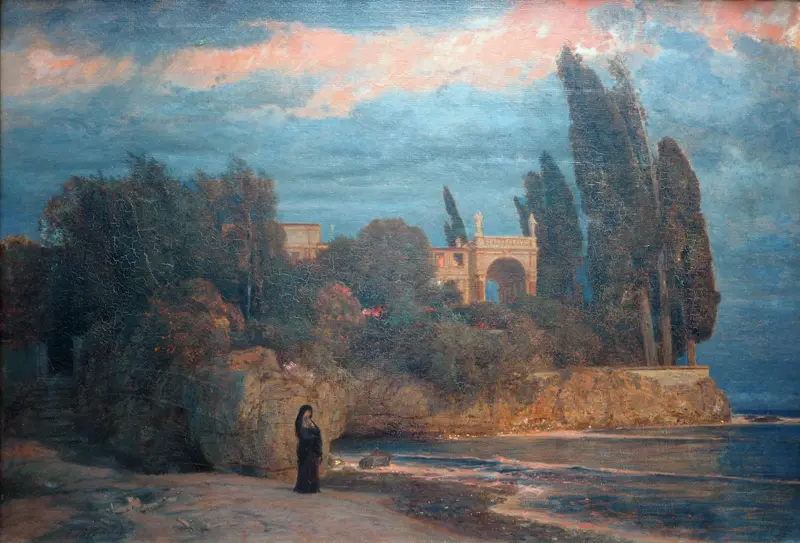
Villa by the Sea
Arnold Böcklin
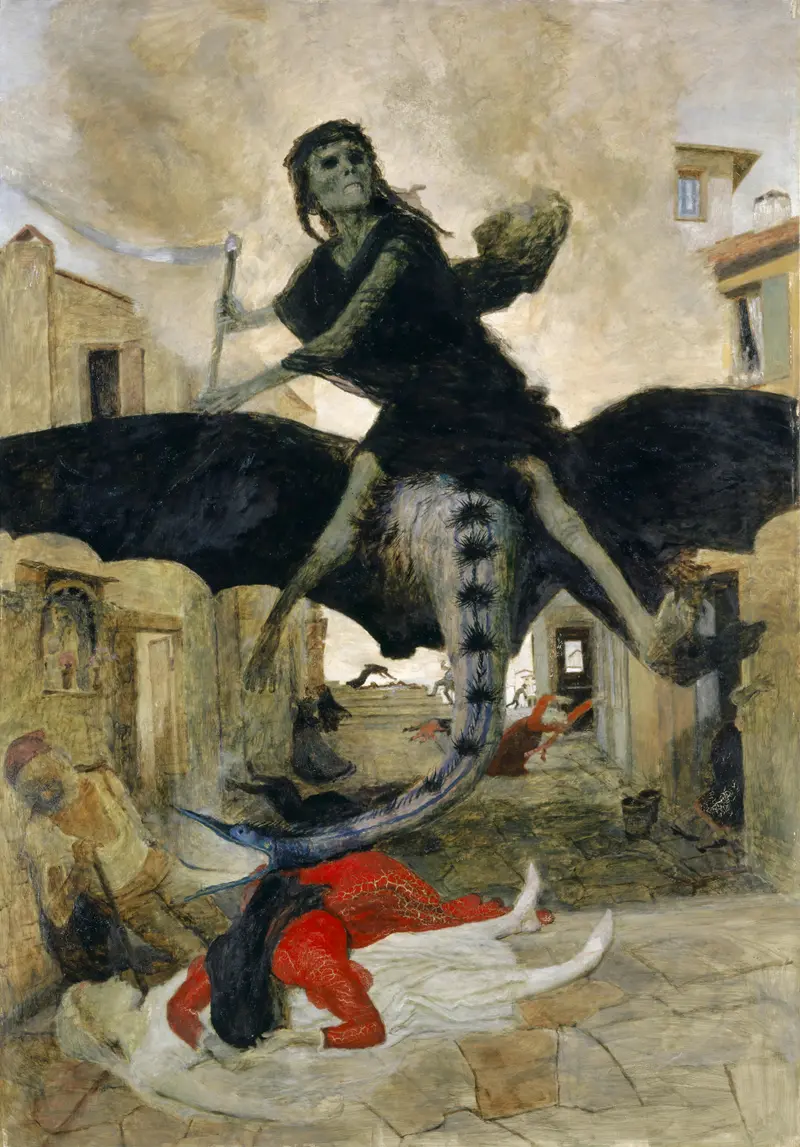
The Plague
Arnold Böcklin
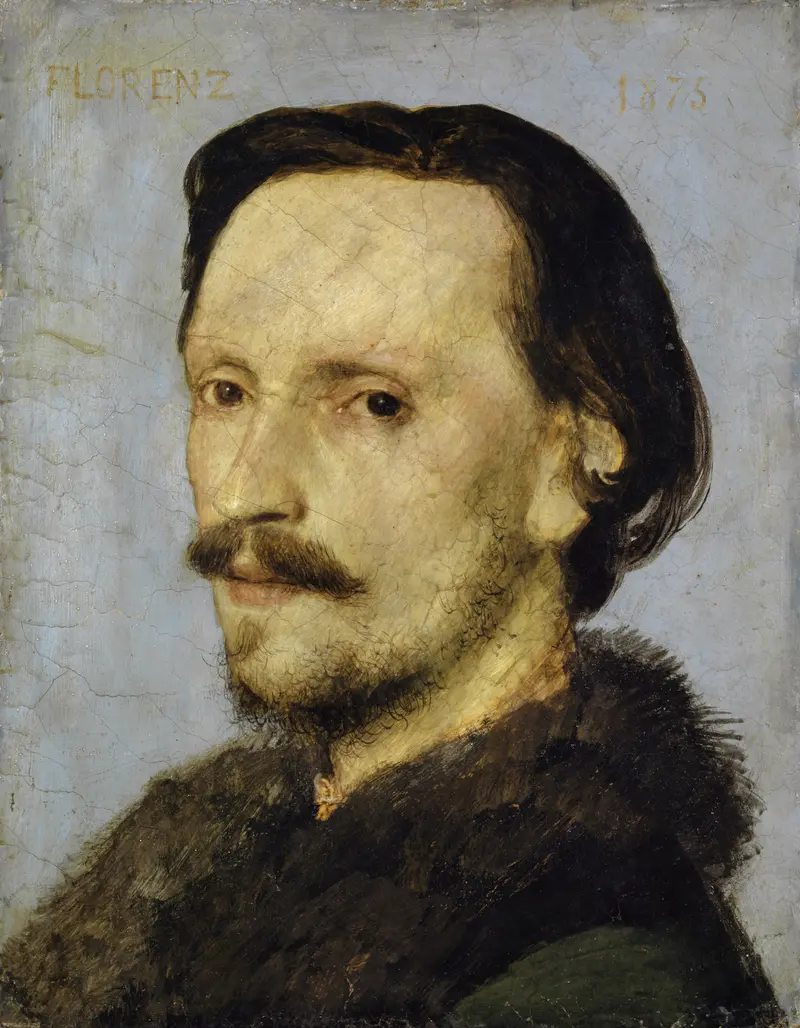
Böcklin Bildnis des Kunsthistorikers Adolph Bayersdorfer, 1875
Arnold Böcklin
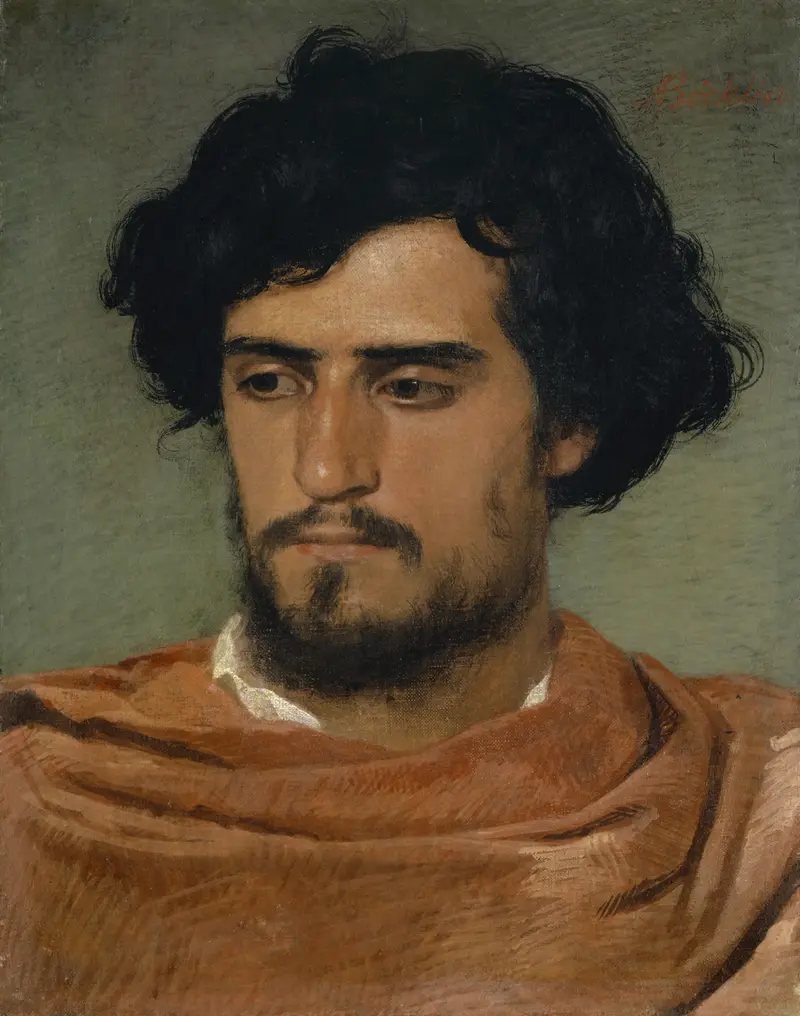
Head of a Roman
Arnold Böcklin
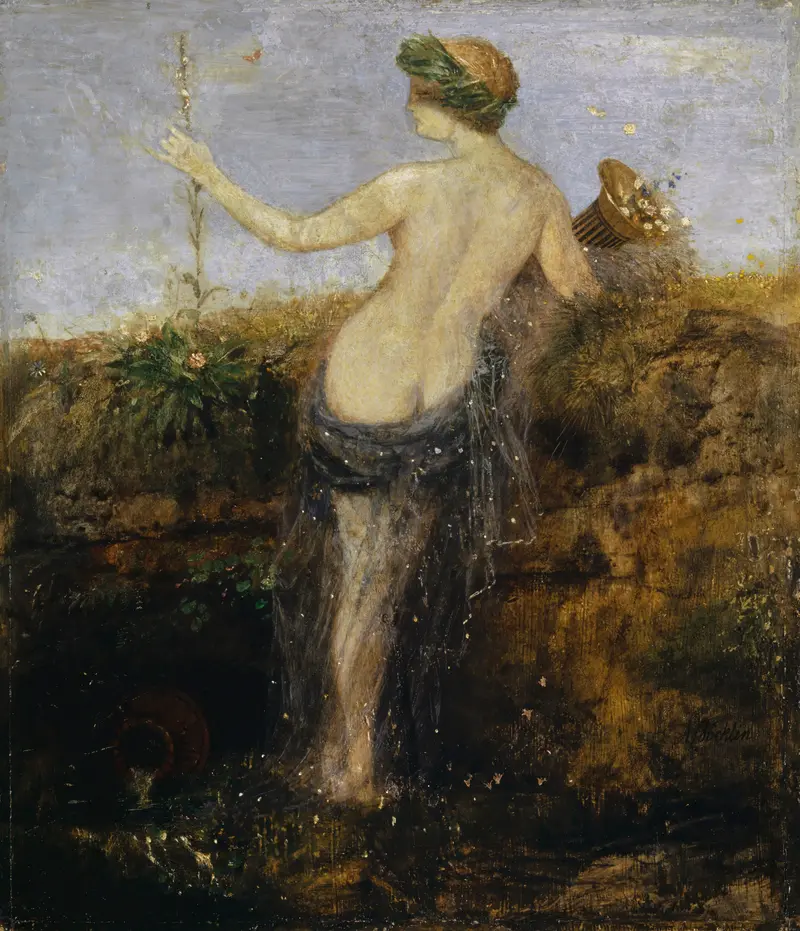
Nymphe with Horn of Plenty
Arnold Böcklin
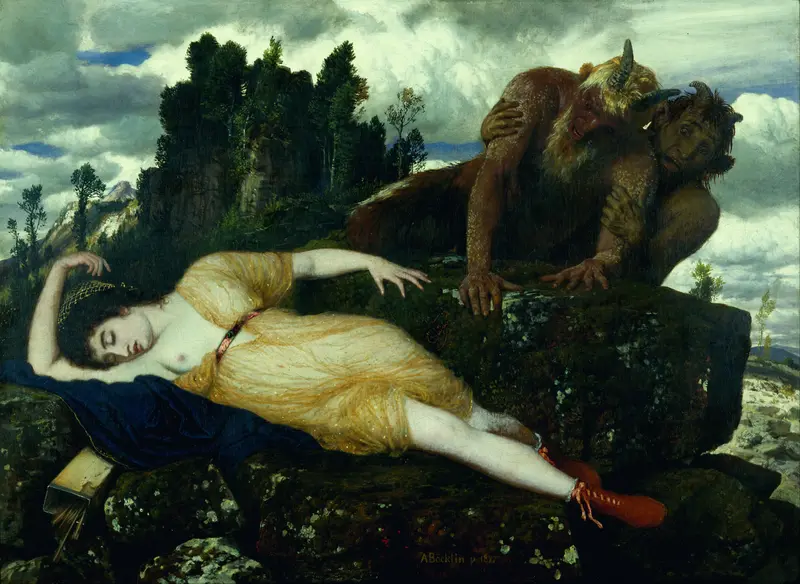
Sleeping Diana Watched by Two Fauns
Arnold Böcklin
Spring (Songs of Spring)
Arnold Böcklin





