
Bacchus and Ariadne — History & Facts
Ariadne’s gaze is the first surprise: not the face of a woman abandoned, but of one startled by sudden arrival, her body twisting away even as her eyes are caught by the figure striding toward her. The painter’s hand lingers on this moment of interruption—Ariadne’s draped form, half-turned, is all tension and possibility, her fate balanced between solitude and rescue. The god Bacchus, crowned with vine leaves, advances with a flourish, his energy and followers spilling into the scene.
Light pools around Ariadne, isolating her on the shore, while Bacchus’s retinue surges from the shadows, their movement a counterpoint to her stillness. This is a painting that delights in spectacle, in the theatricality of myth brought to life. The rich, saturated palette—deep crimsons, gleaming golds, the cool blue of the sea—draws the viewer into a world of drama and sensuality. Every gesture is calculated: Bacchus’s outstretched arm promises both revelation and command, while the satyrs and maenads behind him seem to press the story forward.
Such mythological scenes were favored by 18th-century patrons for their blend of classical learning and decorative grandeur, often destined for the salons of the elite. Though little is recorded about this specific Bacchus and Ariadne by Jean-François de Troy, its presence in the National Gallery of Ireland’s collection invites us to linger over the moment when myth and paint conspire to make the extraordinary visible.
More Artworks by Jean-François de Troy
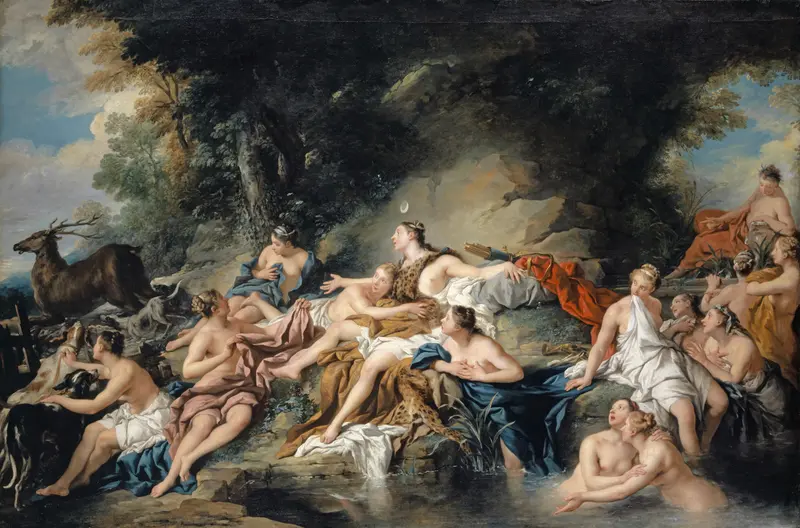
Diana and Actaeon
Jean-François de Troy
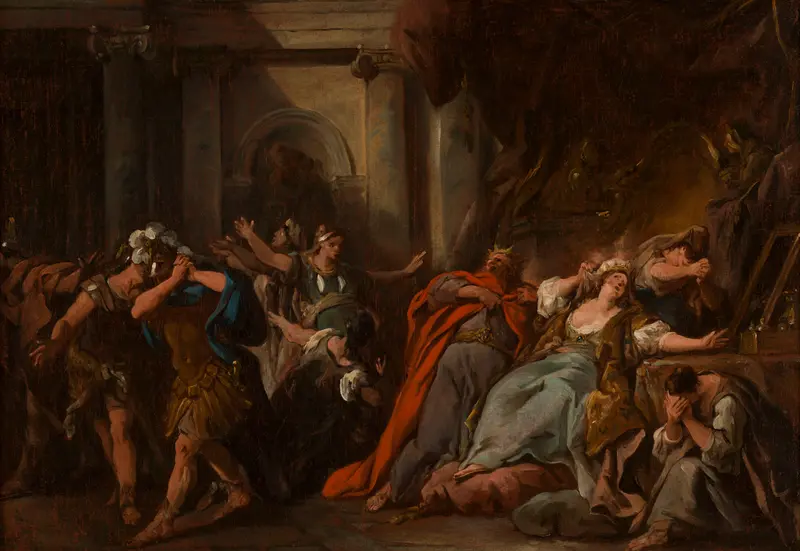
Créüse consumée par la robe empoisonnée
Jean-François de Troy
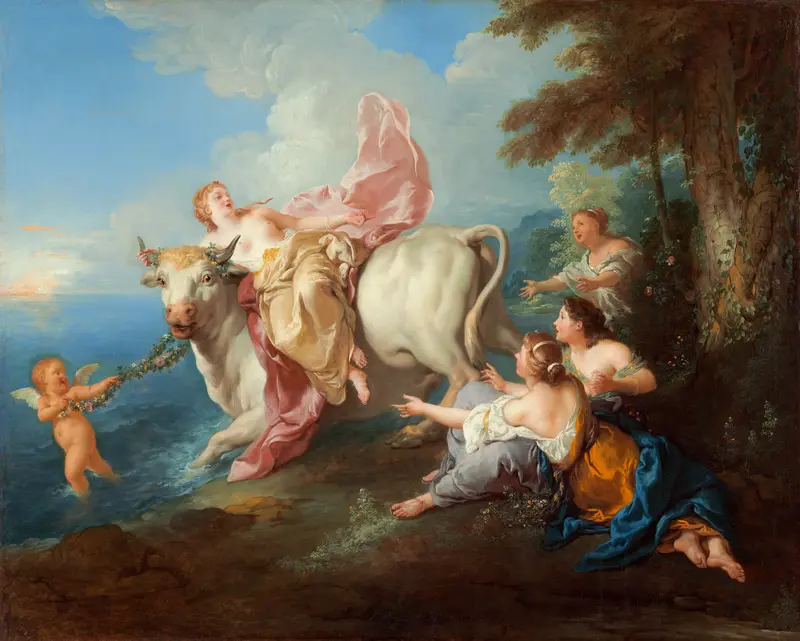
The Abduction of Europa
Jean-François de Troy
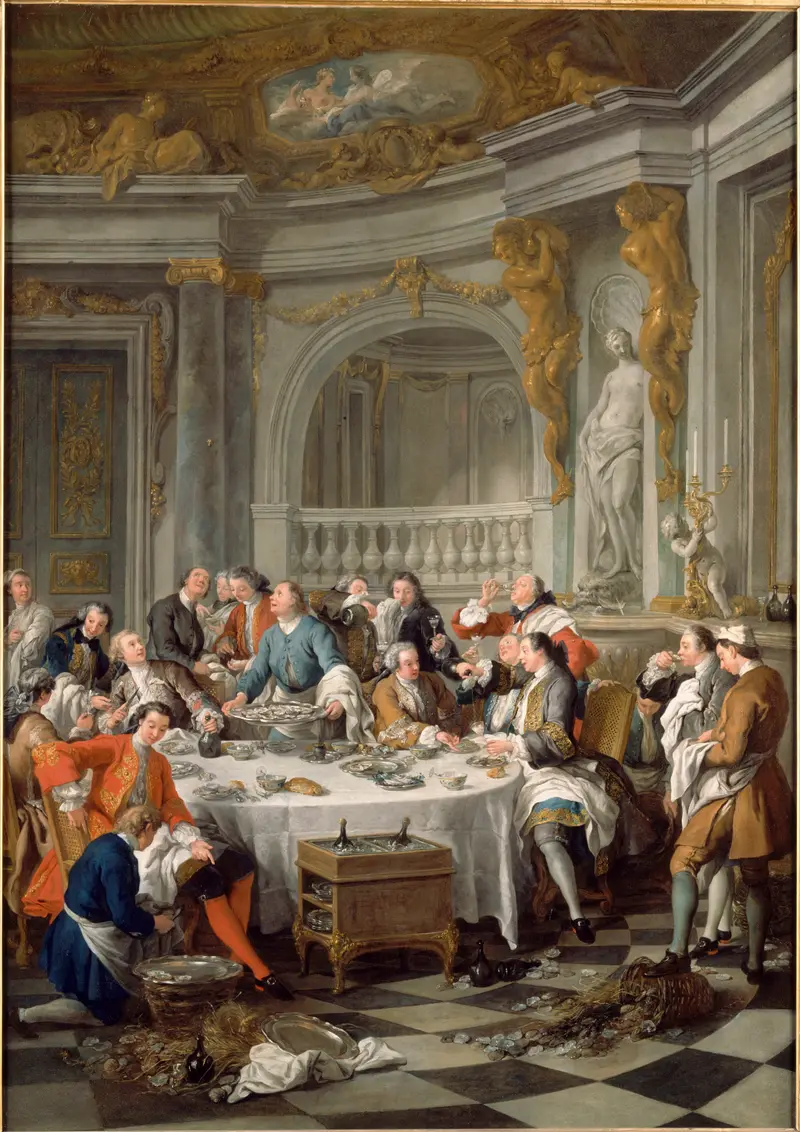
The Lunch of Oysters
Jean-François de Troy
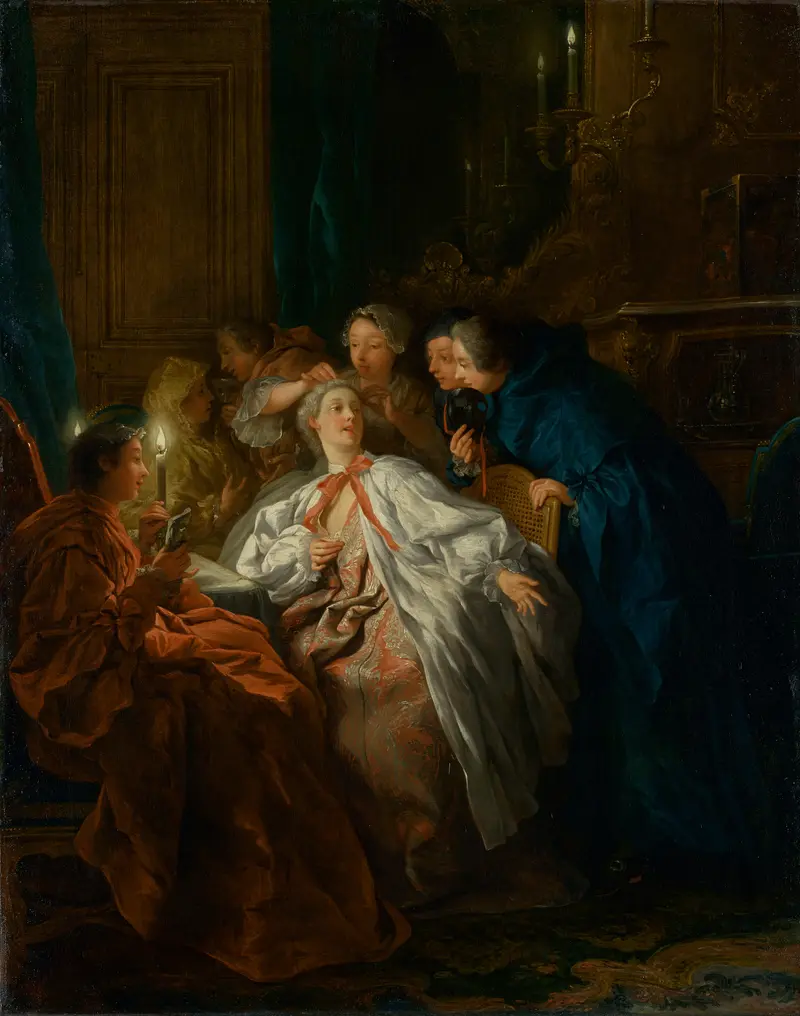
Before the Ball
Jean-François de Troy
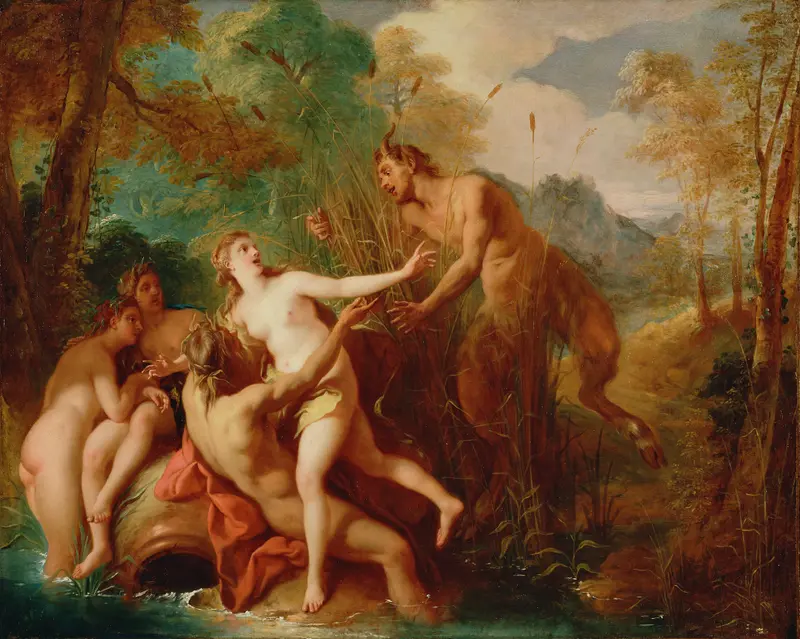
Pan and Syrinx
Jean-François de Troy

Le Combat des soldats nés des dents du serpent
Jean-François de Troy
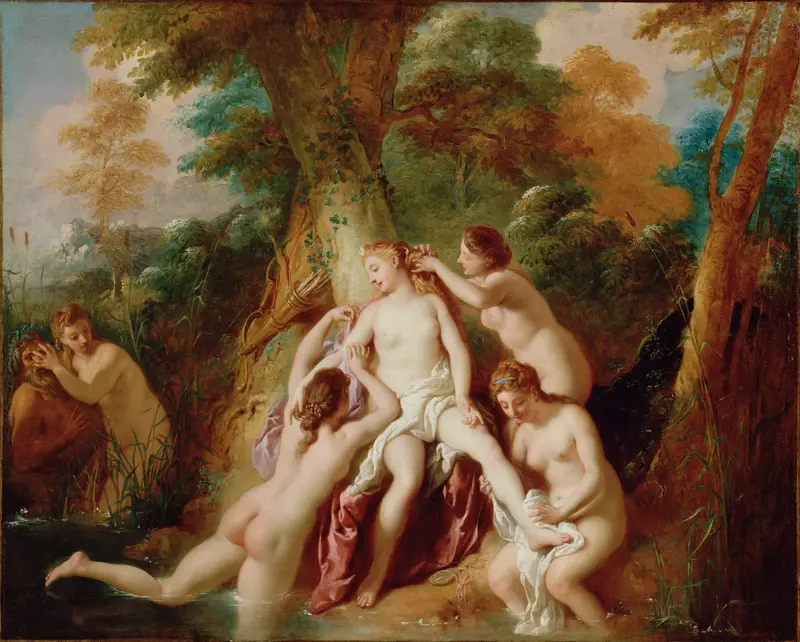
Diana and Her Nymphs Bathing
Jean-François de Troy
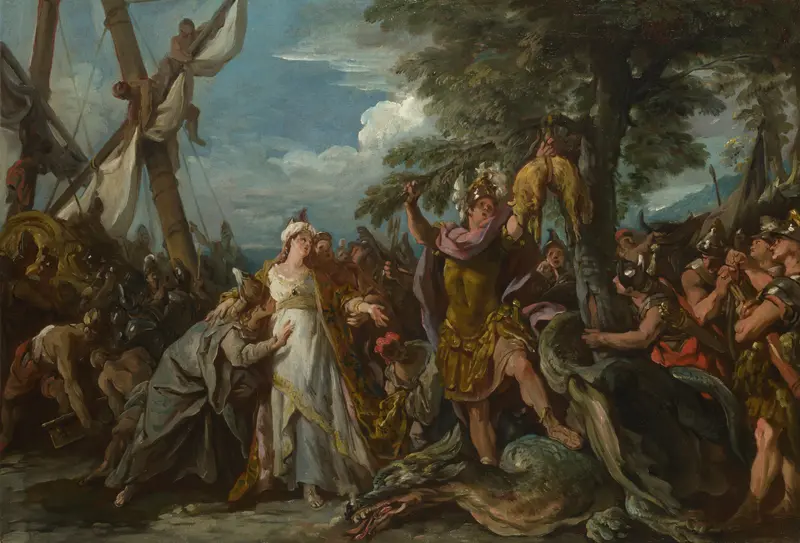
The Capture of the Golden Fleece
Jean-François de Troy

The Triumph of Mordecai
Jean-François de Troy





