
Baptism of Christ — History & Facts
When William Blake received a commission in 1799 to paint a series of biblical watercolours for the civil servant Thomas Butts, he embarked on a sequence of images that would become some of his most personal interpretations of scripture. Among these, Baptism of Christ stands out for its radical vision—a scene so suffused with Blake’s spiritual imagination that it blurs the boundary between the earthly and the divine. Unlike the grand altarpieces of the Italian Renaissance, Blake’s intimate scale and visionary approach were intended for private devotion, not public display. At the centre of Baptism of Christ, John the Baptist bends over the kneeling figure of Jesus in the shallow waters of the Jordan.
Blake chooses the instant when the Holy Spirit, rendered as a radiant dove, descends from above, its light enveloping both figures. The riverbank is sparse, the background dissolving into a glowing wash, focusing all attention on the act of baptism itself. Christ’s hands are folded in prayer, while John’s gesture is gentle, almost hesitant—a far cry from the robust physicality seen in, for example, Piero della Francesca’s treatment of the same subject.
Blake’s use of light, not as a natural phenomenon but as a symbol of divine presence, transforms the scene into a vision of spiritual awakening. The precise medium of this work remains uncertain—possibly tempera or watercolour on paper, as with many of Blake’s biblical scenes. It was likely kept in the Butts family collection for decades, passing quietly through hands until Blake’s reputation grew in the late nineteenth century. Today, Baptism of Christ is recognized as part of the extraordinary Butts set, a landmark in Blake’s career that marks his shift from commercial engraving to independent artistic creation.
Its current home is the collection of the National Gallery of Art in Washington, D.C., where it stands as a testament to Blake’s singular vision and the private, mystical faith that shaped his art.
More Artworks by William Blake
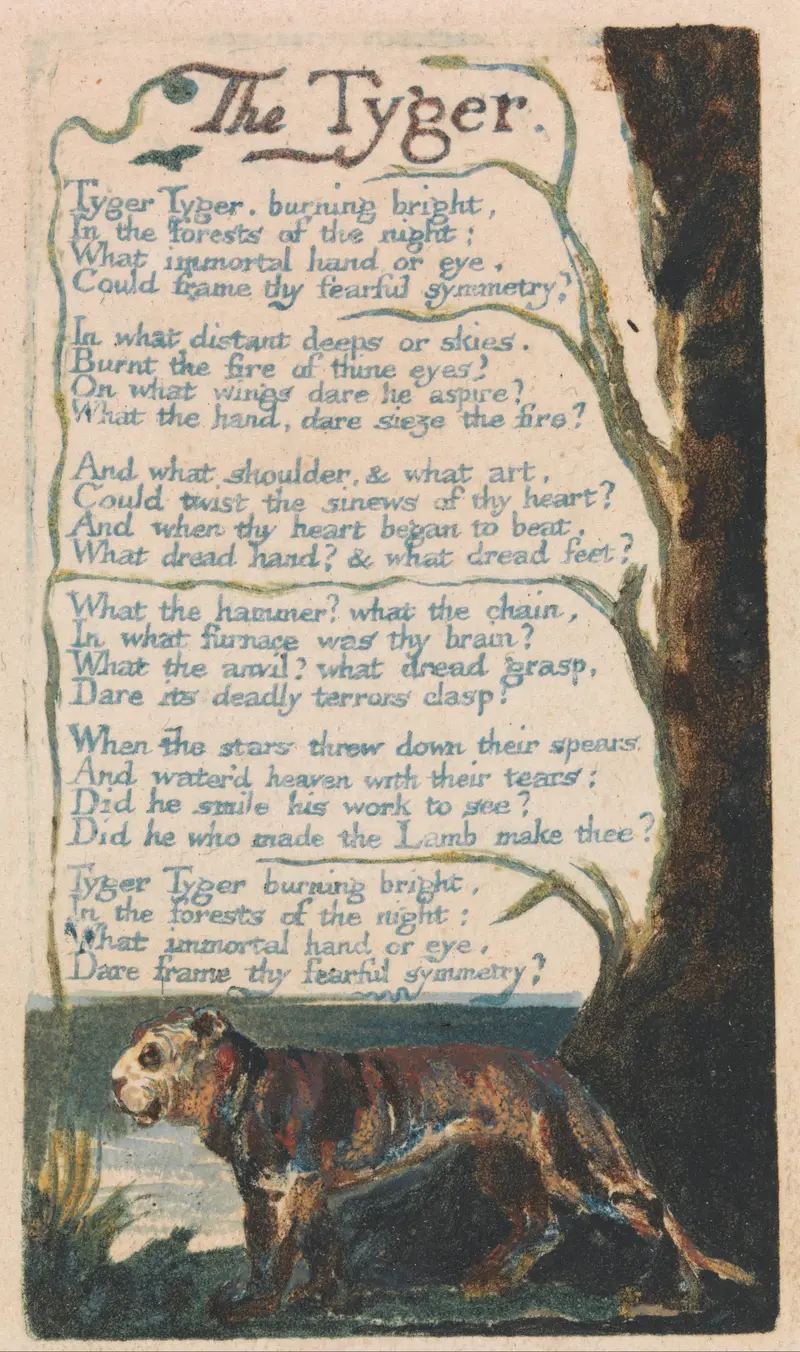
The Tyger
William Blake

Christ Blessing
William Blake
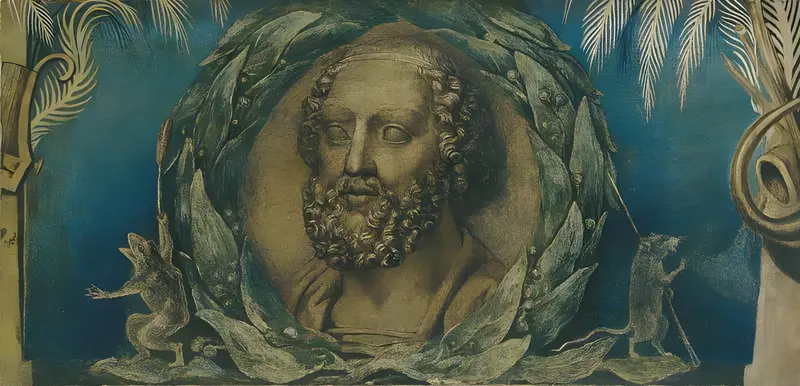
Homer
William Blake
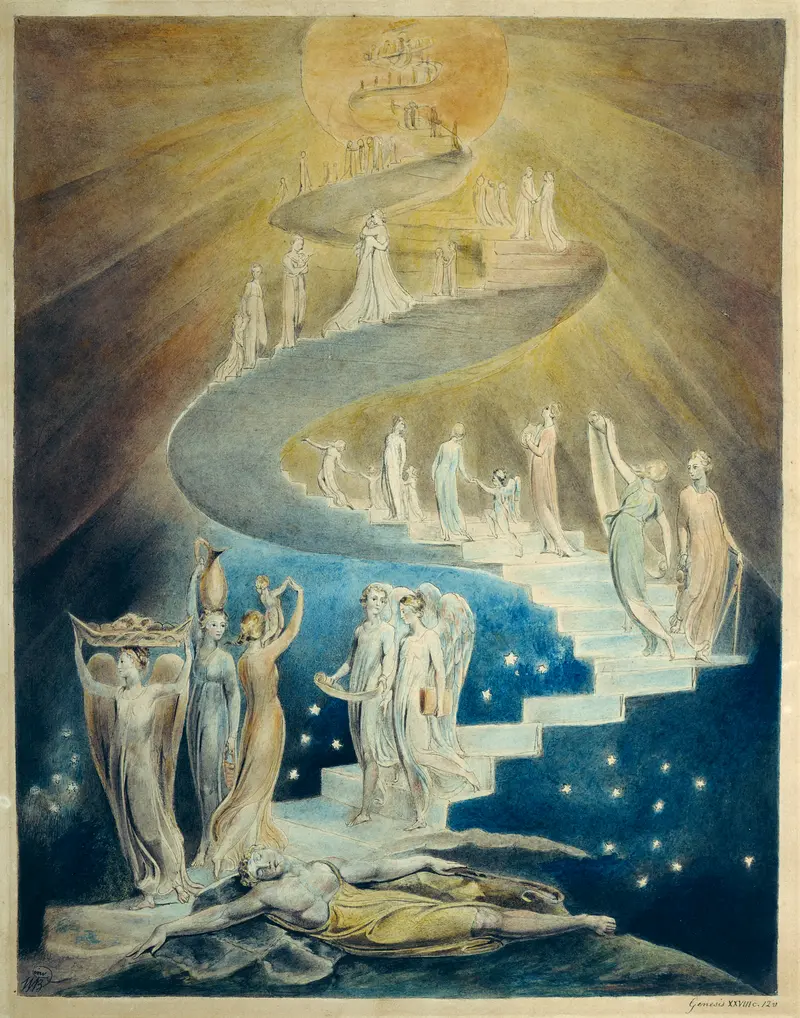
Jacob's Ladder
William Blake
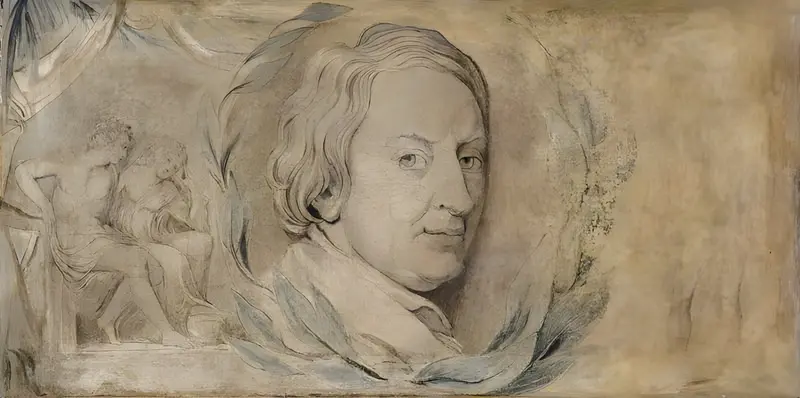
John Dryden (1631–1700)
William Blake
Landscape near Felpham
William Blake
Sacrifice of Job
William Blake
Christ's Entry into Jerusalem
William Blake
The Ancient of Days
William Blake
Adam Naming the Beasts
William Blake





