
Cupid and Psyche — History & Facts
A single flame, held aloft by Psyche’s trembling hand, becomes the fulcrum on which this entire scene pivots. The eye is drawn first to her poised figure, caught between longing and fear, as she leans over the sleeping Cupid. The golden light spills across their bodies, illuminating the soft curve of Cupid’s arm and the anxious determination in Psyche’s face.
Shadows pool in the corners, thick with secrecy, while the heavy drapery and sumptuous bedding close in, turning the chamber into a stage for revelation and risk. Every fold of fabric and flicker of light is a participant in this moment of discovery—the instant before love’s test is either won or lost. Works like this, drawing on the myth of Cupid and Psyche, flourished in the eighteenth century, when stories from antiquity were reimagined for a world hungry for both sensuality and moral drama. Painters such as Jean-François de Troy found in these tales a perfect vehicle for exploring the interplay of desire, innocence, and curiosity.
The painting’s theatrical lighting and lush textures are hallmarks of the Rococo, a style that delighted in private moments and the play of flesh against silk. Though little is recorded about this specific Cupid and Psyche, now documented as Sotheby’s Lot.343, its very obscurity invites us to linger over the details—the careful composition, the charged silence, the way the story is told entirely in glances and gestures. Look again, and notice how the world outside the curtain seems to vanish, leaving only this fragile, dangerous intimacy.
More Artworks by Jean-François de Troy
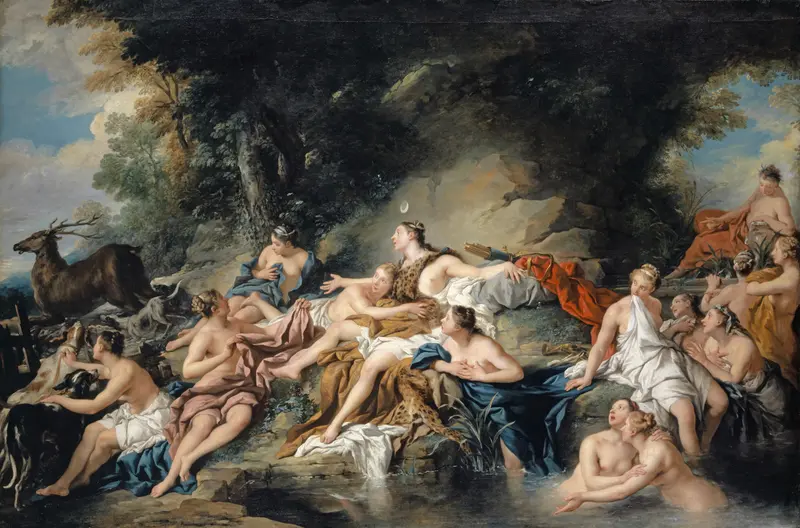
Diana and Actaeon
Jean-François de Troy
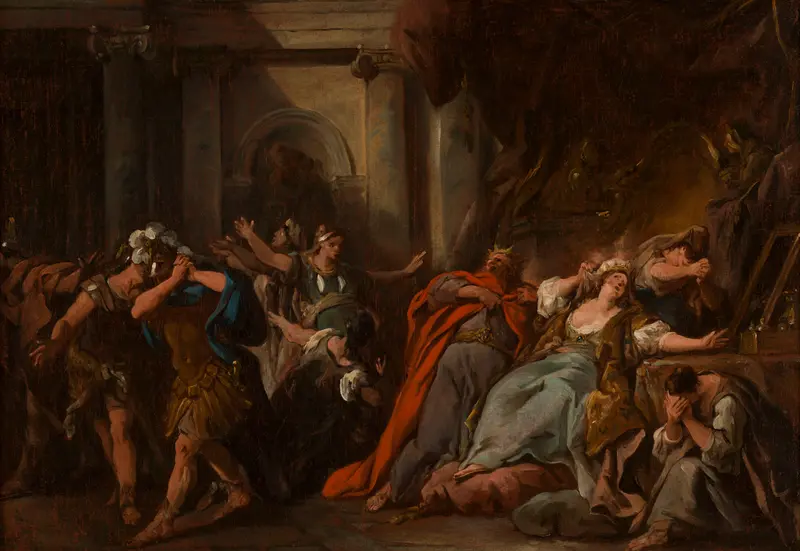
Créüse consumée par la robe empoisonnée
Jean-François de Troy
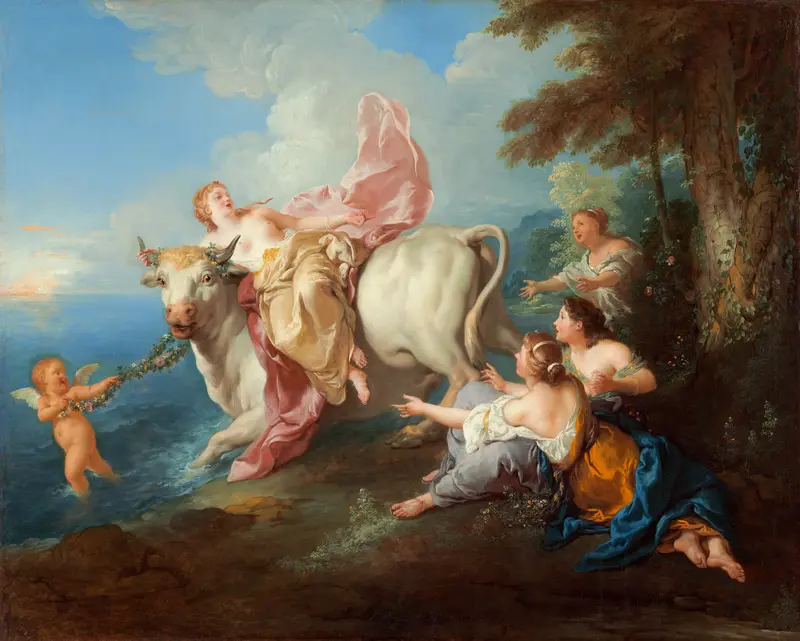
The Abduction of Europa
Jean-François de Troy
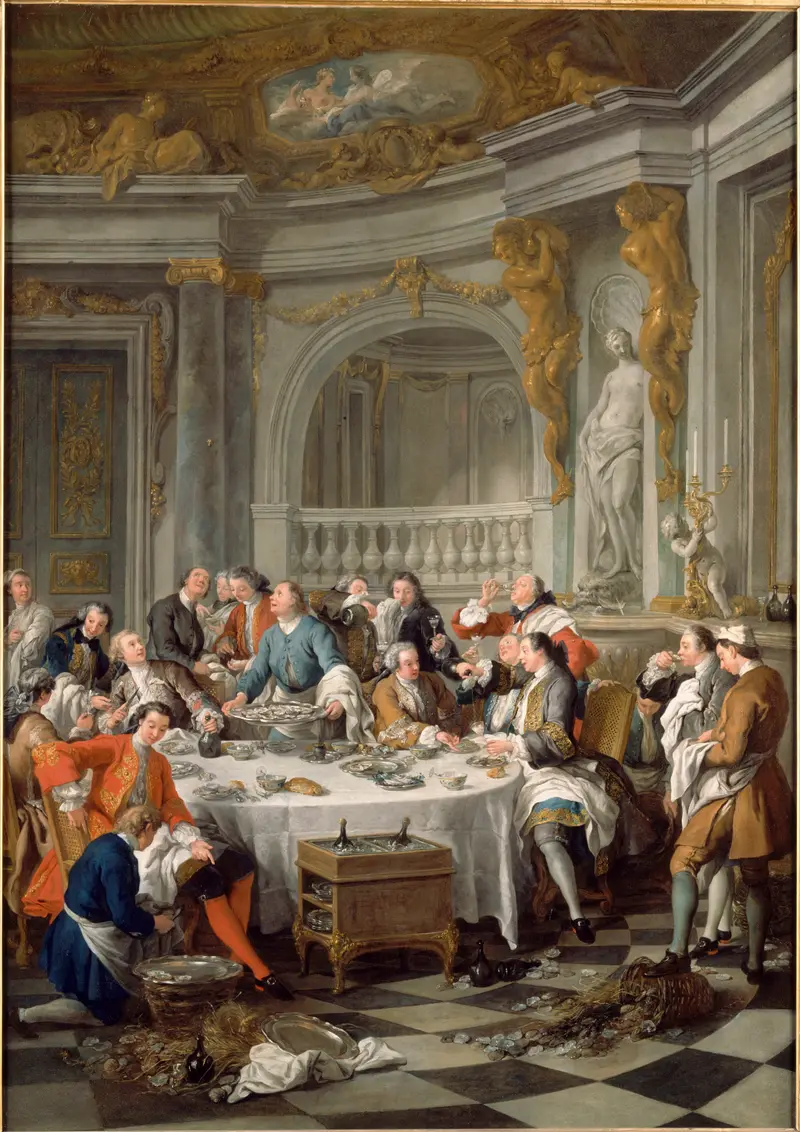
The Lunch of Oysters
Jean-François de Troy
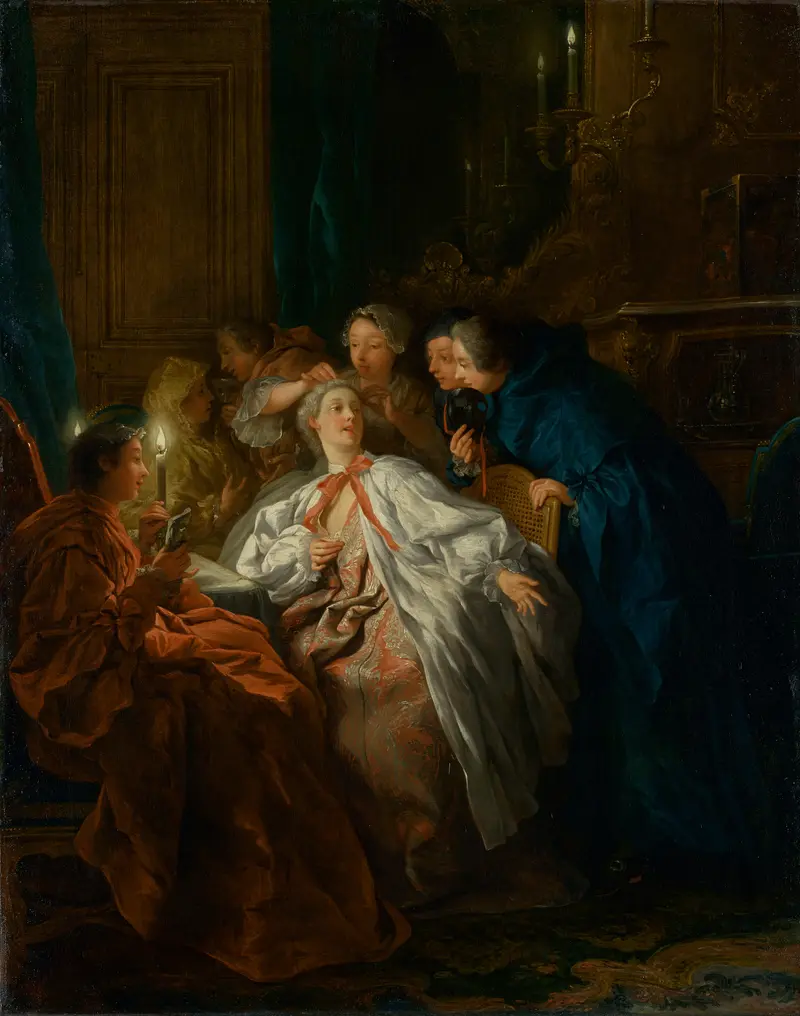
Before the Ball
Jean-François de Troy
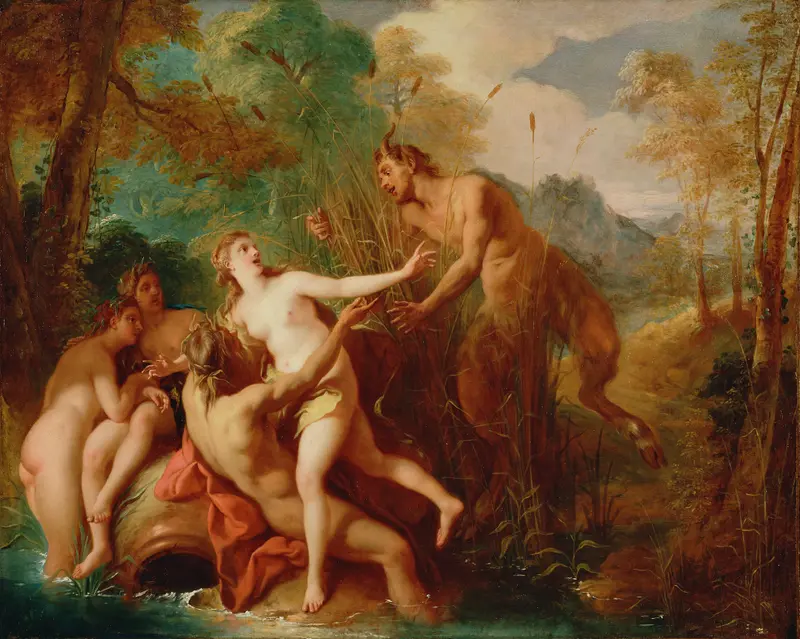
Pan and Syrinx
Jean-François de Troy

Le Combat des soldats nés des dents du serpent
Jean-François de Troy
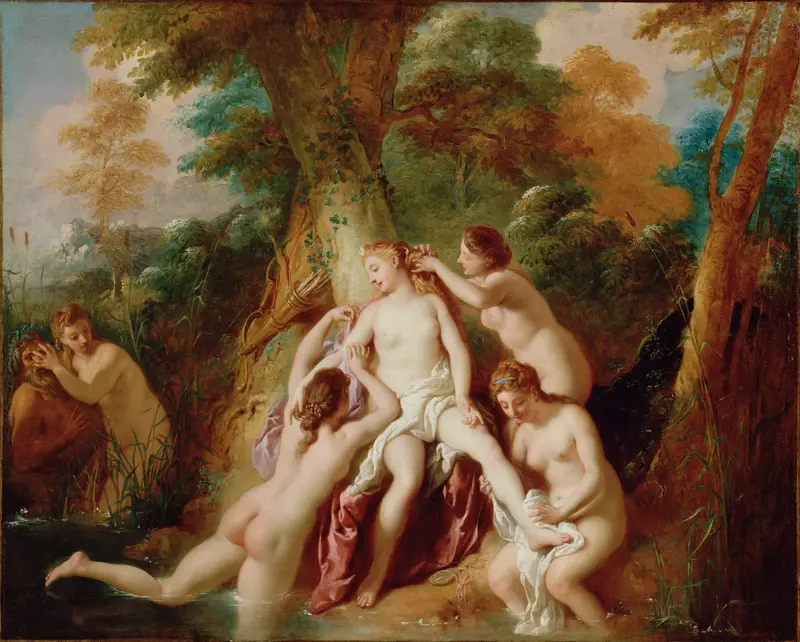
Diana and Her Nymphs Bathing
Jean-François de Troy
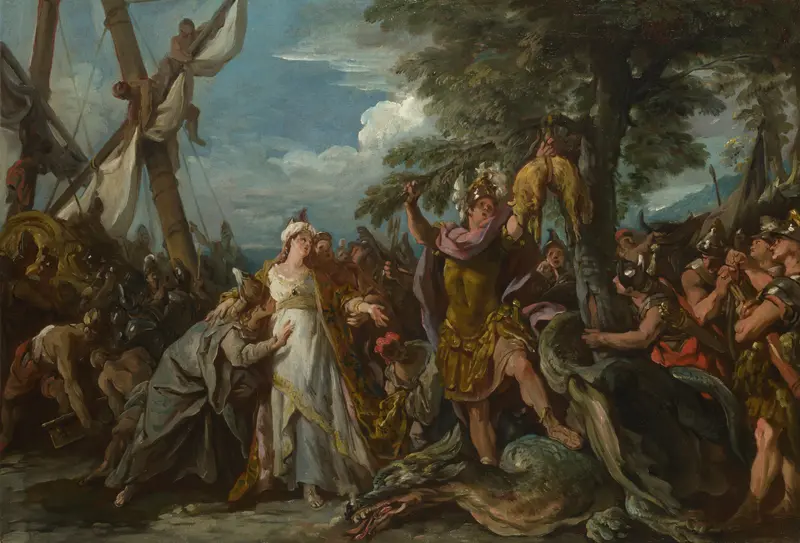
The Capture of the Golden Fleece
Jean-François de Troy
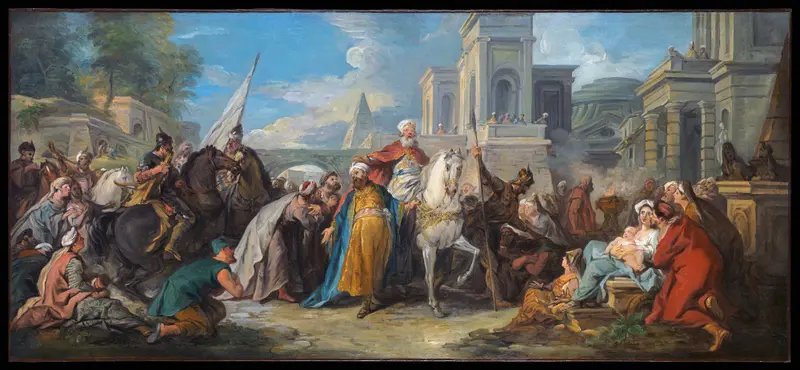
The Triumph of Mordecai
Jean-François de Troy





