
Der Hausierer — History & Facts
No one is quite sure when Felix Schlesinger painted Der Hausierer, and the mystery adds to its appeal: the work appears in several 19th-century German collections, but no dated sketch or letter confirms its origin. What is certain is that Schlesinger was celebrated for his scenes of everyday life, and this painting became one of his most recognized images, often reproduced in prints and engravings. Its popularity speaks to a fascination with the figure of the peddler—an emblem of rural commerce and curiosity in a rapidly changing Germany. At the heart of Der Hausierer is a moment of encounter: a traveling peddler, his pack brimming with wares, stands at the threshold of a humble cottage.
A child gazes up at him with wide-eyed wonder, while the mother, apron-clad, inspects his goods with a mixture of skepticism and interest. The peddler’s battered hat and worn boots signal a life on the road, while the domestic interior—sunlight falling on a tidy table, a cat curled in the corner—contrasts the visitor’s transience with the family’s rootedness. Unlike Wilhelm Leibl’s The Village Politicians, which captures rural debate, Schlesinger chooses the quieter drama of commerce and trust, letting small gestures and glances tell the story. Little is known about the early life of Der Hausierer as an object.
No records of its first owner or exhibition have come to light, and its medium—oil on canvas, panel, or even board—remains uncertain in catalogues. What is clear is that Schlesinger’s reputation as a genre painter grew in the later 19th century, and works like this one were sought after by collectors interested in scenes of German domesticity. Today, Der Hausierer is often cited as a prime example of Schlesinger’s ability to blend narrative and observation, though its precise whereabouts may shift as it moves between private hands and public displays.
More Artworks by Felix Schlesinger

Fleißige Helfer in der Küche
Felix Schlesinger

Die Zeitungslektüre
Felix Schlesinger
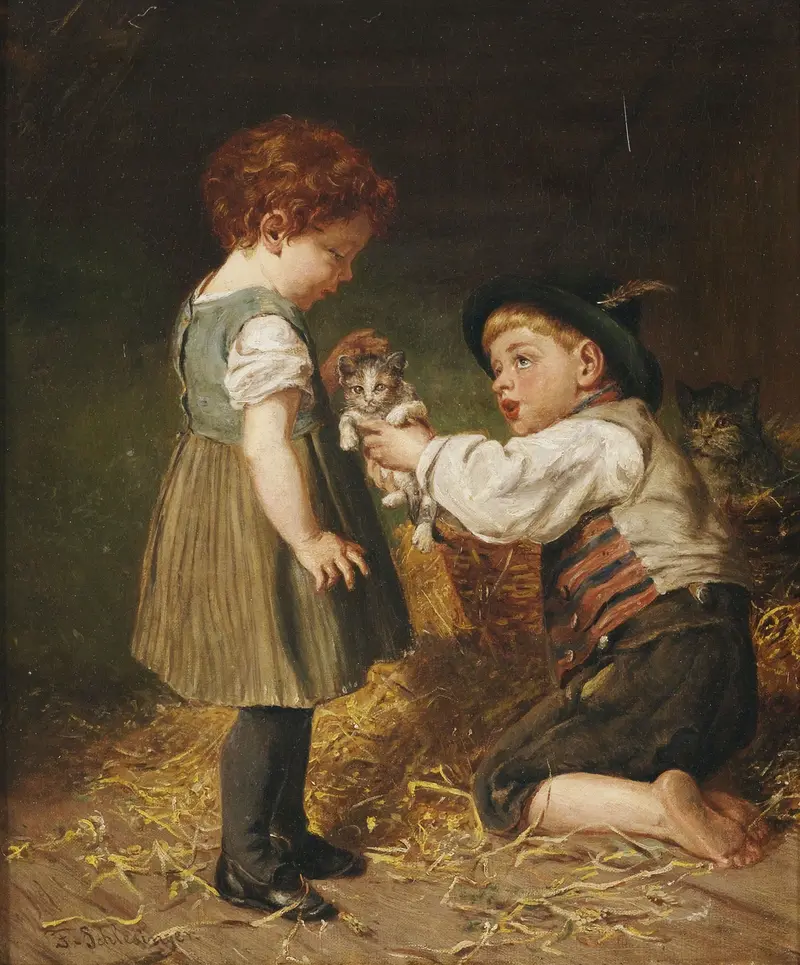
Zwei Kinder mit Kätzchen im Stall
Felix Schlesinger
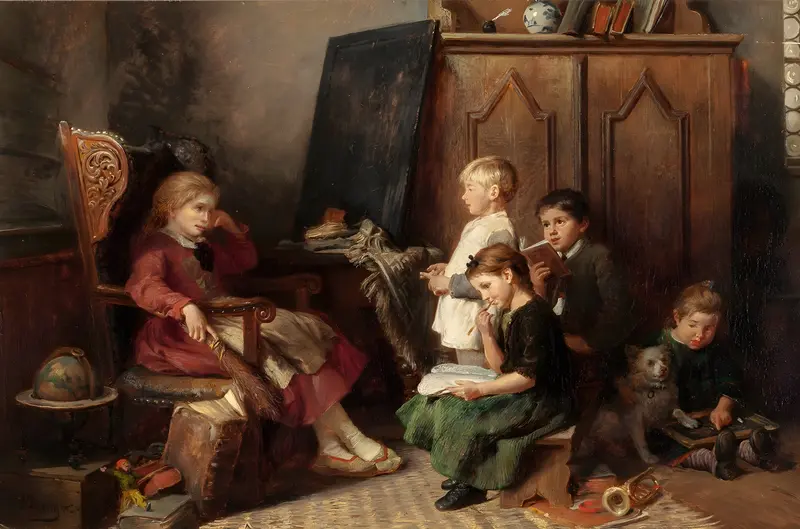
Children Reading
Felix Schlesinger
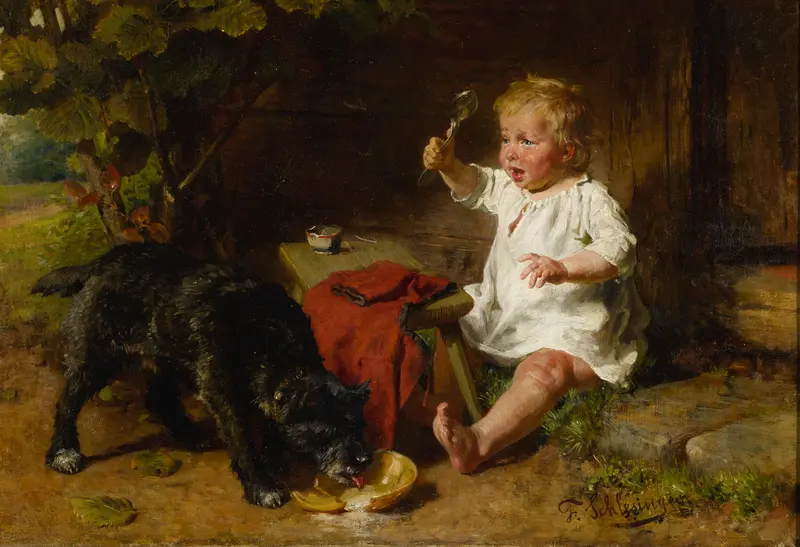
A Shared Meal
Felix Schlesinger
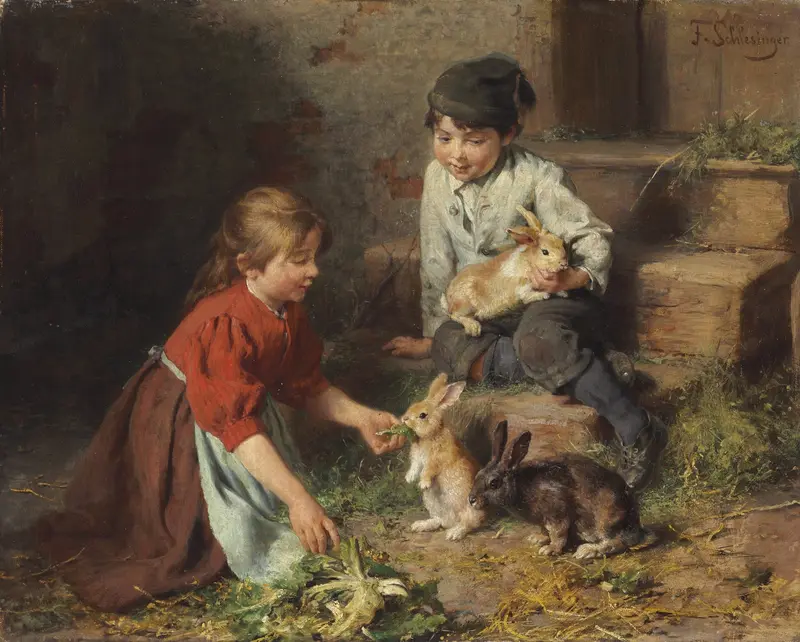
Fütterung Der Kaninchen
Felix Schlesinger
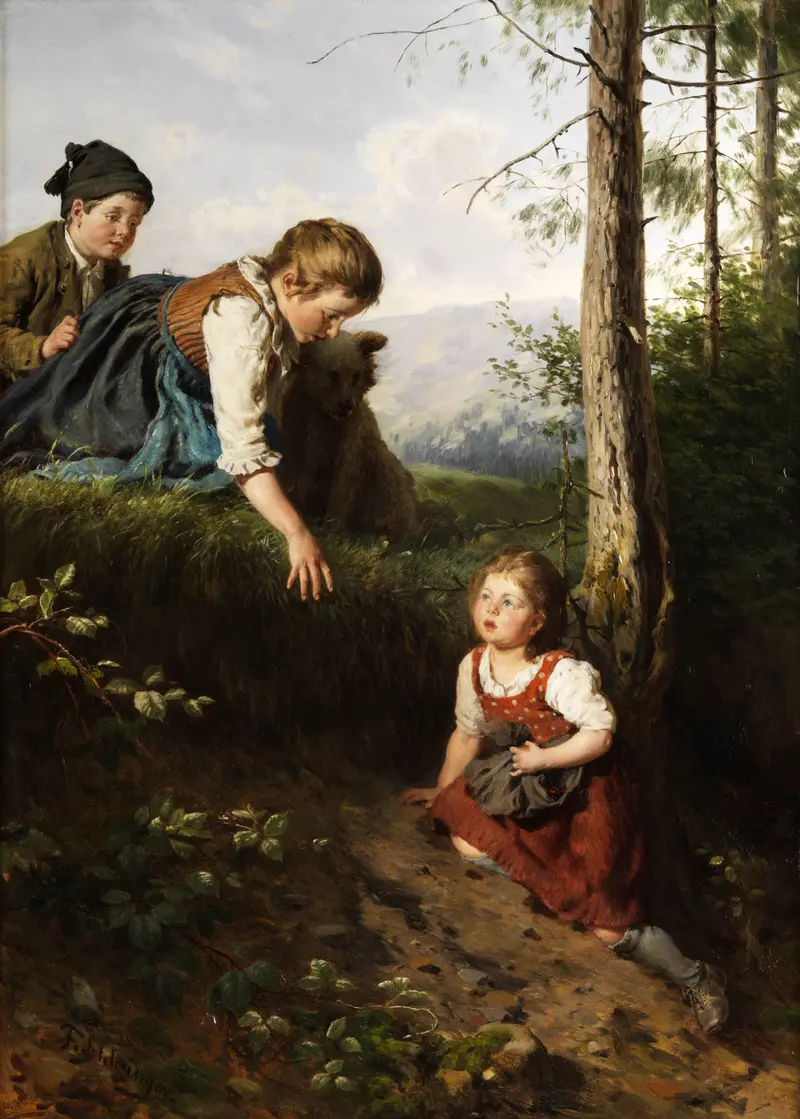
Drei Kinder im Wald beim Beerenpflücken
Felix Schlesinger
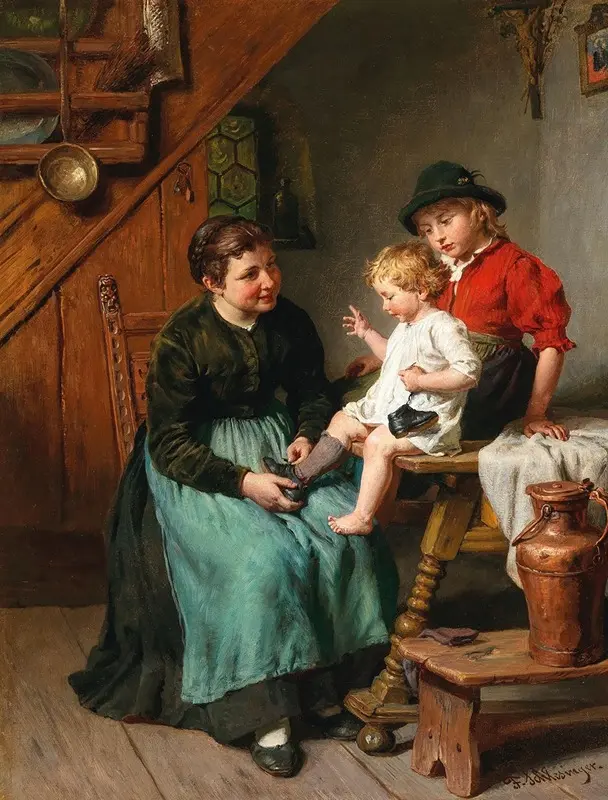
The First Shoe
Felix Schlesinger
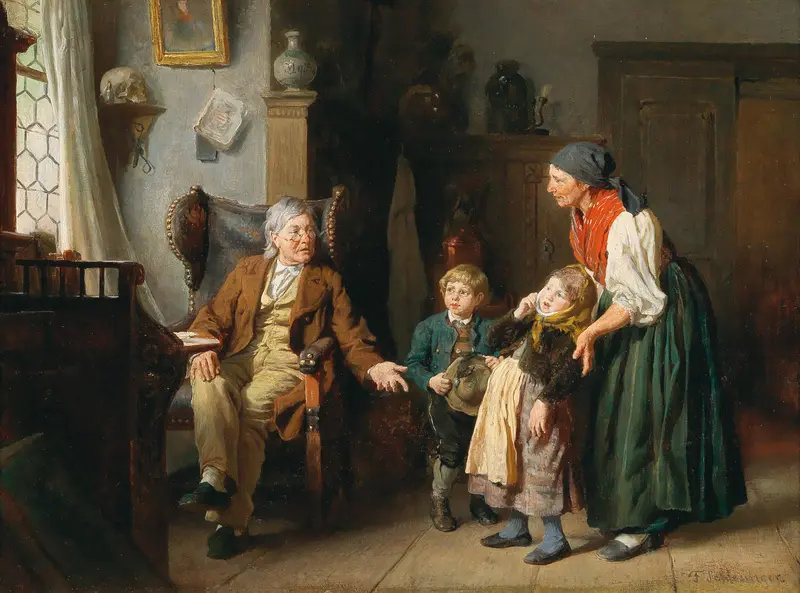
The village doctor
Felix Schlesinger
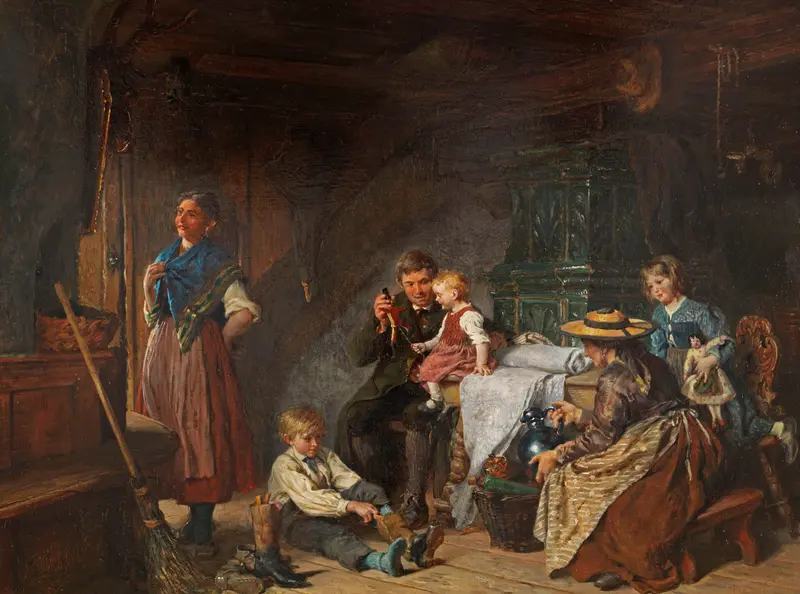
Familienszene
Felix Schlesinger
More Genre Scene Art

Banquet of the Officers of the St George Civic Guard
Frans Hals

Rembrandt and Saskia in the Scene of the Prodigal Son
Rembrandt van Rijn

Bal du moulin de la Galette
Pierre-Auguste Renoir

Quadrille at the Moulin Rouge
Henri de Toulouse-Lautrec

A Burial at Ornans
Gustave Courbet

When Will You Marry?
Paul Gauguin