
Dervish in His Stall — History & Facts
When Dervish in His Stall appeared in Paris in 1820, it marked one of the earliest moments when a major French artist turned his eye to the Ottoman world not as a backdrop for fantasy, but as a subject worthy of psychological study. Théodore Géricault, already famous for The Raft of the Medusa, painted this work after his travels in England and his growing fascination with the "Oriental" subjects then captivating Europe. Unlike the grand historical canvases of his peers, Géricault’s dervish is not caught in spectacle or violence, but in a rare, private moment—an approach that set his work apart from the more theatrical scenes of Eugène Delacroix. The painting captures a dervish, a member of a Sufi Muslim order, seated quietly in his humble stall.
His gaze is turned inward, hands resting in his lap, surrounded by the sparse accoutrements of his daily life: a battered kettle, a prayer rug, and a simple staff. The light falls softly across his face, illuminating the serenity and discipline of his calling. Géricault’s choice to show the dervish at rest, rather than in ecstatic dance, invites viewers to consider the inner life and dignity of his subject.
In contrast, Delacroix’s later The Fanatics of Tangier would depict Sufi mystics in a state of wild religious fervor, emphasizing drama over introspection. The exact provenance of Dervish in His Stall is uncertain, as no early records of its commission or first exhibition survive. It is likely that Géricault painted it during his brief period of intense interest in "Orientalist" themes, between 1819 and 1821, before his untimely death at age 32. The painting’s medium remains a matter of debate among scholars, though most agree it is either oil on canvas or oil on paper.
Today, the work stands as a testament to Géricault’s restless curiosity and his willingness to look beyond the conventions of French painting in the early nineteenth century. It remains a rare and quietly radical piece, inviting us to pause and see the world through another’s eyes.
More Artworks by Théodore Géricault
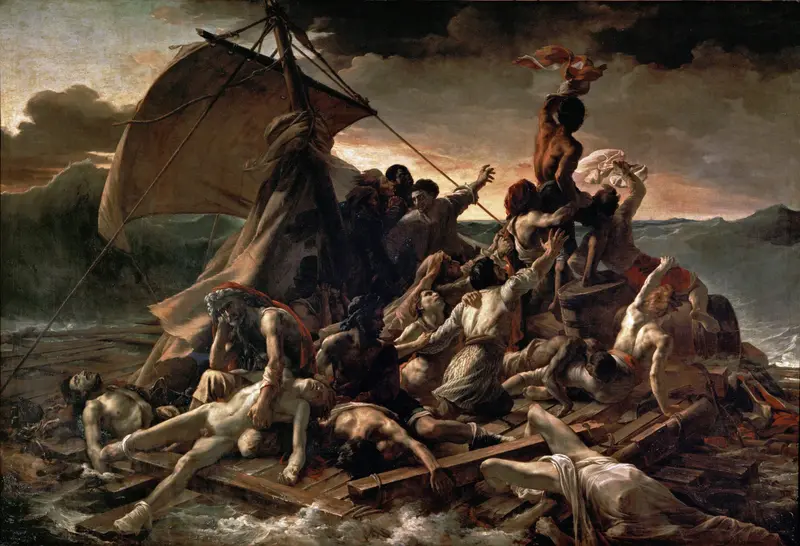
The Raft of the Medusa
Théodore Géricault

Géricault - Le naufrage du radeau de la Méduse, MBA 790
Théodore Géricault
Cattle Market
Théodore Géricault
Evening; Landscape with an Aqueduct
Théodore Géricault
Horse Race
Théodore Géricault

Horses Standing in a Mews
Théodore Géricault
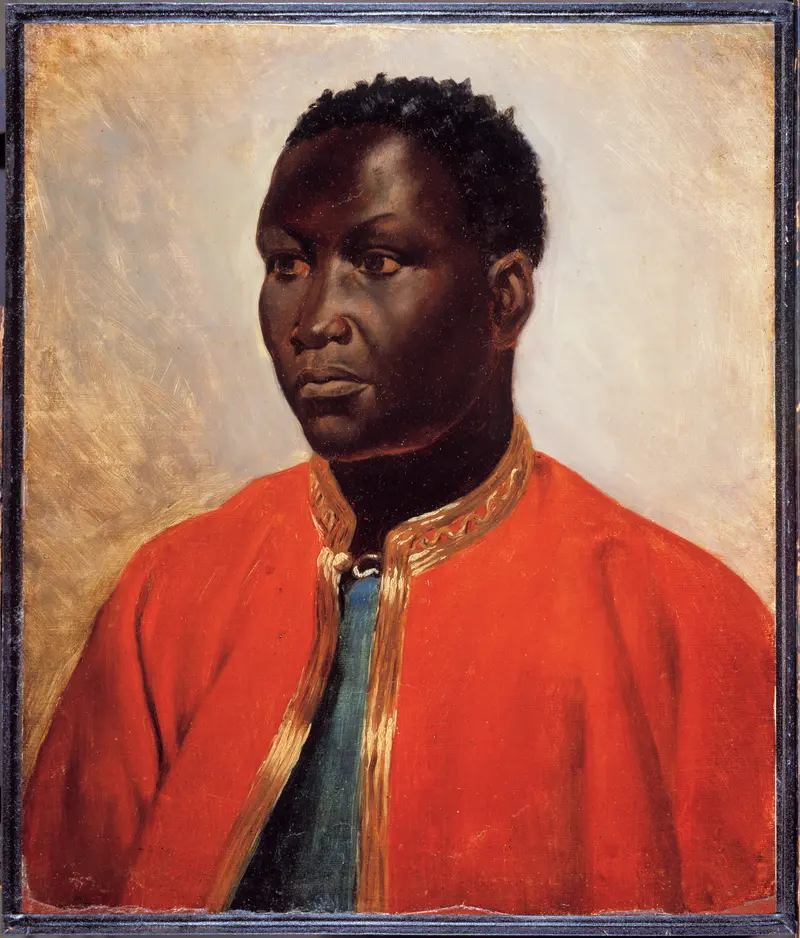
Portrait of a Negro
Théodore Géricault
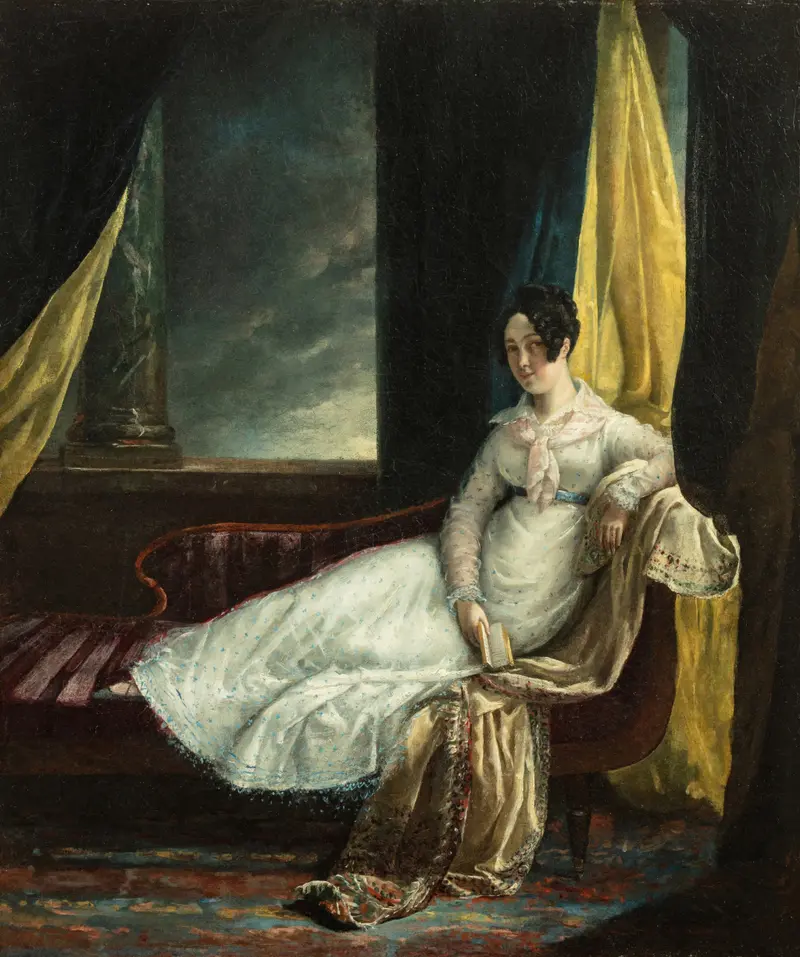
Portrait of Zoë Elmore
Théodore Géricault
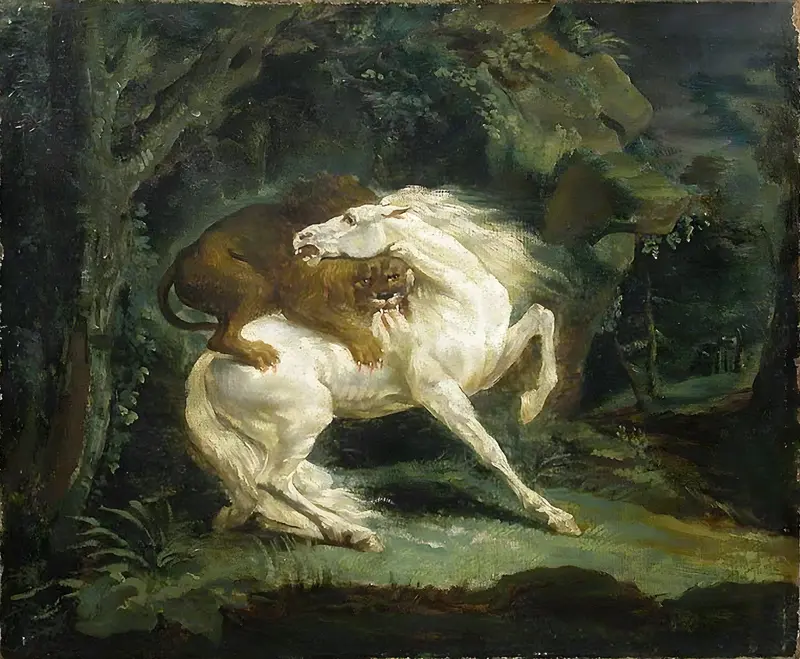
Cheval attaqué par un lion
Théodore Géricault
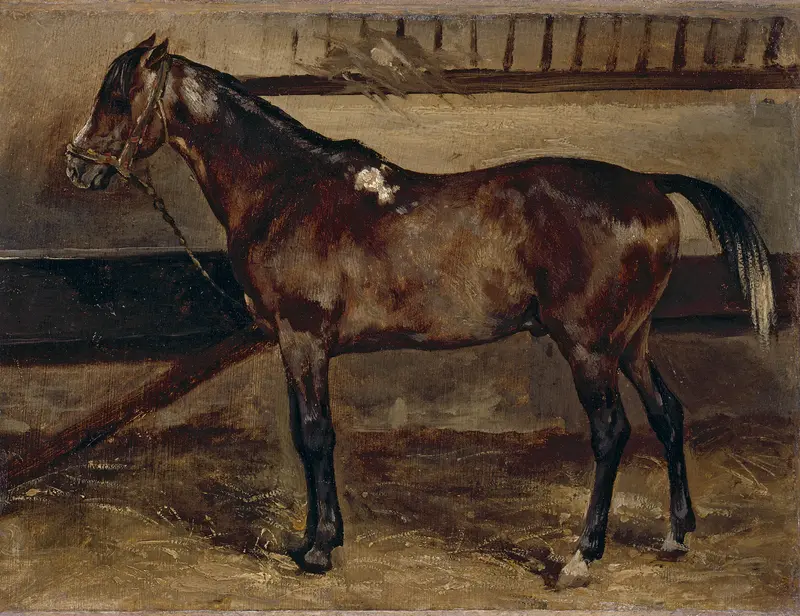
Cheval brun à l'écurie
Théodore Géricault
More Genre Scene Art

Banquet of the Officers of the St George Civic Guard
Frans Hals

Rembrandt and Saskia in the Scene of the Prodigal Son
Rembrandt van Rijn

Bal du moulin de la Galette
Pierre-Auguste Renoir

Quadrille at the Moulin Rouge
Henri de Toulouse-Lautrec

A Burial at Ornans
Gustave Courbet

When Will You Marry?
Paul Gauguin