
Despair of Job — History & Facts
When William Blake exhibited Despair of Job in 1805, he was already known for his radical interpretations of biblical subjects, but this work stood out for its intensity and originality. Unlike many of his contemporaries, Blake was not commissioned for this piece; instead, he created it as part of a personal series exploring the Book of Job, a text that fascinated him throughout his life. The image is one of several versions Blake made of Job’s trials, each differing in detail and mood.
Scholars still debate the exact medium of this particular work, as Blake often combined watercolor, ink, and tempera in experimental ways. At the heart of the scene, Job sits collapsed, hands clenched in agony, his body twisted in a posture of utter defeat. Around him, his wife and friends look on, their faces a mixture of pity and accusation, echoing the biblical moment when Job, stripped of everything, is urged to curse God and die. Blake’s swirling lines and stark contrasts of light and shadow heighten the sense of spiritual crisis; the lightning bolt in the sky and the contorted figures convey both divine wrath and human suffering.
Unlike the serene resignation seen in Job Mocked by his Wife by Georges de La Tour, Blake’s version is raw, almost hallucinatory, emphasizing Job’s psychological torment rather than his patience. The physical history of Despair of Job is less well documented than some of Blake’s other works. It is believed to have remained in private collections for much of the nineteenth century, passing quietly between admirers of Blake’s visionary art before entering a public institution. Today, it is recognized as a key piece in Blake’s lifelong engagement with biblical themes, bridging his work as both painter and poet.
The uncertain medium and provenance only add to its mystique, making it a touchstone for those interested in the experimental spirit of early nineteenth-century British art.
More Artworks by William Blake
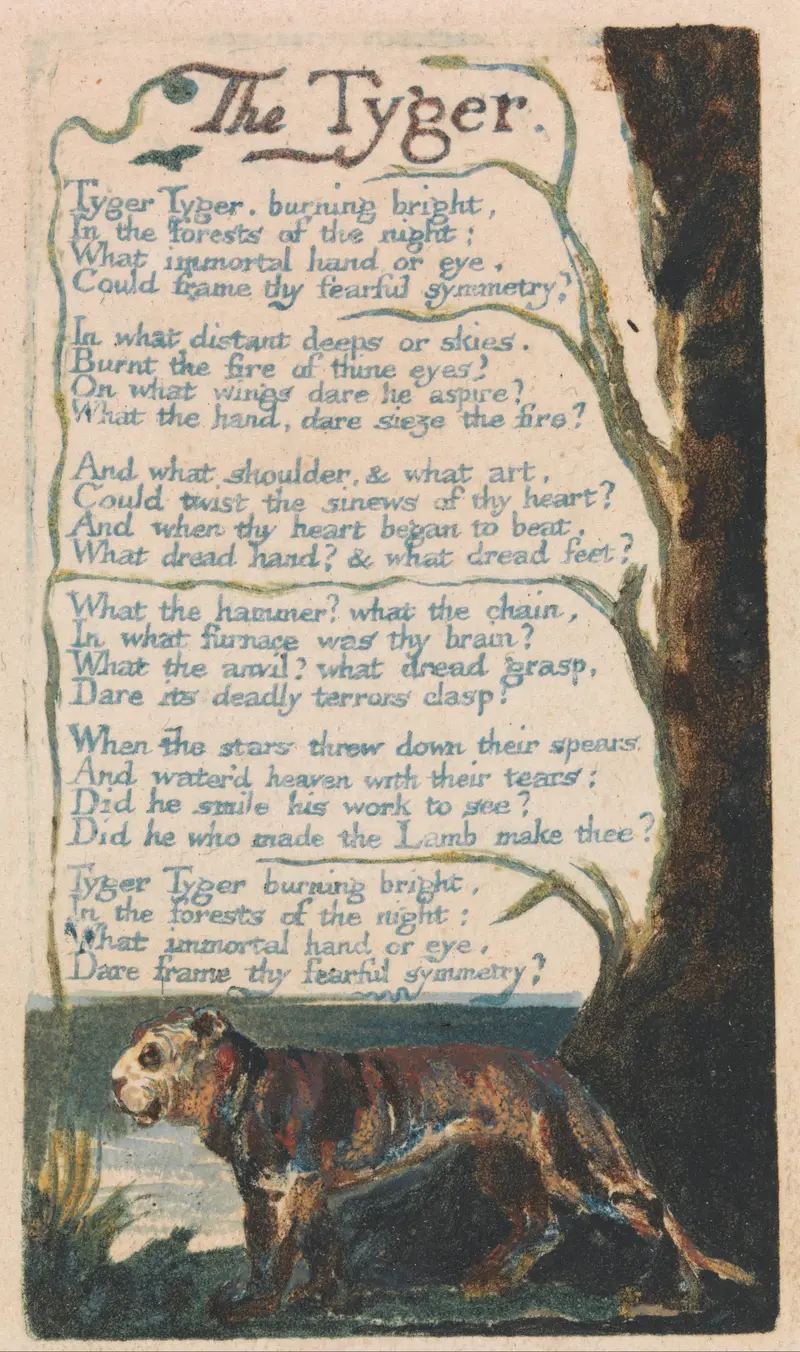
The Tyger
William Blake

Christ Blessing
William Blake
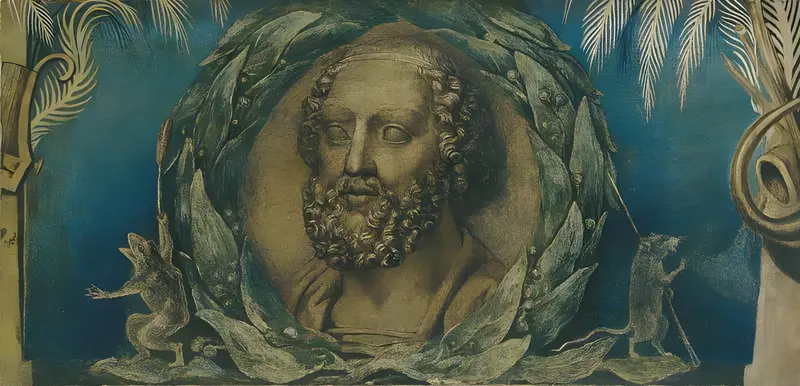
Homer
William Blake
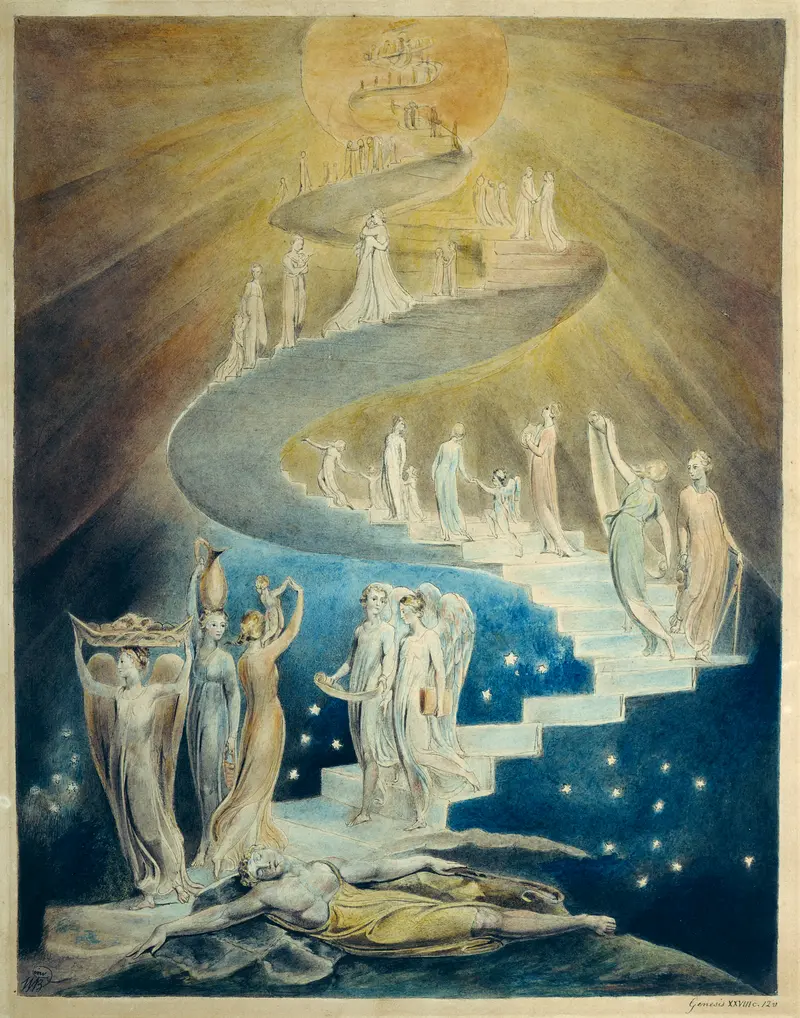
Jacob's Ladder
William Blake
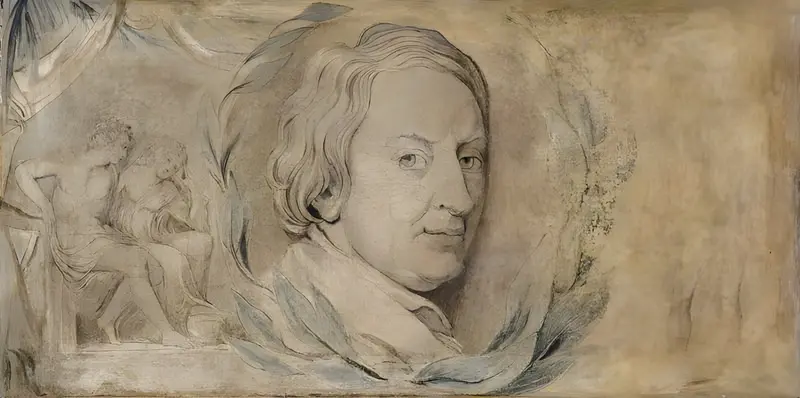
John Dryden (1631–1700)
William Blake
Landscape near Felpham
William Blake
Sacrifice of Job
William Blake
Christ's Entry into Jerusalem
William Blake
The Ancient of Days
William Blake
Adam Naming the Beasts
William Blake





