
Francois Marie Arouet de Voltaire (1694–1778) — History & Facts
When William Blake painted Francois Marie Arouet de Voltaire (1694–1778) in 1800, he was capturing not just a likeness, but a debate that divided Europe. Voltaire, the razor-sharp French philosopher and critic, had died only twenty-two years before, yet his ideas about reason and religion still sparked fierce arguments in England. Blake himself was no admirer; in his private notebooks, he called Voltaire “that monstrous blasphemer,” and this painting is often read as a visual rebuttal to the Enlightenment’s cool rationality.
The work stands as a rare moment when an artist’s personal convictions and the intellectual battles of his age collide on canvas. Blake chooses not to show Voltaire in the salons of Paris or at his writing desk, but as a spectral figure, shrouded in ambiguous light. The philosopher’s features are rendered with a sharpness that borders on caricature, his eyes alert, his mouth set in a knowing, perhaps mocking, smile. Around him, the shadows seem to press in, as if reason itself is beset by darker, unseen forces.
The effect recalls Blake’s own illustrations for Paradise Lost, where the boundary between visionary and villain is never quite clear. Unlike the stately portraits by Maurice Quentin de La Tour, Blake’s Voltaire is not a man of the Enlightenment, but a ghost in the machine—questioning, doubted, and doubting. The precise medium of this work remains uncertain, a fact that has puzzled curators and scholars alike. Some suggest it is a drawing heightened with watercolor, others a small oil on panel; no definitive record survives.
The painting is thought to have remained in private hands for much of its life, surfacing only occasionally in exhibition catalogues and letters. Its attribution to Blake was once debated, but stylistic parallels with his other portraits from around 1800 have since convinced most experts. Today, Francois Marie Arouet de Voltaire (1694–1778) is an enigmatic witness to the artist’s engagement with the intellectual giants—and the spiritual anxieties—of his time.
More Artworks by William Blake
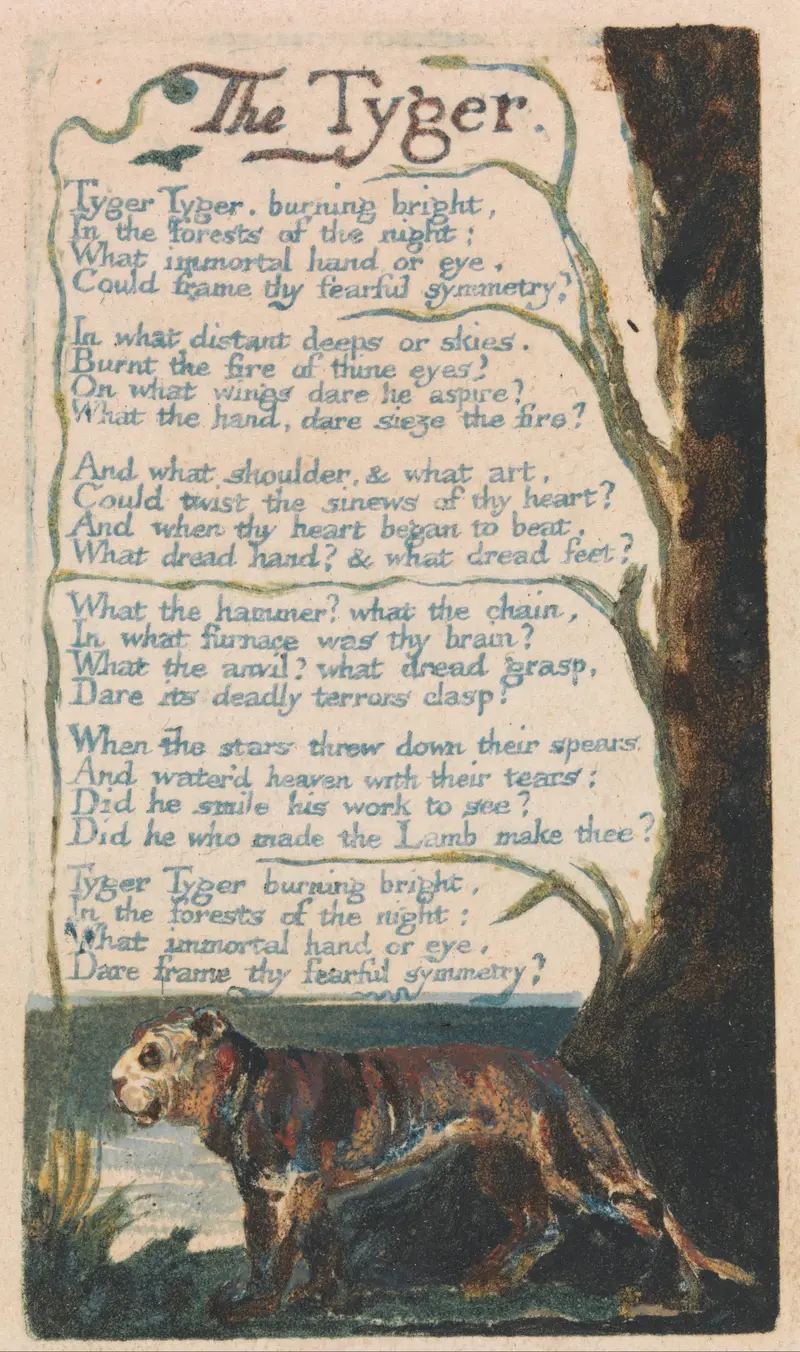
The Tyger
William Blake

Christ Blessing
William Blake
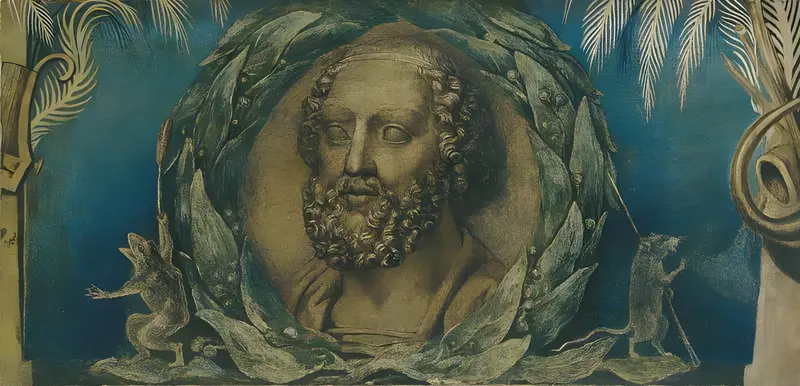
Homer
William Blake
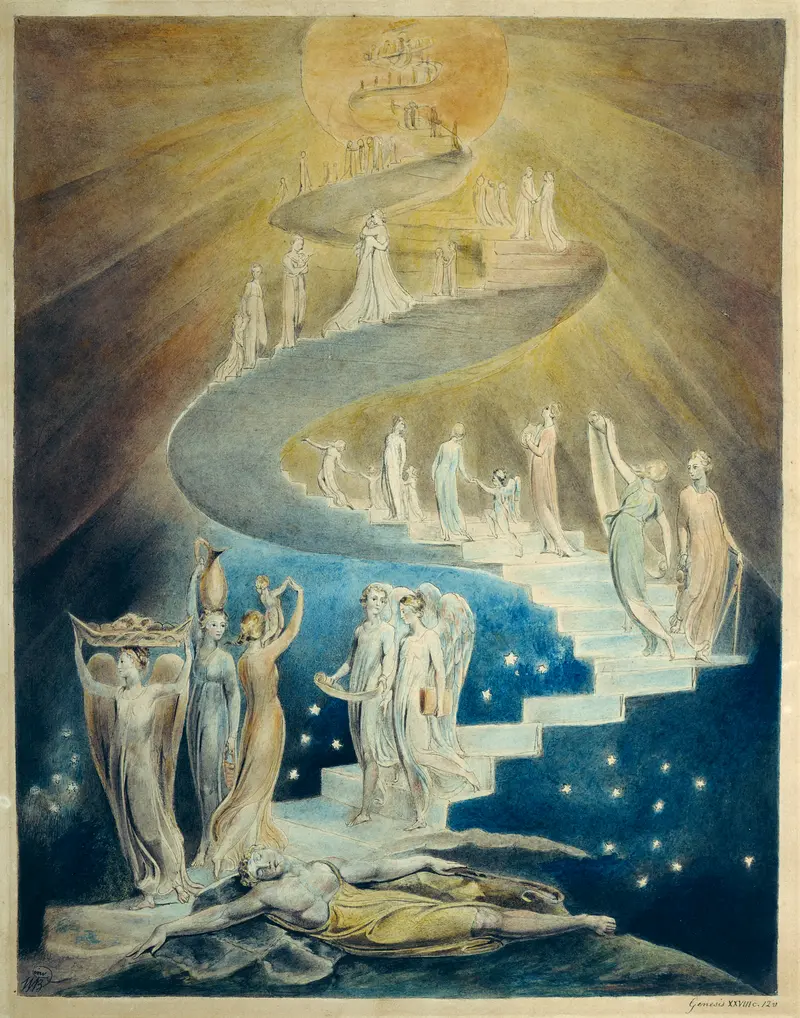
Jacob's Ladder
William Blake
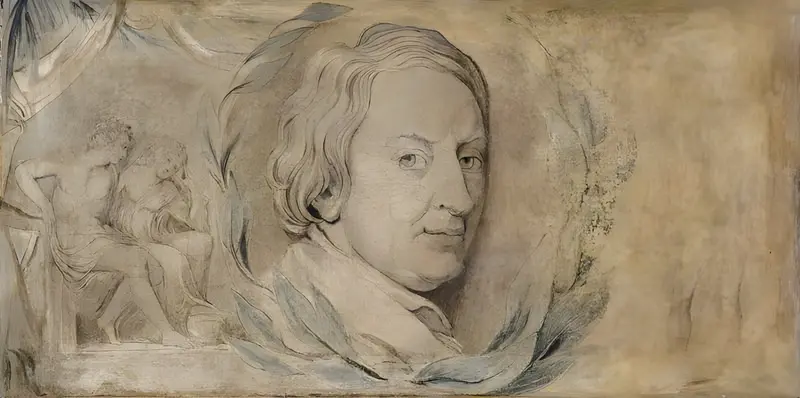
John Dryden (1631–1700)
William Blake
Landscape near Felpham
William Blake
Sacrifice of Job
William Blake
Christ's Entry into Jerusalem
William Blake
The Ancient of Days
William Blake
Adam Naming the Beasts
William Blake





