
Giotto, eternal and angels, perhaps cornice of the baroncelli altarpiece — History & Facts
No one is quite certain where this fragment once belonged, but many scholars believe that Giotto, eternal and angels, perhaps cornice of the baroncelli altarpiece originally crowned the famed Baroncelli Altarpiece in the Florentine church of Santa Croce, completed by Giotto di Bondone around 1328. The uncertainty surrounding its original placement has fueled debate for decades, with some suggesting it was part of a larger narrative ensemble now dispersed. The work’s survival as an independent panel is a rare stroke of fortune, given how often such decorative elements were lost or destroyed during church renovations and changing tastes. The scene captures the eternal—Christ or God the Father—enthroned, surrounded by a host of attentive angels.
Each angel’s posture and gesture conveys reverence: hands crossed, heads bowed, and eyes fixed on the central figure, who radiates calm authority. The gold background, typical of Giotto’s late period, signals the heavenly realm, while the individualized faces of the angels break from earlier, more formulaic Byzantine models. Unlike the static rows in works by Cimabue, Giotto’s angels lean and cluster, creating a sense of movement and emotional engagement that would influence generations of painters. Though the medium is uncertain—possibly tempera on panel, as was common in early 14th-century Florence—the fragment’s style is unmistakably Giotto.
The Baroncelli Altarpiece was commissioned by the Baroncelli family, prominent Florentine merchants, as a mark of both piety and status. Over centuries, the altarpiece was dismembered; some parts remain in Santa Croce, others, like this fragment, have entered museum collections. Today, this panel stands as a testament to Giotto’s revolution: his ability to humanize the divine and bring narrative clarity to sacred art at the dawn of the Italian Renaissance.
More Artworks by Giotto di Bondone
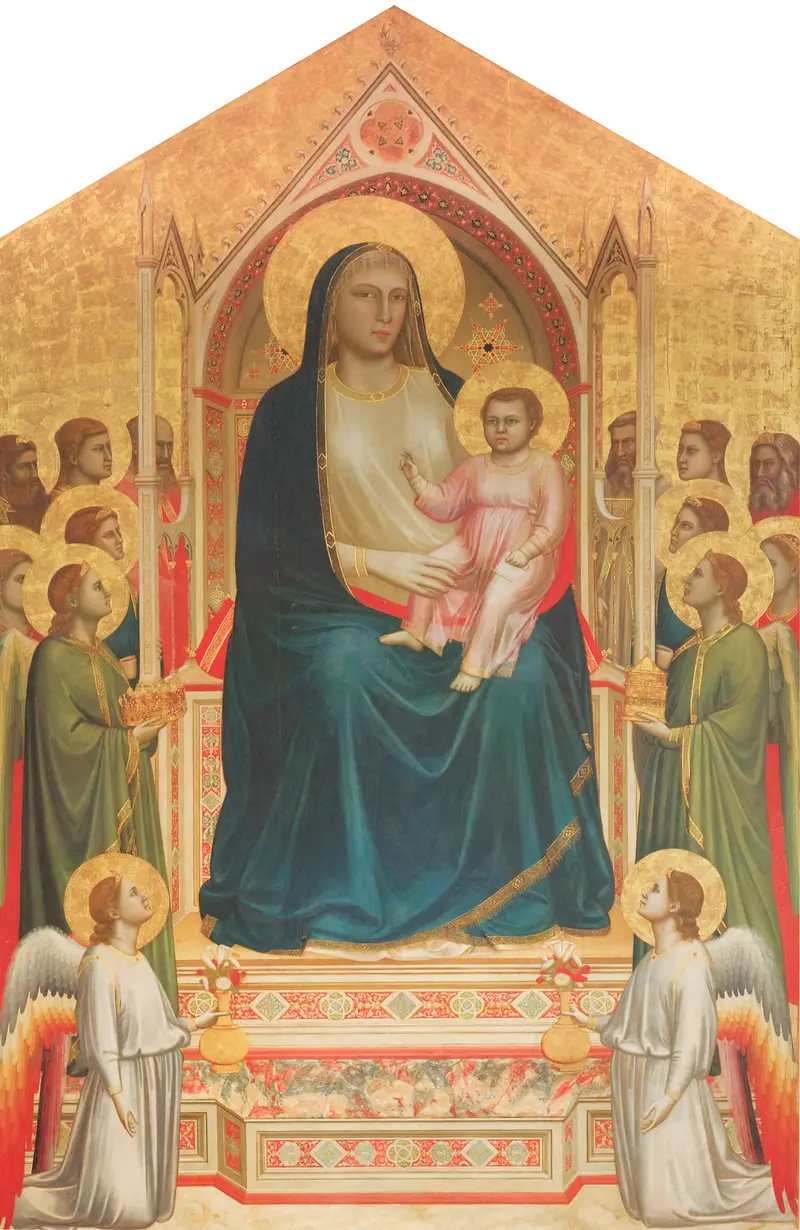
Ognissanti Madonna
Giotto di Bondone
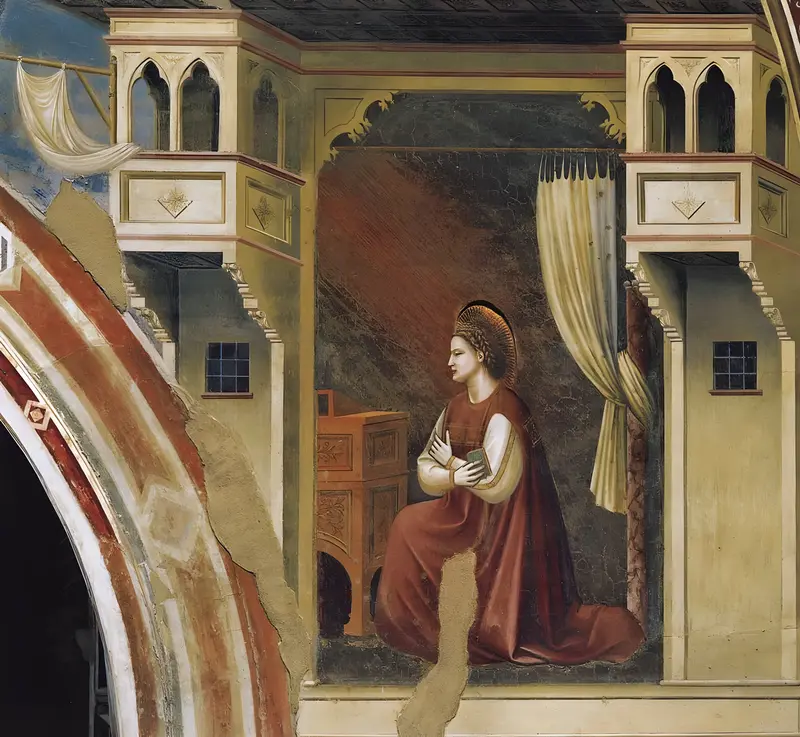
The Virgin of the Annunciation
Giotto di Bondone
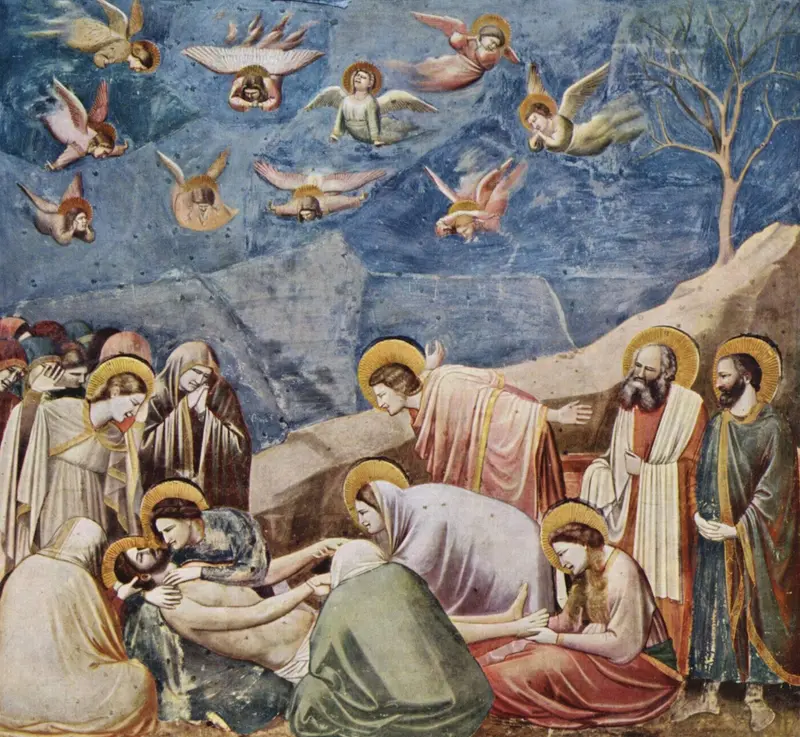
Lamentation (The Mourning of Christ)
Giotto di Bondone
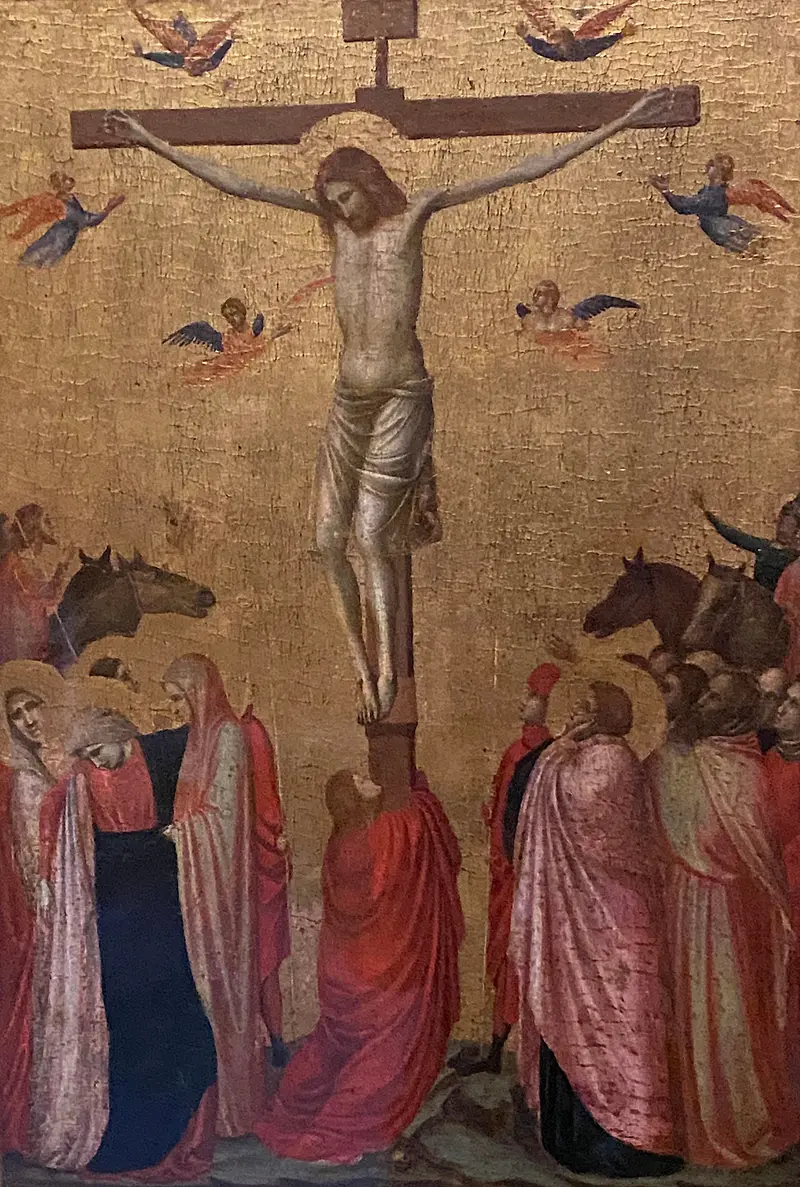
Crucifixion of Strasbourg
Giotto di Bondone
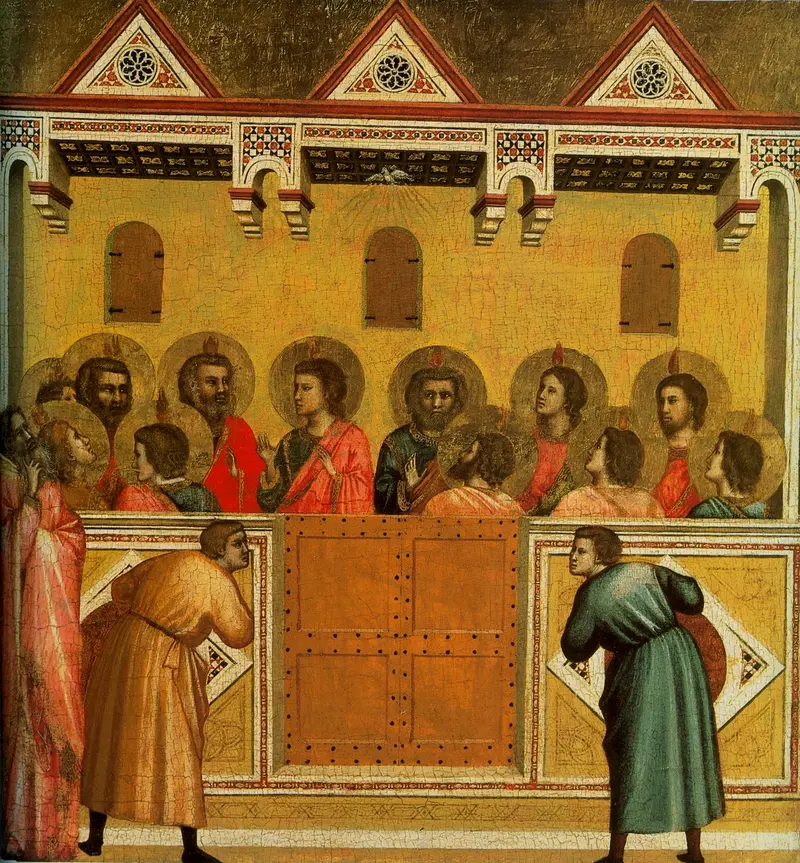
Pentecost
Giotto di Bondone
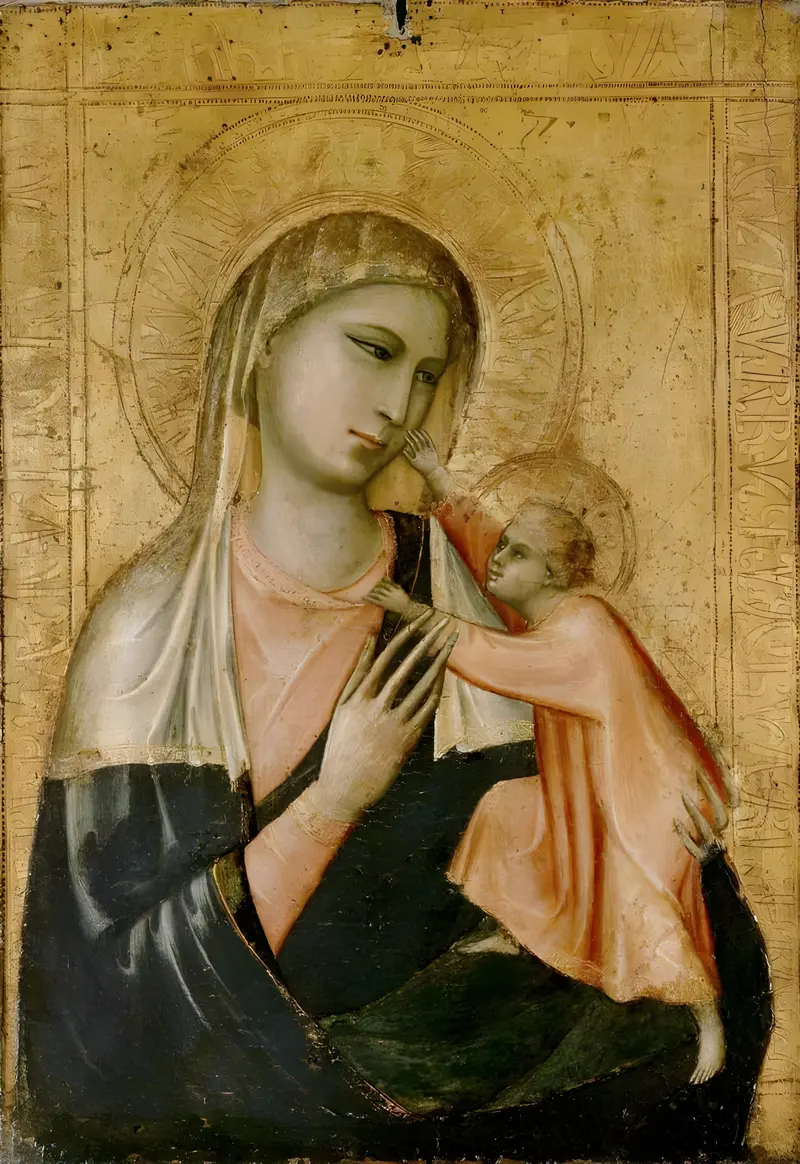
The Virgin and Child
Giotto di Bondone
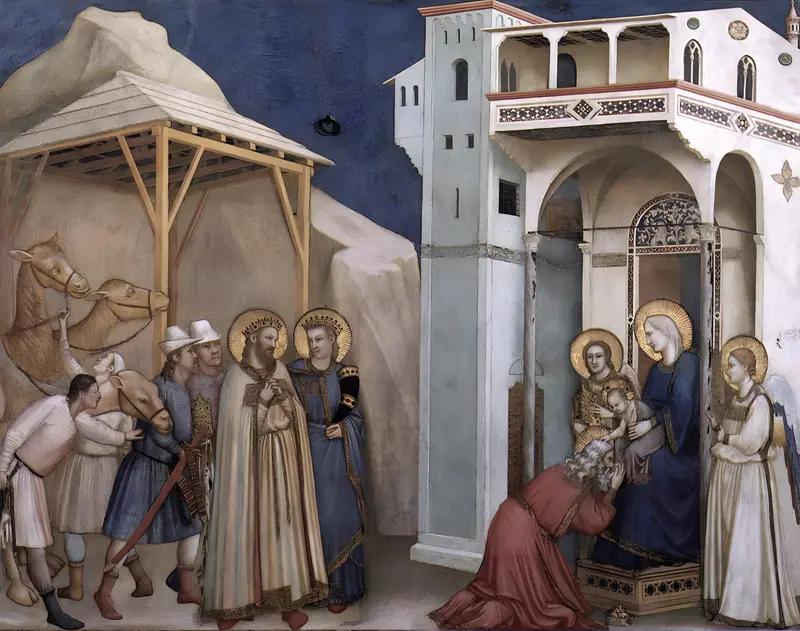
Anbetung der Könige
Giotto di Bondone
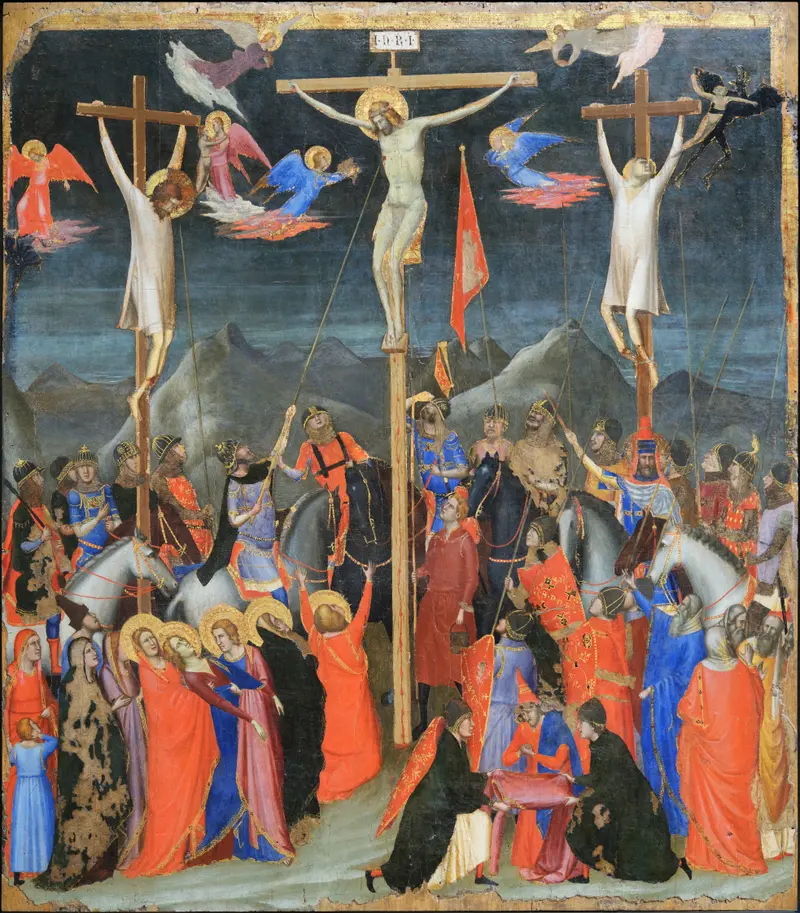
Crucifixion
Giotto di Bondone
The Visitation
Giotto di Bondone
Bologna Polyptych
Giotto di Bondone





