
Head of Milton — History & Facts
When William Blake moved to the seaside village of Felpham in 1800, he claimed to have seen the ghost of John Milton—England’s epic poet—standing before him. This vision became the catalyst for Head of Milton, a work that is as much a spiritual encounter as a portrait. Blake’s fascination with Milton was lifelong, and he regarded the poet as both a personal hero and a mystical presence.
The story goes that Blake, in a trance-like state, drew Milton’s likeness not from life, but from an inner vision, guided by what he believed to be direct communion with the poet’s spirit. In Head of Milton, Blake presents not the public laureate, but a visionary seer, eyes wide and inward-looking, as if beholding truths invisible to others. The face is rendered with a gentle intensity, the hair flowing in soft, almost otherworldly lines, while the gaze is fixed somewhere beyond the viewer. Unlike the formal, wigged portraits of Milton by earlier artists such as John Michael Wright, Blake’s version strips away costume and context, focusing instead on the poet’s inner illumination.
The subtle modeling of the features, the luminous quality of the skin, and the absence of background all serve to elevate Milton’s head into a symbol of poetic genius and spiritual insight. The exact medium of Head of Milton remains uncertain—some suggest it is a drawing, others a tempera or mixed technique—but its status as a unique object in Blake’s oeuvre is undisputed. Created during his productive Felpham years, it was likely intended for private contemplation rather than public exhibition. Over time, the work has passed quietly through collections, overshadowed by Blake’s more famous illuminated books and watercolors.
Today, it stands as a testament to the artist’s belief in visionary art and the living power of poetic inspiration, a rare and intimate relic of his spiritual kinship with Milton.
More Artworks by William Blake
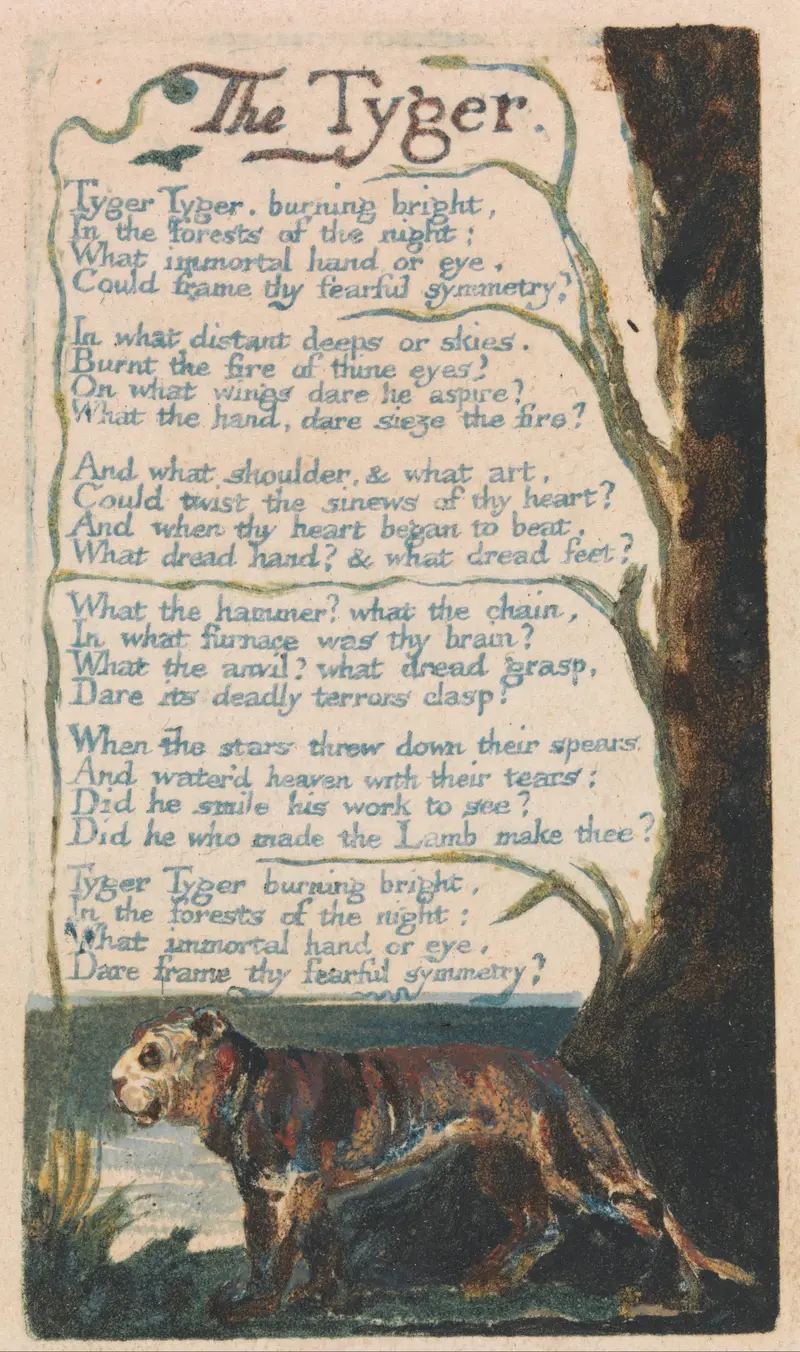
The Tyger
William Blake

Christ Blessing
William Blake
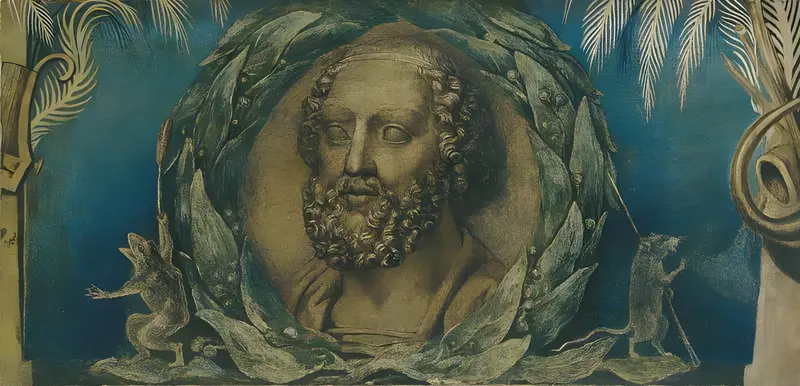
Homer
William Blake
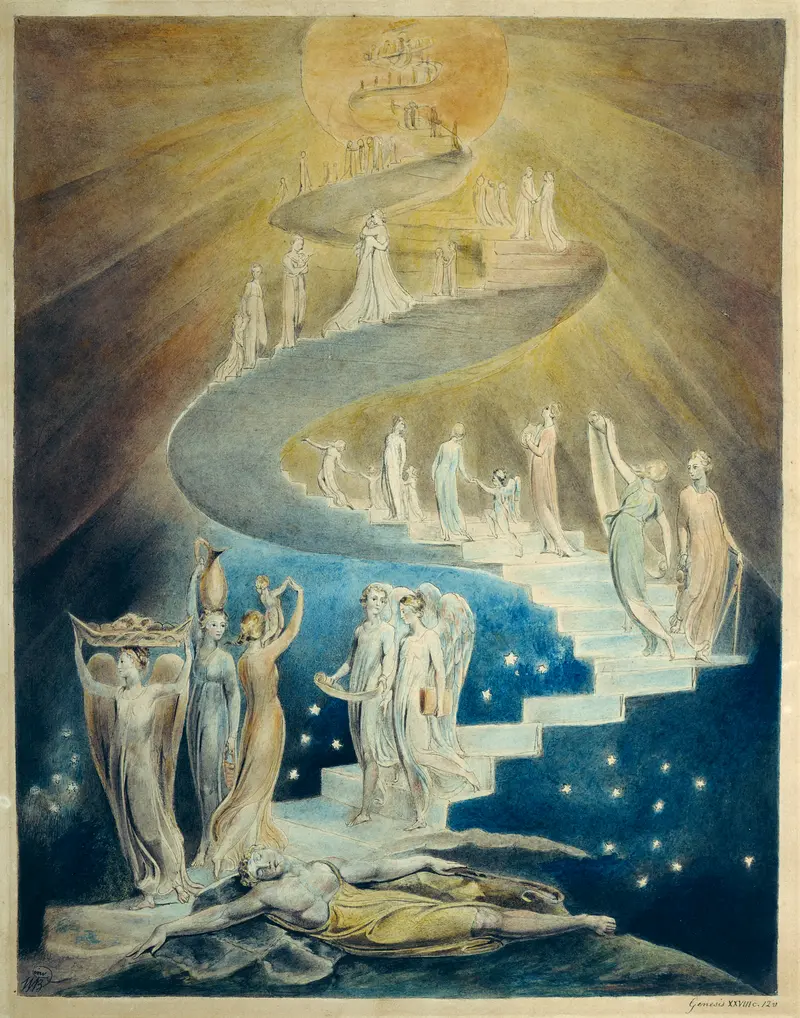
Jacob's Ladder
William Blake
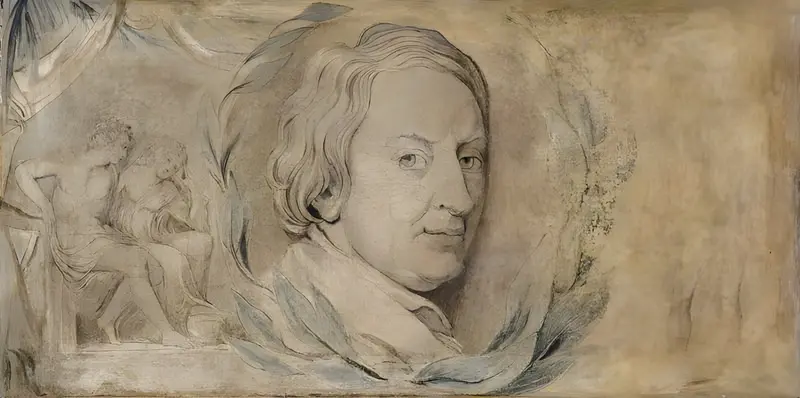
John Dryden (1631–1700)
William Blake
Landscape near Felpham
William Blake
Sacrifice of Job
William Blake
Christ's Entry into Jerusalem
William Blake
The Ancient of Days
William Blake
Adam Naming the Beasts
William Blake





