
Hunt Breakfast — History & Facts
What draws the eye first is the sheer abundance of life gathered around the white-clothed table, where elegant figures in powdered wigs and gleaming silks lean in, laugh, and feast beneath the open sky. The painter, Jean-François de Troy, orchestrates a scene that is as much about spectacle as appetite: the sweep of the tablecloth, the glint of silver, and the animated gestures all pull the viewer into the heart of this outdoor breakfast. The light is carefully managed, spotlighting faces and fabrics while the lush, shadowed trees and the stately house recede into a gentle haze, suggesting both the intimacy and the grandeur of the gathering.
Every detail—the turned head, the raised glass, the attentive servant—serves to heighten the sense of a moment suspended between formality and delight, as if the company has only just paused to savor the pleasures of food and conversation after the morning’s hunt. This kind of painting flourished in eighteenth-century France, when scenes of aristocratic leisure were both a celebration and a performance of status. Works like this were often destined for royal or noble residences, commissioned to decorate private dining rooms or salons, as documented here: this piece was created in 1737 for the king’s smaller apartments at Fontainebleau, paired with a now-lost companion showing the death of a stag. In such settings, the painting would have served as both a reminder and an idealization of the rituals of courtly life—moments when the hunt’s exertions gave way to refined sociability.
History has kept few traces of this specific canvas’s journey, but its lively assembly still invites us to imagine ourselves at the table, catching the laughter and the glances that flicker across the scene.
More Artworks by Jean-François de Troy
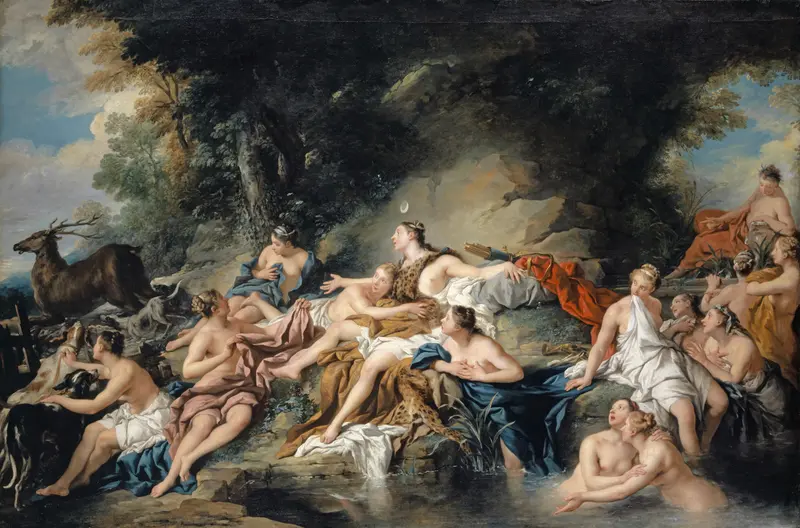
Diana and Actaeon
Jean-François de Troy
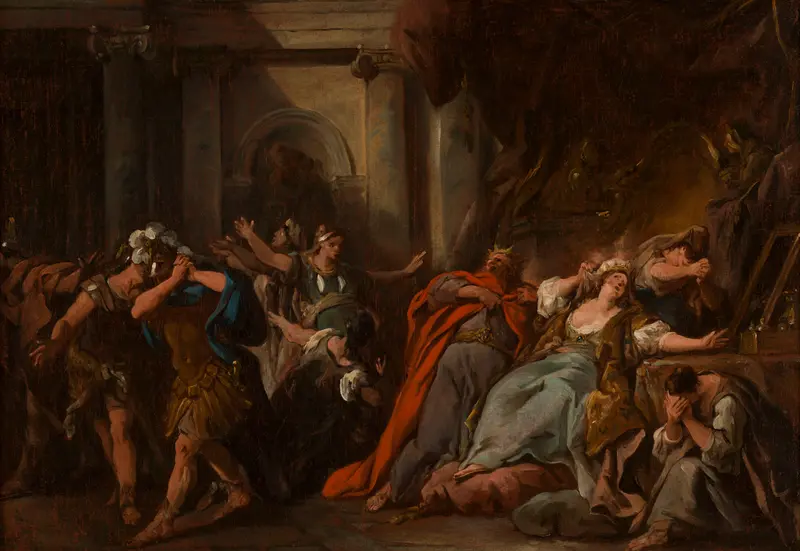
Créüse consumée par la robe empoisonnée
Jean-François de Troy
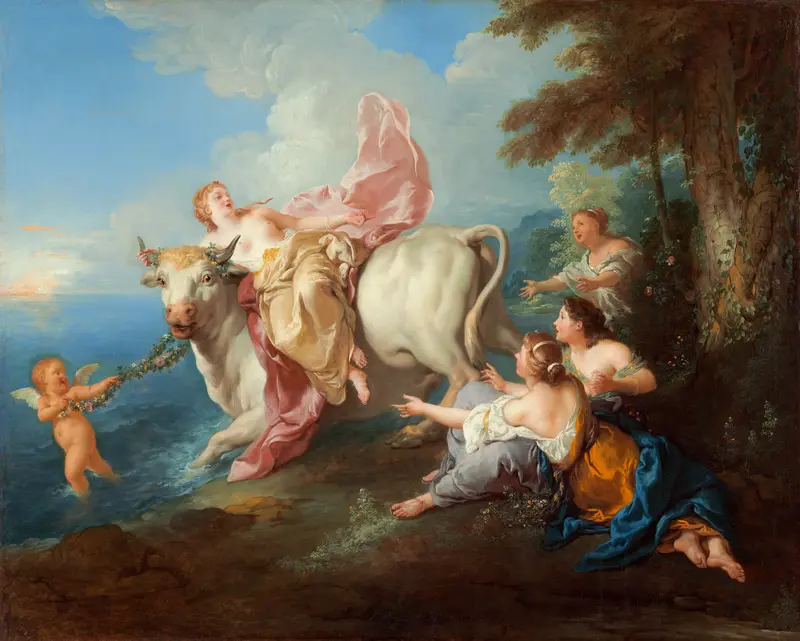
The Abduction of Europa
Jean-François de Troy
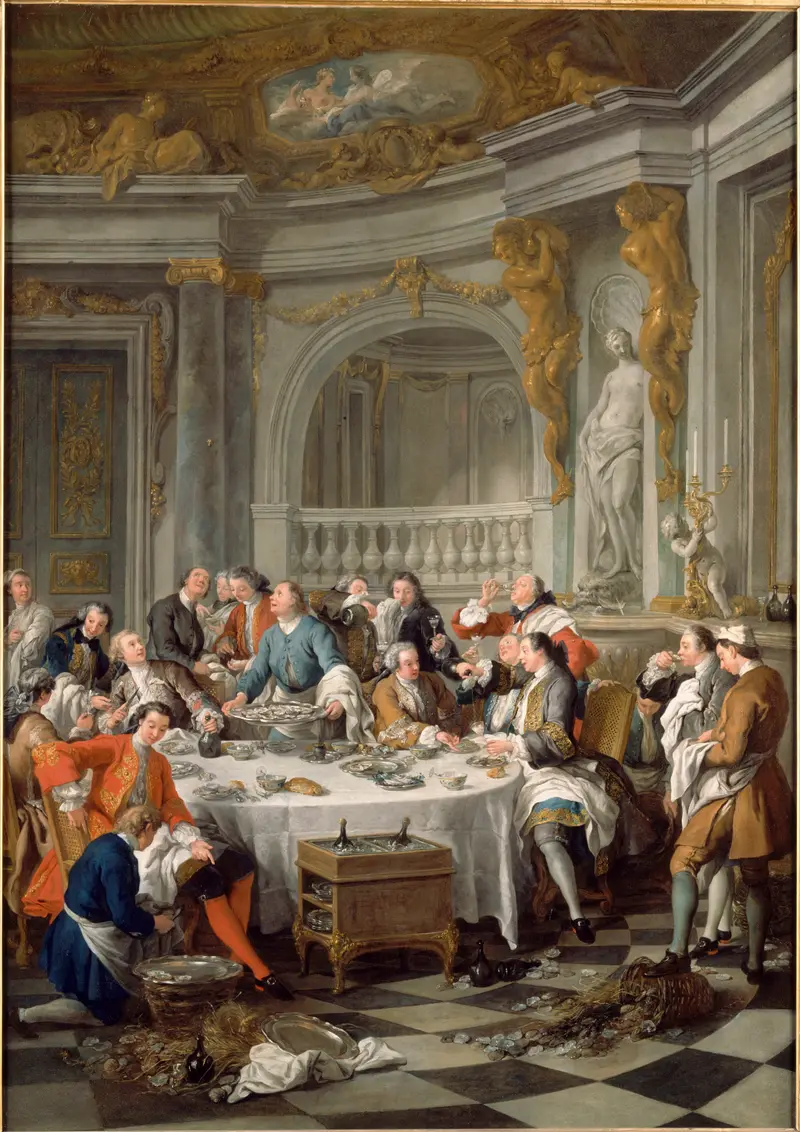
The Lunch of Oysters
Jean-François de Troy
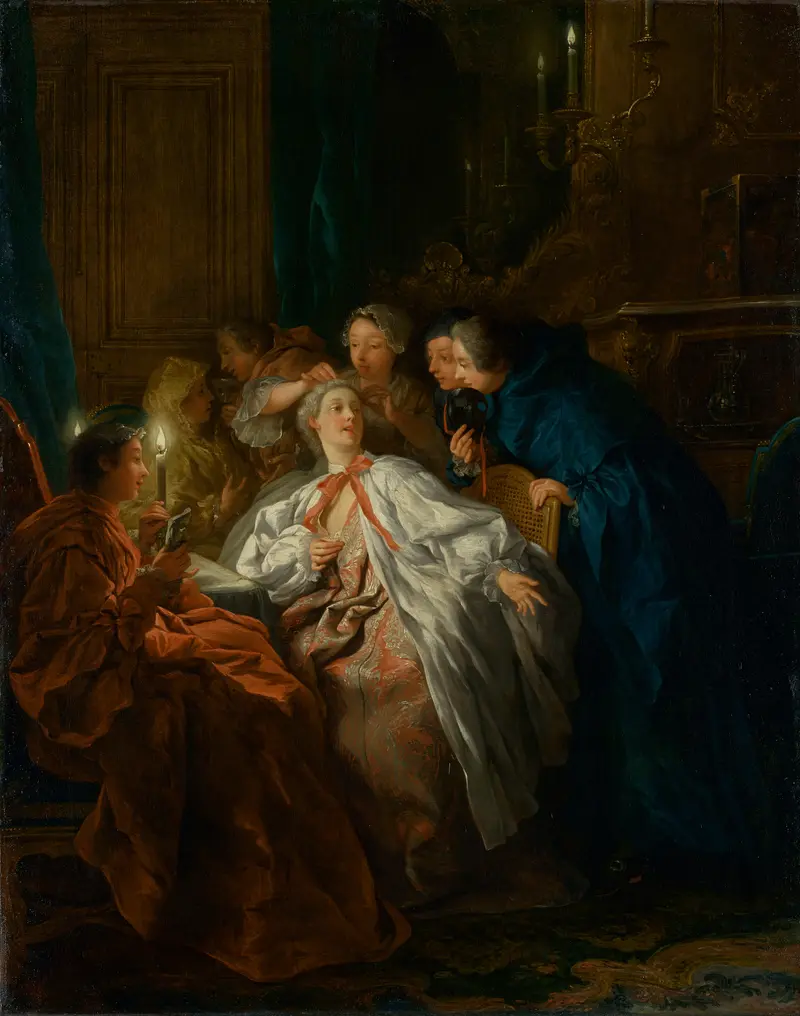
Before the Ball
Jean-François de Troy
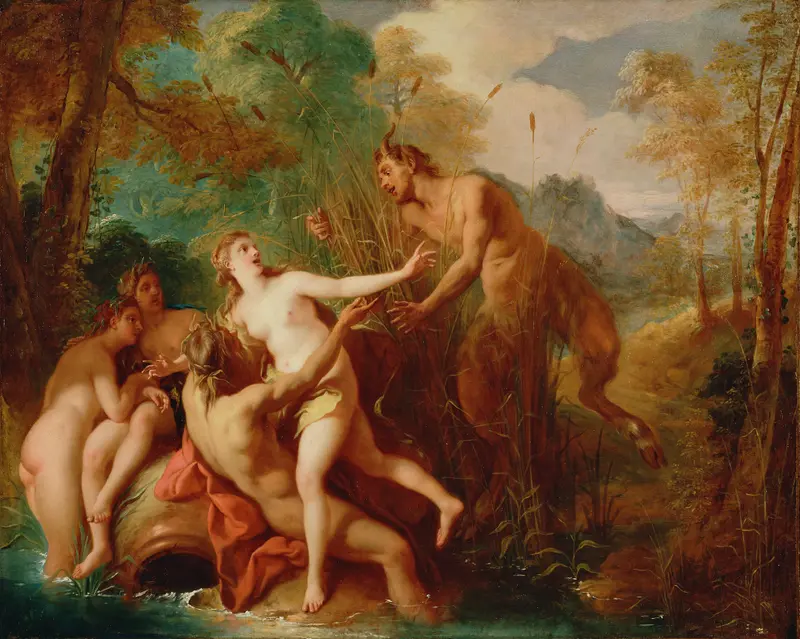
Pan and Syrinx
Jean-François de Troy

Le Combat des soldats nés des dents du serpent
Jean-François de Troy
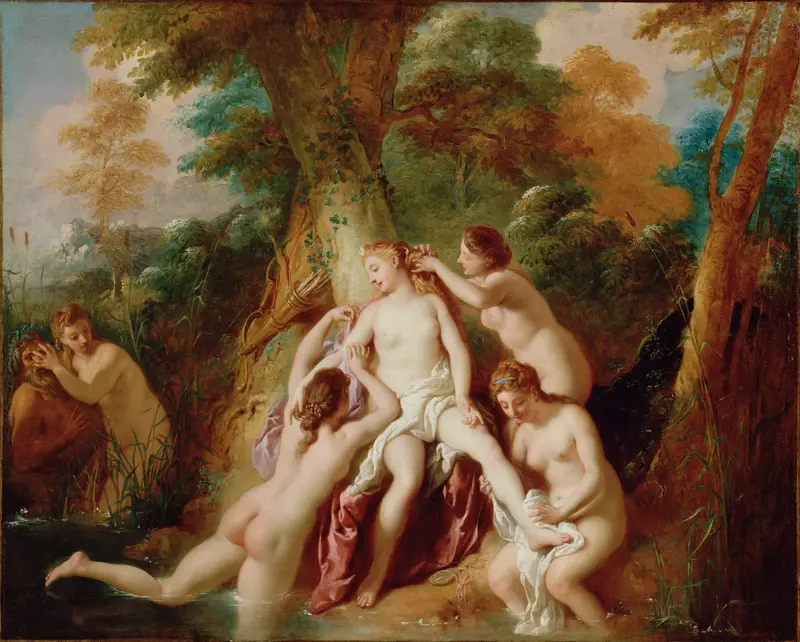
Diana and Her Nymphs Bathing
Jean-François de Troy
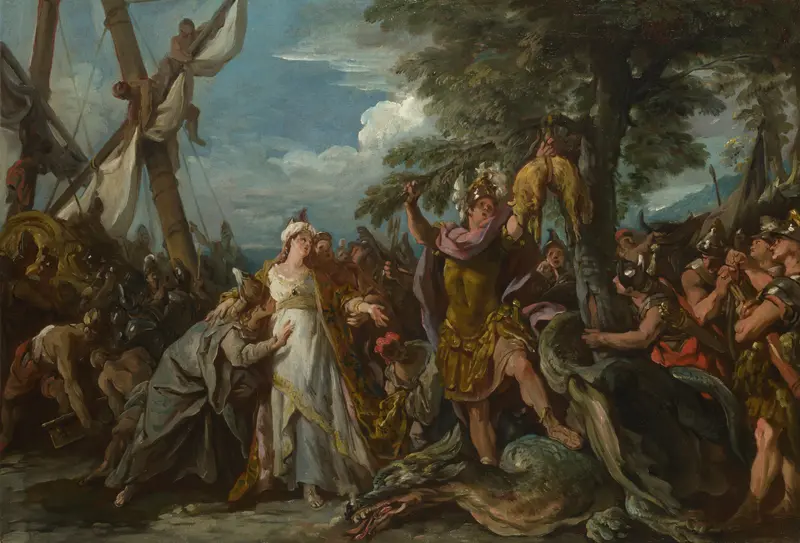
The Capture of the Golden Fleece
Jean-François de Troy

The Triumph of Mordecai
Jean-François de Troy
More Genre Scene Art

Banquet of the Officers of the St George Civic Guard
Frans Hals

Rembrandt and Saskia in the Scene of the Prodigal Son
Rembrandt van Rijn

Bal du moulin de la Galette
Pierre-Auguste Renoir

Quadrille at the Moulin Rouge
Henri de Toulouse-Lautrec

A Burial at Ornans
Gustave Courbet

When Will You Marry?
Paul Gauguin