
Last Miracle and the Death of Saint Zenobius — History & Facts
In the closing years of the fifteenth century, Sandro Botticelli turned his attention from mythological nymphs and Florentine beauty to the austere miracles of saints. Among his last religious works, Last Miracle and the Death of Saint Zenobius stands out for its focus on a local hero: Zenobius, the first bishop of Florence, whose relics were said to have performed miracles even after his death in 417. The painting captures a story cherished by Florentines for centuries, and Botticelli’s version is one of a handful from this period, each emphasizing the city’s pride in its patron saint. At the heart of the scene, Zenobius lies on his deathbed, surrounded by grieving clergy and citizens.
According to legend, as his body was carried through Florence, a dead elm tree touched by his bier burst into leaf—a final miracle Botticelli alludes to with a delicate flourish of green at the edge of the composition. The mourners’ gestures are restrained, their faces marked by sorrow and awe, while the saint’s calm expression suggests his sanctity and the hope of resurrection. Botticelli’s use of clear, linear contours and pale, almost ghostly light sets his approach apart from, for example, Ghirlandaio’s more bustling, worldly depictions of Florentine saints, focusing instead on spiritual transformation. The exact patron of Last Miracle and the Death of Saint Zenobius remains uncertain, though its size and subject suggest it was intended for a chapel or private devotion in Florence.
Over the centuries, the painting’s attribution to Botticelli was occasionally questioned, as its late style—marked by elongated forms and a certain austerity—differs from his earlier, more decorative works. Today, art historians agree on his authorship, placing the painting among his final meditations on faith and mortality. The work now hangs in a major museum, a testament to Botticelli’s late-career shift toward religious intensity and the enduring power of local legend in Florentine art.
More Artworks by Sandro Botticelli

Virgin and Child
Sandro Botticelli

Madonna and Child and the Young St John the Baptist
Sandro Botticelli

Madonna and Child with six angels and Saint John the Baptist as Child
Sandro Botticelli

Adoration of the Magi
Sandro Botticelli

Virgin and Child with the Young Saint John the Baptist
Sandro Botticelli
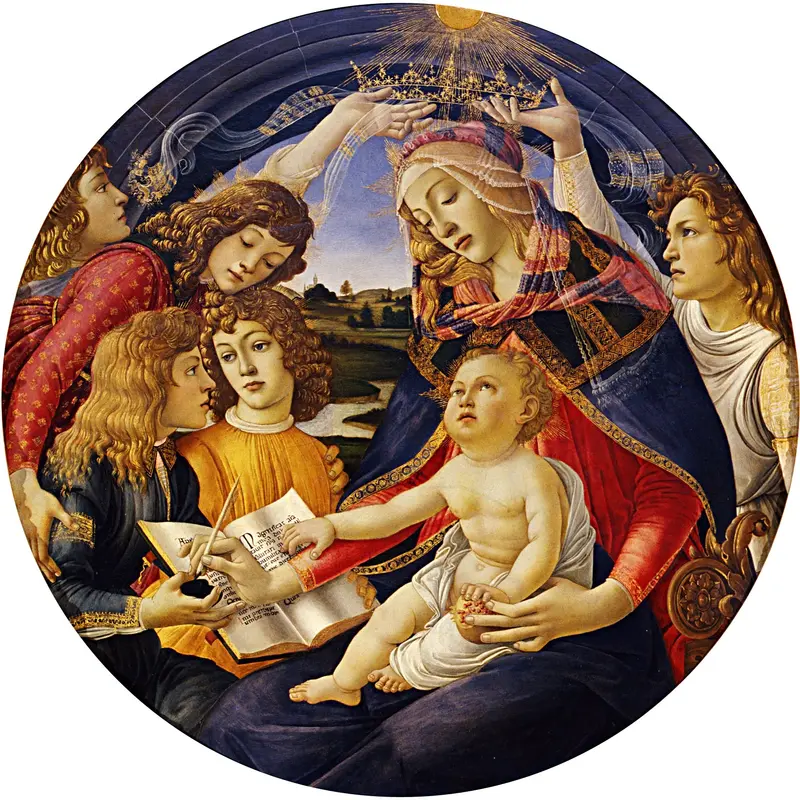
Madonna of the Magnificat
Sandro Botticelli
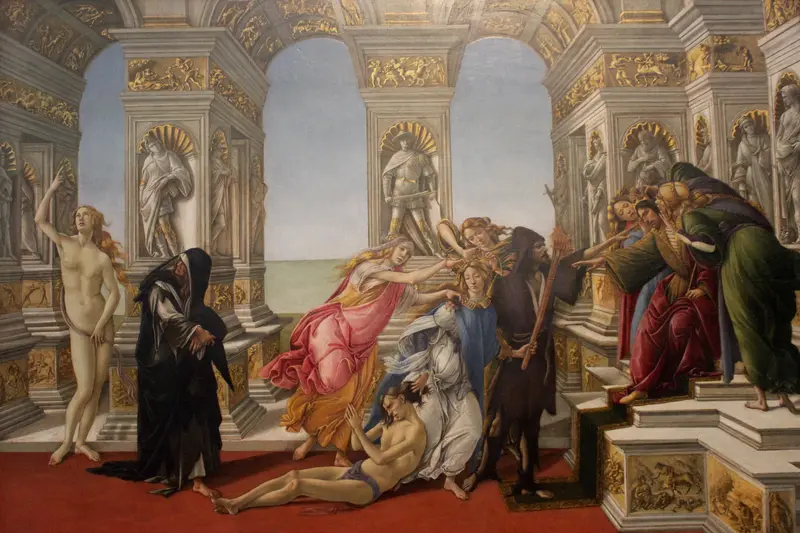
Calumny of Apelles
Sandro Botticelli

Portrait of a young man holding a roundel
Sandro Botticelli

The Trinity with Saint Mary Magdalene and Saint John the Baptist, the Archangel Raphael and Tobias
Sandro Botticelli

Idealized Portrait of a Lady (Portrait of Simonetta Vespucci as Nymph)
Sandro Botticelli





