
Matilda — History & Facts
It is the tension in her glance that first catches the eye—a figure wrapped in pale, patterned robes, pausing beneath the heavy boughs of a flowering tree, her arms cradling a clutch of wildflowers. The woman’s head is turned sharply over her shoulder, her lips parted as if she has just heard a distant call or sensed a presence at the edge of the wood. The creamy whites and golds of her dress seem to glow against the deep, mossy shadows behind her, drawing the viewer’s gaze to her face and the delicate bouquet she holds.
Every brushstroke in the foliage above her head is loose, almost dreamlike, but the figure herself is rendered with a careful clarity—her uncertainty, her alertness, become the true subject of the painting. Painted around 1915, Matilda belongs to the late flowering of the Pre-Raphaelite tradition, a period when artists like John William Waterhouse were still weaving medieval romance and myth into the fabric of modern life. Works of this kind were often commissioned by collectors hungry for the escapism and beauty such scenes provided, especially as Europe was plunged into the turmoil of the First World War. History has kept few traces of this particular painting’s journey—its date and current home with the Art Renewal Center are among the only certainties.
Yet its blend of medieval costume, natural setting, and psychological tension invites us to linger, searching for the story behind that backward glance.
More Artworks by John William Waterhouse
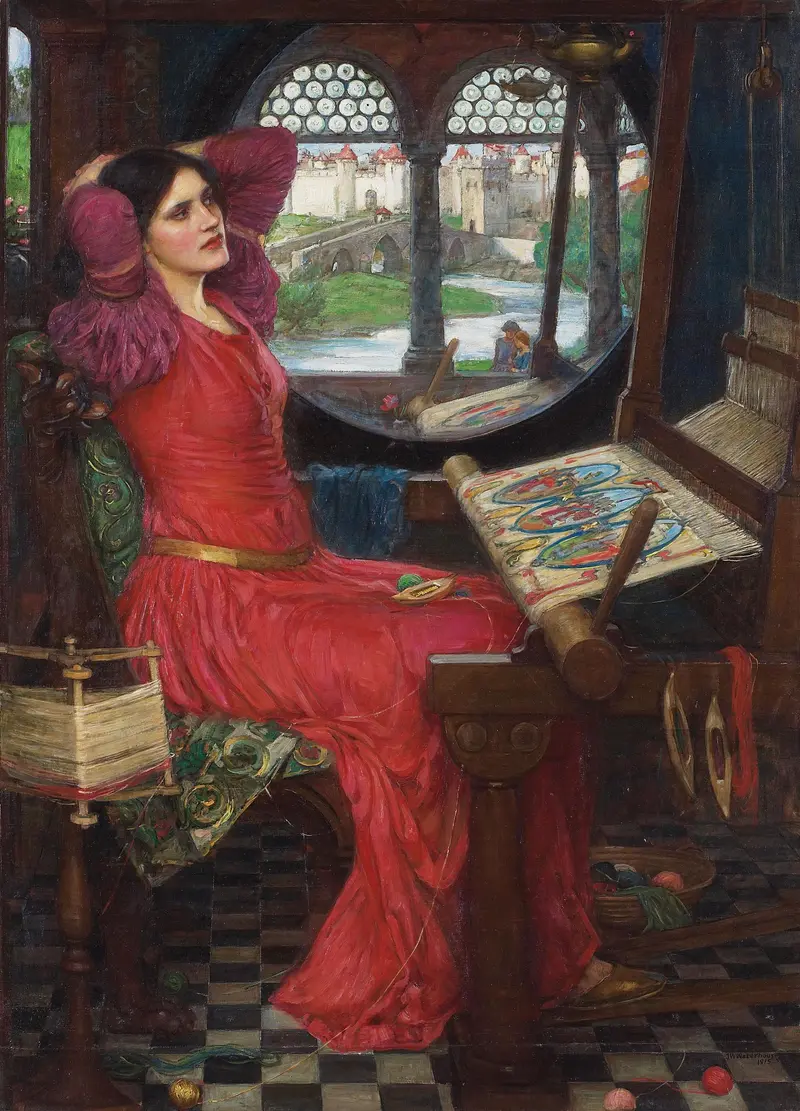
'I Am Half-Sick of Shadows,' Said the Lady of Shalott
John William Waterhouse

The Favourites of the Emperor Honorius, 1883
John William Waterhouse
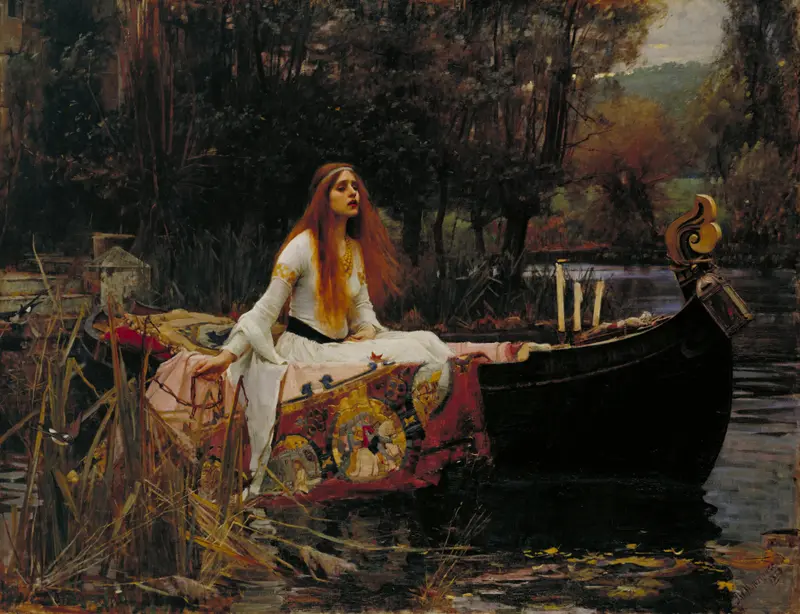
The Lady of Shalott
John William Waterhouse
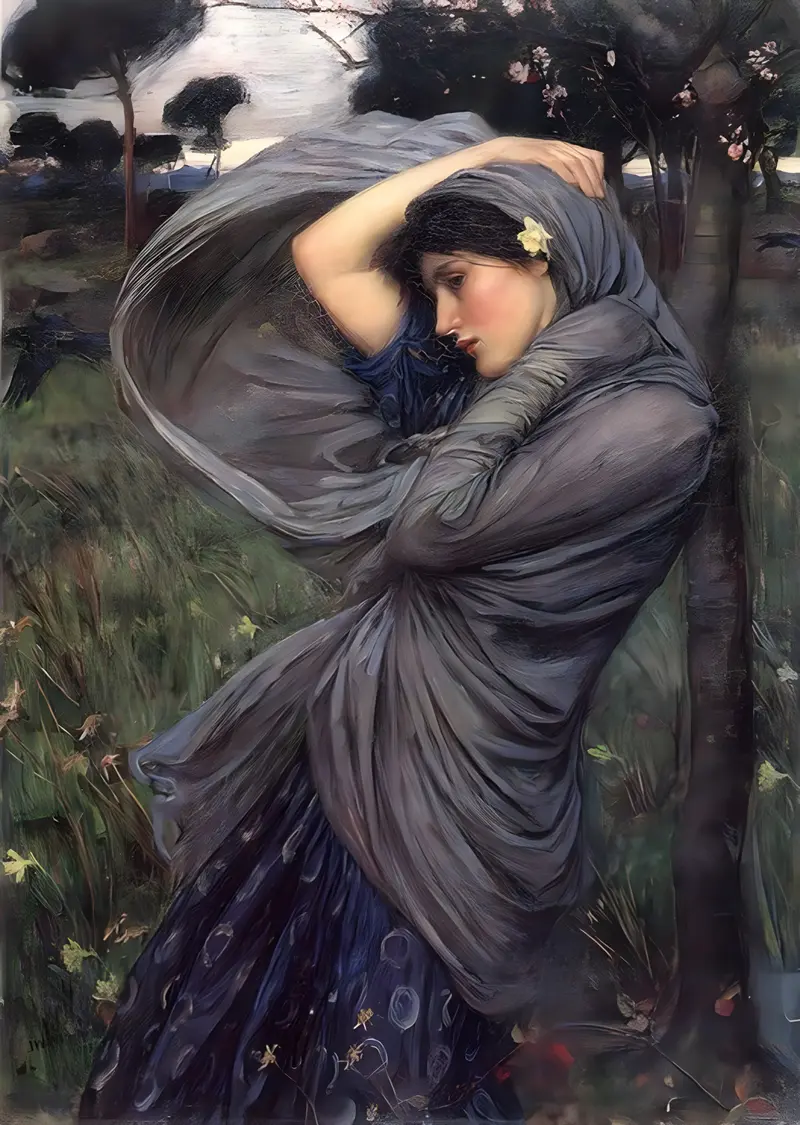
Boreas
John William Waterhouse
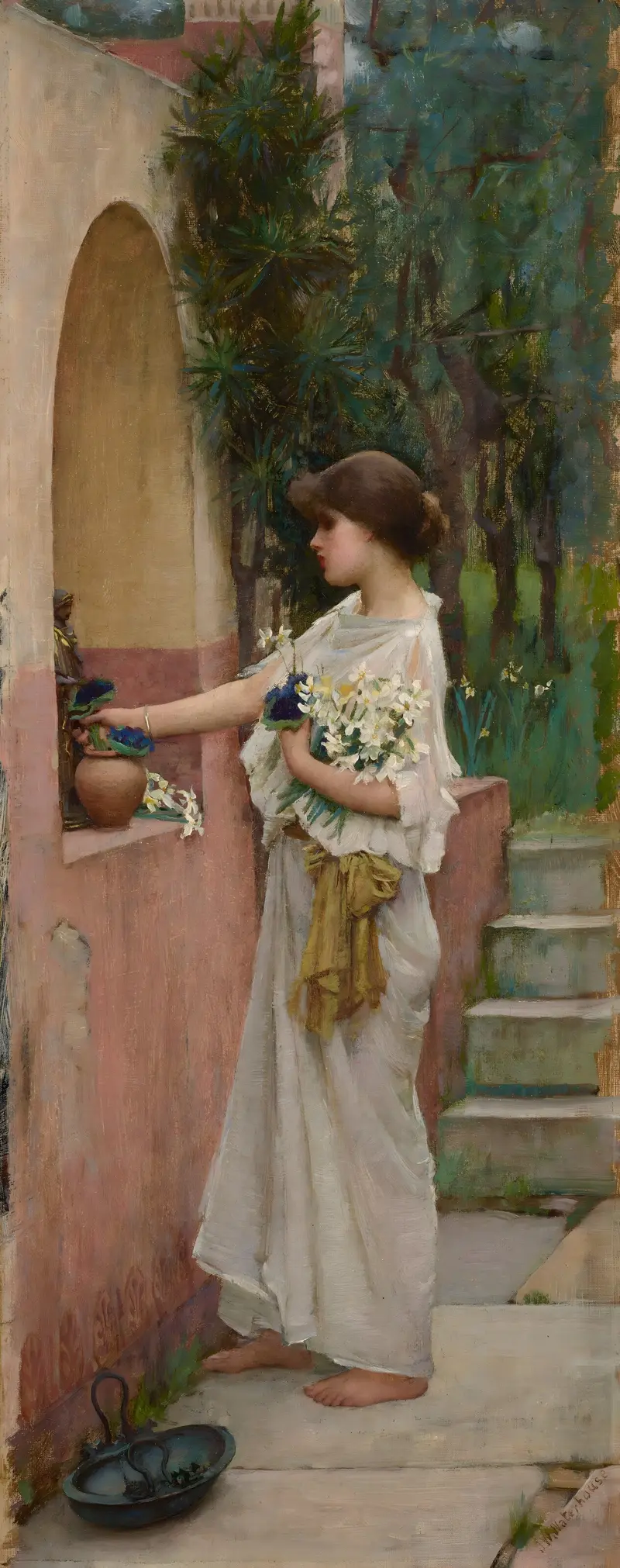
A Roman Offering
John William Waterhouse
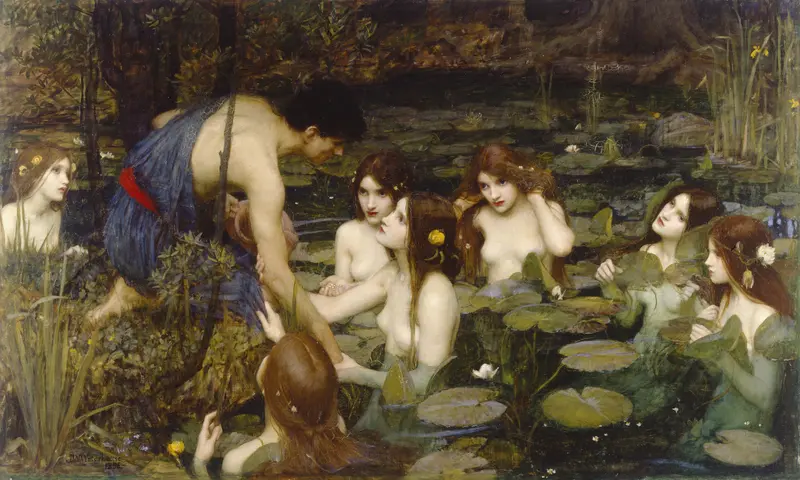
Hylas and the Nymphs
John William Waterhouse
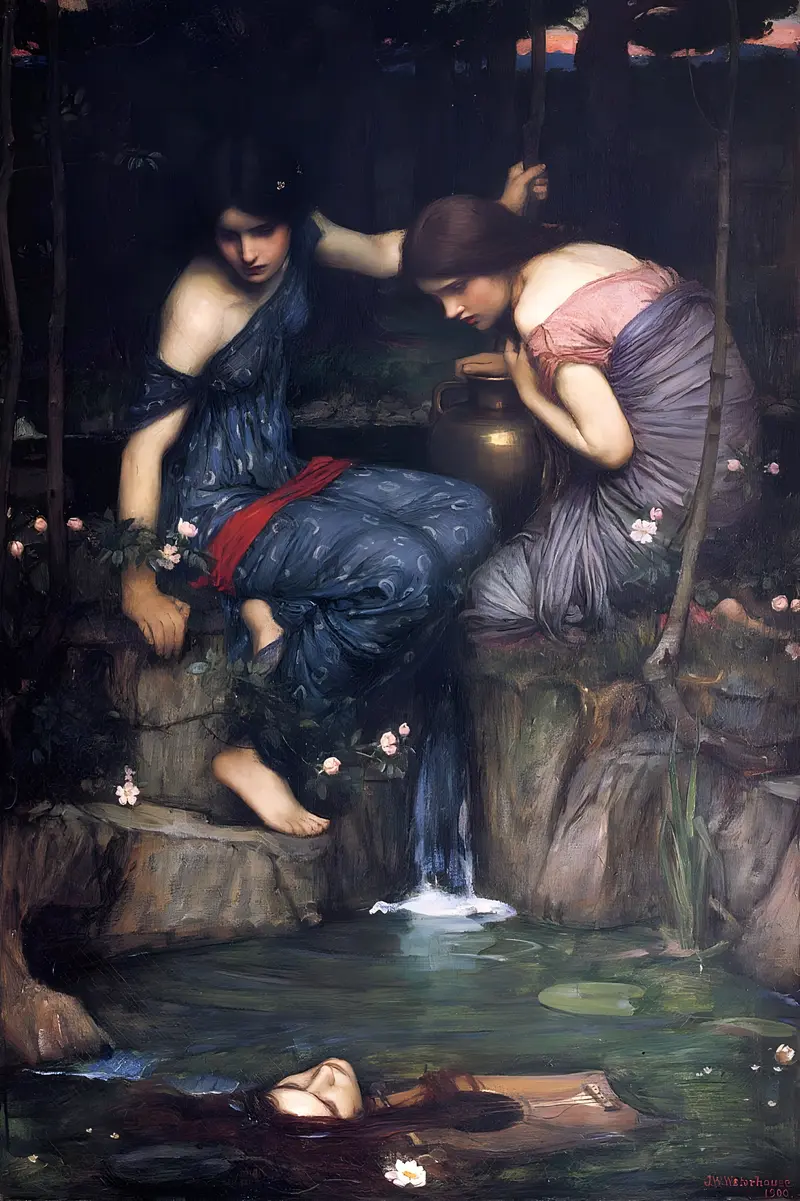
Nymphs Finding the Head of Orpheus
John William Waterhouse
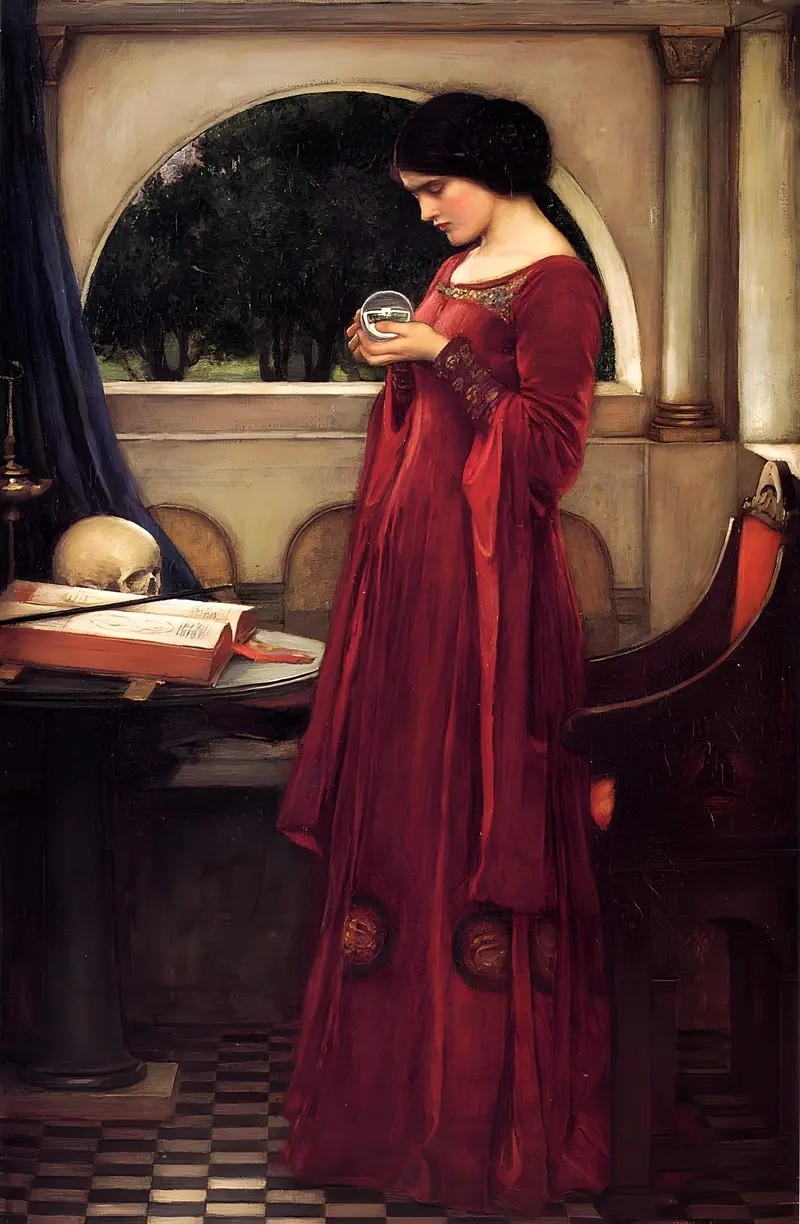
The Crystal Ball
John William Waterhouse
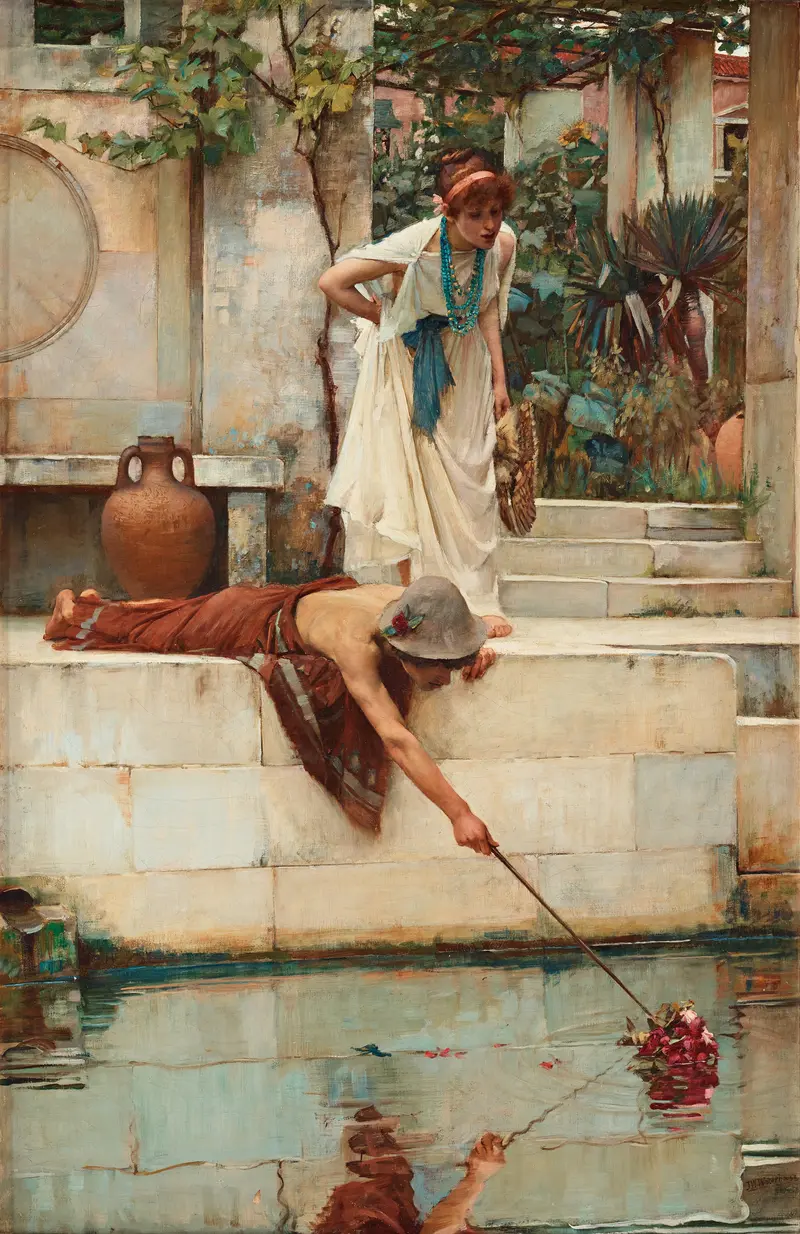
The Rescue
John William Waterhouse
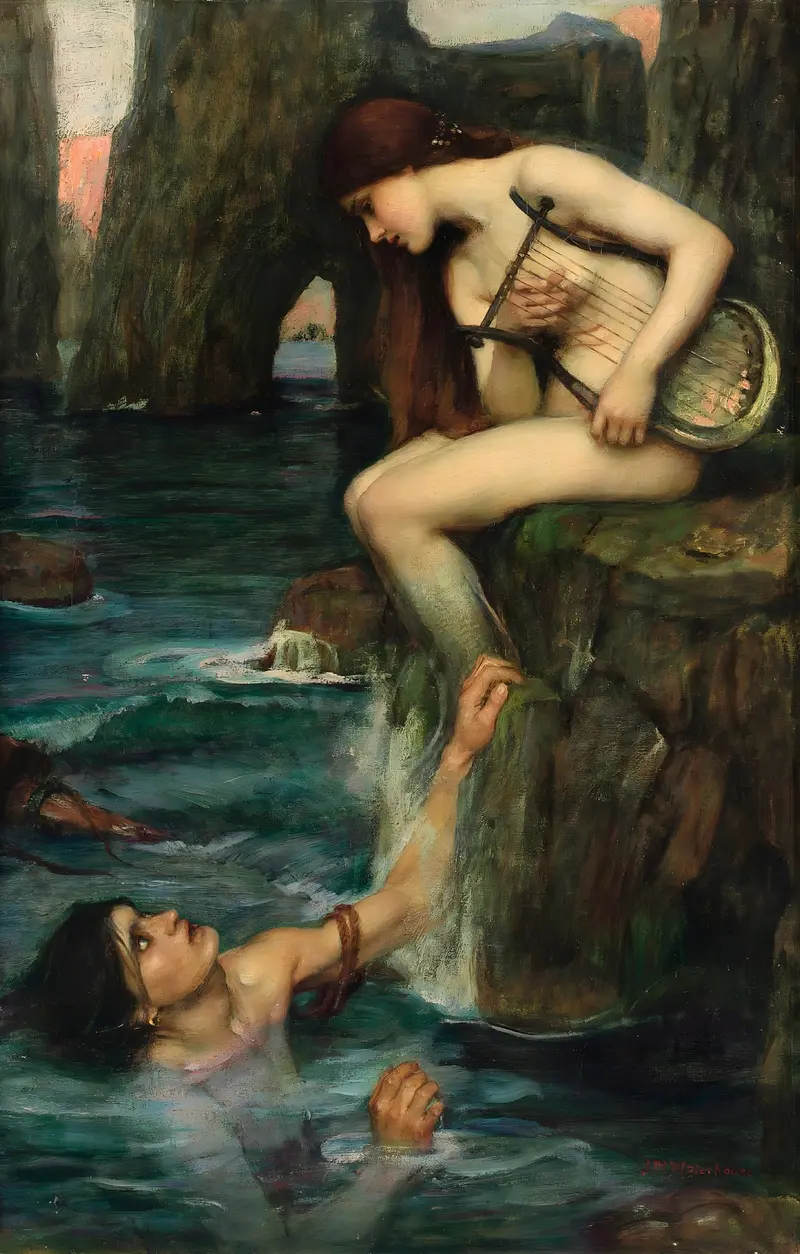
The Siren, 1900
John William Waterhouse



