
Moses Indignant at the Golden Calf — History & Facts
When William Blake painted Moses Indignant at the Golden Calf in 1799, he was working in a fevered period of biblical illustration that would help define his career. This work is one of a remarkable series of tempera paintings commissioned by the civil servant Thomas Butts, who gave Blake steady employment and creative freedom at a time when the artist struggled to find an audience. The subject, drawn from the Book of Exodus, had been painted by many before, but Blake’s version stands out for its emotional intensity and visionary style—qualities that would later make him a cult figure among Romantic poets and artists. The scene captures the moment when Moses descends Mount Sinai to find the Israelites worshipping a golden calf, breaking the very commandments he has just received.
Blake freezes the drama at its most explosive instant: Moses, his face contorted with fury, brandishes the tablets above his head, ready to dash them to the ground. The golden idol gleams at the center, surrounded by a chaotic throng of revelers, their gestures wild and desperate. Blake’s swirling lines and fiery palette heighten the sense of moral crisis, setting his vision apart from the more restrained treatments by artists like Nicolas Poussin, whose own The Adoration of the Golden Calf is stately and controlled by comparison.
Here, the light seems to pour from Moses himself, a visual sign of divine authority and wrath. The original medium of Moses Indignant at the Golden Calf is not definitively known, though Blake often worked in tempera on canvas or wood during this period. The painting was part of the Butts collection for decades before being dispersed; today, several of Blake’s biblical temperas survive in major museums, though some have been lost or damaged. As with many of Blake’s works, the painting’s journey has been partly obscured by time, but its place in his oeuvre is clear: it marks a turning point in his ambition to marry poetry, prophecy, and image.
The painting is now recognized as a key work in the Romantic movement, a testament to Blake’s unique vision and his uncompromising approach to biblical drama.
More Artworks by William Blake
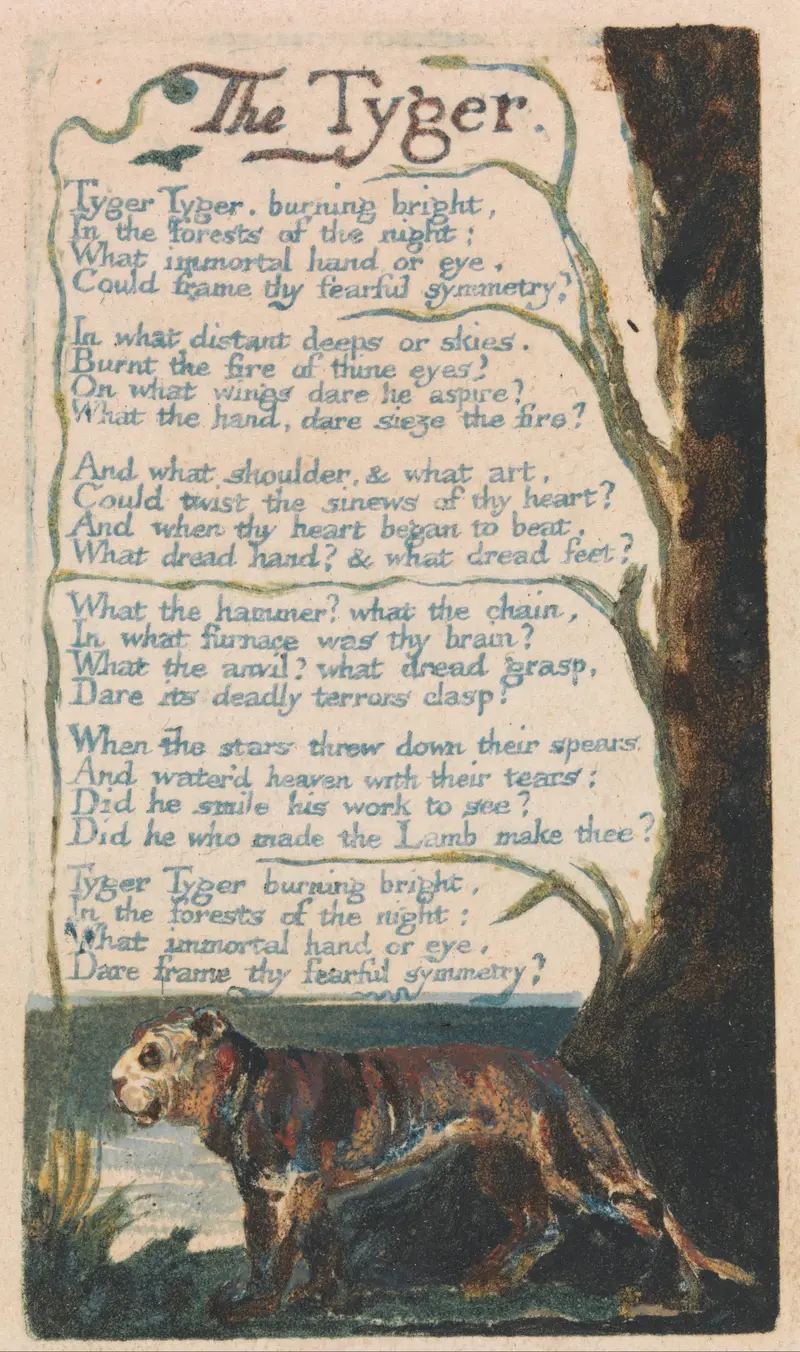
The Tyger
William Blake

Christ Blessing
William Blake
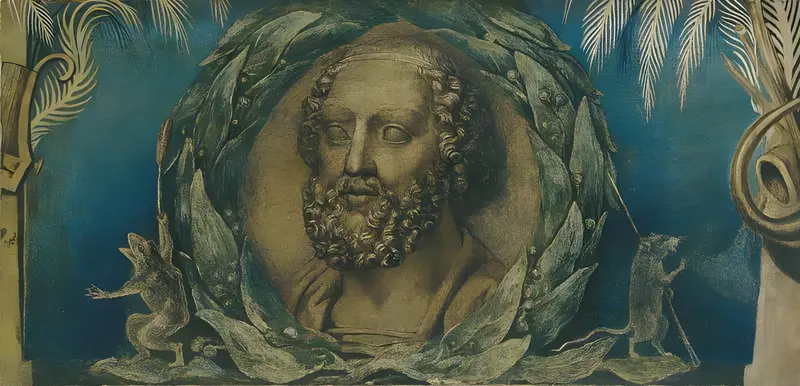
Homer
William Blake
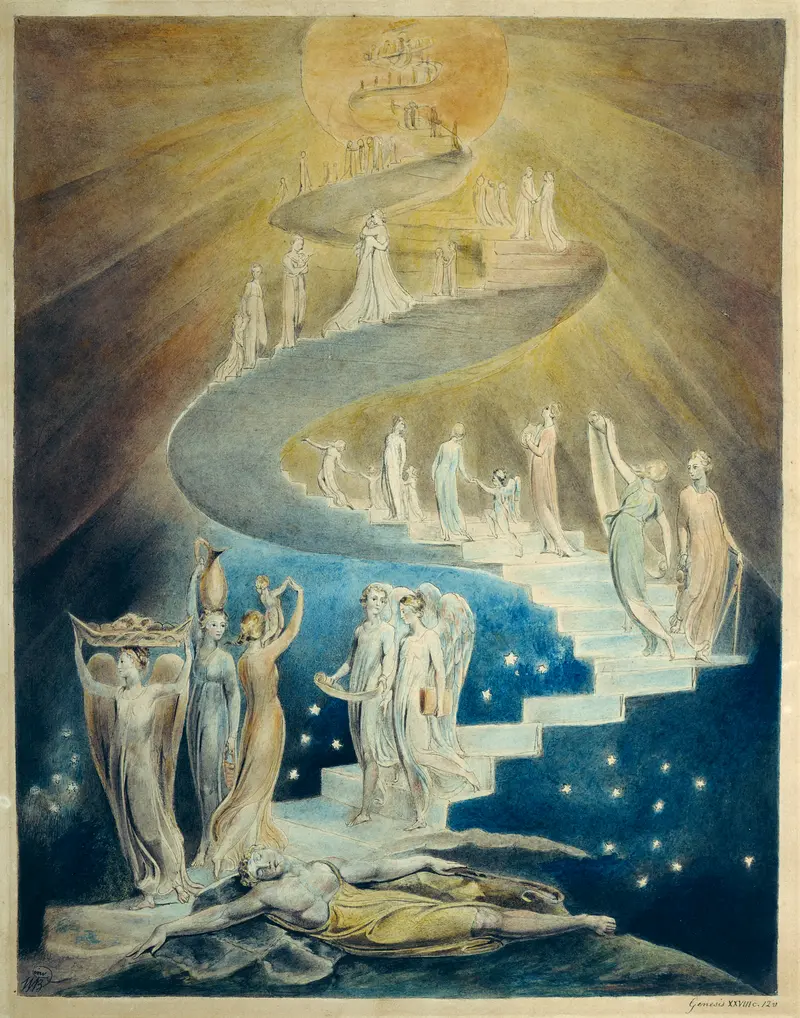
Jacob's Ladder
William Blake
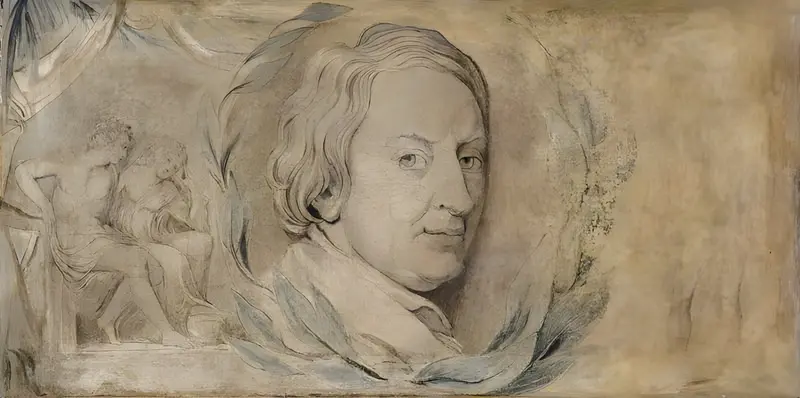
John Dryden (1631–1700)
William Blake

Landscape near Felpham
William Blake
Sacrifice of Job
William Blake
Christ's Entry into Jerusalem
William Blake
The Ancient of Days
William Blake
Adam Naming the Beasts
William Blake





