
Nine-Tailed Golden Fox — History & Facts
In 1799, at the age of nearly forty, Katsushika Hokusai produced Nine-Tailed Golden Fox during a period of intense personal transformation, having just changed his artistic name for the third time. This work emerges at a crossroads in Hokusai’s life, as he was breaking away from his teacher’s style and forging his own path—an act that would eventually lead to his worldwide fame. The subject, drawn from ancient Chinese and Japanese folklore, was rarely depicted in painting at the time, making Hokusai’s choice both daring and innovative.
While the exact medium remains uncertain, the artwork is often grouped with his early paintings and prints, reflecting his restless experimentation. The scene captures the mythical moment when the fox spirit, having assumed many forms and committed countless mischiefs, reveals its true self: a radiant creature with nine golden tails unfurled in a swirl of movement. Hokusai’s fox stands poised on a rocky outcrop, its fur rendered in fine, almost calligraphic lines, each tail curling with a life of its own. The golden hue, if present, would signal its supernatural status, while the fox’s alert gaze and upright ears suggest both wisdom and cunning.
Unlike earlier depictions in Chinese scrolls, which often show the fox in disguise, Hokusai chooses to confront the viewer with the spirit’s unmasked power. The composition’s dynamic energy prefigures the artist’s later, more famous works like The Great Wave off Kanagawa. Little is known about the early journey of Nine-Tailed Golden Fox, and no record survives of its original patron or exhibition. The painting’s attribution to Hokusai is accepted by most scholars, though the lack of a signature leaves room for debate.
Today, it is considered an important example of his pre-Ukiyo-e period, when he was still refining the bold, fluid style that would come to define his legacy. The work’s rarity and subject matter have made it a point of fascination for collectors and historians alike, and it is now preserved in an online gallery, allowing a global audience to encounter this early vision from one of Japan’s most inventive artists.
More Artworks by Katsushika Hokusai

The Great Wave off Kanagawa
Katsushika Hokusai
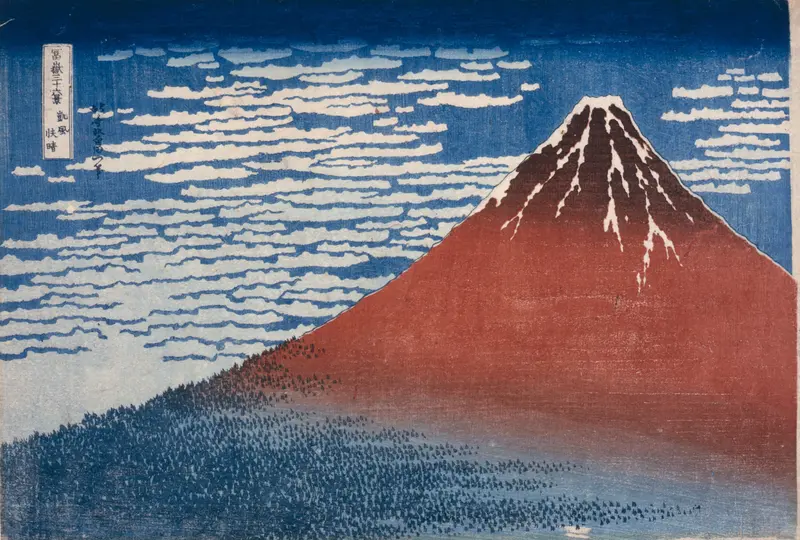
Fine Wind, Clear Morning (Red Fuji)
Katsushika Hokusai
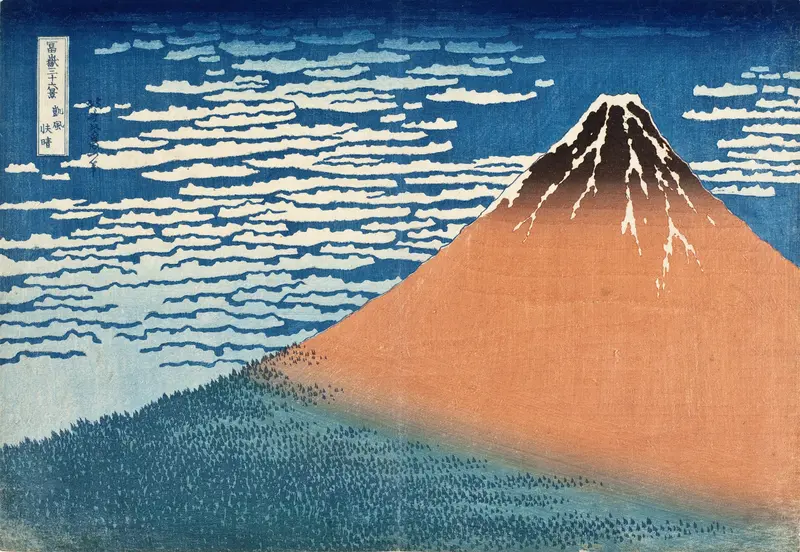
South Wind, Clear Dawn
Katsushika Hokusai
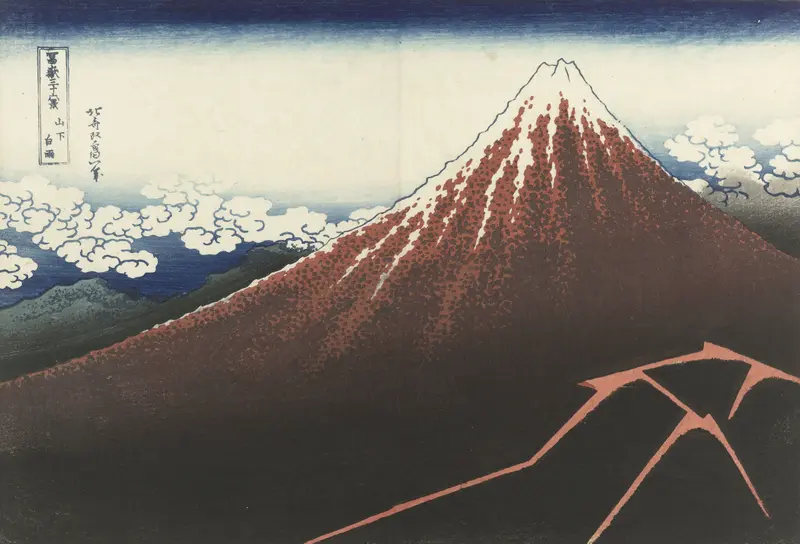
Rainstorm Beneath the Summit
Katsushika Hokusai
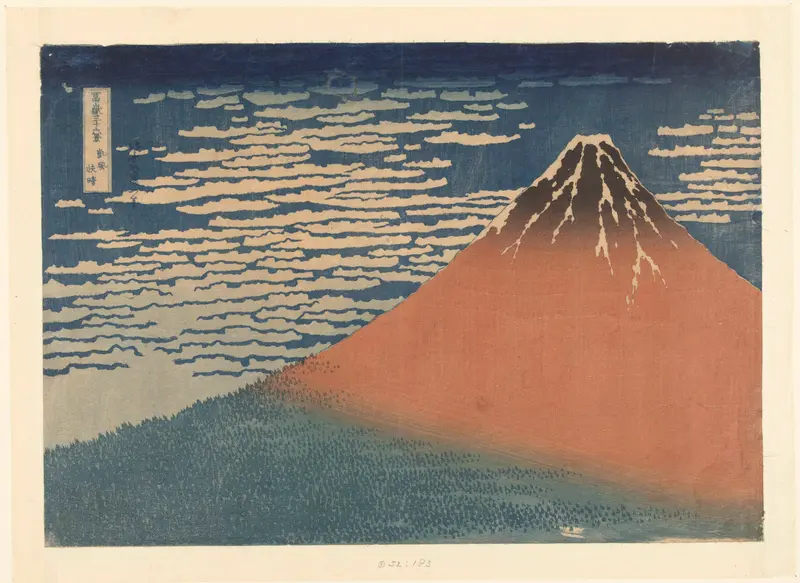
Clear Weather with a Southerly Wind
Katsushika Hokusai
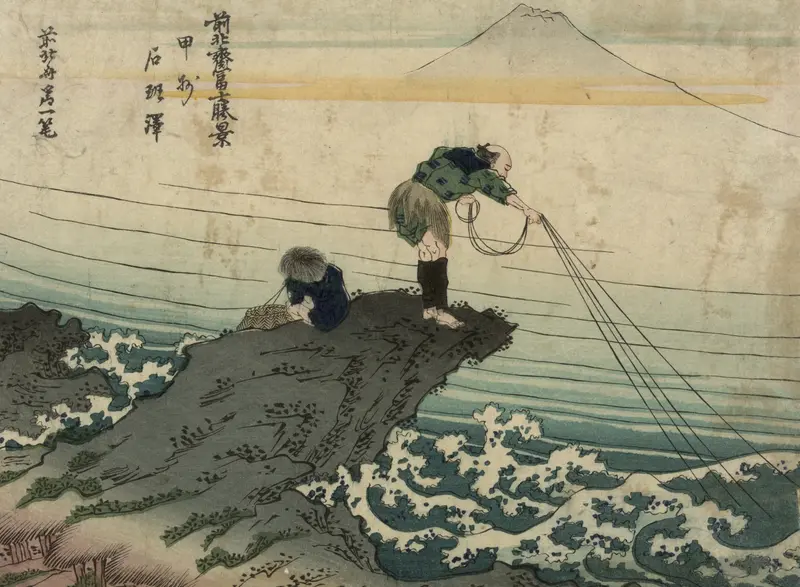
Kōshū kajikazawa
Katsushika Hokusai
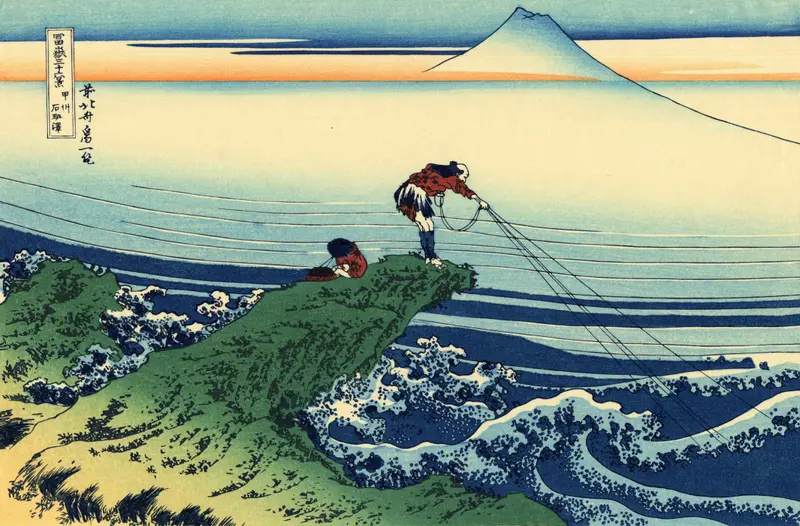
Kōshū kajikazawa 2
Katsushika Hokusai
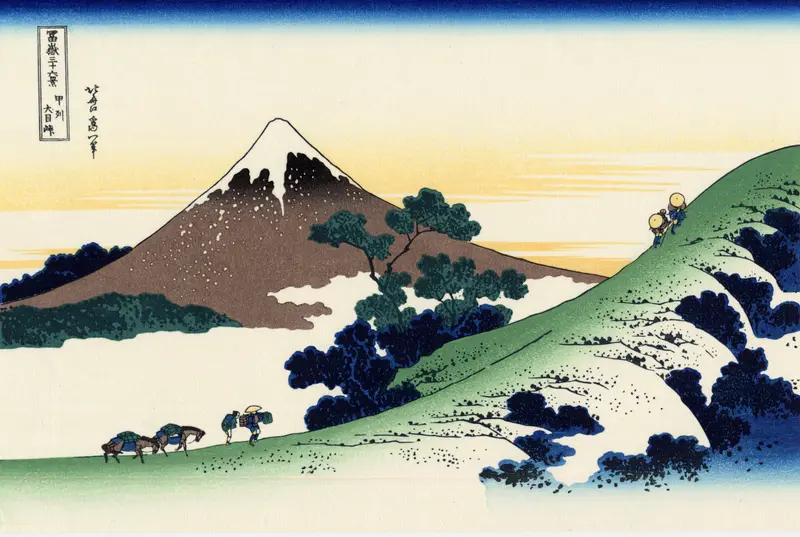
Inume Pass in Kai Province (Kôshû inume-tôge)
Katsushika Hokusai

Yoro Falls in Mino Province (Mino no Yoro no taki), from the series "A Tour of Waterfalls in Various Provinces (Shokoku taki meguri)"
Katsushika Hokusai
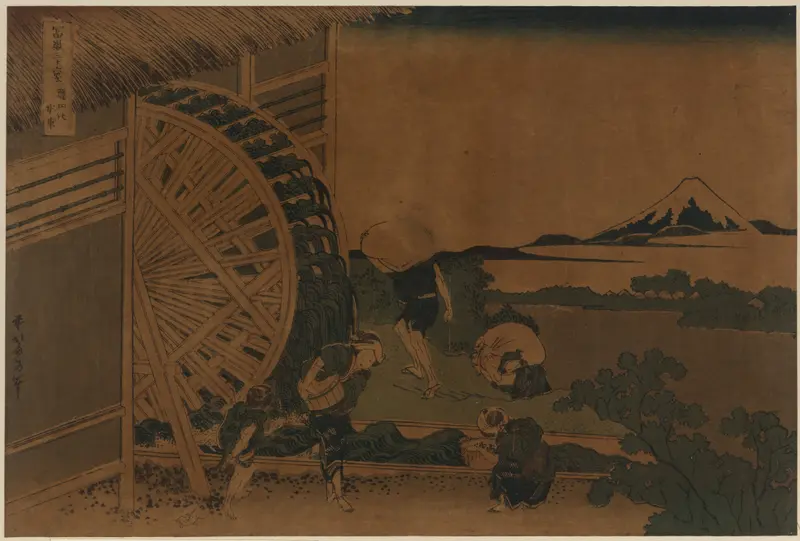
Onden no suisha
Katsushika Hokusai





