
Portrait of Bindo Altoviti — History & Facts
A young man with long, flowing blond hair turns his head over his left shoulder, his gaze meeting the viewer with an intense, almost enigmatic expression. He wears a black cap that sits low on his head, casting a subtle shadow across his forehead and accentuating the delicate modeling of his features. His skin appears luminous, with soft gradations of light and shadow that give his face a sculptural quality, especially around the cheeks and chin.
He is draped in a blue garment that falls in gentle folds across his back and shoulder, the fabric painted with smooth, almost imperceptible brushstrokes that suggest both weight and softness. A hint of a white collar peeks out at the neckline, adding a touch of refinement to his attire. His right hand, delicately modeled, rests on his chest, with a gold ring gleaming on his finger, its detail sharply defined against the darker background.
The background is a deep, mottled green, painted with subtle variations in tone that set off the figure and create a sense of depth without distracting from the sitter. The composition is tightly focused on the upper body and head, with the figure filling most of the panel and the background left bare of any objects or setting. The smooth, refined surface and the harmonious palette of blues, greens, and flesh tones are characteristic of the High Renaissance style.
The left edge of the painting is bordered by the subject’s loose blond hair, which falls in soft waves down to his shoulder and slightly overlaps the blue garment. There are no secondary figures or objects present anywhere in the composition; the background remains uninterrupted and empty. Light falls most strongly on the left side of the sitter’s face and neck, creating a gentle highlight on his cheekbone, while the right side recedes into shadow.
The green background is subtly textured with visible brushwork and faint variations in hue, especially noticeable near the top and right edges. The corners of the painting, particularly at the lower right, are darker, with the black of the garment merging into the shadow, creating a sense of depth and framing the figure.
Sources: National Gallery of Art, record 1943.4.33 · Wikidata Q2528106 · Wikipedia: Portrait of Bindo Altoviti · Image source (Wikimedia Commons)
More Artworks by Raphael

Madonna of the Goldfinch
Raphael

Madonna with the Fish
Raphael
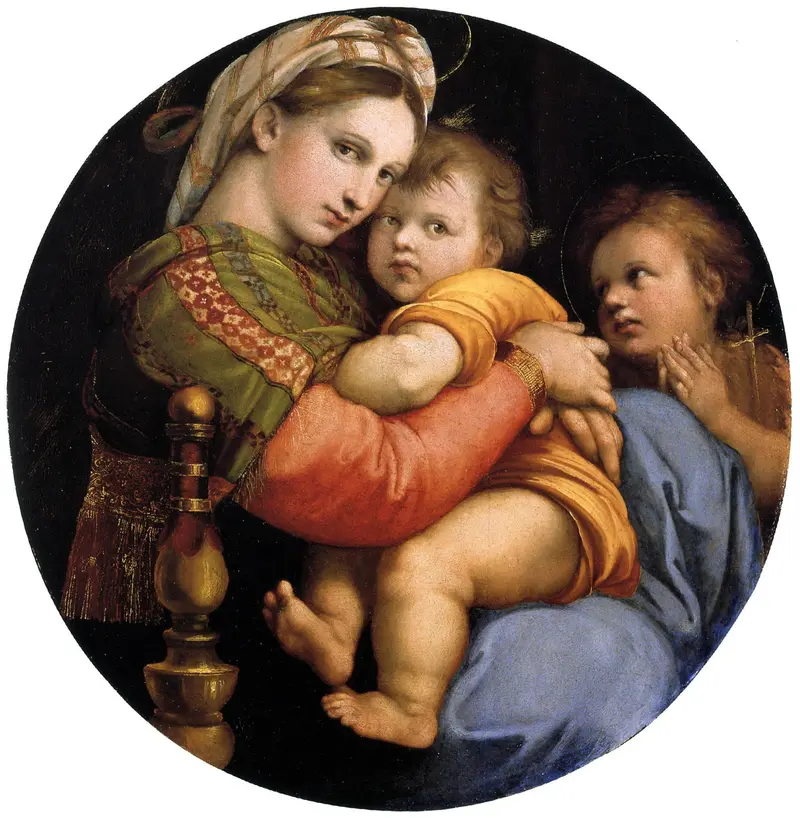
Madonna and Child (Madonna della Seggiola)
Raphael
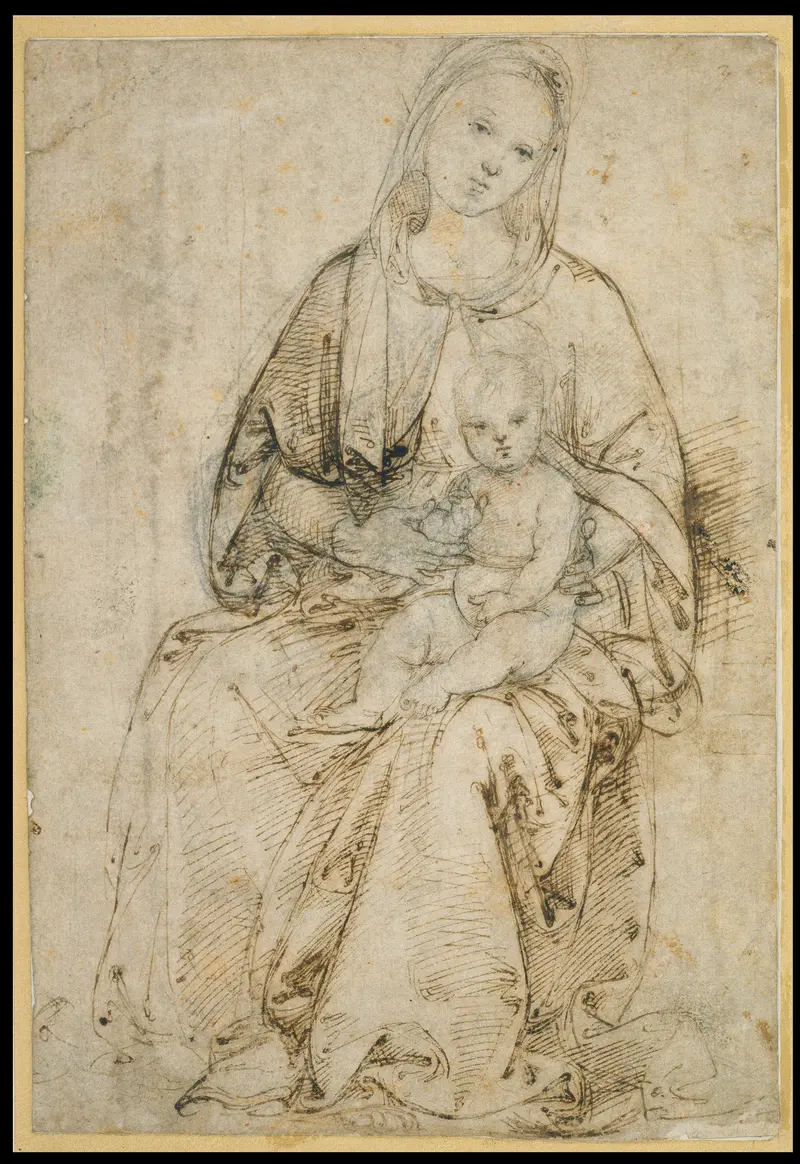
Seated Madonna and Child
Raphael
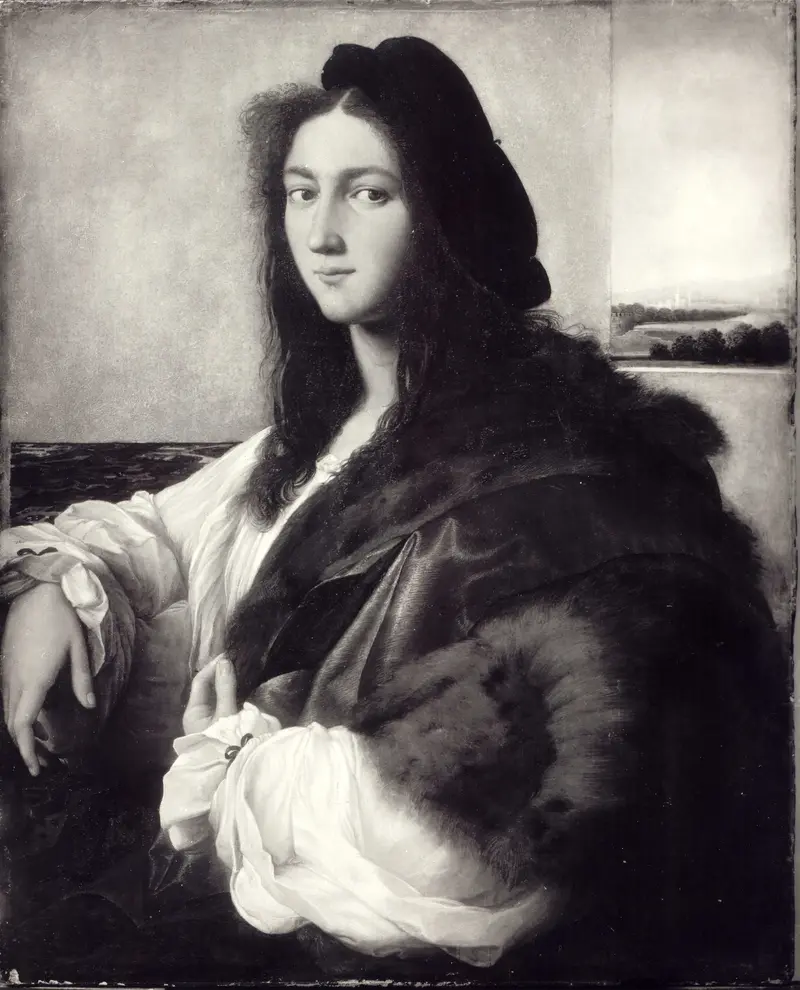
Portrait of a Young Man
Raphael
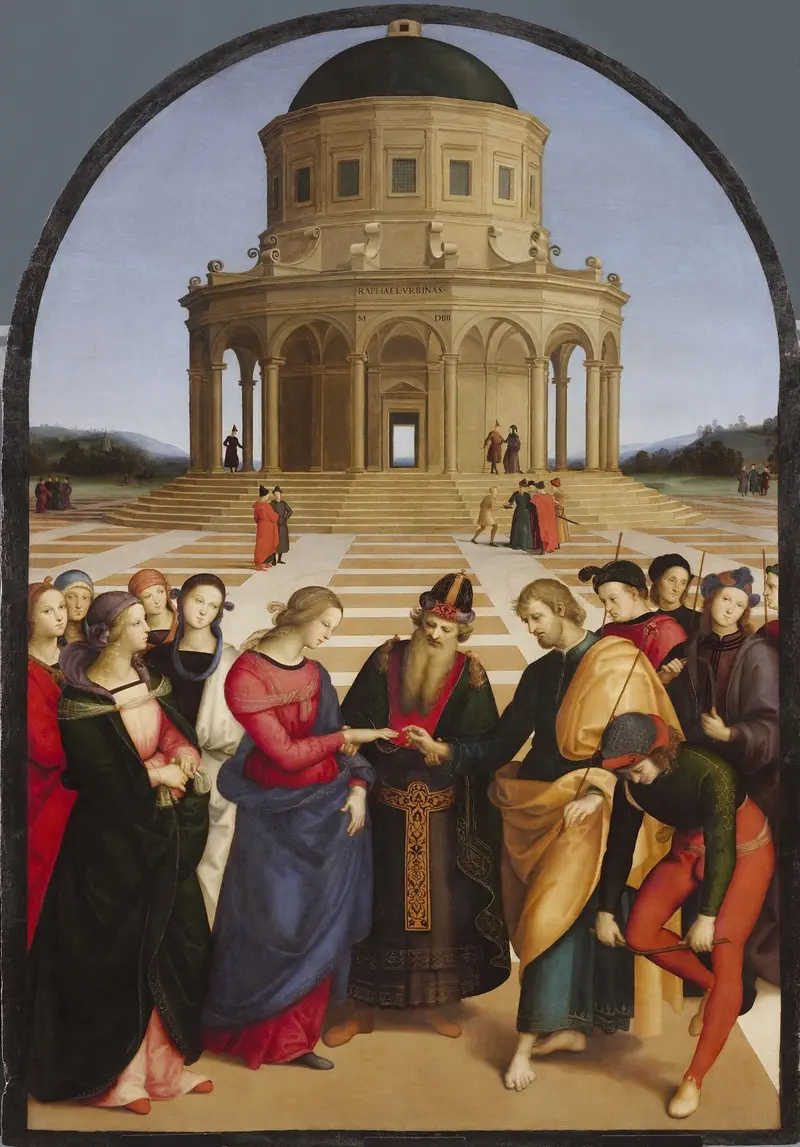
The Marriage of the Virgin
Raphael
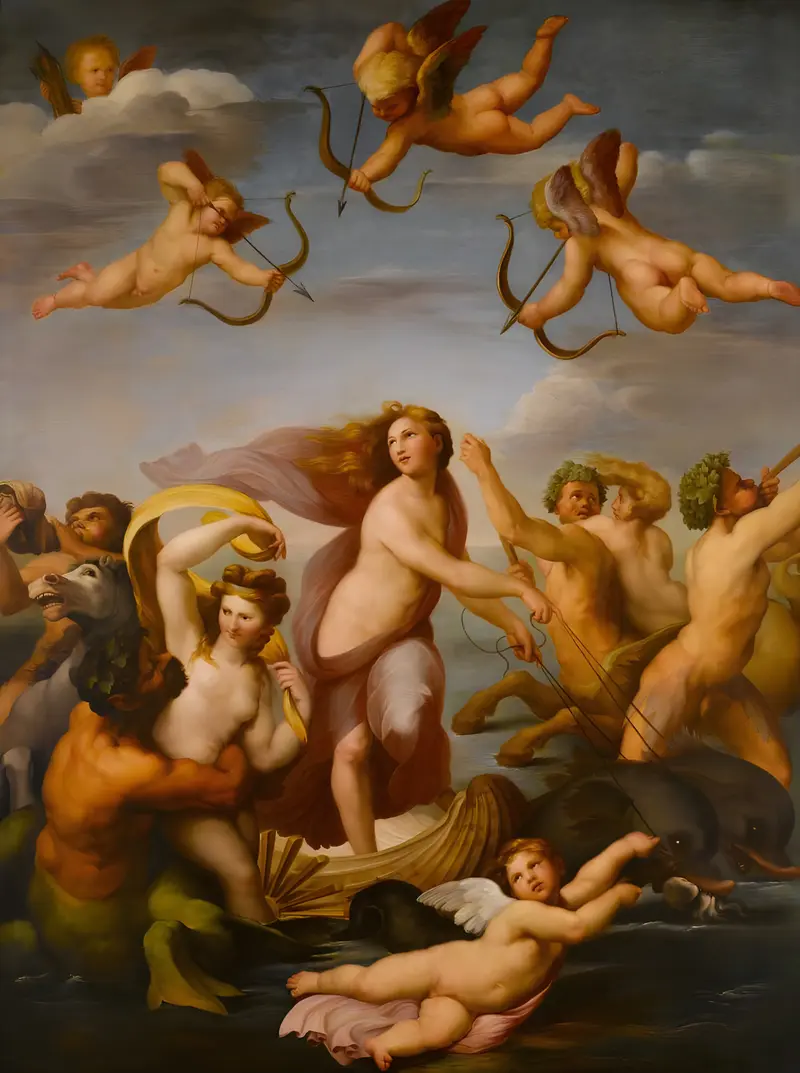
The Triumph of Galatea (copy after Raphael)
Raphael
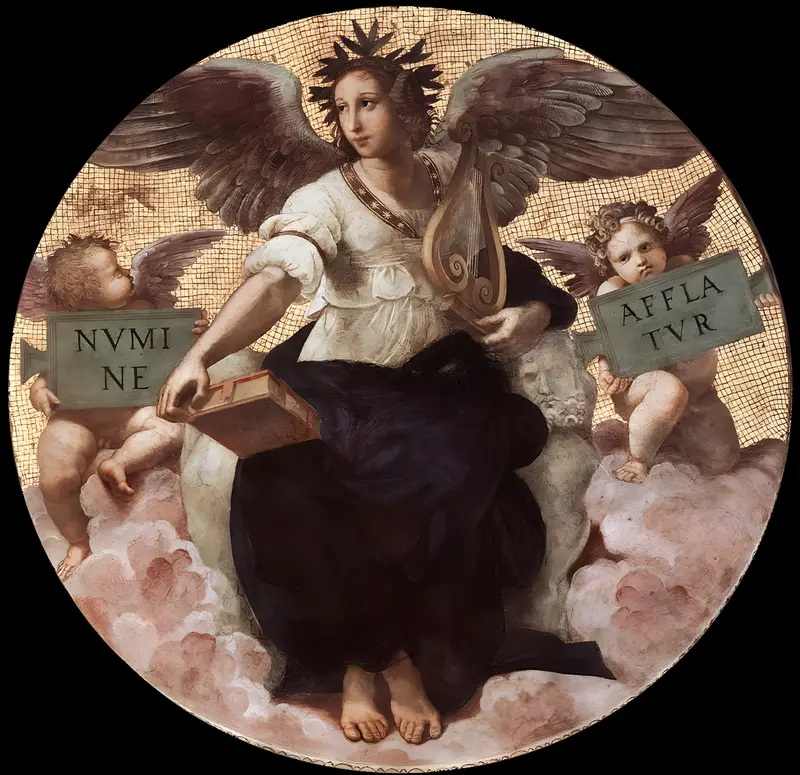
Poetry
Raphael
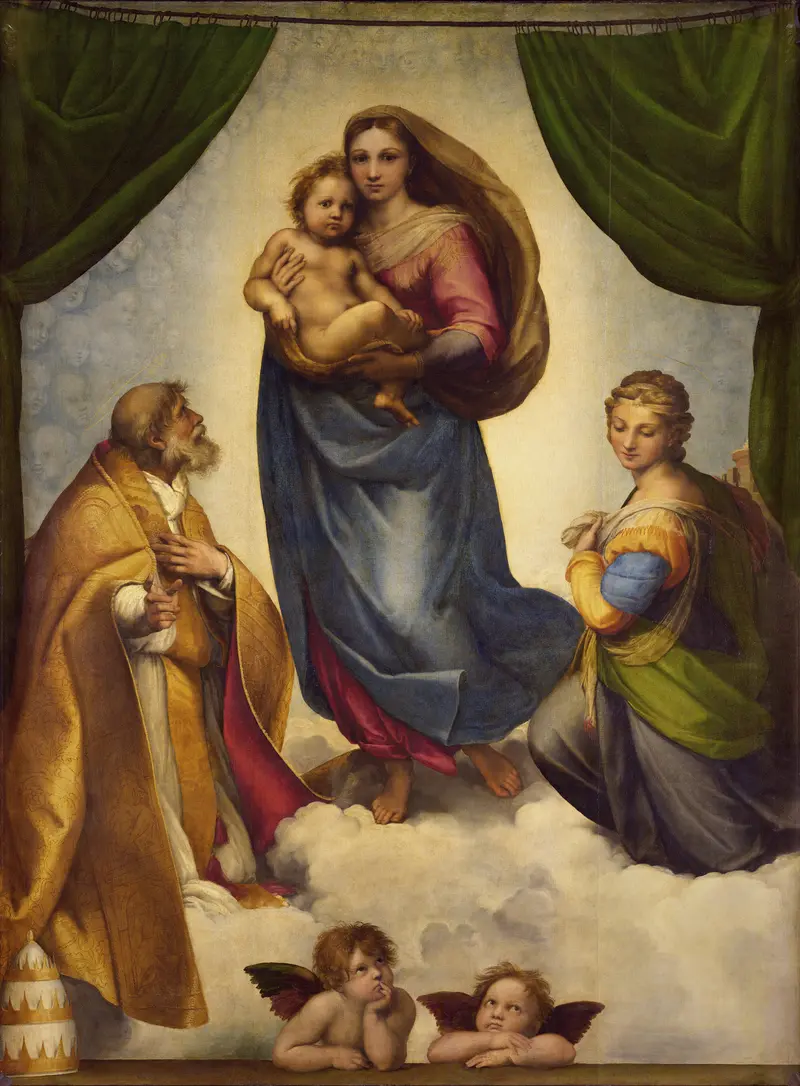
Sistine Madonna
Raphael
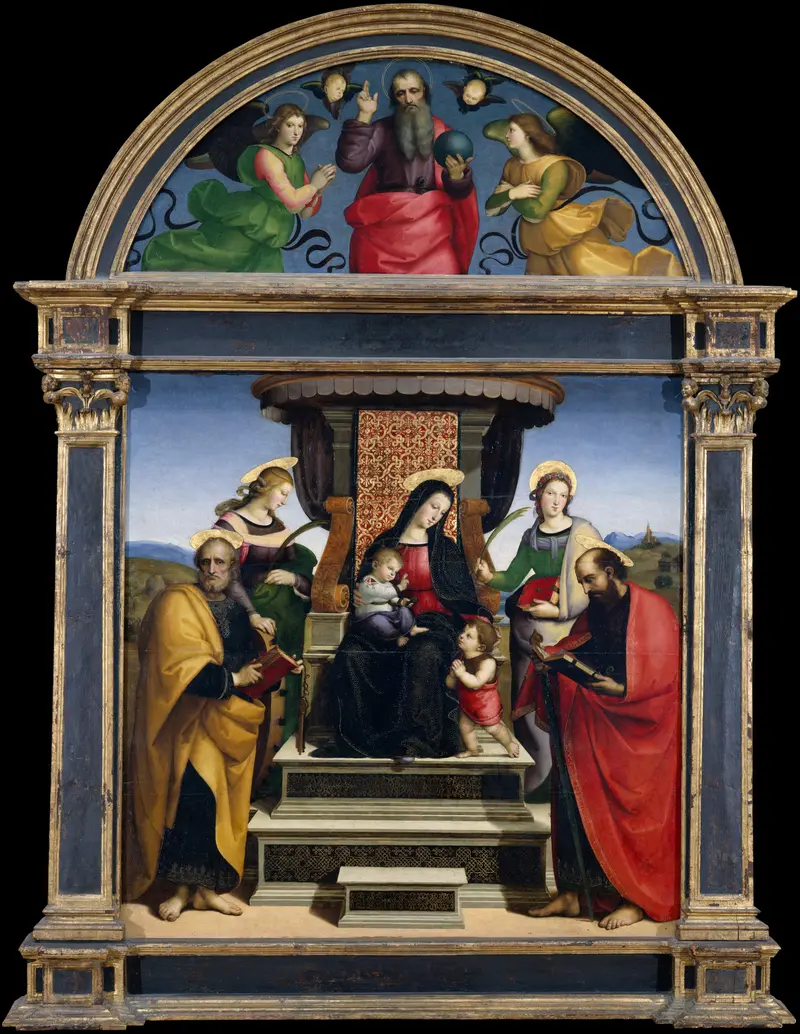
Madonna and Child Enthroned with Saints
Raphael





