
Saint Francis of Assisi with Angels — History & Facts
In 1477, just a few years after the death of Saint Francis of Assisi was officially canonized in 1228, Sandro Botticelli painted his vision of the saint surrounded by angels—a rare subject for the Florentine master, who is far better known for his mythological scenes. What makes this painting especially fascinating is that it stands almost alone in Botticelli’s oeuvre as a devotional image focused on Francis, a figure more commonly depicted by Sienese or Umbrian painters. The work may have been commissioned by a Franciscan patron eager to promote the saint’s ideals of humility and poverty during a period of renewed interest in mendicant orders in Florence. The scene Botticelli chose is one of quiet revelation: Francis kneels in prayer, his gaze lifted heavenward, as a host of angels hovers protectively around him.
The saint’s rough habit, cinched with the knotted cord of his order, marks his renunciation of worldly goods, while the stigmata—wounds mirroring those of Christ—are subtly visible on his hands. The angels, rendered with Botticelli’s characteristic linear grace, seem both tender and vigilant, their gestures drawing the viewer’s eye toward Francis’s serene face. Unlike the dramatic, almost ecstatic visions painted by Giovanni Bellini in his own Saint Francis in the Desert, Botticelli’s approach is intimate and contemplative, emphasizing the saint’s inner peace rather than outward miracle. The provenance of Saint Francis of Assisi with Angels is not fully documented, but its style and devotional character suggest it was intended for private worship, likely in a Florentine home or small chapel.
Over the centuries, the painting’s attribution has shifted; some early catalogues listed it as a work from Botticelli’s workshop, but consensus now favors the master’s own hand, especially in the delicate treatment of the angels. Today, the painting is recognized as an important example of Botticelli’s religious output, offering a glimpse into the spiritual climate of late 15th-century Florence and the artist’s own sensitivity to themes of humility and divine grace.
More Artworks by Sandro Botticelli
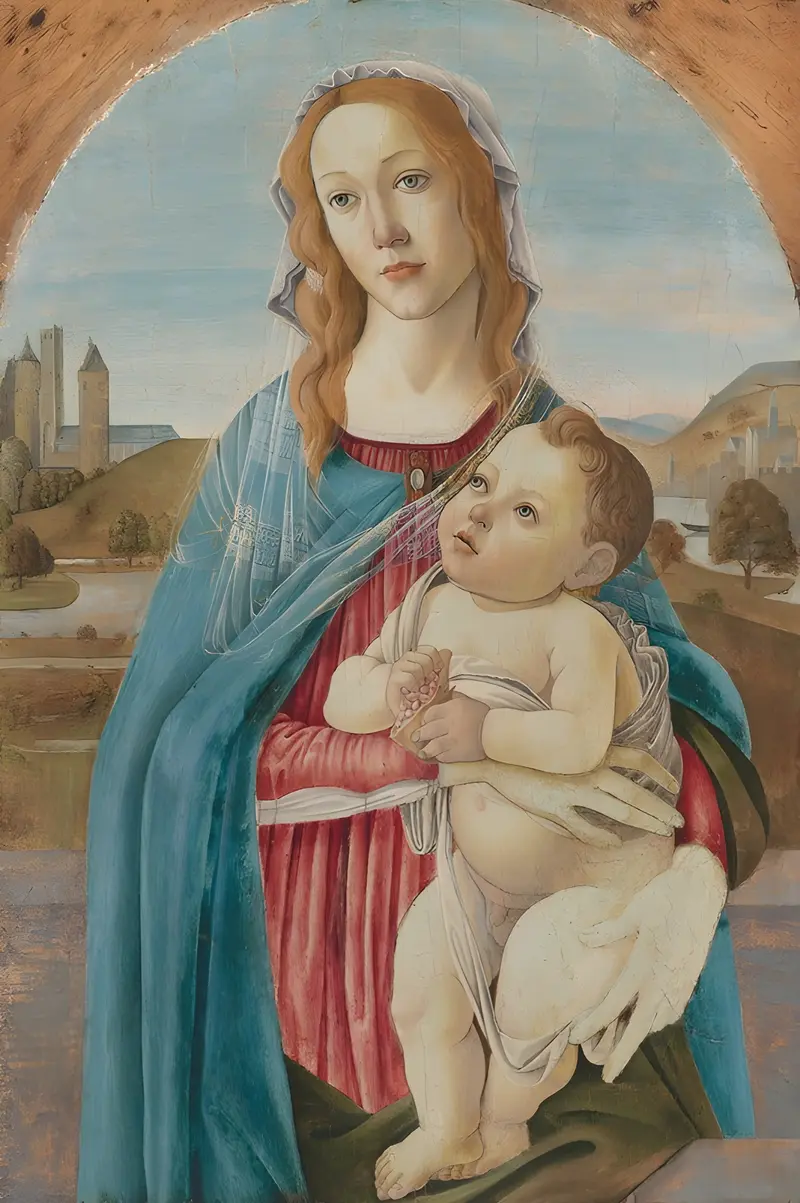
Virgin and Child
Sandro Botticelli
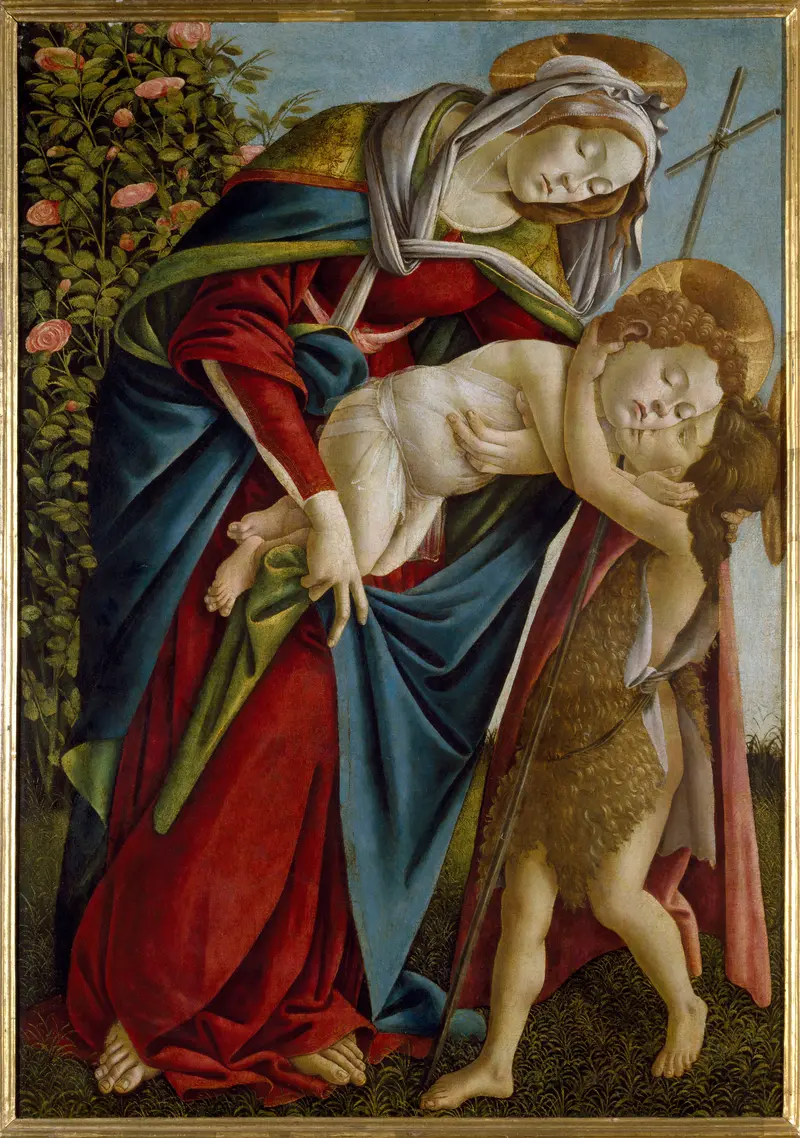
Madonna and Child and the Young St John the Baptist
Sandro Botticelli
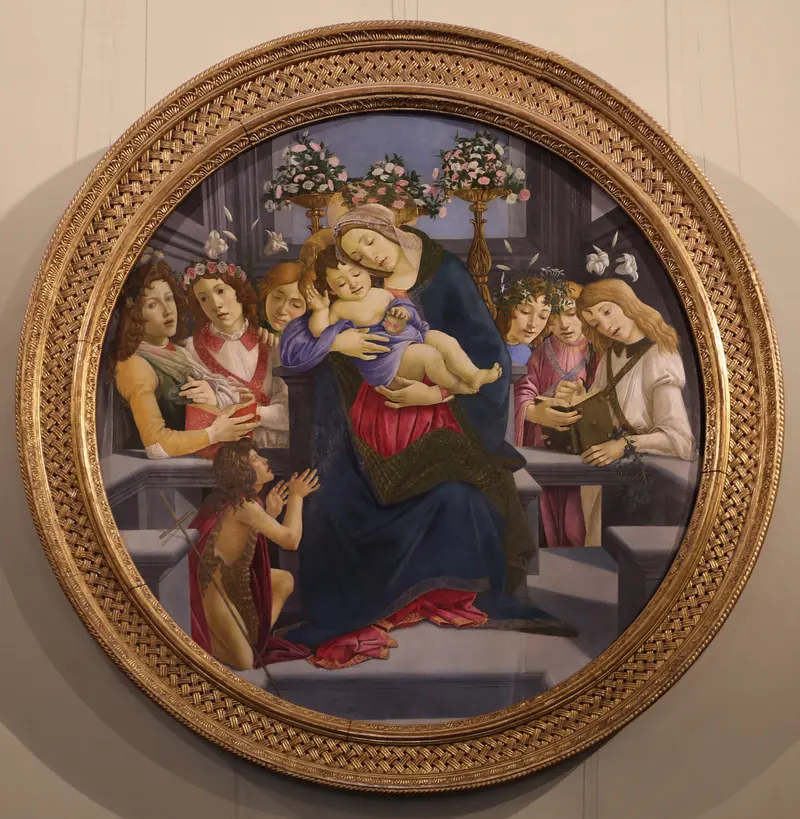
Madonna and Child with six angels and Saint John the Baptist as Child
Sandro Botticelli
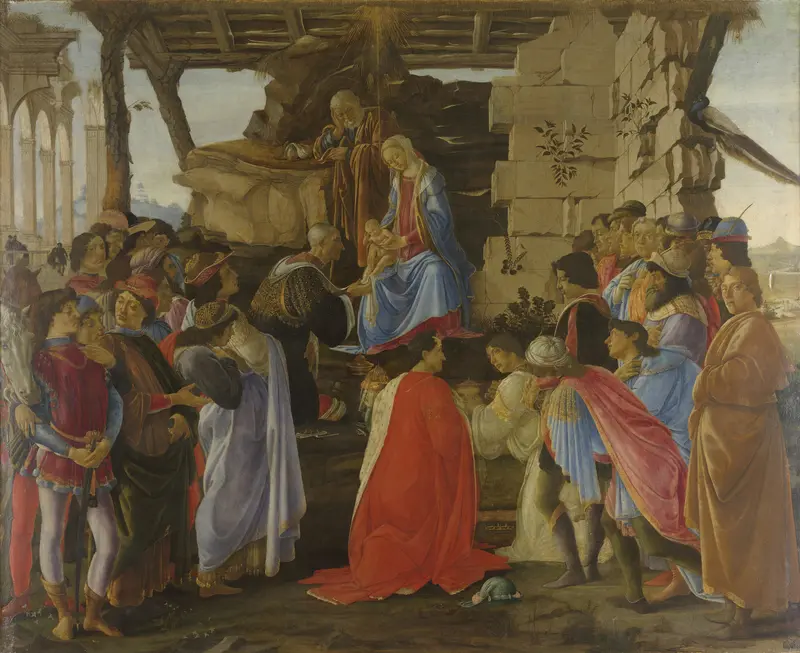
Adoration of the Magi
Sandro Botticelli

Virgin and Child with the Young Saint John the Baptist
Sandro Botticelli
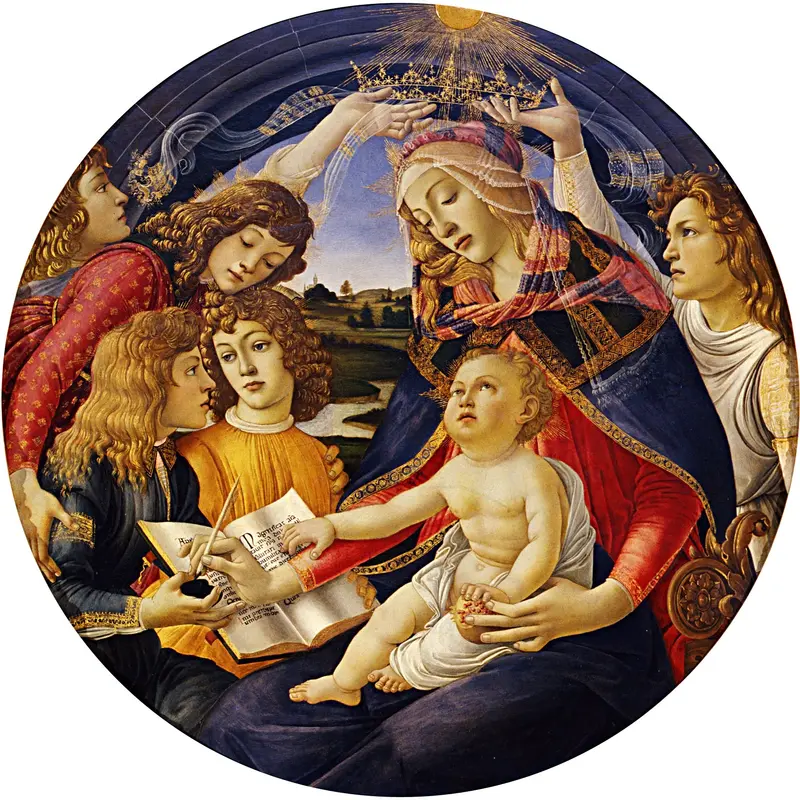
Madonna of the Magnificat
Sandro Botticelli
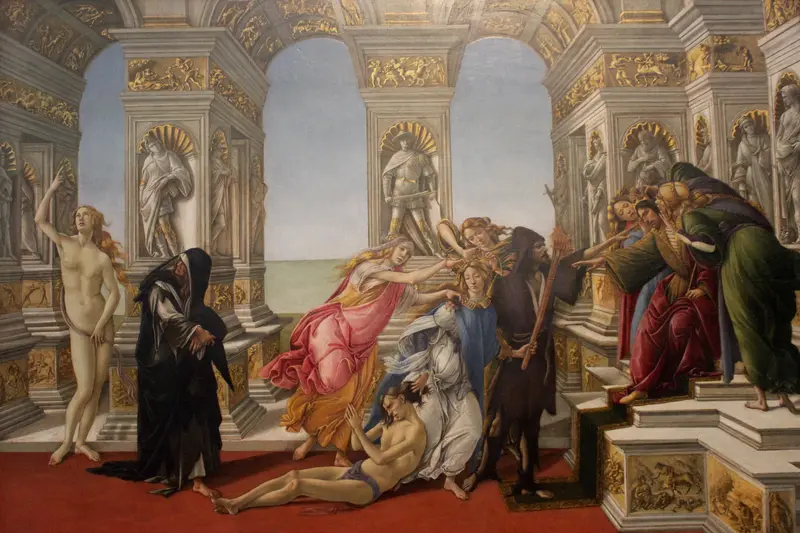
Calumny of Apelles
Sandro Botticelli
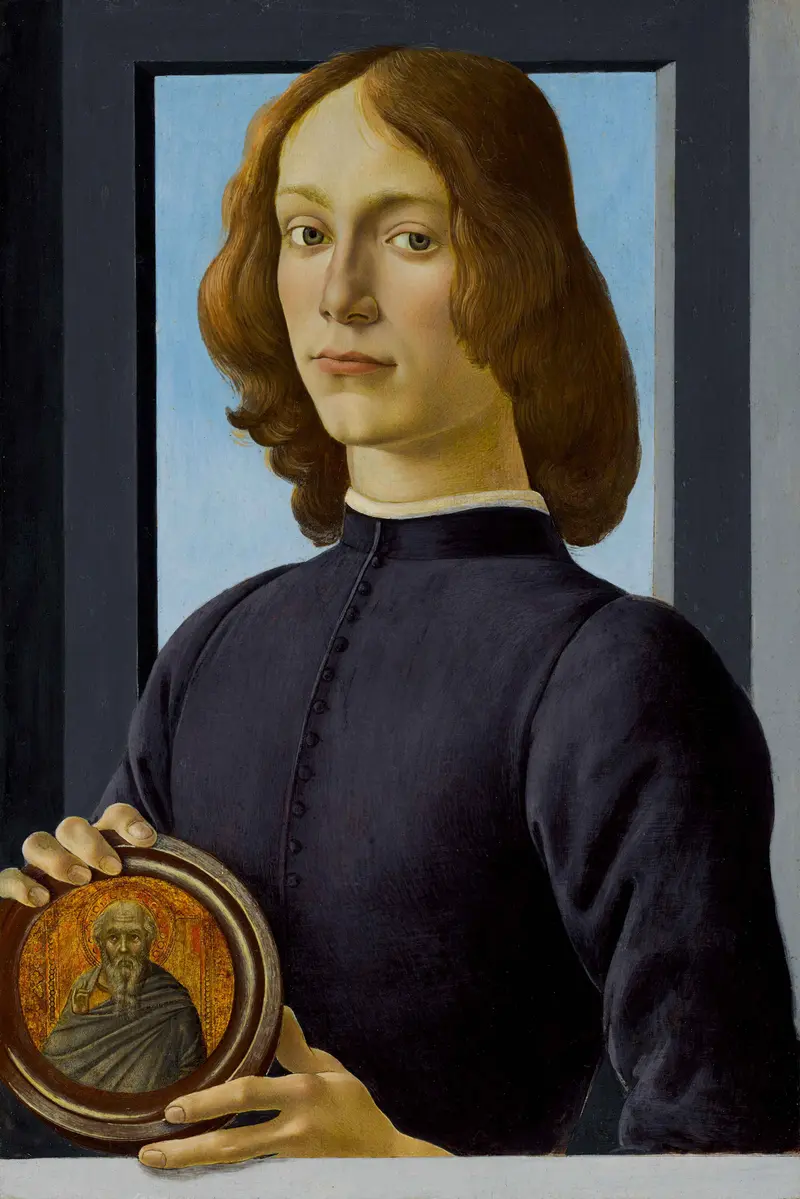
Portrait of a young man holding a roundel
Sandro Botticelli

The Trinity with Saint Mary Magdalene and Saint John the Baptist, the Archangel Raphael and Tobias
Sandro Botticelli
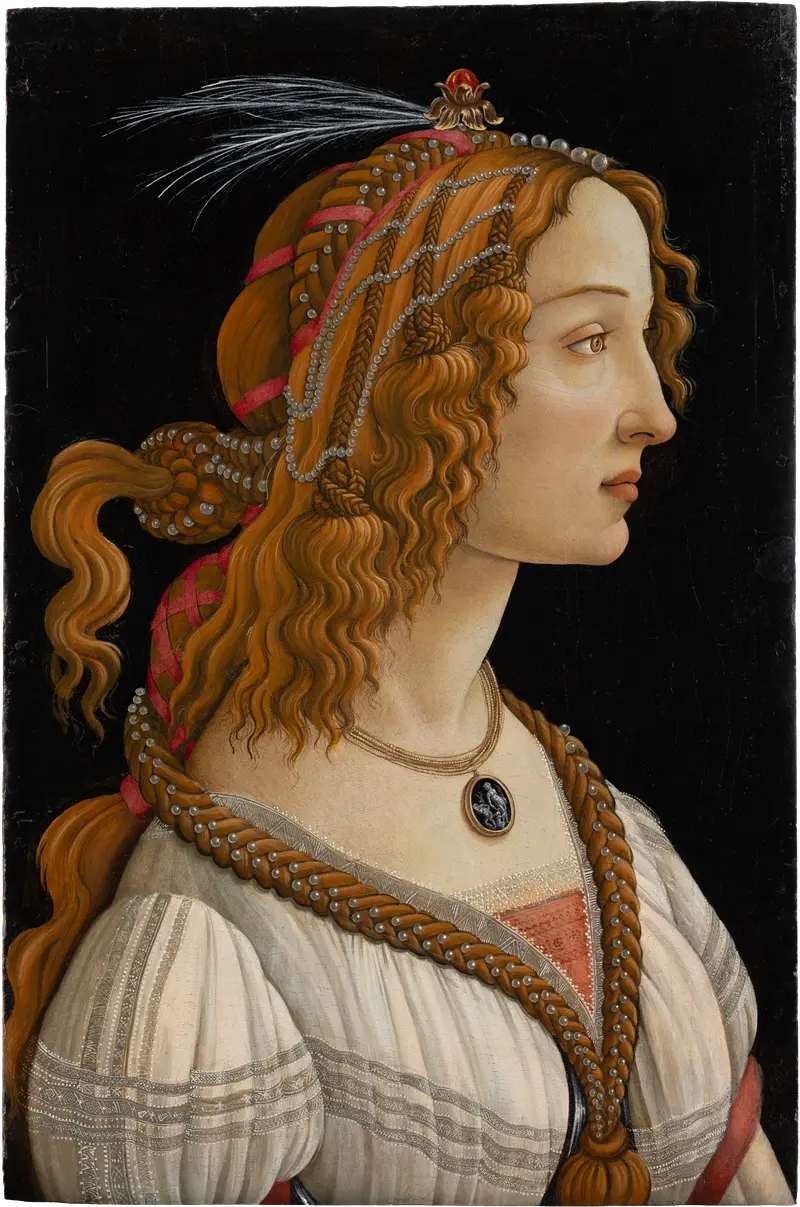
Idealized Portrait of a Lady (Portrait of Simonetta Vespucci as Nymph)
Sandro Botticelli





