
Satan calling up his legions — History & Facts
When Satan calling up his legions was first exhibited in 1809, William Blake himself described it as one of his “Grand Historical Pictures,” intended to rival the great works of the Old Masters. Blake’s ambition was bold: he hung this painting in his own private exhibition in Soho, hoping to convince the public and critics alike that his visionary art could stand alongside the likes of Michelangelo and Raphael. Yet the show was almost entirely ignored, and Blake lamented that his “fancies” were “not understood.” The painting remains one of the few surviving large-scale works from this ill-fated exhibition. The scene is drawn from Paradise Lost, John Milton’s epic poem, at the moment when Satan, newly cast into the abyss, summons his fallen angels.
Blake captures the instant Satan rises, his arm outstretched in command, his muscular body illuminated in a shaft of light that cuts through the gloom of Hell. Around him, the legions stir, their forms writhing in the darkness, some still chained or crouched in despair. The composition recalls Michelangelo’s figures in the Sistine Chapel, especially in the heroic anatomy and dramatic gestures, but Blake’s vision is more fevered and hallucinatory, the flames and shadows suggesting a world born from imagination rather than observation.
The golden light on Satan’s torso marks him as both fallen and still angelic, a complex figure of pride and ruin. The original medium of Satan calling up his legions is uncertain—scholars debate whether it was tempera or oil—but its monumental scale and ambition are clear. After Blake’s 1809 exhibition failed to attract buyers, the painting vanished from public view for decades, passing through private hands until its rediscovery in the twentieth century. Today, it is held in the collection of the Victoria and Albert Museum, a rare survivor from Blake’s attempt to reinvent British painting.
The work stands as a testament to Blake’s isolation and determination: an artist largely unrecognized in his lifetime, yet now seen as a visionary who bridged poetry, painting, and prophecy.
More Artworks by William Blake
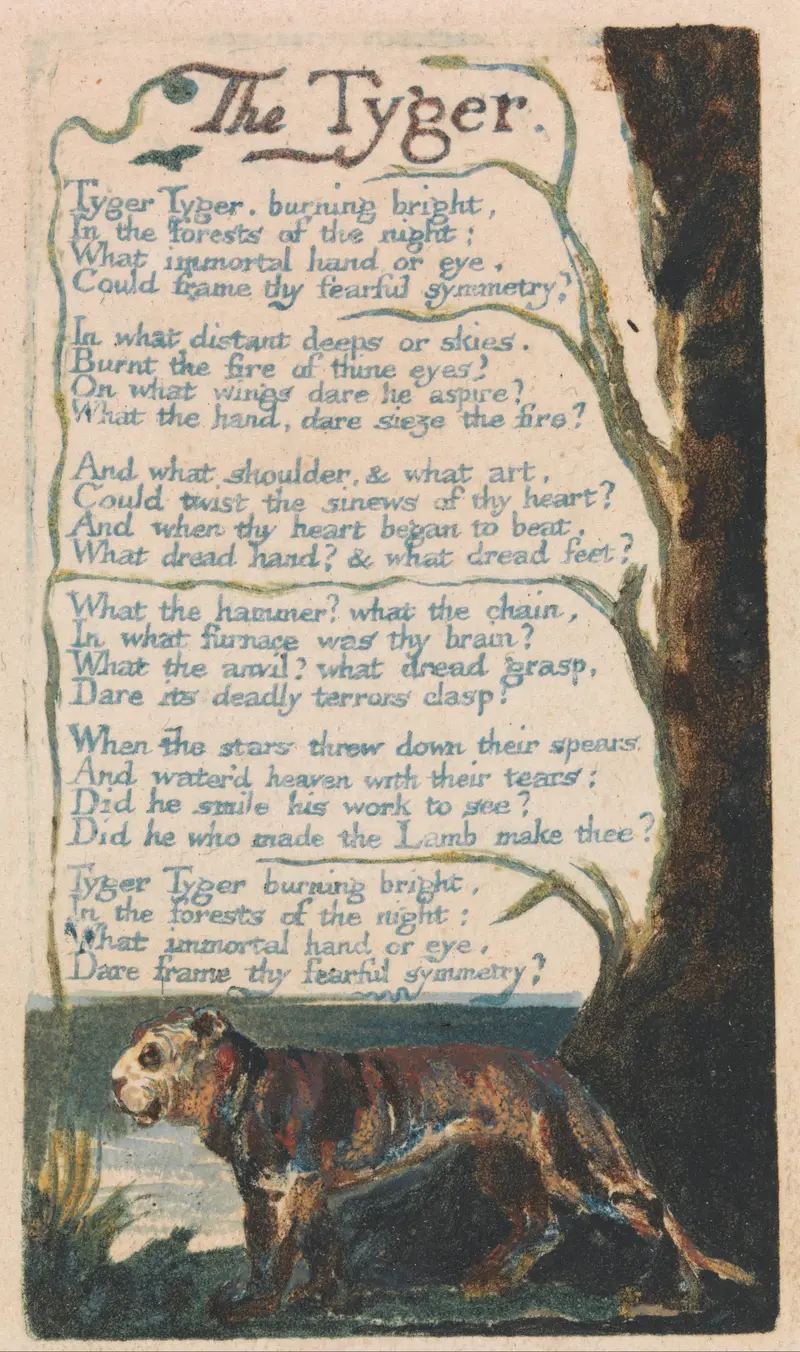
The Tyger
William Blake

Christ Blessing
William Blake
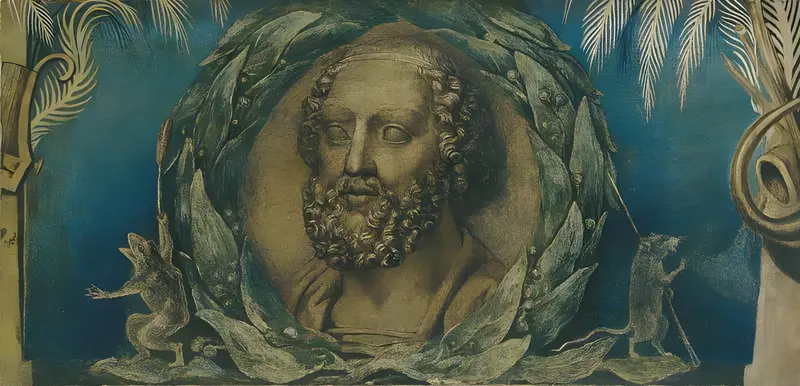
Homer
William Blake
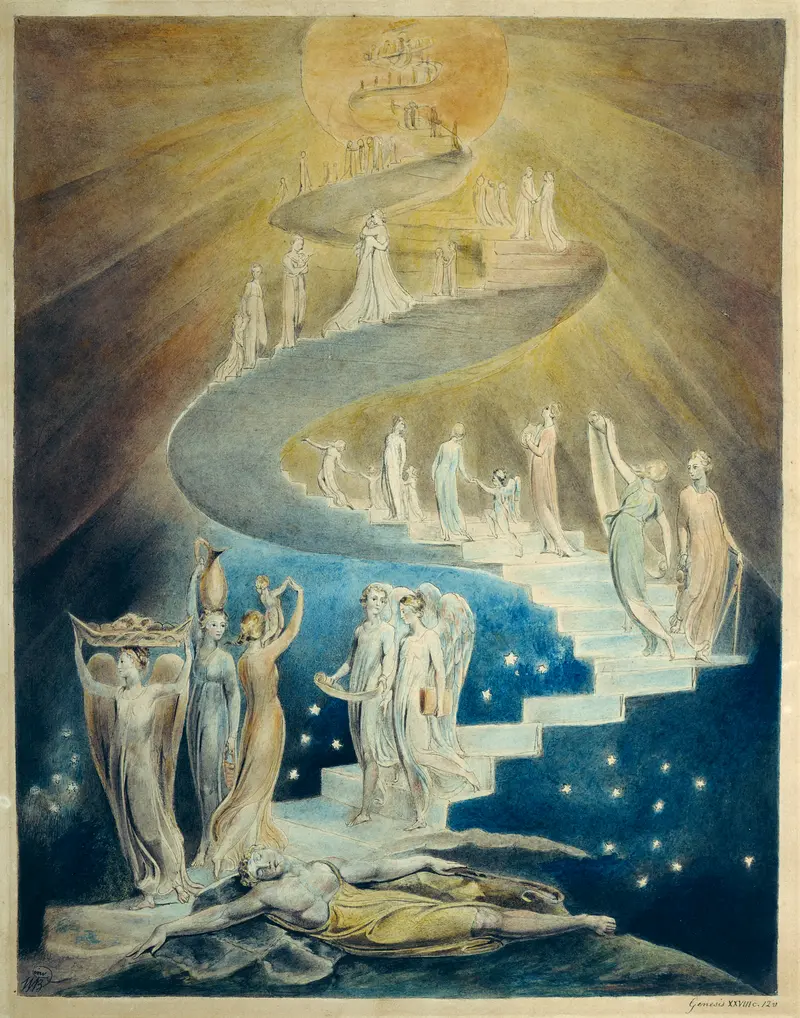
Jacob's Ladder
William Blake
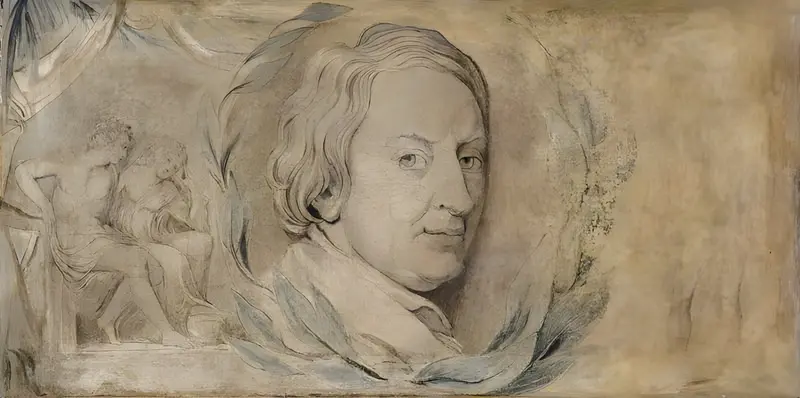
John Dryden (1631–1700)
William Blake
Landscape near Felpham
William Blake
Sacrifice of Job
William Blake
Christ's Entry into Jerusalem
William Blake
The Ancient of Days
William Blake
Adam Naming the Beasts
William Blake





