
The Canterbury Pilgrims — History & Facts
When William Blake unveiled The Canterbury Pilgrims in 1808, he boldly challenged the authority of Thomas Stothard, who had already created a popular version of the same subject. Blake’s public dispute with Stothard over the originality of the composition became a minor scandal in London’s art world, with Blake insisting that his vision was entirely his own. This rivalry was so intense that Blake staged his own exhibition to showcase the work, hoping to outshine his rival and assert his unique interpretation of Geoffrey Chaucer’s medieval procession. Blake’s image captures the moment when Chaucer’s diverse band of pilgrims sets out from the Tabard Inn, each figure individualized and arranged in a long, winding procession.
The Knight rides at the head, upright and dignified, while the bawdy Wife of Bath, the scholarly Clerk, and the humble Parson follow, each rendered with distinct gestures and costumes that signal their character and social standing. Blake’s linework is sharp and expressive, emphasizing spiritual and psychological qualities over physical realism. Unlike Stothard’s more polished, harmonious group, Blake’s pilgrims seem almost visionary—each face a mask of inner life, each body slightly exaggerated, as if drawn from a dream. The original medium of The Canterbury Pilgrims remains uncertain; some sources describe it as a tempera painting, others as a watercolor or colored engraving.
The work was not a commission, but a labor of personal conviction, and Blake’s exhibition failed to attract buyers or critical acclaim during his lifetime. Today, the piece is recognized as a testament to Blake’s fiercely independent spirit and his lifelong fascination with English literature. Surviving versions and preparatory drawings reside in several public collections, including the British Museum, though the fate of the original painting is unclear.
The work stands as a vivid example of Blake’s singular approach to narrative art at the height of the Romantic movement.
More Artworks by William Blake
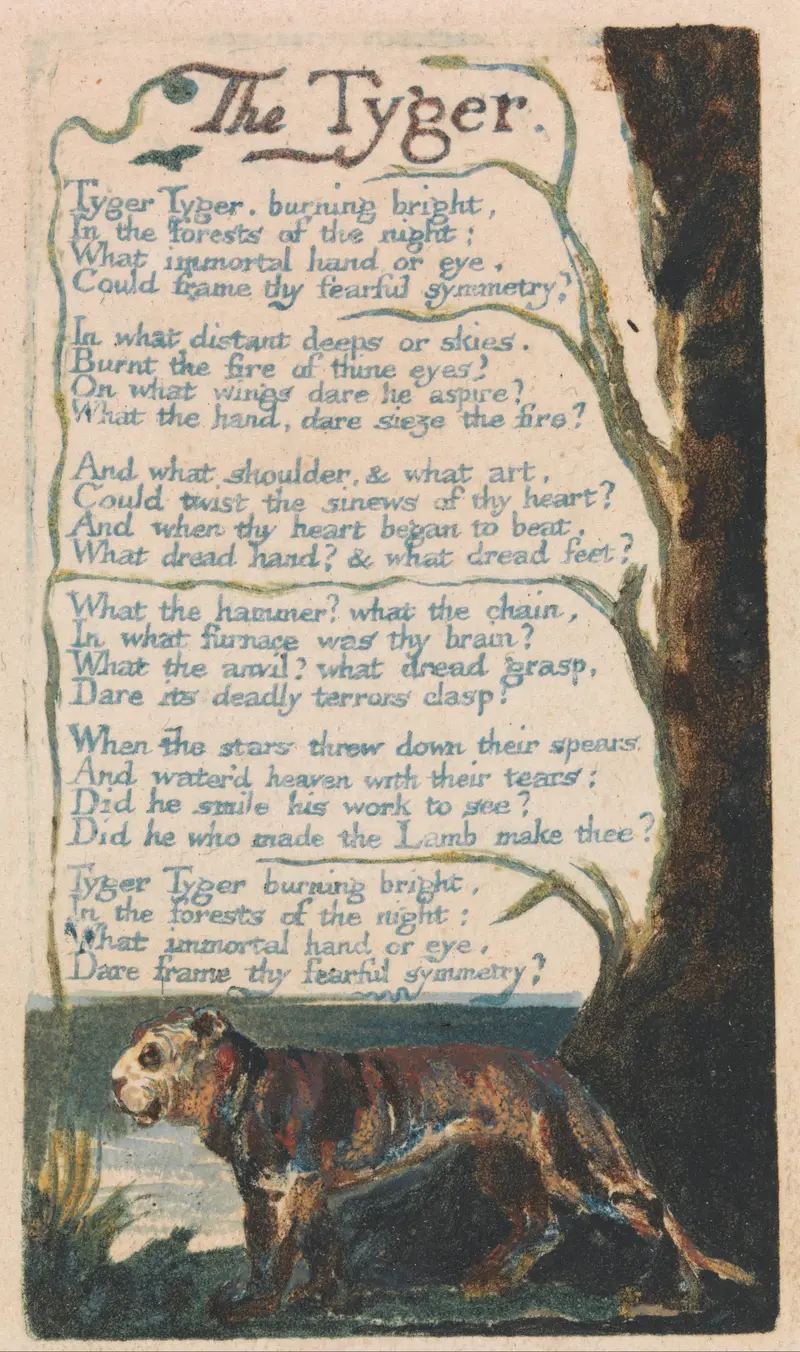
The Tyger
William Blake

Christ Blessing
William Blake
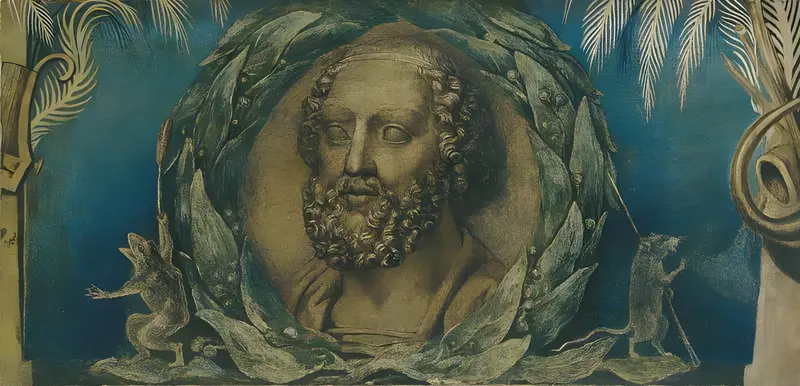
Homer
William Blake
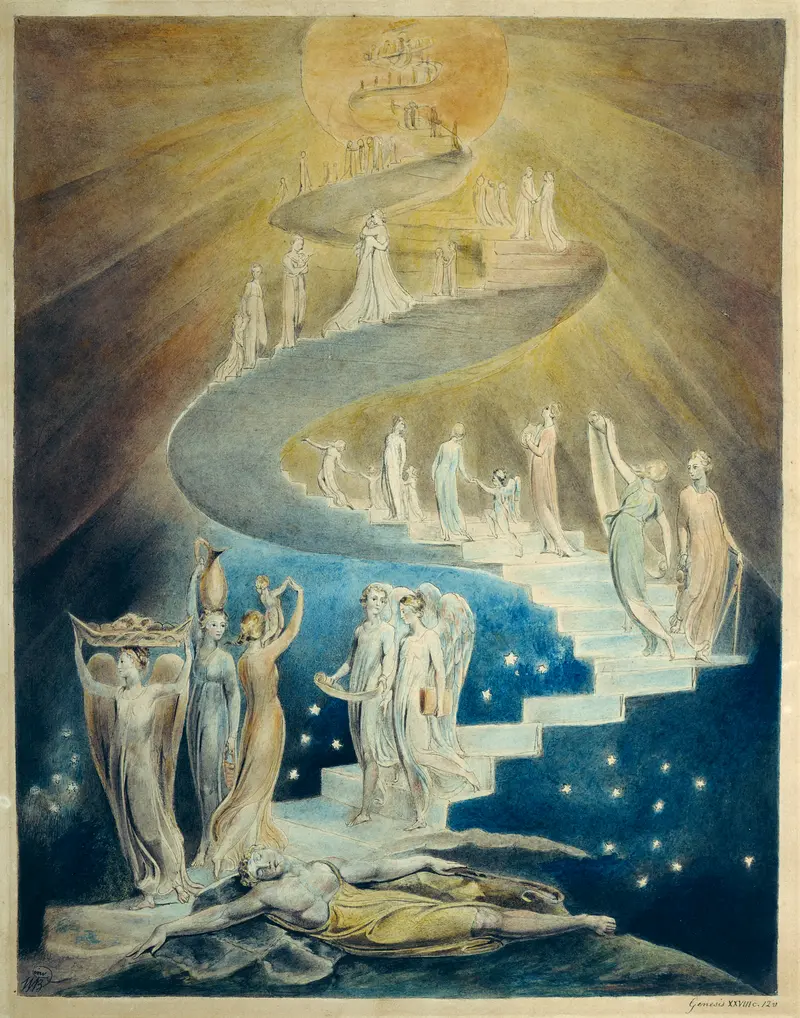
Jacob's Ladder
William Blake
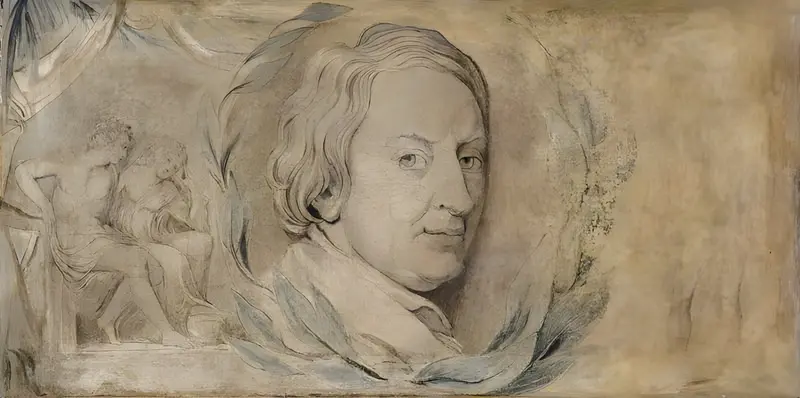
John Dryden (1631–1700)
William Blake
Landscape near Felpham
William Blake
Sacrifice of Job
William Blake
Christ's Entry into Jerusalem
William Blake
The Ancient of Days
William Blake
Adam Naming the Beasts
William Blake





