
The Channel at Gravelines, Petit-Fort-Philippe — History & Facts
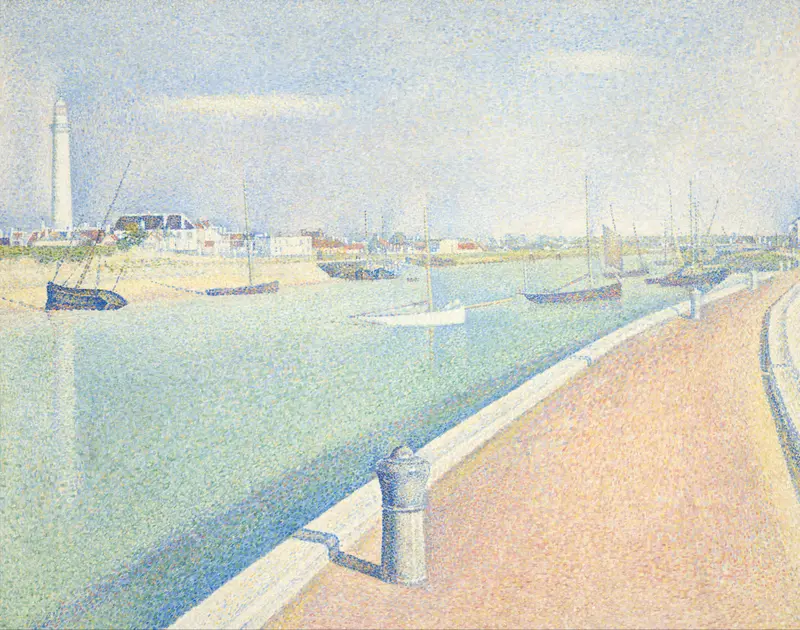
When Georges Seurat set up his easel at Gravelines in the summer of 1890, he was crafting what would become his final completed painting before his untimely death at just 31. The artist, already renowned for inventing the Pointillist technique, was at the height of his powers, yet The Channel at Gravelines, Petit-Fort-Philippe would be among the last works he would ever sign. This quiet coastal scene, painted en plein air, marks the end of a short but revolutionary career that forever changed the course of modern art. Seurat chose a tranquil view along the northern French coast, where the channel meets the sea at Petit-Fort-Philippe.
The composition is stripped of narrative drama: boats rest at anchor, the water lies still, and the horizon is a gentle band between earth and sky. Yet every element is carefully orchestrated — the rhythmic repetition of hulls, the luminous dots of color that shimmer in the light, the almost mathematical order of forms. Unlike the bustling scenes of Impressionism, Seurat’s vision is meditative, inviting the viewer to linger on the play of color and the structure of space.
Where Monet’s Port of Le Havre dissolves into atmosphere, Seurat’s channel is a place of clarity and calm. The painting’s journey since 1890 is less documented than some of Seurat’s other major works, but it stands as a testament to his late style: serene, balanced, and deeply experimental. After Seurat’s death, his canvases were championed by fellow artists and collectors who recognized the radical nature of his approach. Today, The Channel at Gravelines, Petit-Fort-Philippe is held by the National Gallery in London, where it is seen as a quiet masterpiece of Post-Impressionism, bridging the gap between the fleeting impressions of the 19th century and the new art of the 20th.
More Artworks by Georges Seurat
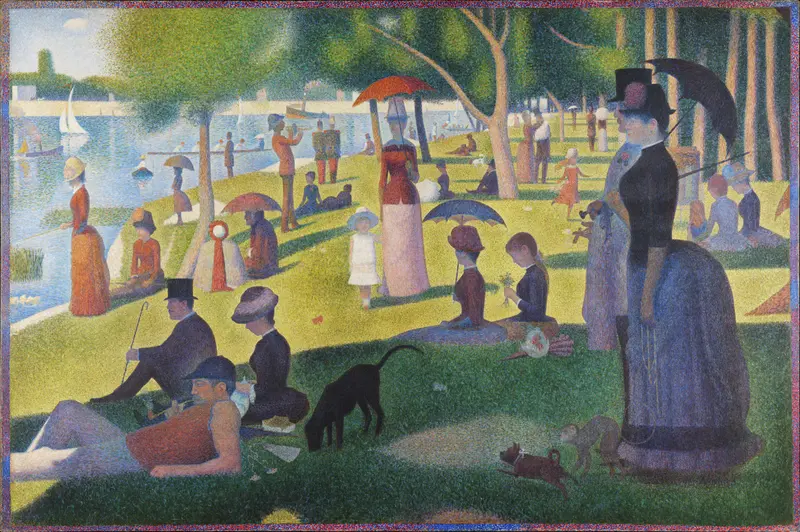
A Sunday Afternoon on the Island of La Grande Jatte
Georges Seurat
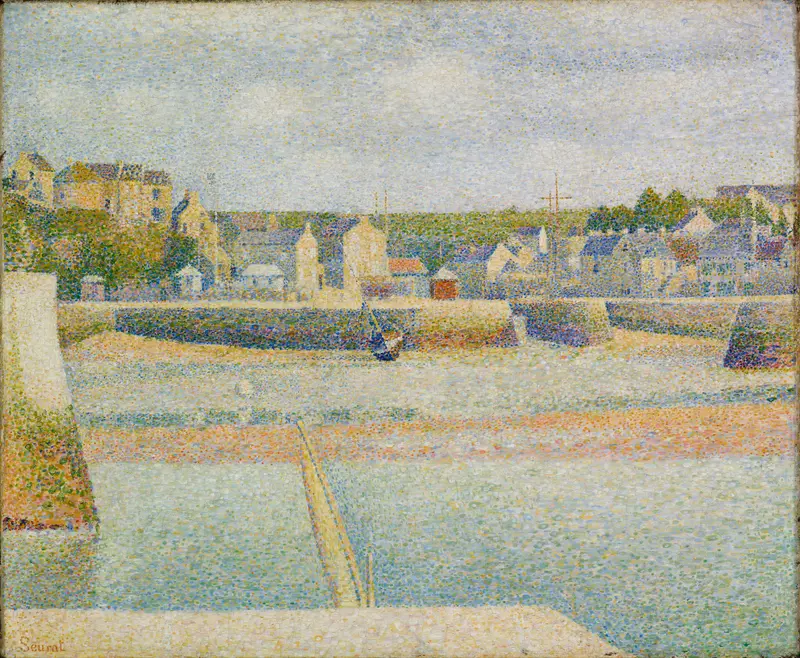
Port-en-Bessin, The Outer Harbor (Low Tide)
Georges Seurat
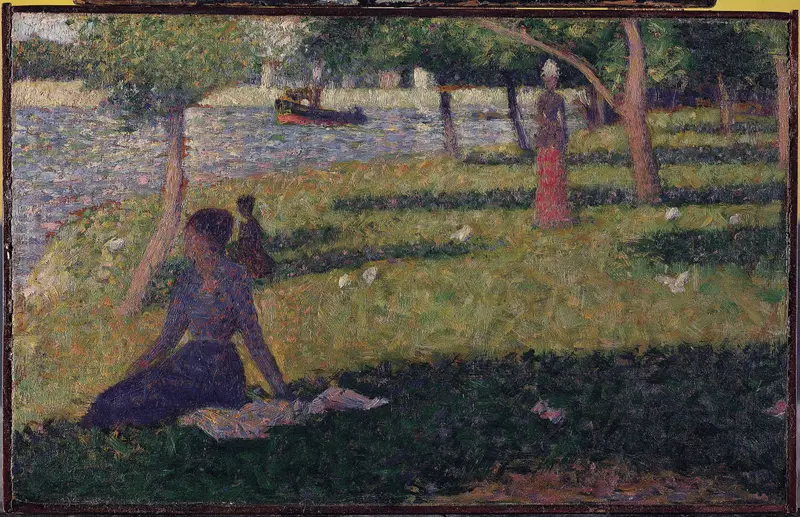
Étude pour ‘La Grande Jatte’ (Study for ‘La Grande Jatte’)
Georges Seurat
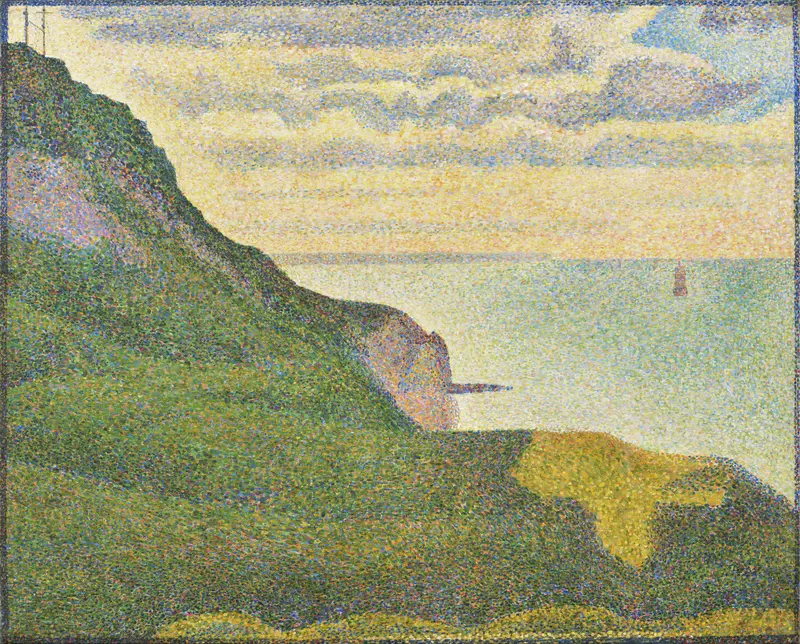
Seascape at Port-en-Bessin,Normandy
Georges Seurat
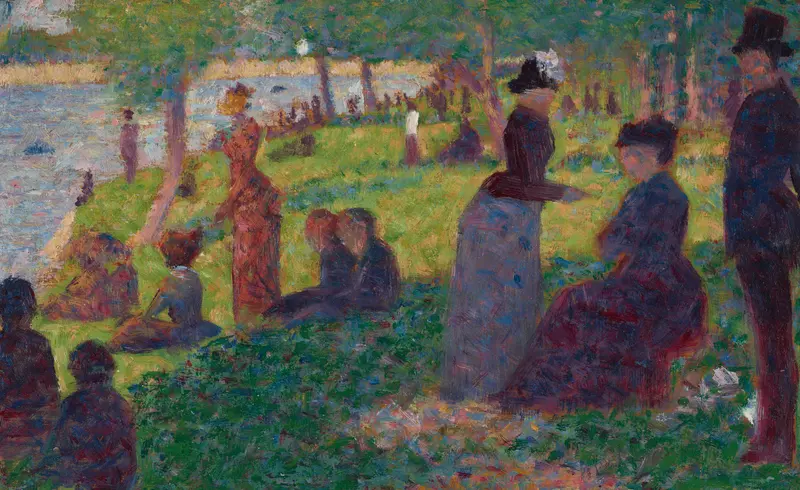
Oil Sketch for "A Sunday on La Grande Jatte — 1884"
Georges Seurat
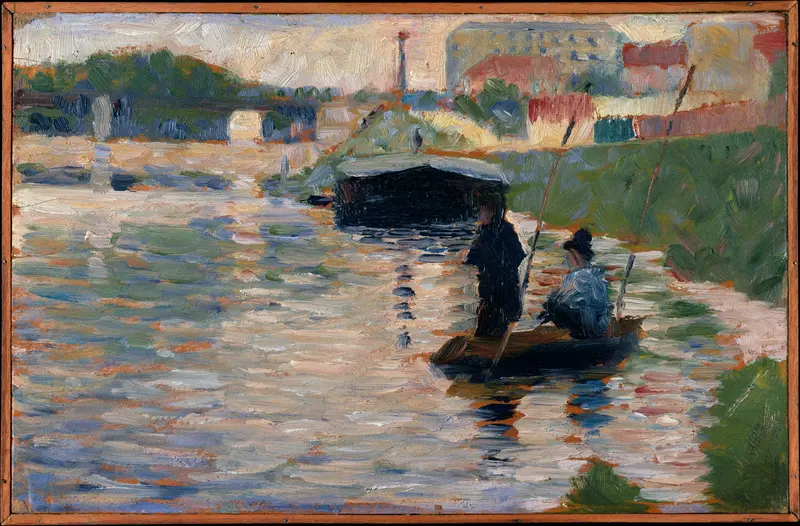
View of the Seine
Georges Seurat
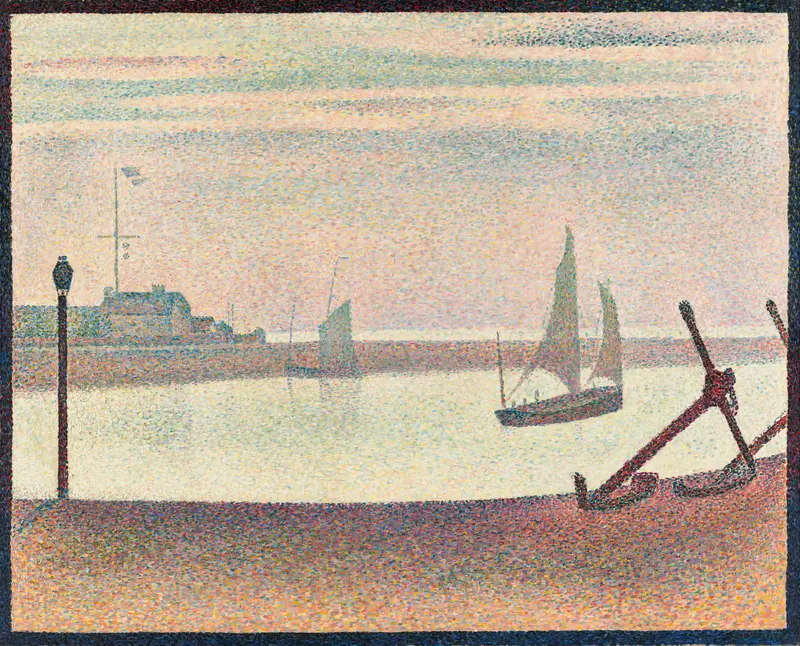
The Channel at Gravelines, Evening
Georges Seurat
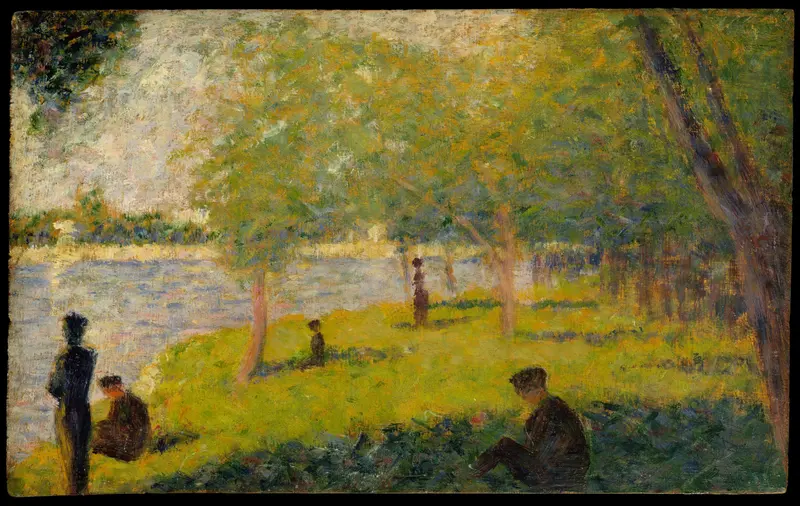
Study for ‘A Sunday on La Grande Jatte’
Georges Seurat
Study for A Sunday on La Grande Jatte
Georges Seurat
The Channel of Gravelines, Petit Fort Philippe
Georges Seurat





