
The Declaration of Love — History & Facts
The first thing to catch the eye in The Declaration of Love is the shimmering play between intimacy and performance. Light pools on the woman's elaborate gown, its silvery-blue pattern a spectacle in itself, while her suitor leans in, his earnestness almost theatrical against the lush pink backdrop. Every detail is a calculated gesture: the tilt of her head, the faint smile, the hand she allows him to clasp, all choreographed to draw us into this private—yet curiously public—moment.
Even the little dog at their feet seems to sense the tension, its body angled between the pair as if to mediate the exchange. Above them, a painted mythological scene echoes their drama, blurring the line between real feeling and the roles they play. This is the world of early eighteenth-century France, when the rococo style flourished in salons and boudoirs, and painters like Jean-François de Troy specialized in scenes of courtship, wit, and intrigue. Around 1724, when this work was created, such paintings were prized by the elite for their elegance and their knowing humor, often destined for private rooms where their playful narratives could be savored up close.
The Declaration of Love now resides in the collection of the Metropolitan Museum of Art, a reminder of an age when love was both a game and a spectacle, and when art delighted in showing us the rules. Look again at the woman's sidelong glance—does she accept, or does she tease? The answer is left, deliciously, to us.
More Artworks by Jean-François de Troy
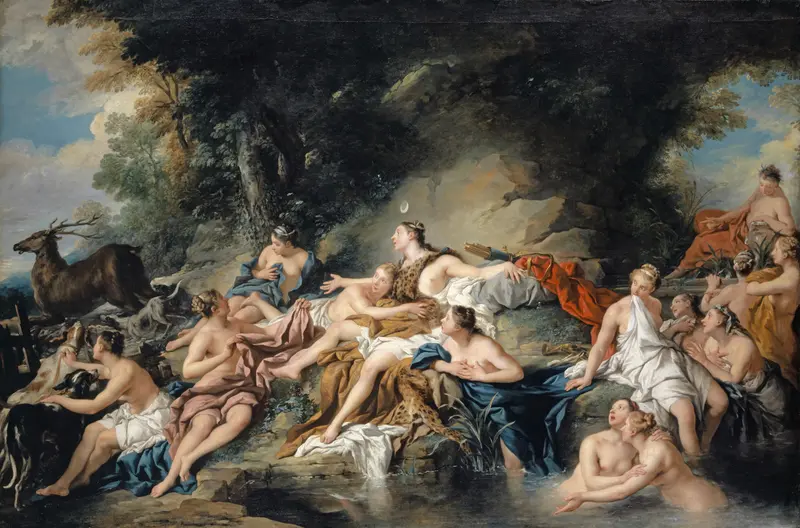
Diana and Actaeon
Jean-François de Troy
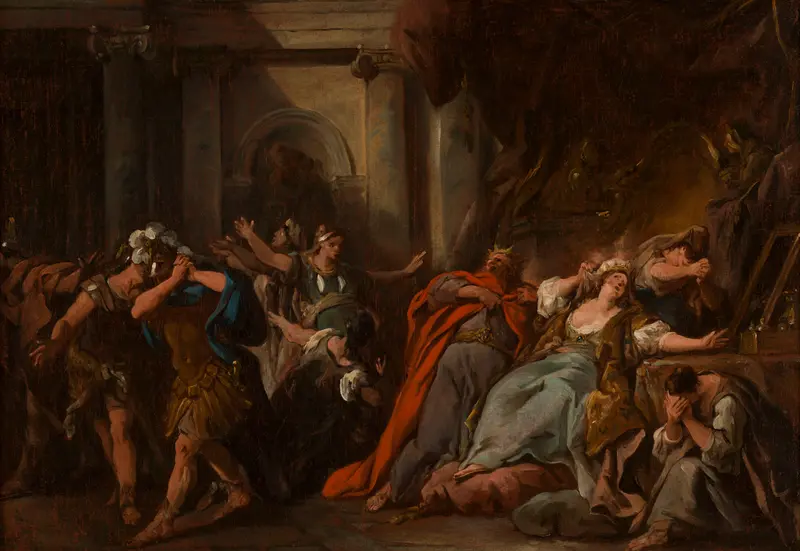
Créüse consumée par la robe empoisonnée
Jean-François de Troy
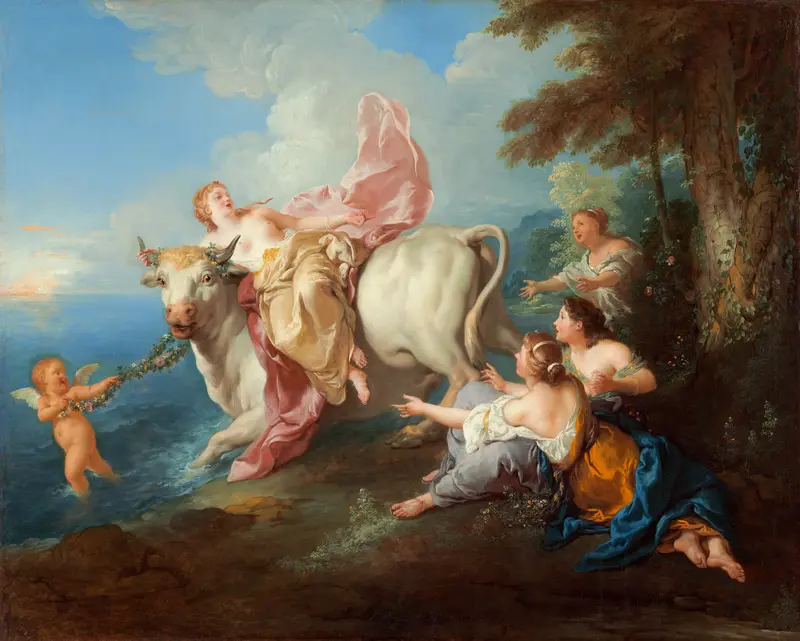
The Abduction of Europa
Jean-François de Troy
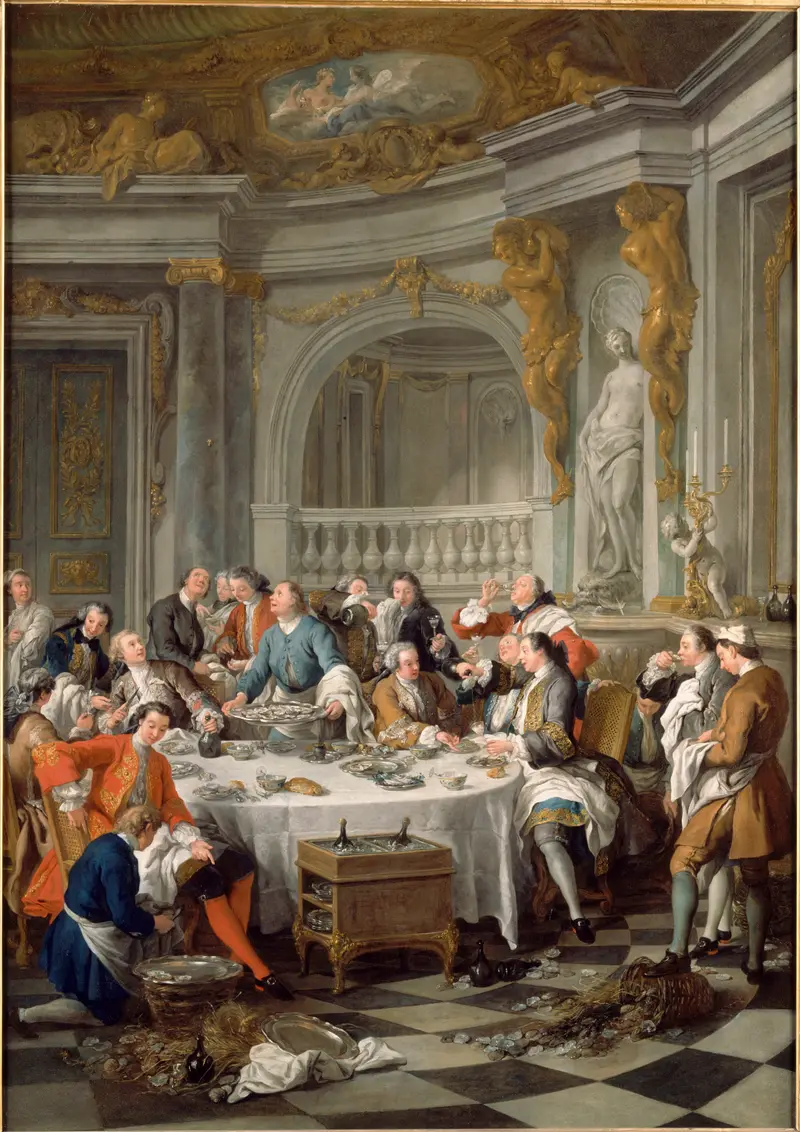
The Lunch of Oysters
Jean-François de Troy
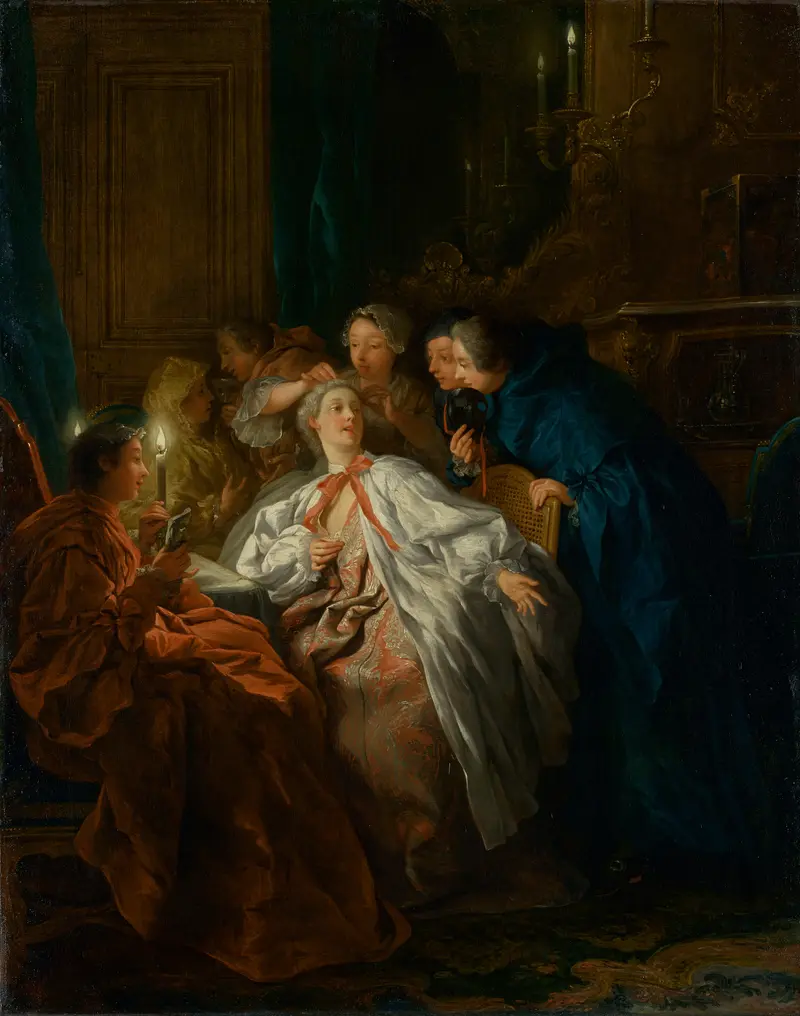
Before the Ball
Jean-François de Troy
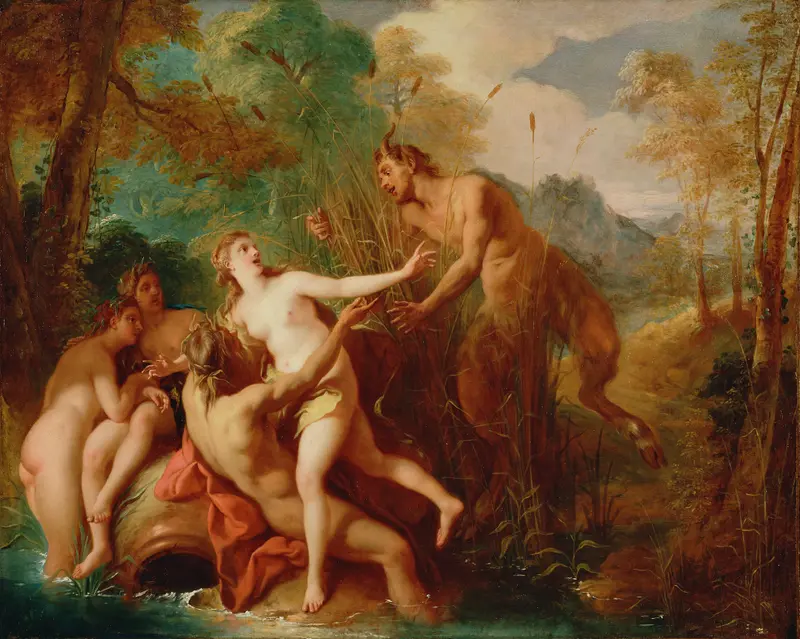
Pan and Syrinx
Jean-François de Troy

Le Combat des soldats nés des dents du serpent
Jean-François de Troy
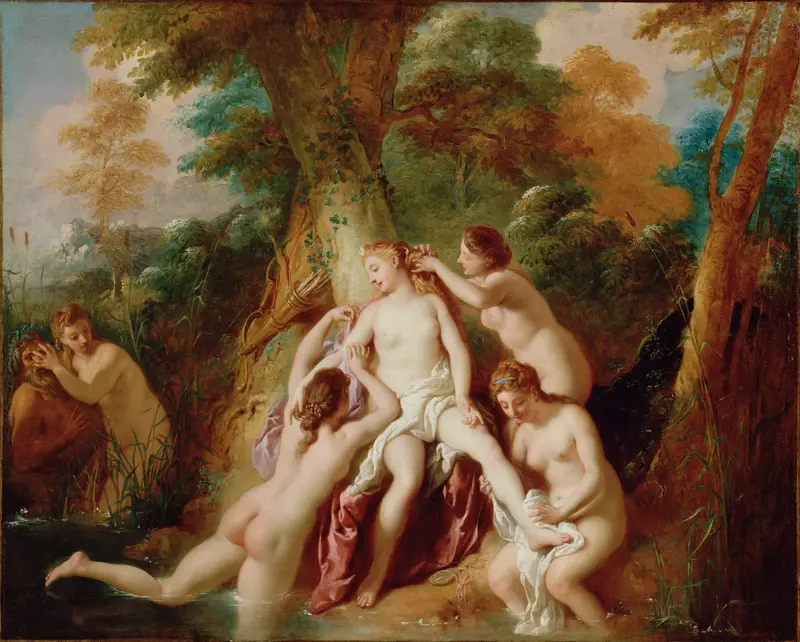
Diana and Her Nymphs Bathing
Jean-François de Troy
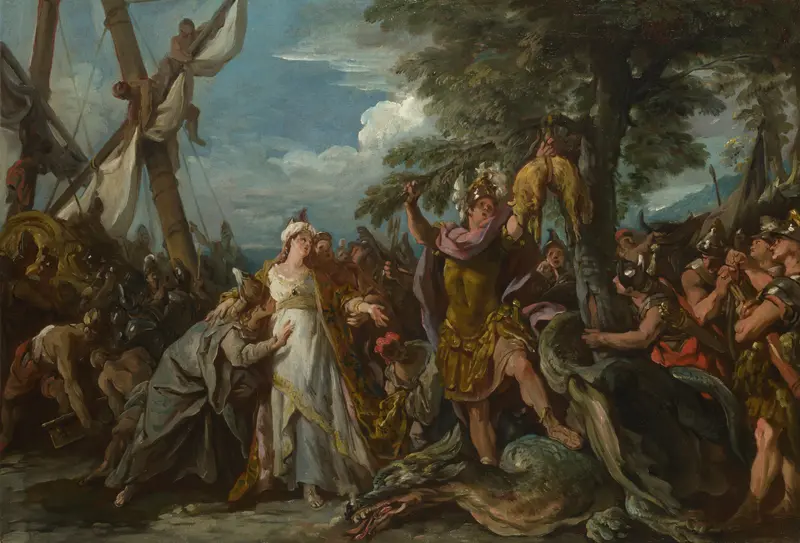
The Capture of the Golden Fleece
Jean-François de Troy
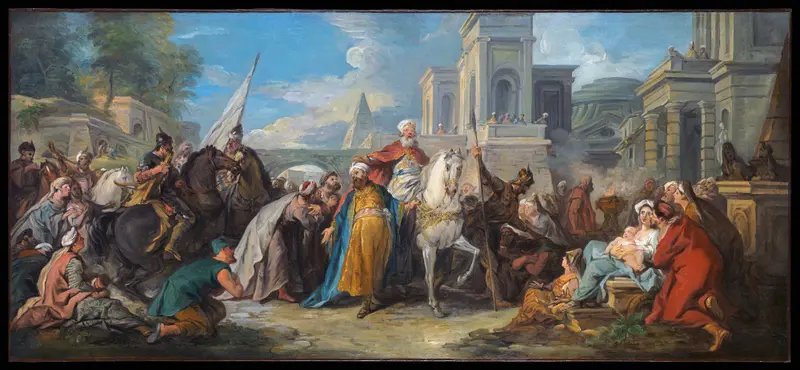
The Triumph of Mordecai
Jean-François de Troy
More Genre Scene Art

Banquet of the Officers of the St George Civic Guard
Frans Hals

Rembrandt and Saskia in the Scene of the Prodigal Son
Rembrandt van Rijn

Bal du moulin de la Galette
Pierre-Auguste Renoir

Quadrille at the Moulin Rouge
Henri de Toulouse-Lautrec

A Burial at Ornans
Gustave Courbet

When Will You Marry?
Paul Gauguin