
The Elf Hill (Andersen) — History & Facts
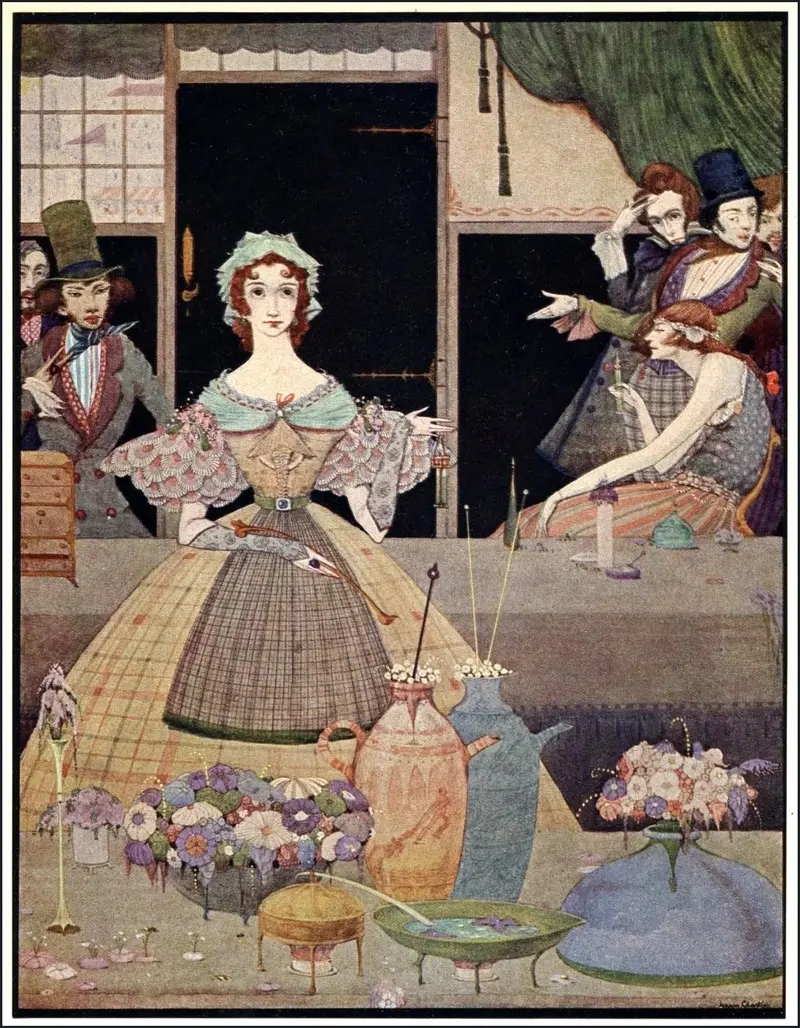
The first thing to catch the eye is the swirl of color and movement, as if the entire scene is caught mid-spin in a world where gravity and daylight have no hold. Three figures, their hair a vivid flame against the cool blues and greens, hover above a mound of fantastical foliage. Their arms stretch wide, holding delicate shawls that seem spun from mist and moonlight itself—each thread shimmering with impossible light.
The central figure, robed in green and adorned with intricate patterns, commands the scene with a serene, almost regal poise, while the two flanking dancers mirror each other in pose and costume, their gowns alive with the suggestion of moths and flowers. The background, a night sky scattered with stars and cosmic orbs, frames the dancers in a bubble of enchantment, suggesting that this is a world apart, a moment suspended between dream and waking. Created for Fairy Tales by Hans Christian Andersen in 1916, The Elf Hill (Andersen) by Harry Clarke belongs to the golden age of illustrated books, when artists transformed familiar stories into visual feasts for both children and adults. Clarke, an Irish artist celebrated for his stained glass and book illustration, brought the sensibilities of Art Nouveau and Symbolism into his work—every pattern, every color choice, every elongated limb a nod to a world where art and fantasy intertwine.
The image’s intricate linework and jewel-like palette are hallmarks of this era, when publishers sought to enchant readers with books as beautiful as the tales they contained. History has kept few traces of the journey of this particular illustration, but its luminous strangeness invites us to linger, searching for the secrets hidden in every shimmering detail.
More Artworks by Harry Clarke
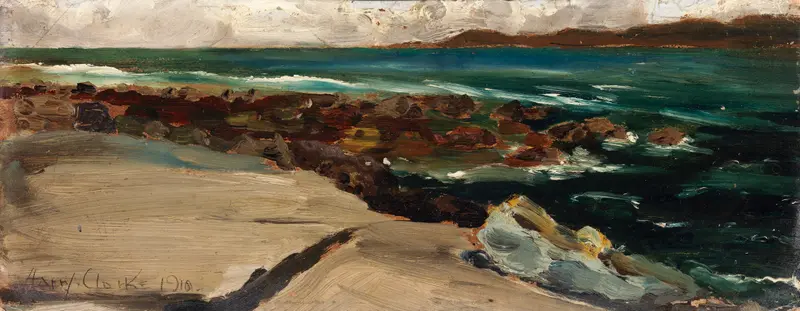
Landscape by the Coast
Harry Clarke
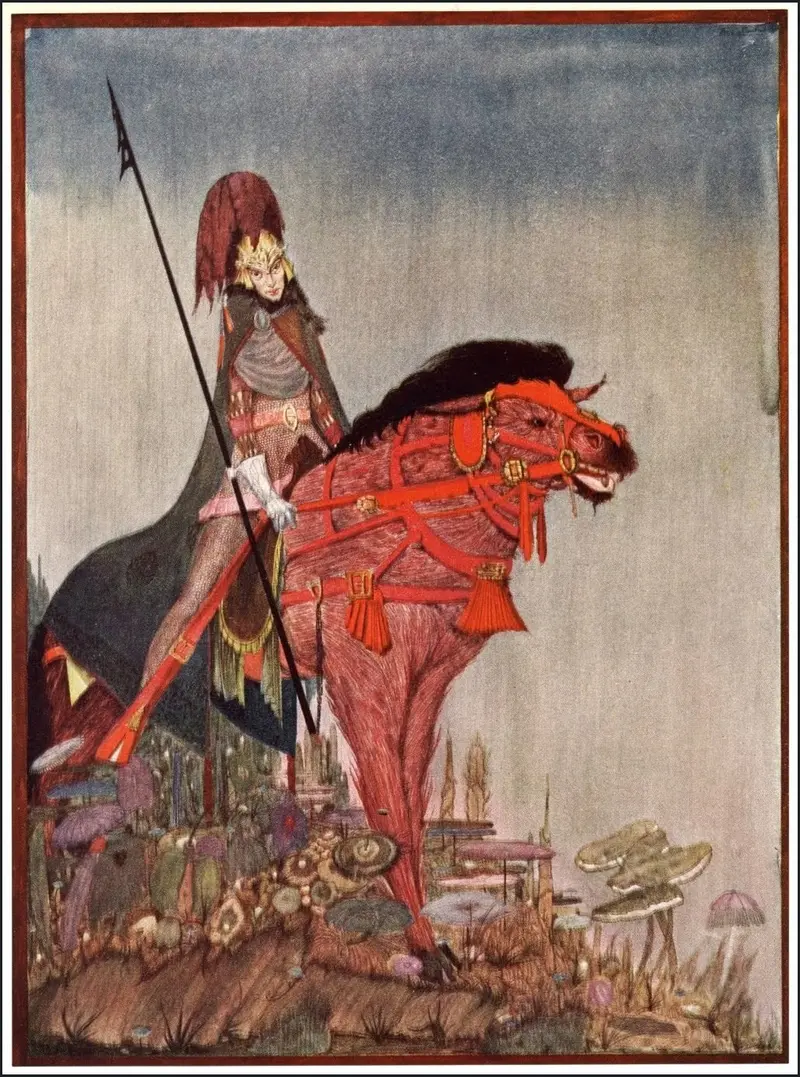
Metzengerstein (Poe)
Harry Clarke
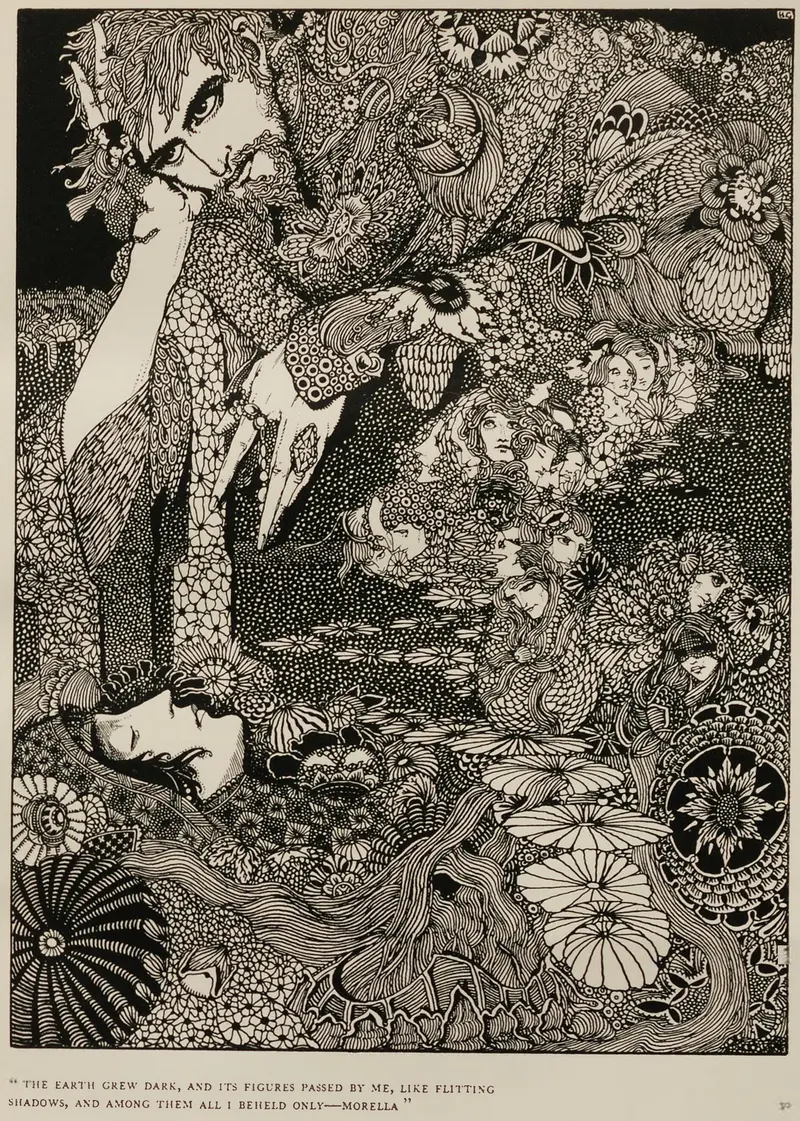
Morella (Poe)
Harry Clarke
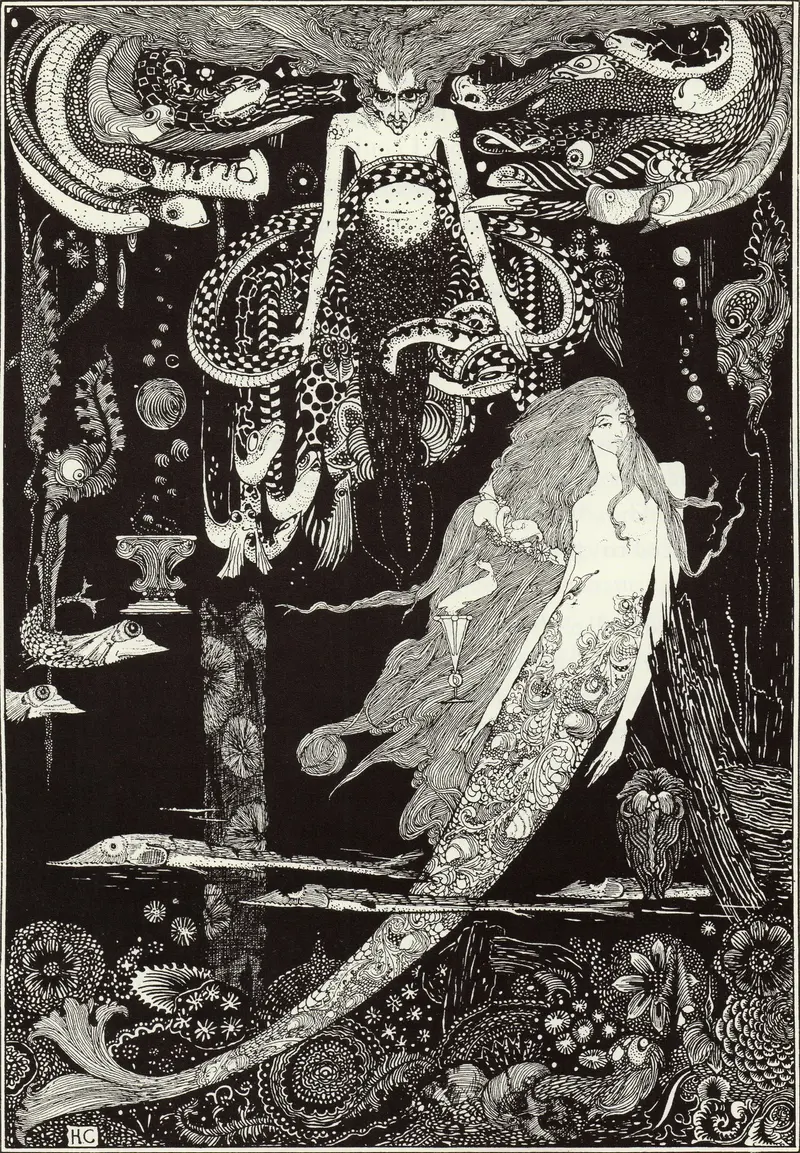
The Little Mermaid (Andersen)
Harry Clarke
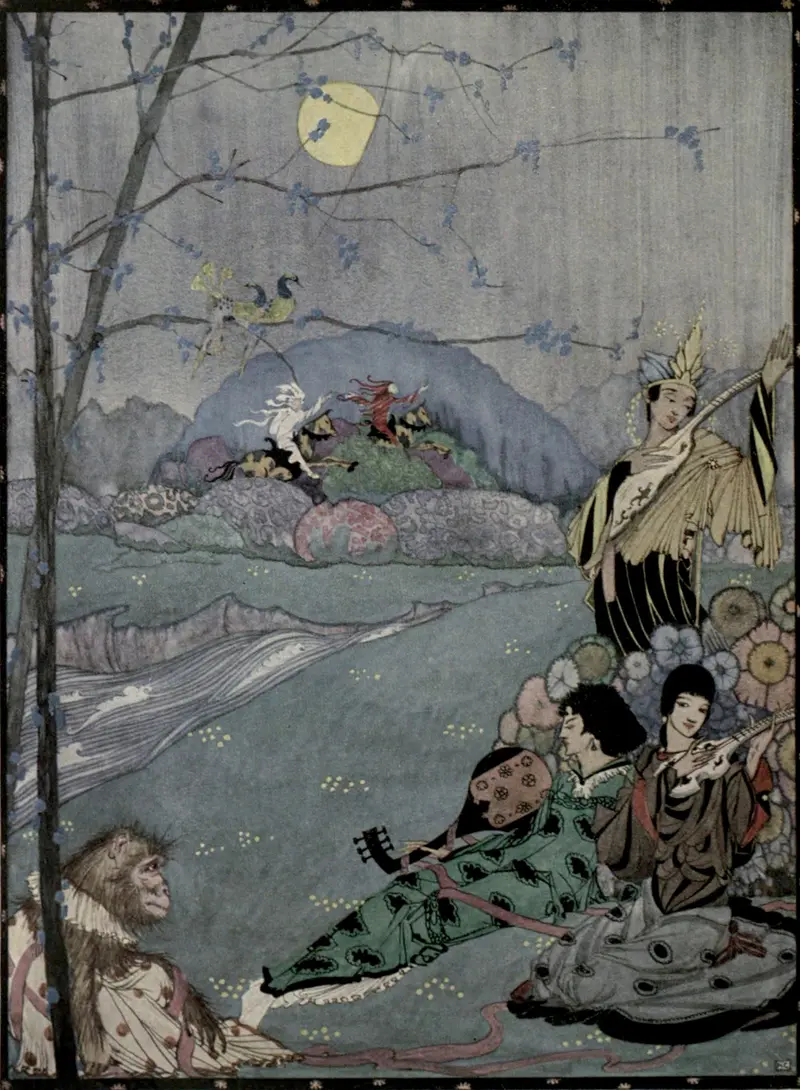
Arabia (The Year's at the Spring)
Harry Clarke
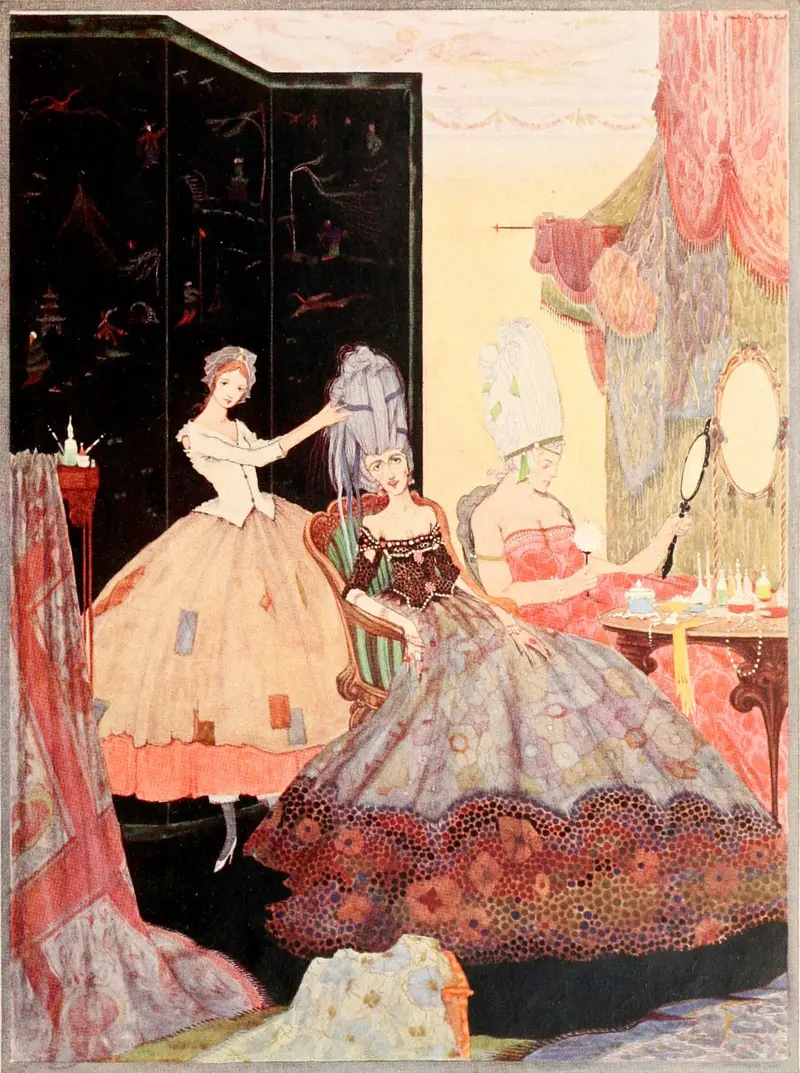
Cinderella (Perrault)
Harry Clarke
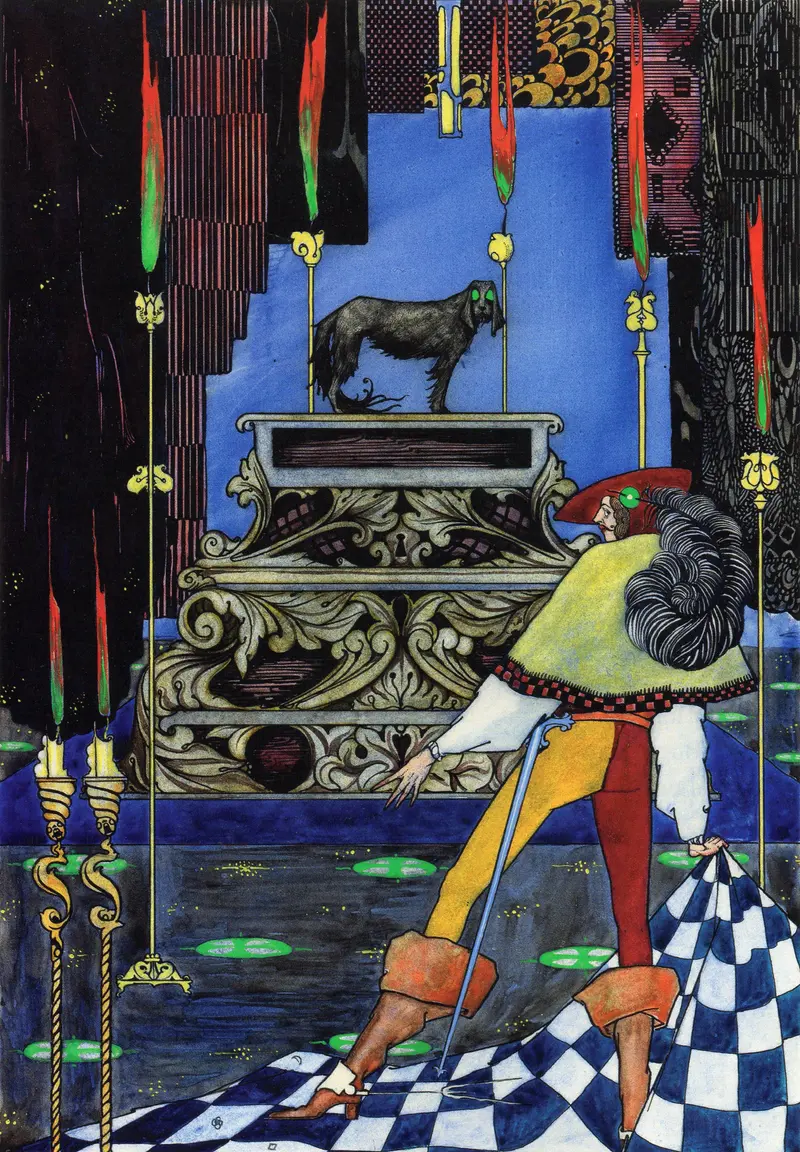
The Tinder Box (Andersen)
Harry Clarke
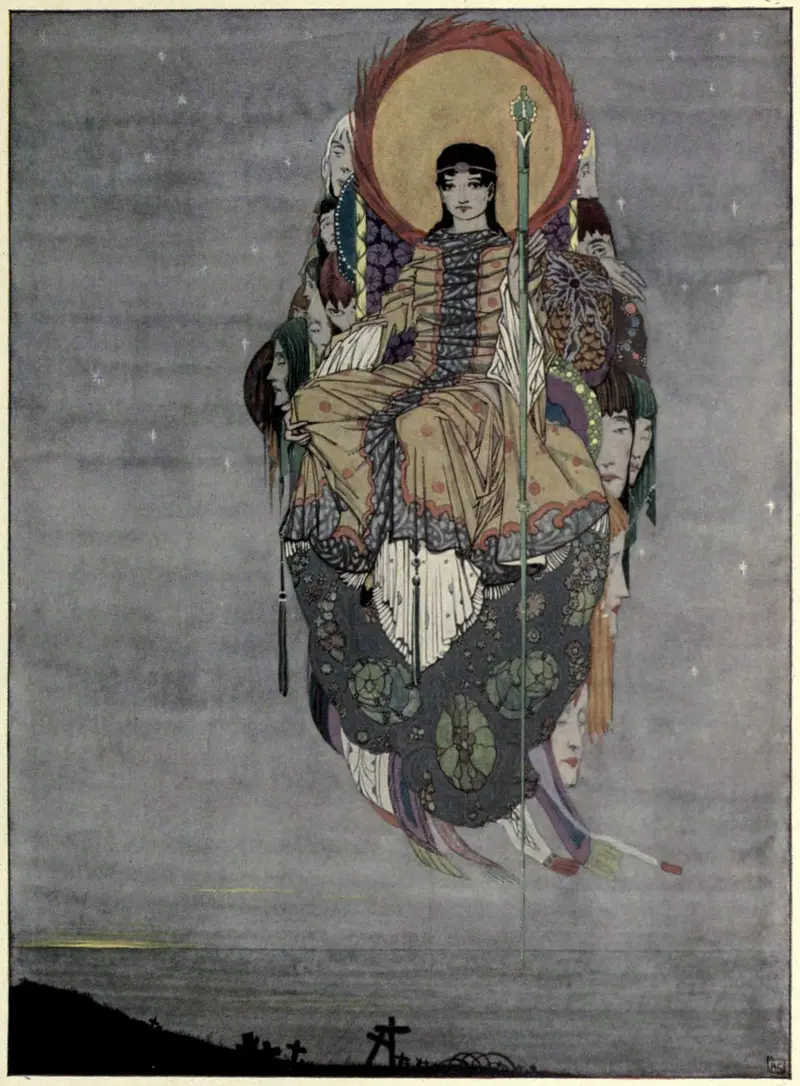
The Dead (The Year's at the Spring)
Harry Clarke
The Mystery of Marie Roget (Poe)
Harry Clarke

The Travelling Companion (Andersen)
Harry Clarke





